
The Basarab Family
A comprehensive chronicle of the House of Basarab – tracing its origins, ruling branches, heraldic symbolism, and dynastic impact across centuries of European history.
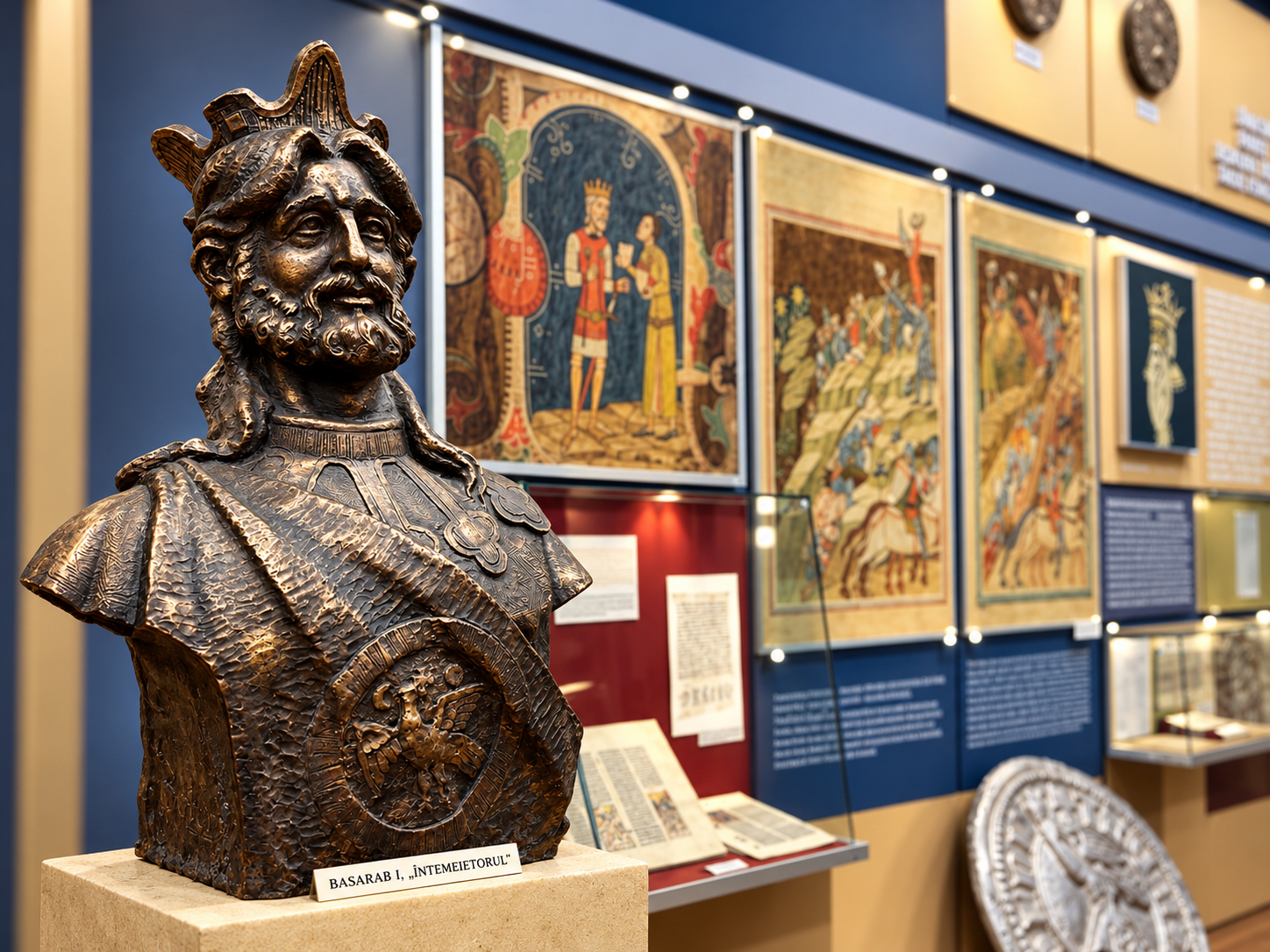
Bust of Basarab I, Founder of Wallachia (Basarab Întemeietorul). Photographed on location at the History Museum of Târgoviște (Muzeul de Istorie) by Basarab Heritage.
The Foundation of Wallachian Sovereignty
& Statecraft
Long before the consolidation of Wallachian statehood, the lands south of the Carpathians were home to autonomous political formations, including knesates and voivodeships, documented in medieval sources such as the Diploma of the Knights Hospitaller of 1247. These early political structures formed part of the historical landscape from which the principality of Wallachia would emerge.
The rise of Basarab I (Basarab Întemeietorul, traditionally dated c. 1310–1352), son of Thocomerius, marked a decisive turning point in this process. Through territorial consolidation, political negotiation, and the strengthening of princely authority, Basarab helped establish Țara Românească – the Wallachian Land – as a distinct political power between the Southern Carpathians and the Lower Danube.
As Basarab I asserted his authority over strategically important territories, tensions intensified with Charles I Robert of Anjou, King of Hungary. Seeking to reassert Hungarian overlordship, the Angevin monarch launched a military campaign against Wallachia in 1330. The conflict reflected a broader struggle over sovereignty, territorial control, and the political future of the lands south of the Carpathians.
The decisive confrontation came in the autumn of 1330, during the celebrated Battle of Posada (Bătălia de la Posada). In difficult mountainous terrain, Basarab’s forces ambushed and defeated the Hungarian royal army. The dramatic encounter is famously depicted in the illuminated Chronicon Pictum, one of the most important medieval visual sources for the campaign.
The victory represented a defining moment in the consolidation of Wallachian autonomy. It strengthened Basarab I’s position, weakened Hungary’s immediate capacity to impose its authority over the principality, and established a lasting historical precedent for the independent exercise of princely power.
In the decades that followed, Wallachia continued to develop its institutions of government, diplomatic relations, monetary practices, and ecclesiastical organization. These developments formed part of a broader process through which the principality secured its place among the political entities of medieval Southeastern Europe.
Dynastic Divergence: The Rival Houses of Dănești and Drăculești
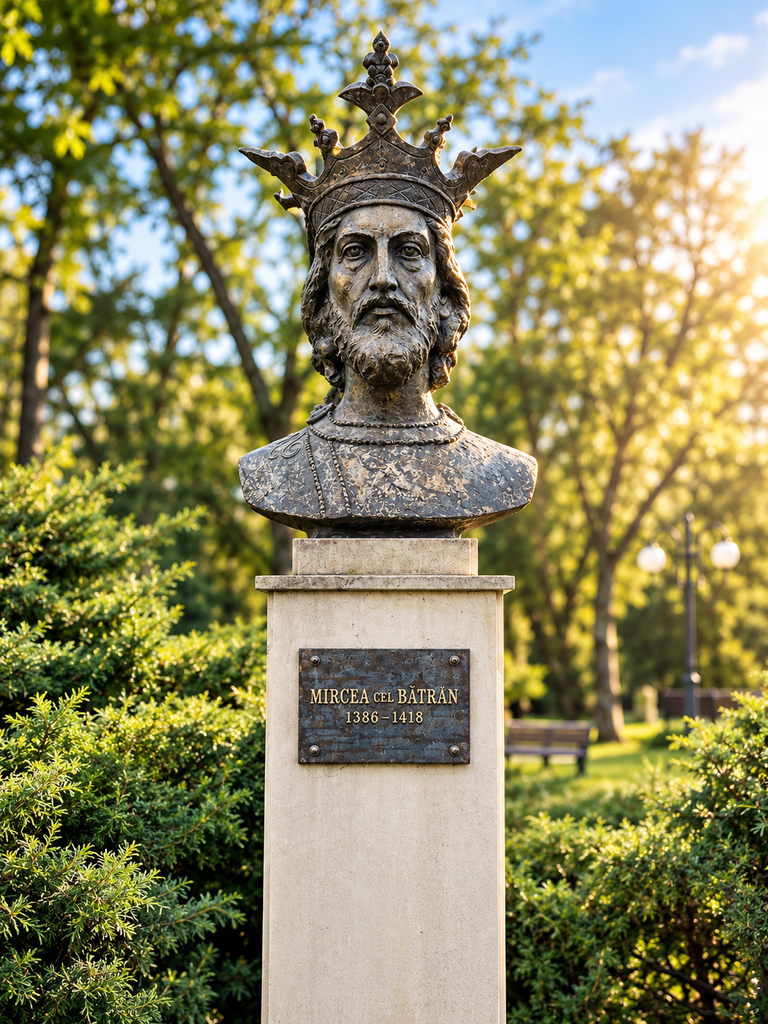
Following the prosperous reign of Voivode Mircea cel Bătrân (Mircea the Elder, r. 1386-1418) – who consolidated Wallachian statehood, expanded its territories to the Black Sea, and effectively engaged in coalition warfare against Ottoman expansion – the ruling dynasty diverged into two fiercely competitive cadet branches: the Dănești and the Drăculești. This internal schism was rooted in the Wallachian customary succession system (monarhie electiv-ereditară), which decreed that any male descendant of royal blood (os domnesc) was eligible for the throne, provided he secured the formal election of the High Boyar Council (Sfatul Domnesc).
Founded by descendants of Voivode Dan I (r. 1383–1386), elder brother of Mircea cel Bătrân, the House of Dănești (featuring prominent rulers such as Dan II, Vladislav II, and Basarab Laiotă) consistently positioned itself as the defender of traditional boyar privileges and regional autonomy. Their political alignment frequently sought backing from the Kingdom of Hungary, the Transylvanian Saxon estates, and the Voivodeship of Transylvania, utilizing diplomatic charters, trade concessions in Brașov and Sibiu, and chivalric networks to maintain territorial sovereignty.
The House of Drăculești originated with Vlad II Dracul (r. 1436-1442, 1446-1447), son of Mircea cel Bătrân. Vlad II was inducted into the prestigious Order of the Dragon (Societas Draconistarum) in 1431 by Sigismund of Luxembourg, King of Hungary and Holy Roman Emperor – a chivalric order dedicated to the defense of Christian Europe against Ottoman advancement. The sobriquet Dracul (derived from the Latin draco, meaning dragon) was inherited by his son, Vlad III Țepeș (Vlad the Impaler, r. 1448, 1456-1462, 1476), whose military campaigns against Sultan Mehmed II underscored the fierce, uncompromising sovereignty of the Wallachian realm.
For over two centuries, the crown of Wallachia alternated between these two branches in a perpetual struggle for political supremacy. While this internal rivalry contributed to frequent dynastic shifts, it simultaneously forced both lines to develop sophisticated diplomatic chancery practice, international alliances, and resilient borderland warfare strategies. Ultimately, both the Dănești and the Drăculești preserved Wallachian autonomy at the critical frontier between Western Christendom and the Ottoman Empire, culminating in the historic temporary unification of Wallachia, Transylvania, and Moldavia under Mihai Viteazul (Michael the Brave, r. 1593-1601), a descendant of the Drăculești lineage.
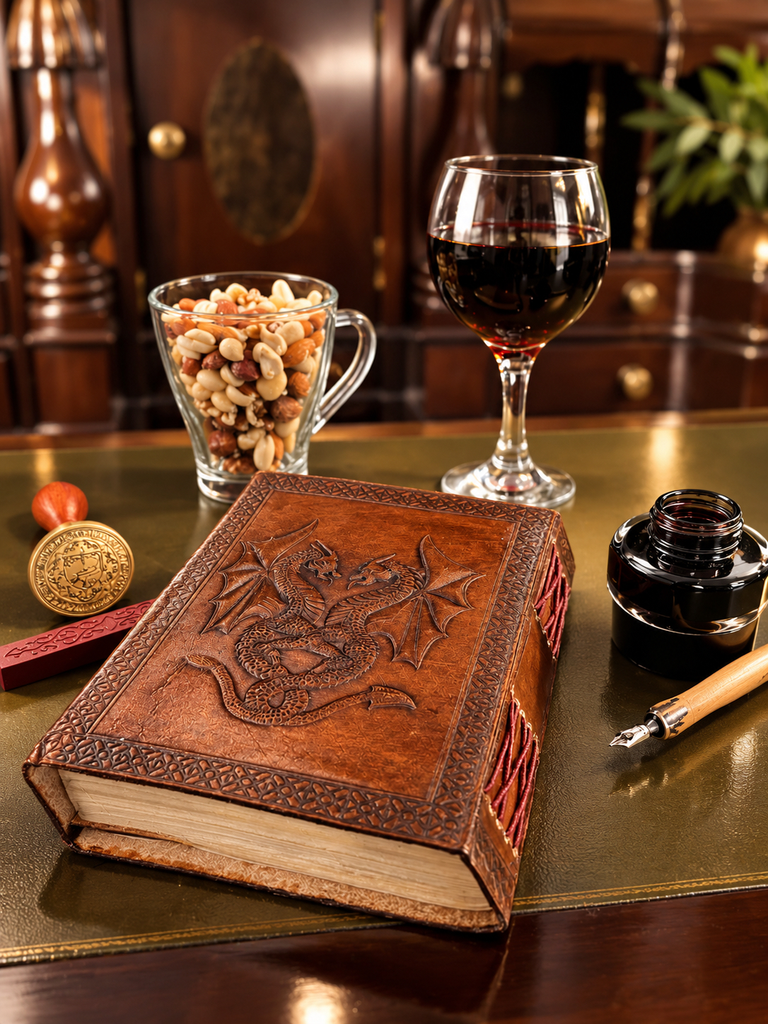
Symbolic representation of dynastic duality: The intertwined dragons on the ledger binding signify the rival lineages of Dănești and Drăculești.
Symbol of the Order of the Dragon.

Ornamental metalwork featuring the Wallachian eagle with cross and celestial symbols. Photographed on location in Târgoviște by Basarab Heritage.
Heraldic Symbolism, Sigillography & Dynastic Insignia
The heraldic composition of the House of Basarab represents one of the most distinctive sigillographic and armorial traditions in Southeastern European history. The central visual element – historically designated as the Wallachian Eagle (Acvila valahică) or heraldic raven – features a crowned or contourné bird perched upon a mount, holding a golden cross (either Latin or patriarchal Orthodox) within its beak. Originating on the earliest silver ducats (dinares) minted during the reigns of Vladislav I (r. 1364-1377) and Nicolae Alexandru (r. 1352-1364), this heraldic bird symbolized the sacred duty of the sovereign as both earthly protector of the realm and defender of Christian orthodoxy.
Accompanying the heraldic bird are celestial symbols deeply rooted in late medieval European armorial practice: a six-pointed heraldic star or radiant sun positioned alongside a crescent moon (increscent/decrescent). In medieval heraldic sigillography, the combination of sun and moon flanking the central eagle signified cosmic order, divine legitimacy, and the eternal continuity of the realm (domnia). These astromorphic elements featured prominently on voivodal seals (pecete domnească), gold-stamped wax seals (bulla aurea), and monumental stone reliefs decorating royal monastic foundations such as Curtea de Argeș, Cumpăna, and Tismana.
Beyond personal and dynastic coats of arms, the House of Basarab developed a highly structured chancery sigillography. The royal seal served as the ultimate instrument of law, diplomatic authority, and land grant ratification (hrisov domnesc). The great red wax seal (pecetea cea mare), affixed with silk threads to diplomatic correspondence sent to the Holy See, the Hungarian Kingdom, the Transylvanian Saxon Chanceries, and the Sublime Porte, bore the full armorial shield surrounded by the formal Slavic-Wallachian sovereign title: „Io, [Name], by the Grace of God, Voivode and Master of the Whole Realm of Wallachia”.
The heraldic legacy of the Basarab dynasty was preserved not only in official legal documents, but also woven into the fabric of sacred art. Intricate heraldic embroidery on voivodal epitaphs, liturgical textiles (distinctions), heraldic bookbindings, and carved stone portals across Wallachia and Transylvania safeguarded these symbols through centuries of geopolitical change. Today, this rich sigillographic tradition remains a cornerstone of Romanian national heraldry and a testament to the sovereign continuity established by the House of Basarab.
Variations in Heraldry: Tinctures, Pallets, and Sigillographic Fluidity
In late medieval Southeastern Europe, heraldic iconography was not defined by rigid, standardized state rules, but developed dynamically through voivodal seals (pecete), numismatic minting, and international armorial records. Primary sources – most notably the Gelre Armorial (c. 1370-1395) and the Bellenville Armorial – document the foundational coat of arms of the House of Basarab as a divided shield featuring a barry of six to eight (6-8 horizontal pallets/streipes) in gules and or (red and gold) on the dexter side, dimidiated with the sovereign astromorphic or plain fields.
The exact number of horizontal pallets fluctuated between three distinct bars (yielding six stripes) and four bars (yielding eight stripes) across different reigns and mintages. On small silver ducats minted by Vladislav I and Radu I, die engravers adapted the number of bars to fit the physical constraints of the coin dies, while illuminated armorials in Western Europe standardized the field to an eight-part division (barry of eight).
Furthermore, while the dominant tinctures preserved in Western armorials were gules and or (red and gold), regional manuscript illuminations and later Transylvanian-Wallachian record books document alternative color schemes, including vert and or (green and gold). Rather than indicating separate state symbols, these variations reflect the personal nature of medieval voivodal authority, where sovereigns adapted heraldic tinctures and pallets to signify personal legitimacy, diplomatic alliances, and territorial claims.
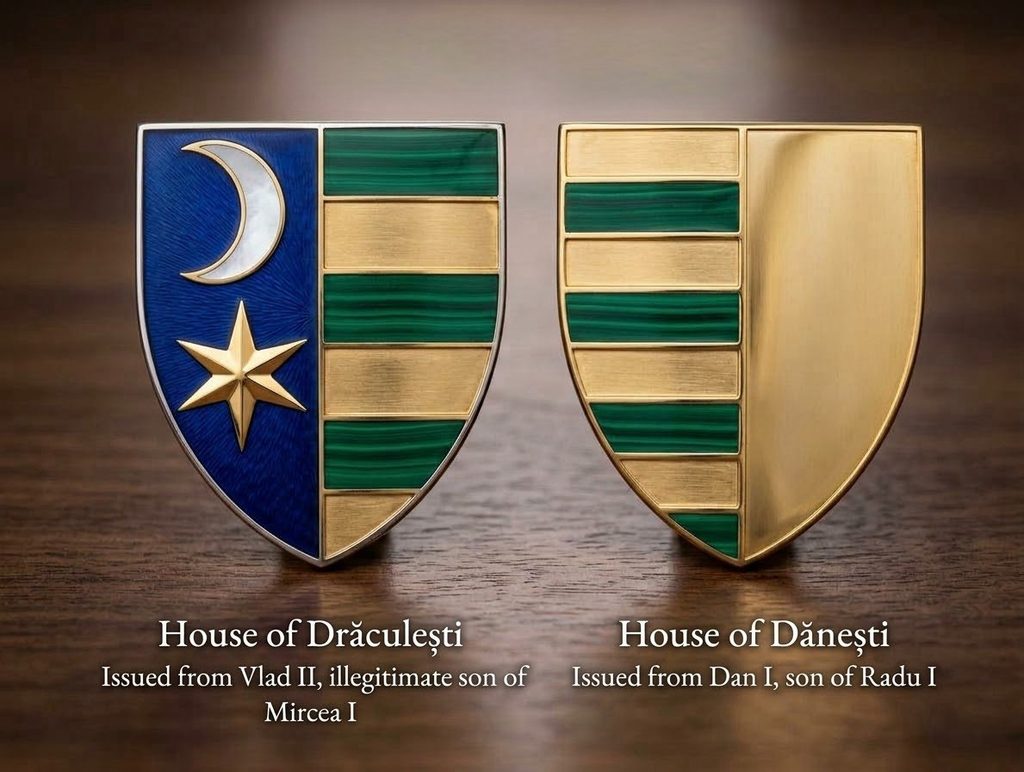

Mircea cel Bătrân,
1386-1394 & 1397-1418
The living nature of dynastic heraldry extends beyond historical archives into modern representational practice. While medieval voivodes adapted armorial tinctures and sigillographic elements to their respective reigns, contemporary heraldic representations often synthesize these historic motifs into a unified compositions.
The combined blazon featuring the wallachian eagle crest (Acvila valahică) bearing the cross, set above the dimidiated shield of azure with celestial charges and gules-and-or pallets, represents a modern continuation of this centuries-old visual heritage – bridging medieval sovereign iconography with the living legacy of the House of Basarab today.
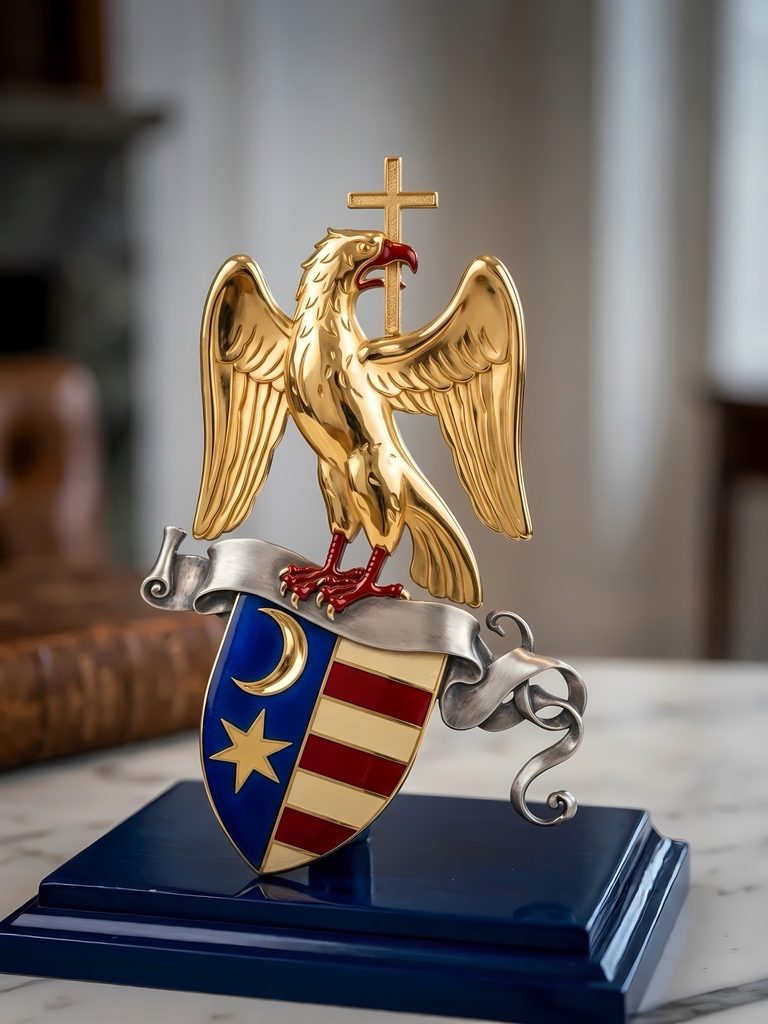
Modern combination, preferred by
Vladislav Carol Nicolae
Explore Chronicles &
Research
For further sources, heraldic analyses, and detailed genealogical profiles of individual Voivodes, please visit our dedicated repository or reach out to our chancery for inquiries.