
Wallachia, Transylvania & Beyond: A Sovereign & Territorial History
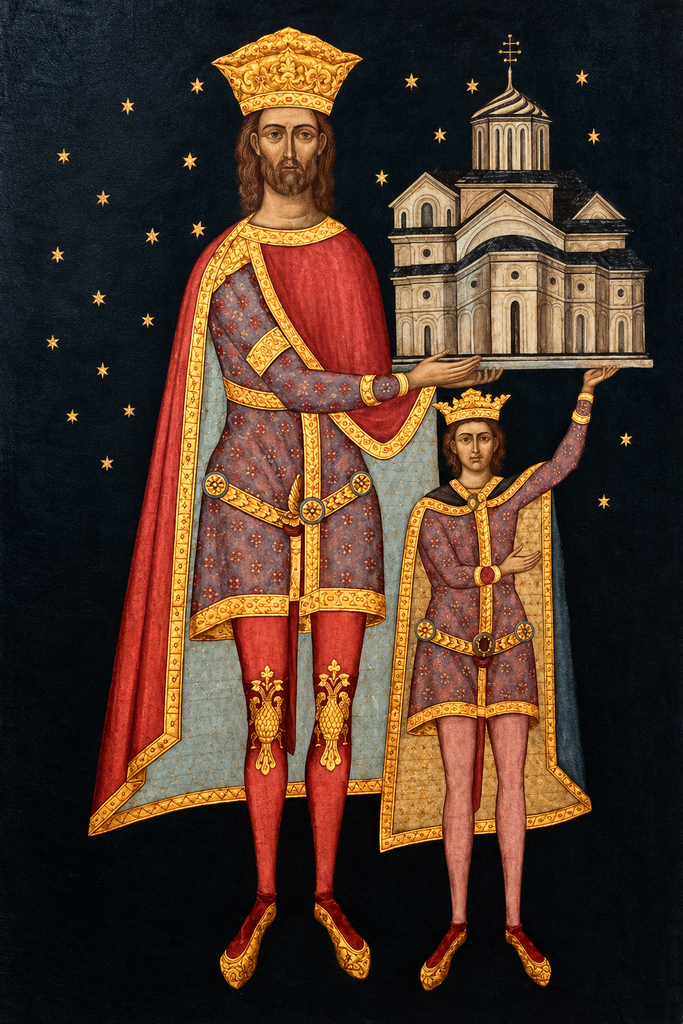
Foundations of the realm: Voivode Mircea the Elder and his son Mihail depicted in a votive fresco at Cozia Monastery, reflecting the consolidation of political authority and territorial governance in medieval Wallachia.
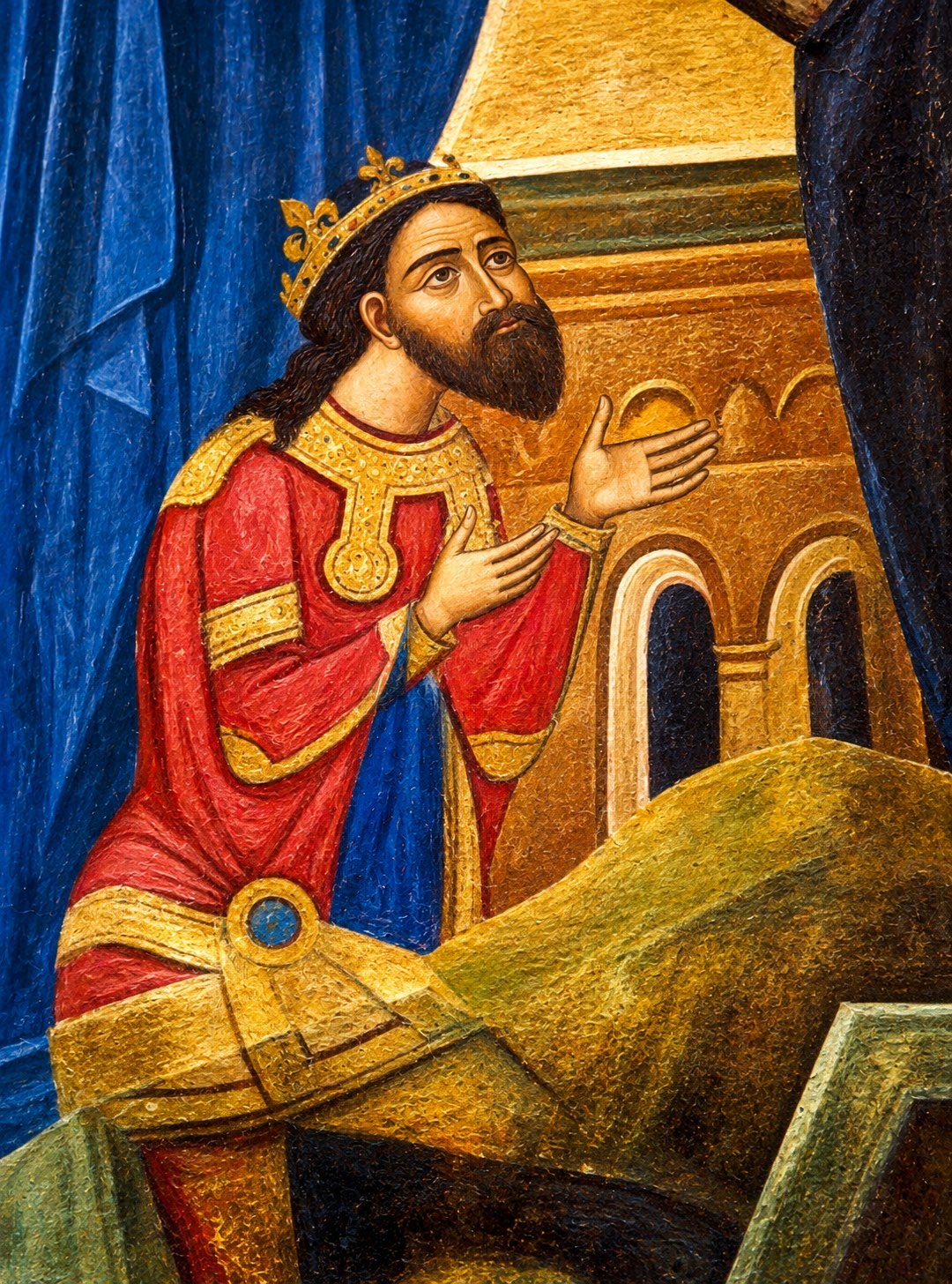
The genesis of sovereignty: Voivode Basarab I, founder of the independent Wallachian polity, whose leadership shaped the geopolitical destiny of the region (Digital restoration by Basarab Heritage).
The Foundations of Wallachian Statehood: From Early Voivodeships to the Battle of Posada (1330)
The history of Wallachia is closely connected to the emergence of political authority in the lands between the Carpathian Mountains and the Danube. During the Middle Ages, local voivodes and regional power structures gradually contributed to the formation of a distinct Wallachian polity.
The reign of Basarab I, traditionally regarded as the founder of an independent Wallachian principality, marked a decisive stage in this process. His conflict with King Charles I of Hungary culminated in the Battle of Posada in 1330, a confrontation that significantly strengthened Wallachia’s ability to maintain its political autonomy.
The battle occupies an important place in the historical memory of Wallachian statehood. Its details, including the precise location of the battlefield, remain subjects of historical discussion, and accounts must be considered in light of the surviving medieval sources. Nevertheless, Posada stands as a defining episode in the consolidation of Wallachian princely authority and in the development of the principality’s relationship with the neighboring Kingdom of Hungary.
The emergence of Wallachia was not an isolated event, but part of a broader transformation of political power throughout southeastern and central Europe. Its early history reflects the interaction of local leadership, regional rivalries, dynastic interests, and the gradual formation of enduring political institutions.
Princely Authority and Regional Power: Târgoviște & the Carpathian Realm (14th–15th Centuries)
During the fourteenth and fifteenth centuries, Wallachia developed its political institutions and strengthened its position within the wider Carpathian and Danubian region. Its rulers governed a principality shaped by shifting alliances, competing regional interests, and the need to preserve internal authority amid pressure from more powerful neighboring states.
Târgoviște emerged as one of Wallachia’s principal political and administrative centers. Together with other princely residences, it played an important role in the exercise of government, the administration of the principality, and the development of its cultural and religious life. The existence of multiple centers of princely activity reflects the character of medieval rule, in which authority was expressed through the ruler’s court, ecclesiastical foundations, local elites, and established networks of allegiance.
Wallachia’s relationship with the territories beyond the southern Carpathians was equally significant. Areas such as Amlaș and Făgăraș were connected at different times with Wallachian rulers through arrangements involving the Hungarian Crown. These territories illustrate the complex and changing nature of medieval lordship, in which political influence, dynastic interests, and territorial claims did not always correspond to the fixed borders of modern states.
The reigns of rulers such as Mircea the Elder further demonstrate Wallachia’s active role in regional politics. Through diplomacy, military campaigns, and changing alliances, Wallachian rulers sought to preserve their authority and protect the principality’s interests. Their policies were shaped by relations with Hungary, the Ottoman Empire, and other neighboring powers.
This period reveals a political landscape in which sovereignty was not always absolute in the modern sense. Instead, it was negotiated and maintained through a combination of military strength, diplomatic relationships, dynastic legitimacy, and the effective exercise of internal authority.
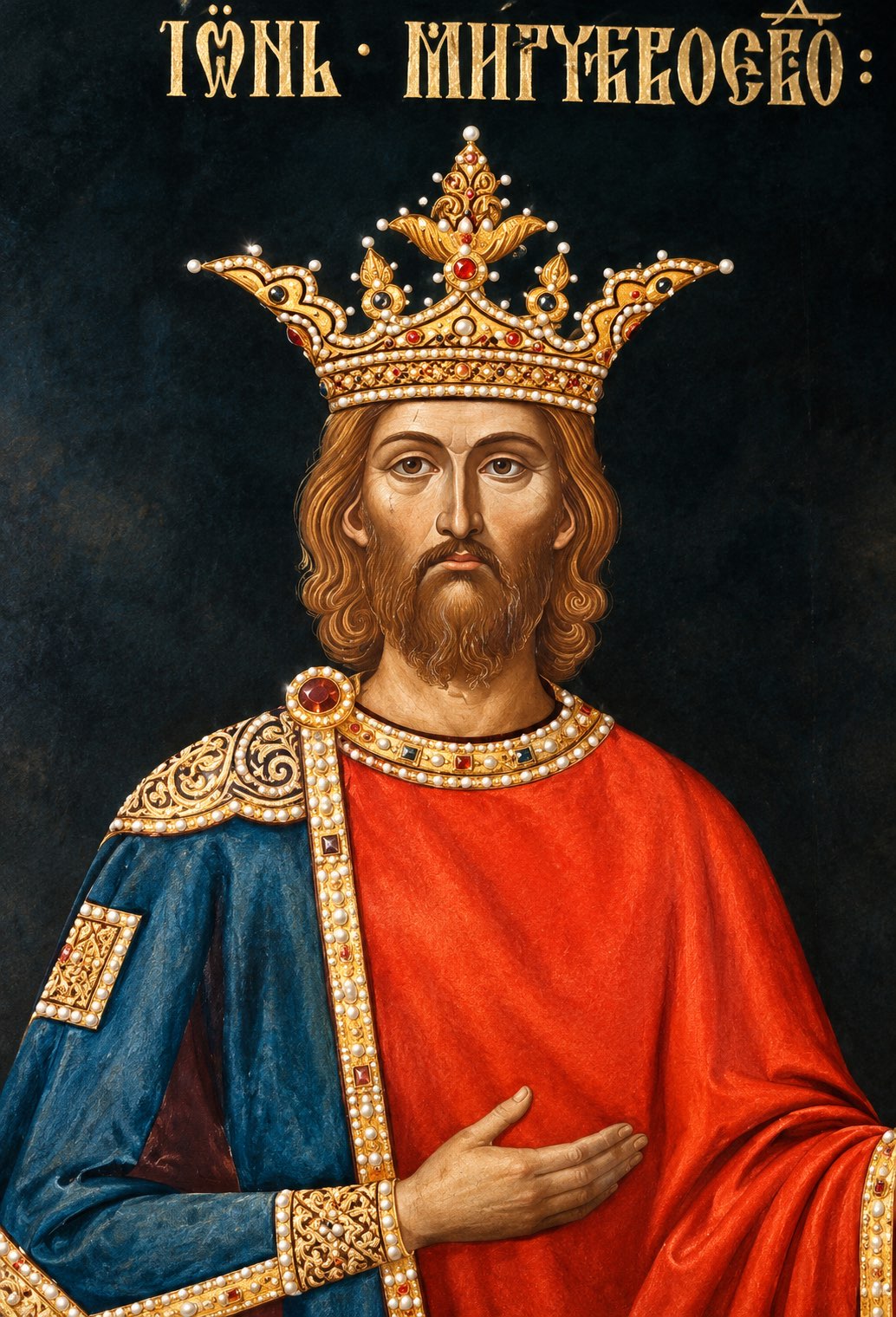
Architect of regional power: Voivode Mircea the Elder, whose diplomacy, administrative reforms, and territorial stewardship established Wallachia as a pivotal realm in southeastern Europe (Digital enhancement: Basarab Heritage).
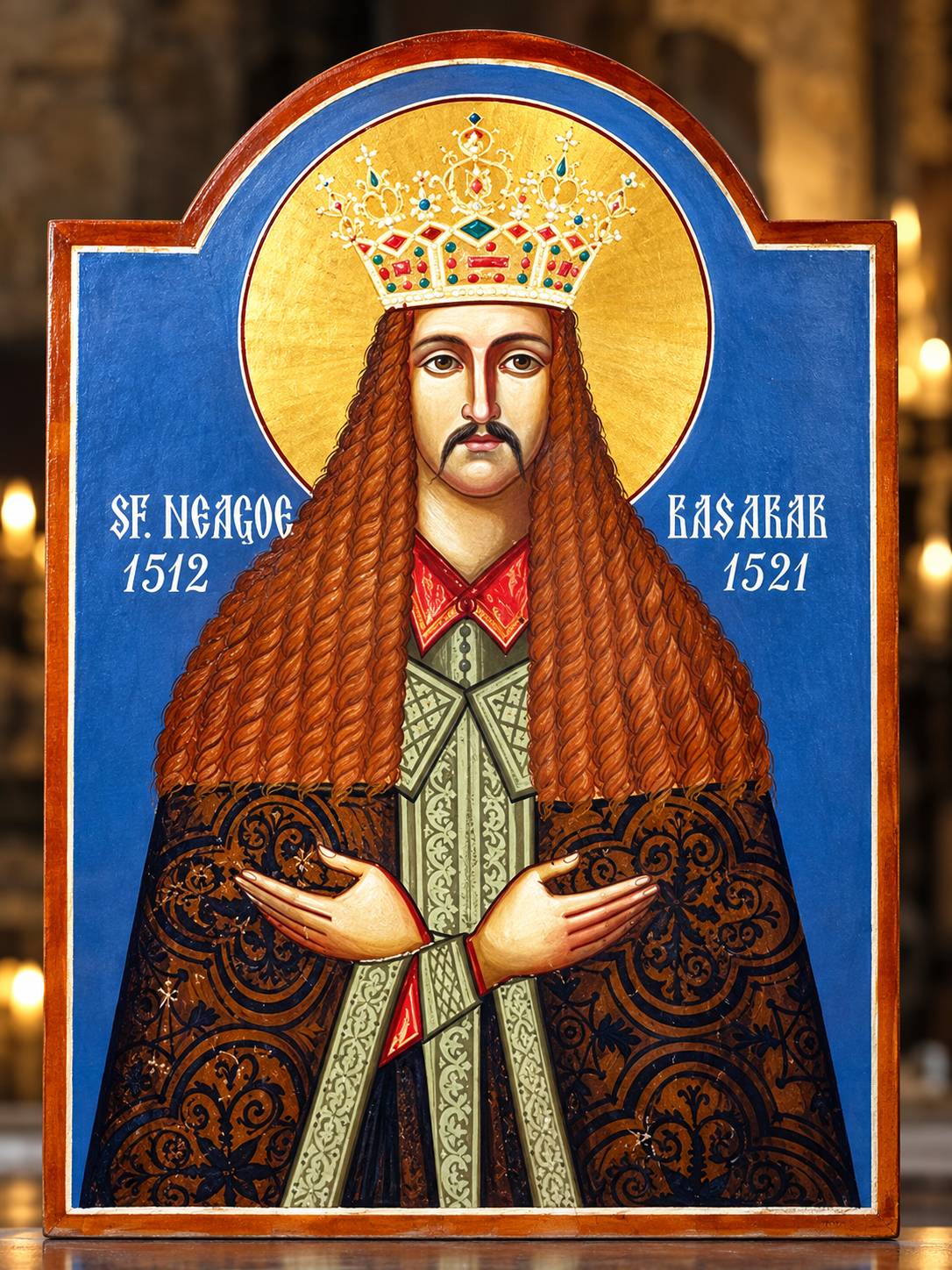
Patron of arts and letters: Voivode Neagoe Basarab (1512–1521), under whose reign Wallachia experienced a golden age of architectural patronage, spiritual literature, and cultural achievement (Digital restoration: Basarab Heritage).
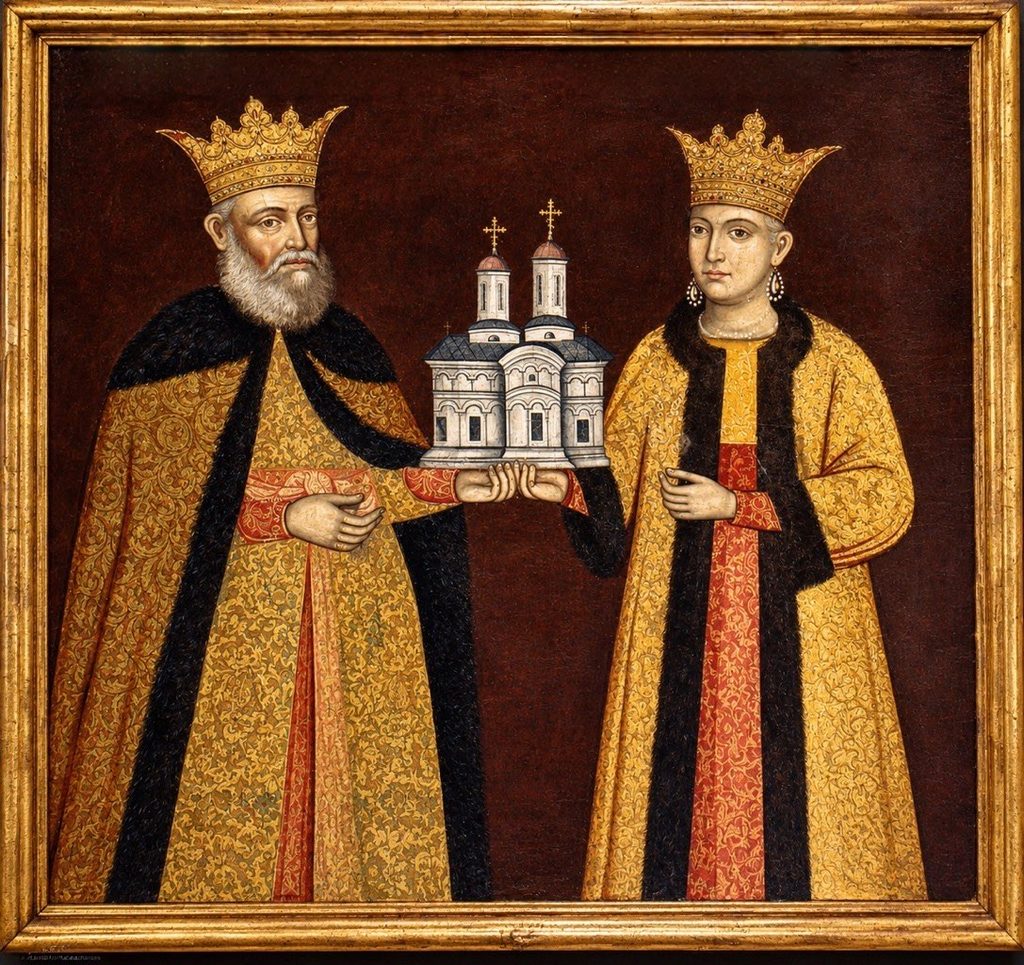
Patronage of faith and law: Voivode Matei Basarab and Doamna Elena holding a church model, symbolizing an era of extensive religious foundations, architectural renewal, and legal codification in 17th-century Wallachia (Digital reconstruction: Basarab Heritage).
Religious Patronage, Cultural Achievement & Legal Development (16th–17th Centuries)
The sixteenth and seventeenth centuries witnessed important developments in Wallachia’s religious, cultural, and administrative life. Princely patronage supported monasteries, churches, manuscript traditions, printing, and the preservation of religious learning. These institutions contributed not only to spiritual life but also to the continuity of cultural identity and historical memory.
The development of printing in Wallachia represents an important milestone. In 1508, during the reign of Radu cel Mare, the monk Macarie printed a liturgical book at the monastery of Dealu. This early publication formed part of a wider effort to support Orthodox religious practice and the circulation of liturgical texts in the region.
Later rulers continued to support religious foundations and cultural initiatives. Neagoe Basarab, whose reign in the early sixteenth century became closely associated with princely patronage and religious thought, occupies a prominent place in Wallachian cultural history. His legacy reflects the close relationship between political authority, Orthodox Christianity, and the ideals of princely conduct.
Legal and administrative developments also contributed to the principality’s institutional life. During the reign of Matei Basarab, the Pravila de la Govora was published in 1640, representing an important stage in the development of Romanian-language legal and ecclesiastical literature. Such works illustrate the role of religious institutions and princely authority in shaping the legal and cultural frameworks of the period.
By the late seventeenth and early eighteenth centuries, Wallachia’s cultural landscape continued to evolve. The reign of Constantin Brâncoveanu became particularly associated with architectural patronage, artistic achievement, and the flourishing of a distinctive cultural style that combined local traditions with influences from across southeastern and central Europe.
These developments took place within a complex political environment. Wallachian rulers operated under varying degrees of Ottoman influence while maintaining significant responsibilities within the principality. Diplomacy, patronage, religious foundations, and cultural production consequently became important means of sustaining political standing and preserving a distinct Wallachian tradition.
The legacy of this period extends beyond individual rulers or monuments. It reflects the enduring role of religious institutions, cultural patronage, and legal development in shaping Wallachia’s historical identity.
Territorial Transformations & the Emergence of Modern Romania (18th–20th Centuries)
The eighteenth, nineteenth, and early twentieth centuries brought substantial changes to the political geography of the Carpathian and Danubian region. Rivalries between the Ottoman, Habsburg, and Russian Empires reshaped territorial arrangements, while local political movements increasingly articulated new ideas of autonomy, national identity, and statehood.
For Wallachia and Moldavia, the Treaty of Adrianople of 1829 marked an important turning point. It strengthened the principalities’ autonomy and expanded the scope for internal administration, although Ottoman suzerainty remained in place. Russian influence also grew, illustrating the increasingly international character of the political questions surrounding the principalities.
The subsequent union of Moldavia and Wallachia under Alexandru Ioan Cuza in 1859 established a crucial foundation for the modern Romanian state. The development of unified institutions and the declaration of independence in 1877, internationally recognized in the aftermath of the Russo-Turkish War, marked further stages in this transformation. Romania’s establishment as a kingdom in 1881 gave the state a new constitutional and dynastic framework.
The history of Transylvania followed a different territorial and political trajectory. For much of the modern period, it was governed within the Habsburg Monarchy and later Austria-Hungary. Its political institutions, social structure, and diverse population developed within a distinct historical context, even as cultural, linguistic, and familial connections linked it with the Romanian lands south and east of the Carpathians.
The events of 1918 brought major territorial changes to the region. Transylvania’s union with Romania was proclaimed at Alba Iulia on 1 December 1918. Bukovina’s union with Romania had been proclaimed earlier that year, while Bessarabia followed a separate political process and voted for union with Romania in March 1918. The subsequent international settlements helped shape the territorial order of the interwar period.
These developments should be understood as related but distinct historical processes, each shaped by its own political circumstances, institutions, and regional experiences. Together, they contributed to the formation of modern Romania and transformed the historical relationships among the lands of the wider Carpathian and Danubian region.
The territorial history of Wallachia, Transylvania, Moldavia, Bukovina, and Bessarabia demonstrates that political borders are not static. They evolve through dynastic change, diplomacy, conflict, institutional development, and shifting ideas of political belonging. Understanding these transformations requires attention to the individual histories of each territory as well as to the broader regional context in which they unfolded.

Architect of modern statehood: Alexandru Ioan Cuza, whose double election in 1859 united Moldavia and Wallachia, laying the institutional and administrative foundation of modern Romania (Digital restoration: Basarab Heritage).
Historical Perspective & Editorial Approach
Basarab Heritage is committed to presenting the history of Wallachia, Transylvania, and the wider Carpathian region with historical awareness, accuracy, and respect for the complexity of the past.
Our work draws upon historical records, chronicles, scholarly research, cultural traditions, and other relevant sources, depending on the subject and nature of each contribution. We value the distinction between documented events, historical interpretations, and later traditions, while recognizing that the surviving evidence does not always provide definitive answers.
Through articles, educational projects, and cultural contributions, we seek to encourage a deeper appreciation of the region’s political, territorial, and cultural heritage. Our approach combines respect for historical tradition with an openness to further research and evolving historical understanding.