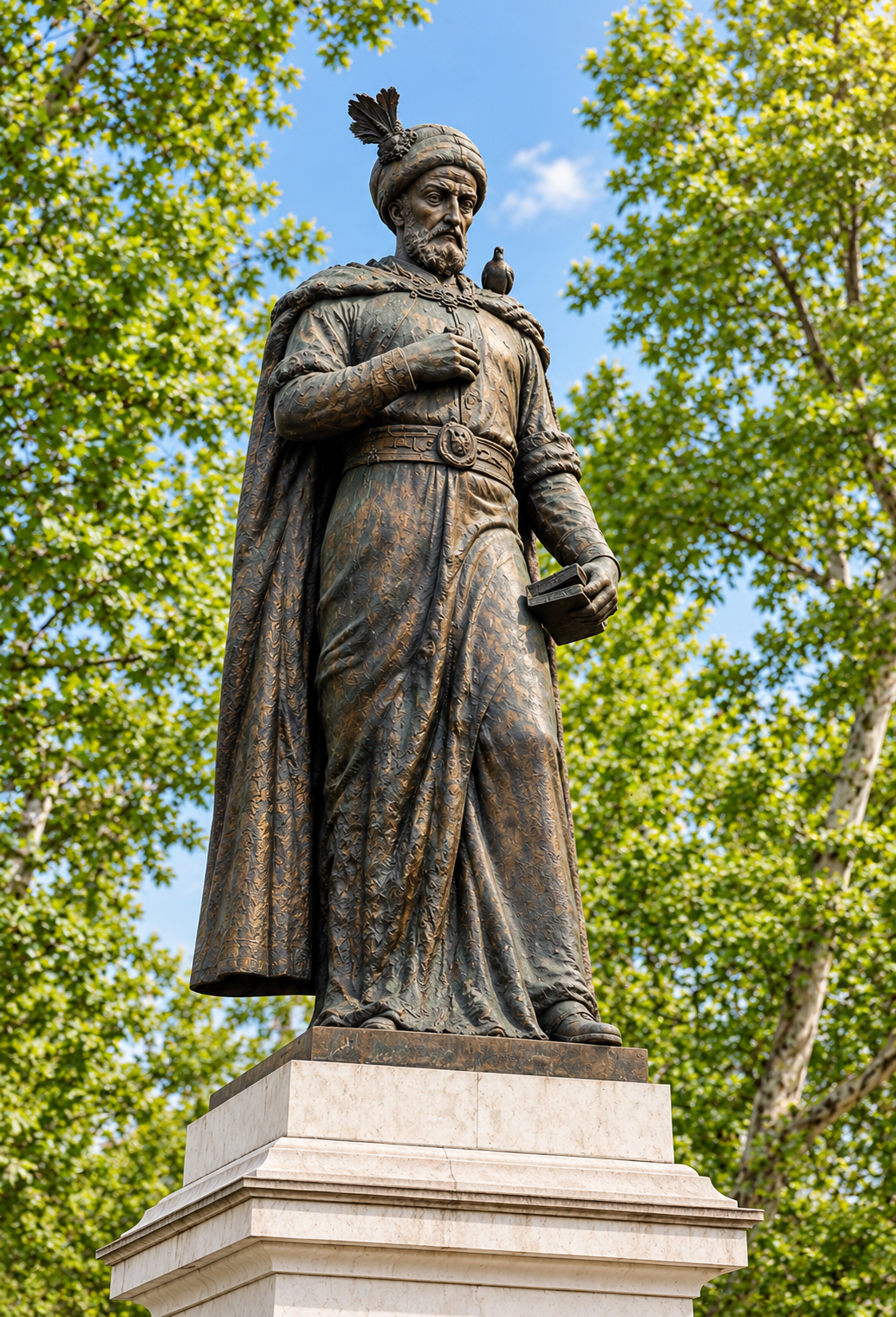
Constantin Brâncoveanu
Voivode of Wallachia
1688-1714
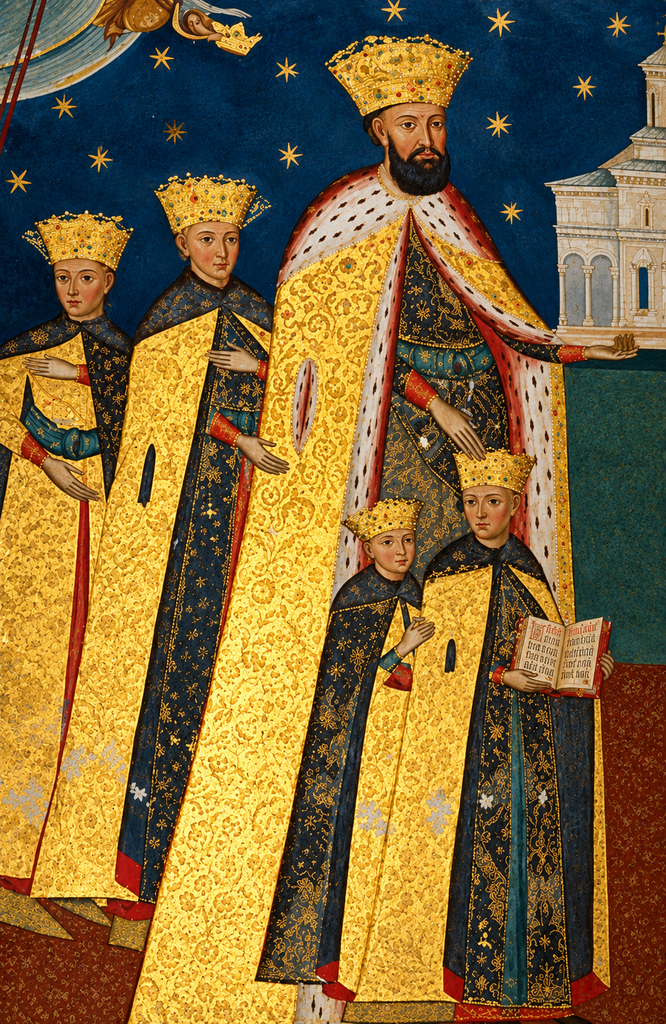
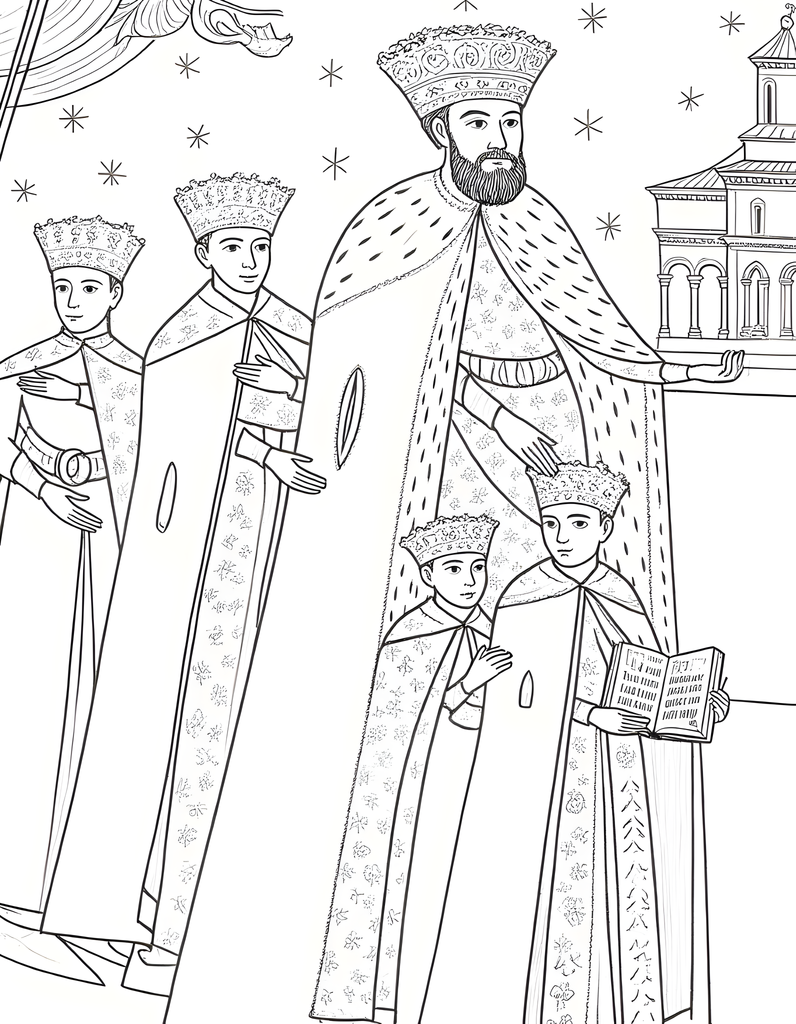
Fresco depicting Constantin Brâncoveanu and his four sons at Hurezi Monastery, Wallachia.
Meet the Ruler
Constantin Brâncoveanu ruled Wallachia from 1688 to 1714, during a period of considerable political change in south-eastern Europe. His long reign was marked by diplomatic challenges, cultural achievement, and the flourishing of religious art and architecture.
Situated between the Ottoman Empire and the expanding Habsburg and Russian powers, Wallachia faced complex political pressures. Brâncoveanu sought to preserve his principality’s position through careful diplomacy and shifting alliances while maintaining its established relationship with the Ottoman Empire.
His reign became renowned for its cultural achievements. He supported the construction and restoration of churches and monasteries, encouraged printing, and fostered artistic traditions that combined local, Byzantine, and other European influences. This distinctive architectural and artistic tradition became known as the Brâncovenesc style.
Among his most significant foundations was Hurezi Monastery, an important centre of religious art and architecture. His patronage left a lasting mark on Wallachia’s cultural heritage.
In 1714, Brâncoveanu was executed in Constantinople alongside his four sons, Constantin, Ștefan, Radu, and Matei, and his adviser Ianache Văcărescu. Their deaths became a defining part of his historical legacy. In 1992, the Romanian Orthodox Church canonised Brâncoveanu and his sons, commemorating them as martyrs.
Today, Constantin Brâncoveanu is remembered both for his political leadership and for the artistic, architectural, and religious legacy of his reign.
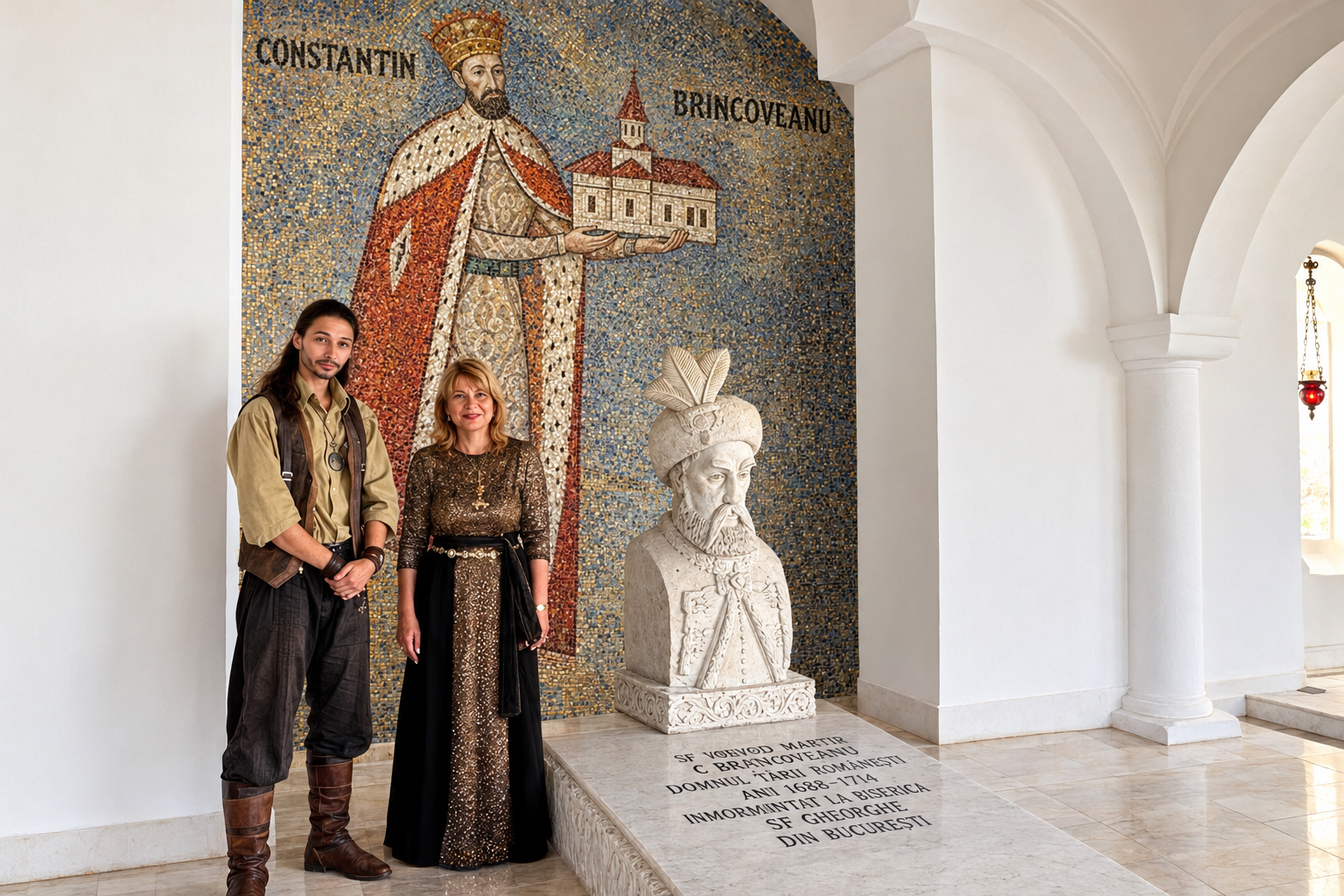
Vladislav Carol Nicolae and his cousin, Silvia Lucia Andronik Cantacuzino, at Sâmbăta de Sus Monastery, standing in front of the monument, with a mosaic depicting Saint Constantin Brâncoveanu, Voivode of Wallachia (1688–1714).
Download Your Colouring Page
Bring this historical ruler to life with your own colours!
For personal, educational, and classroom use.
Download the colouring page via Google Drive, as described in our Privacy Policy.
Handout: Constantin Brâncoveanu
Select your preferred language to download the short historical profile (PDF):
Colour the Past
Discover Constantin Brâncoveanu through this colouring page inspired by a fresco depicting the ruler and his four sons.
Shown wearing princely crowns, the figures reflect the dynastic identity of the Brâncoveanu family and the artistic traditions of Wallachia. The fresco also offers a glimpse into how the family was commemorated before its later recognition as saints by the Romanian Orthodox Church.
Did You Know?
- He ruled Wallachia for 26 years.
His reign, from 1688 to 1714, was unusually long for a period marked by political uncertainty and shifting regional alliances.
- His reign gave its name to an artistic style.
The Brâncovenesc style combined architectural and decorative influences in a distinctive tradition visible in churches, monasteries, and princely buildings.
- His family is commemorated in religious art.
Frescoes depicting Brâncoveanu and his four sons preserve the memory of the princely family. The Romanian Orthodox Church canonised them in 1992.
Continue exploring the rulers of Wallachia through our growing collection of colouring pages and historical introductions.