
The Basarab
Dynasty
A comprehensive chronicle of the House of Basarab – tracing its origins, ruling branches, heraldic symbolism, and dynastic impact across centuries of European history.
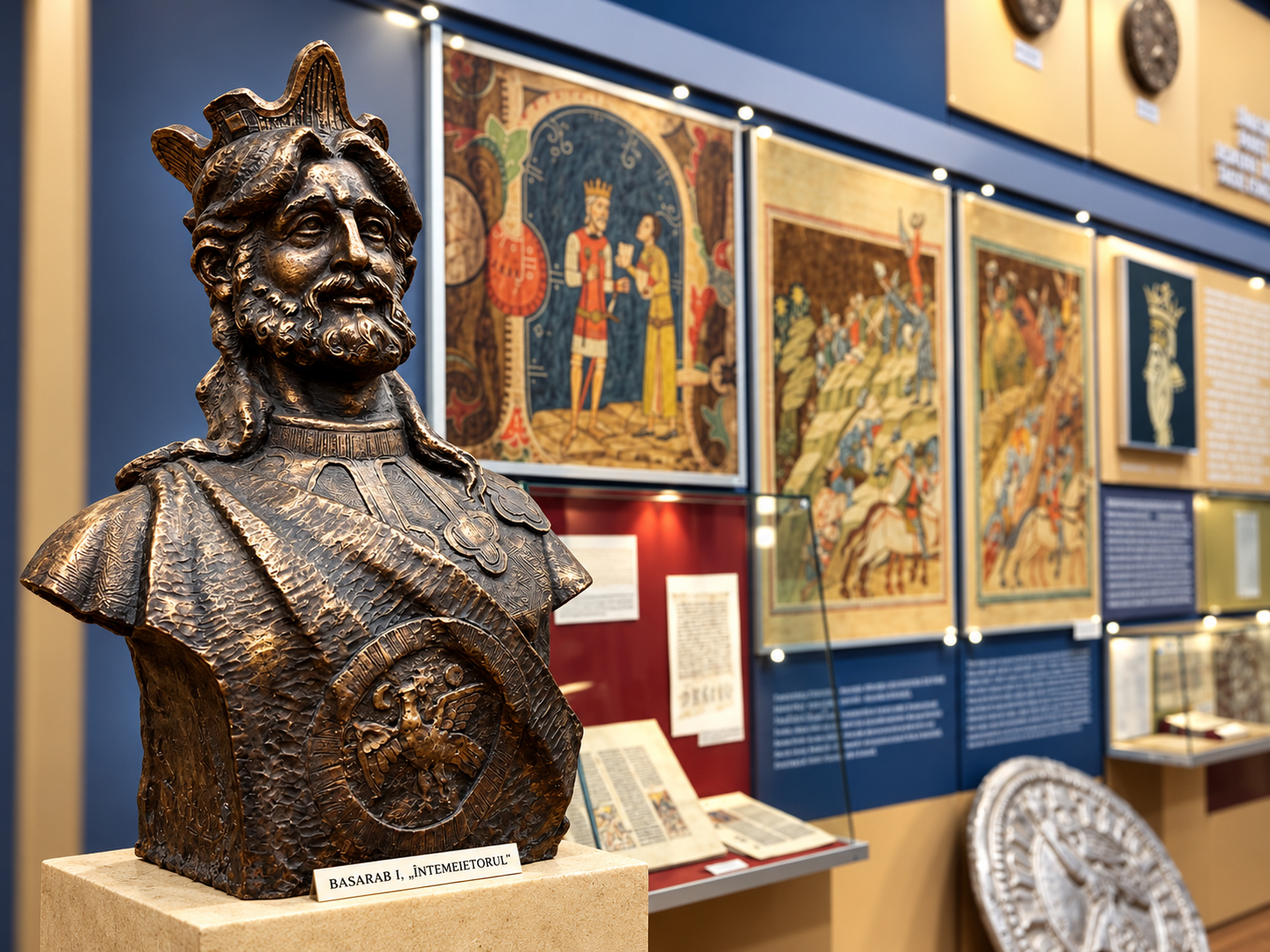
Bust of Basarab I, Founder of Wallachia (Basarab Întemeietorul). Photographed on location at the History Museum of Târgoviște (Muzeul de Istorie) by Basarab Heritage.
The Foundation of Wallachian Sovereignty
& Statecraft
Long before the consolidation of Wallachian statehood, the lands south of the Carpathians were home to autonomous political formations, including knesates and voivodeships, documented in medieval sources such as the Diploma of the Knights Hospitaller of 1247. These early political structures formed part of the historical landscape from which the principality of Wallachia would emerge.
The rise of Basarab I (Basarab Întemeietorul, traditionally dated c. 1310–1352), son of Thocomerius, marked a decisive turning point in this process. Through territorial consolidation, political negotiation, and the strengthening of princely authority, Basarab helped establish Țara Românească – the Wallachian Land – as a distinct political power between the Southern Carpathians and the Lower Danube.
As Basarab I asserted his authority over strategically important territories, tensions intensified with Charles I Robert of Anjou, King of Hungary. Seeking to reassert Hungarian overlordship, the Angevin monarch launched a military campaign against Wallachia in 1330. The conflict reflected a broader struggle over sovereignty, territorial control, and the political future of the lands south of the Carpathians.
The decisive confrontation came in the autumn of 1330, during the celebrated Battle of Posada (Bătălia de la Posada). In difficult mountainous terrain, Basarab’s forces ambushed and defeated the Hungarian royal army. The dramatic encounter is famously depicted in the illuminated Chronicon Pictum, one of the most important medieval visual sources for the campaign.
The victory represented a defining moment in the consolidation of Wallachian autonomy. It strengthened Basarab I’s position, weakened Hungary’s immediate capacity to impose its authority over the principality, and established a lasting historical precedent for the independent exercise of princely power.
In the decades that followed, Wallachia continued to develop its institutions of government, diplomatic relations, monetary practices, and ecclesiastical organization. These developments formed part of a broader process through which the principality secured its place among the political entities of medieval Southeastern Europe.
Dynastic Divergence: The Rival Houses of Dănești and Drăculești
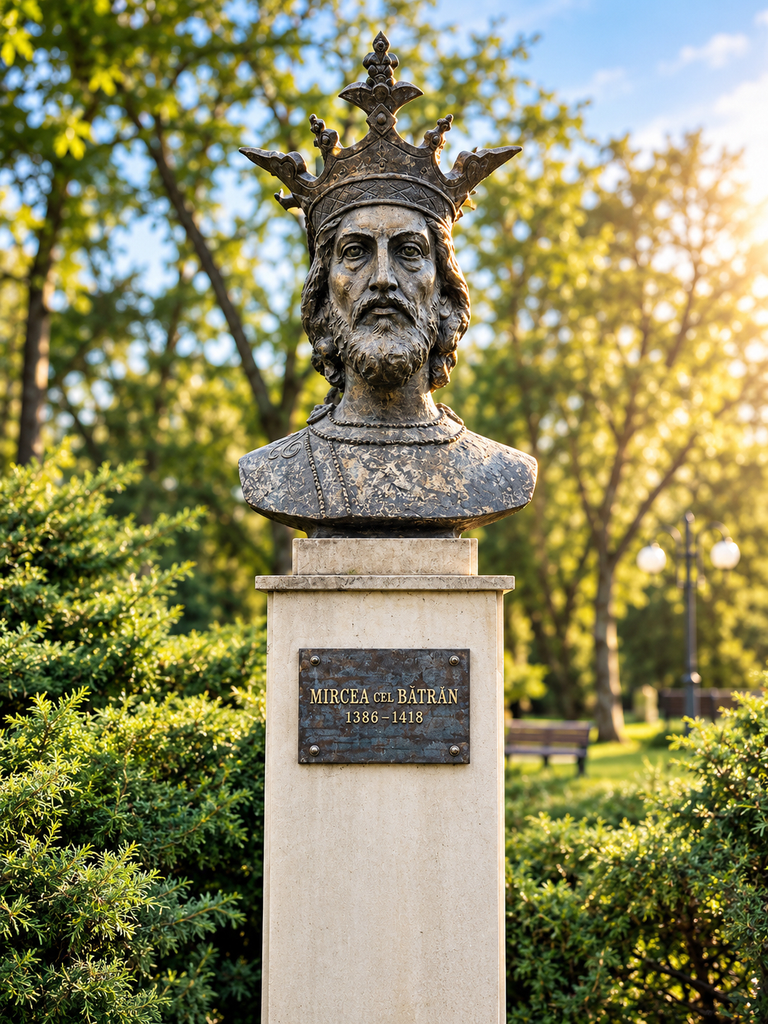
Following the prosperous reign of Voivode Mircea cel Bătrân (Mircea the Elder, r. 1386-1418) – who consolidated Wallachian statehood, expanded its territories to the Black Sea, and effectively engaged in coalition warfare against Ottoman expansion – the ruling dynasty diverged into two fiercely competitive cadet branches: the Dănești and the Drăculești. This internal schism was rooted in the Wallachian customary succession system (monarhie electiv-ereditară), which decreed that any male descendant of royal blood (os domnesc) was eligible for the throne, provided he secured the formal election of the High Boyar Council (Sfatul Domnesc).
Founded by descendants of Voivode Dan I (r. 1383–1386), elder brother of Mircea cel Bătrân, the House of Dănești (featuring prominent rulers such as Dan II, Vladislav II, and Basarab Laiotă) consistently positioned itself as the defender of traditional boyar privileges and regional autonomy. Their political alignment frequently sought backing from the Kingdom of Hungary, the Transylvanian Saxon estates, and the Voivodeship of Transylvania, utilizing diplomatic charters, trade concessions in Brașov and Sibiu, and chivalric networks to maintain territorial sovereignty.
The House of Drăculești originated with Vlad II Dracul (r. 1436-1442, 1446-1447), son of Mircea cel Bătrân. Vlad II was inducted into the prestigious Order of the Dragon (Societas Draconistarum) in 1431 by Sigismund of Luxembourg, King of Hungary and Holy Roman Emperor – a chivalric order dedicated to the defense of Christian Europe against Ottoman advancement. The sobriquet Dracul (derived from the Latin draco, meaning dragon) was inherited by his son, Vlad III Țepeș (Vlad the Impaler, r. 1448, 1456-1462, 1476), whose military campaigns against Sultan Mehmed II underscored the fierce, uncompromising sovereignty of the Wallachian realm.
For over two centuries, the crown of Wallachia alternated between these two branches in a perpetual struggle for political supremacy. While this internal rivalry contributed to frequent dynastic shifts, it simultaneously forced both lines to develop sophisticated diplomatic chancery practice, international alliances, and resilient borderland warfare strategies. Ultimately, both the Dănești and the Drăculești preserved Wallachian autonomy at the critical frontier between Western Christendom and the Ottoman Empire, culminating in the historic temporary unification of Wallachia, Transylvania, and Moldavia under Mihai Viteazul (Michael the Brave, r. 1593-1601), a descendant of the Drăculești lineage.
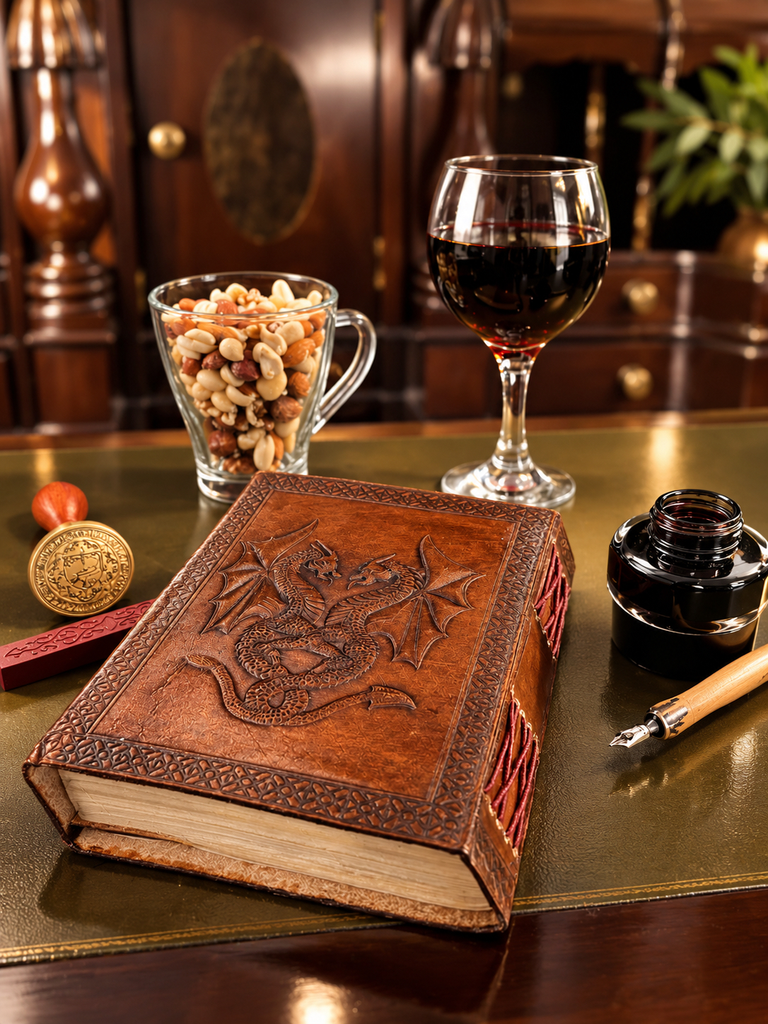
Symbolic representation of dynastic duality: The intertwined dragons on the ledger binding signify the rival lineages of Dănești and Drăculești.
Symbol of the Order of the Dragon.

Ornamental metalwork featuring the Wallachian eagle with cross and celestial symbols. Photographed on location in Târgoviște by Basarab Heritage.
Heraldic Symbolism, Sigillography & Dynastic Insignia
The heraldic composition of the House of Basarab represents one of the most distinctive sigillographic and armorial traditions in Southeastern European history. The central visual element – historically designated as the Wallachian Eagle (Acvila valahică) or heraldic raven – features a crowned or contourné bird perched upon a mount, holding a golden cross (either Latin or patriarchal Orthodox) within its beak. Originating on the earliest silver ducats (dinares) minted during the reigns of Vladislav I (r. 1364-1377) and Nicolae Alexandru (r. 1352-1364), this heraldic bird symbolized the sacred duty of the sovereign as both earthly protector of the realm and defender of Christian orthodoxy.
Accompanying the heraldic bird are celestial symbols deeply rooted in late medieval European armorial practice: a six-pointed heraldic star or radiant sun positioned alongside a crescent moon (increscent/decrescent). In medieval heraldic sigillography, the combination of sun and moon flanking the central eagle signified cosmic order, divine legitimacy, and the eternal continuity of the realm (domnia). These astromorphic elements featured prominently on voivodal seals (pecete domnească), gold-stamped wax seals (bulla aurea), and monumental stone reliefs decorating royal monastic foundations such as Curtea de Argeș, Cumpăna, and Tismana.
Beyond personal and dynastic coats of arms, the House of Basarab developed a highly structured chancery sigillography. The royal seal served as the ultimate instrument of law, diplomatic authority, and land grant ratification (hrisov domnesc). The great red wax seal (pecetea cea mare), affixed with silk threads to diplomatic correspondence sent to the Holy See, the Hungarian Kingdom, the Transylvanian Saxon Chanceries, and the Sublime Porte, bore the full armorial shield surrounded by the formal Slavic-Wallachian sovereign title: „Io, [Name], by the Grace of God, Voivode and Master of the Whole Realm of Wallachia”.
The heraldic legacy of the Basarab dynasty was preserved not only in official legal documents, but also woven into the fabric of sacred art. Intricate heraldic embroidery on voivodal epitaphs, liturgical textiles (distinctions), heraldic bookbindings, and carved stone portals across Wallachia and Transylvania safeguarded these symbols through centuries of geopolitical change. Today, this rich sigillographic tradition remains a cornerstone of Romanian national heraldry and a testament to the sovereign continuity established by the House of Basarab.
Variations in Heraldry:
Tinctures, Pallets, and Sigillographic Fluidity
In late medieval Southeastern Europe, heraldic iconography was not defined by rigid, standardized state rules, but developed dynamically through voivodal seals (pecete), numismatic minting, and international armorial records. Primary sources – most notably the Gelre Armorial (c. 1370-1395) and the Bellenville Armorial – document the foundational coat of arms of the House of Basarab as a divided shield featuring a barry of six to eight (6-8 horizontal pallets/streipes) in gules and or (red and gold) on the dexter side, dimidiated with the sovereign astromorphic or plain fields.
The exact number of horizontal pallets fluctuated between three distinct bars (yielding six stripes) and four bars (yielding eight stripes) across different reigns and mintages. On small silver ducats minted by Vladislav I and Radu I, die engravers adapted the number of bars to fit the physical constraints of the coin dies, while illuminated armorials in Western Europe standardized the field to an eight-part division (barry of eight).
Furthermore, while the dominant tinctures preserved in Western armorials were gules and or (red and gold), regional manuscript illuminations and later Transylvanian-Wallachian record books document alternative color schemes, including vert and or (green and gold). Rather than indicating separate state symbols, these variations reflect the personal nature of medieval voivodal authority, where sovereigns adapted heraldic tinctures and pallets to signify personal legitimacy, diplomatic alliances, and territorial claims.
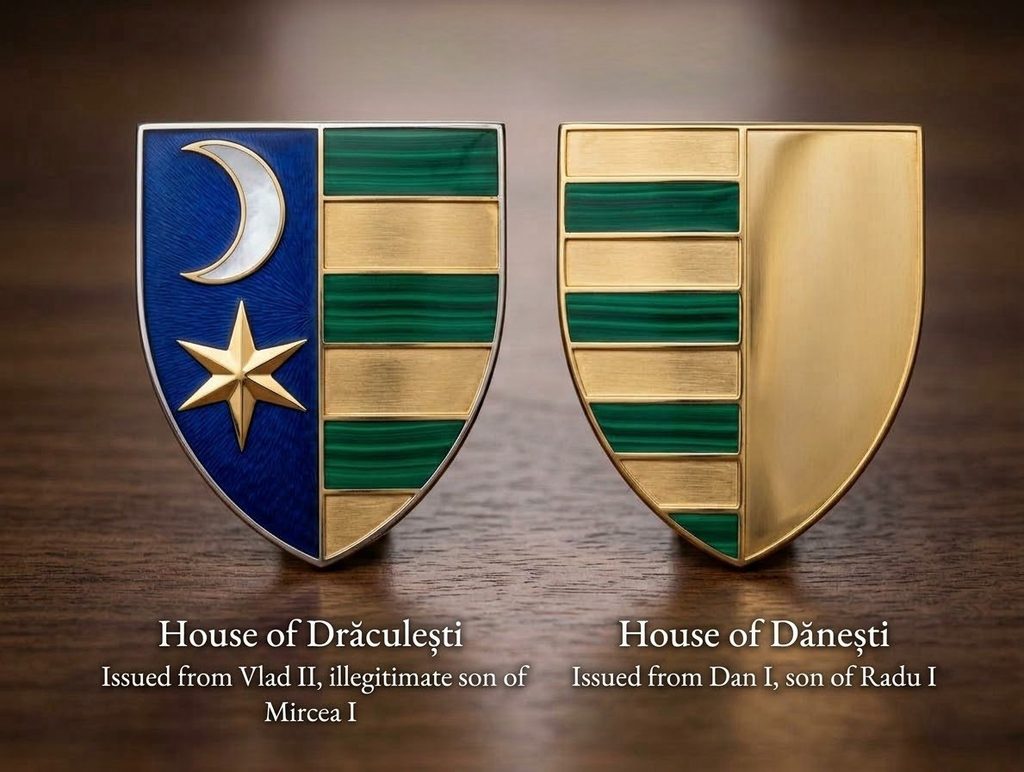

Mircea cel Bătrân,
1386-1394 & 1397-1418
The living nature of dynastic heraldry extends beyond historical archives into modern representational practice. While medieval voivodes adapted armorial tinctures and sigillographic elements to their respective reigns, contemporary heraldic representations often synthesize these historic motifs into a unified compositions.
The combined blazon featuring the wallachian eagle crest (Acvila valahică) bearing the cross, set above the dimidiated shield of azure with celestial charges and gules-and-or pallets, represents a modern continuation of this centuries-old visual heritage – bridging medieval sovereign iconography with the living legacy of the House of Basarab today.
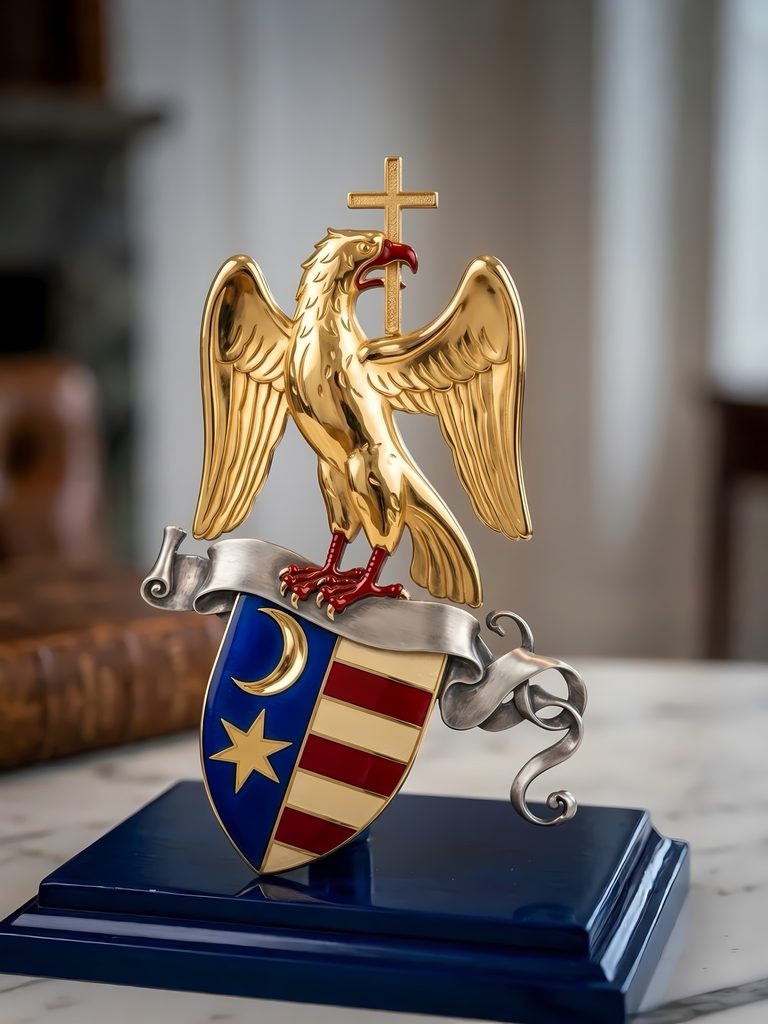
Modern combination, preferred by
Vladislav Carol Nicolae
Chronology of the Basarab Rulers and Dynastic Tradition
This chronology presents the rulers associated with the medieval House of Basarab, including its Drăculești and Dănești branches. It also includes later princes who adopted the Basarab name, claimed a connection with the dynasty, or invoked its legacy to strengthen their political legitimacy.
The chronology follows the historical sequence of Wallachian rulers rather than separating them by family branch. Dynastic classifications distinguish established or traditionally accepted relationships from disputed genealogies and later claims of descent.
Regnal dates and genealogical relationships are not equally certain for every ruler. The early fifteenth century is particularly complex because several princes named Dan appear in the historical record. Where relevant, this chronology notes the alternative reconstruction proposed by historian Andrei Pippidi in his 2013 study of the Wallachian dynasty. His interpretation distinguishes rulers whom earlier accounts had conflated; it should be understood as a scholarly reconstruction rather than an uncontested consensus.
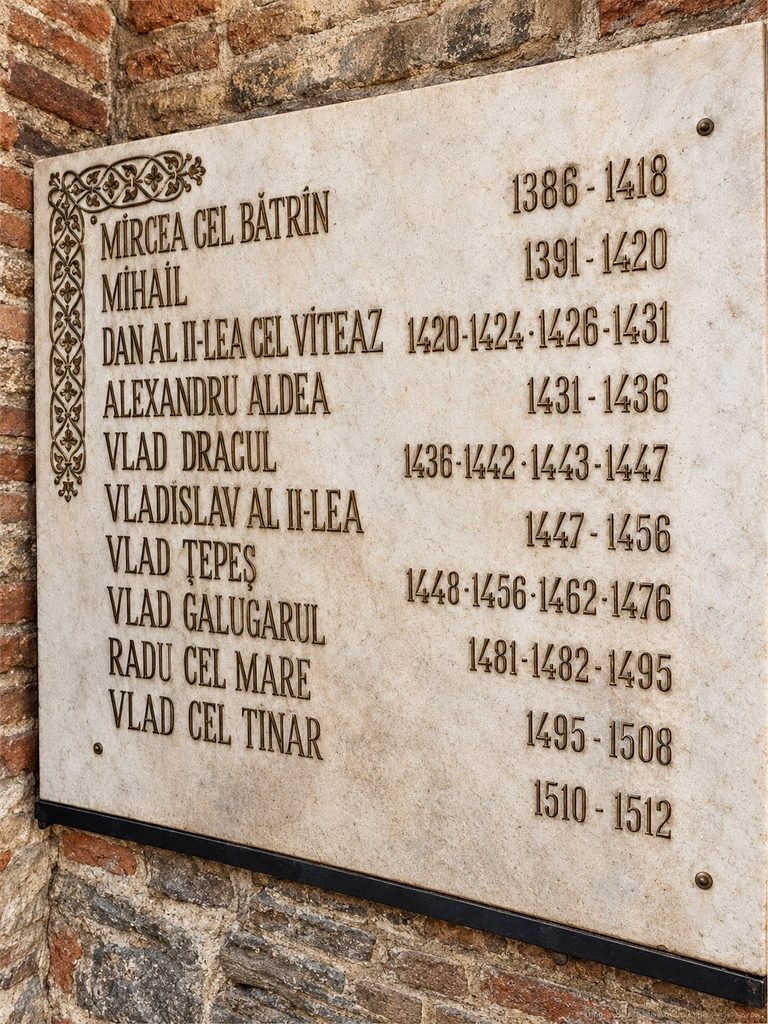
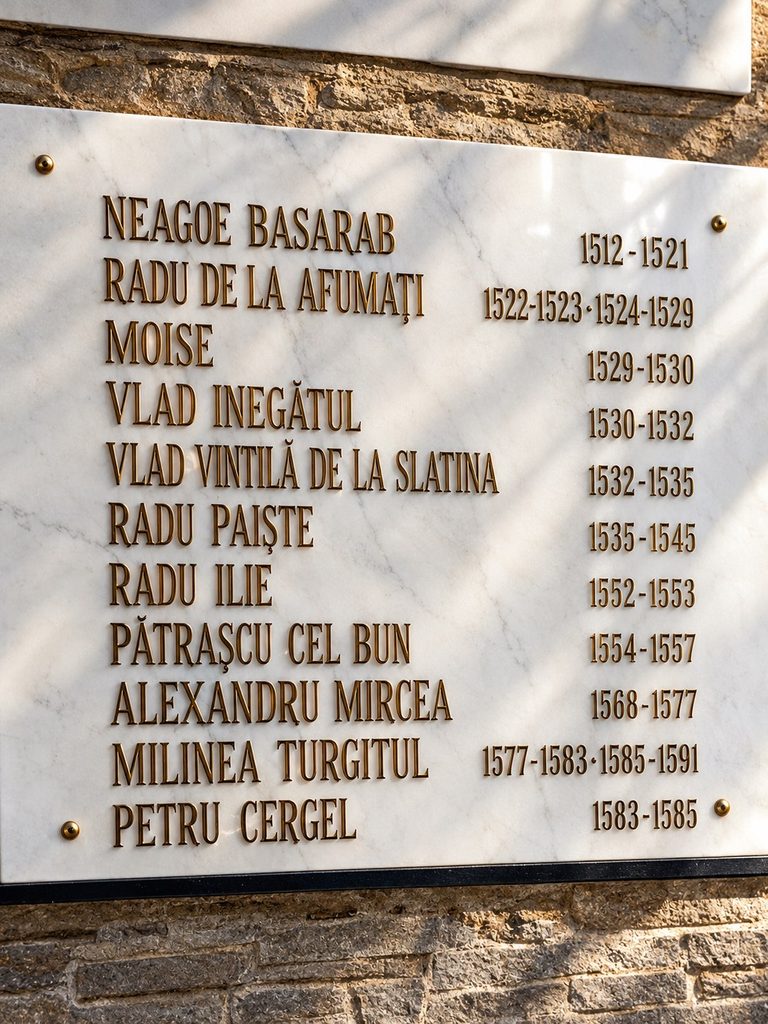
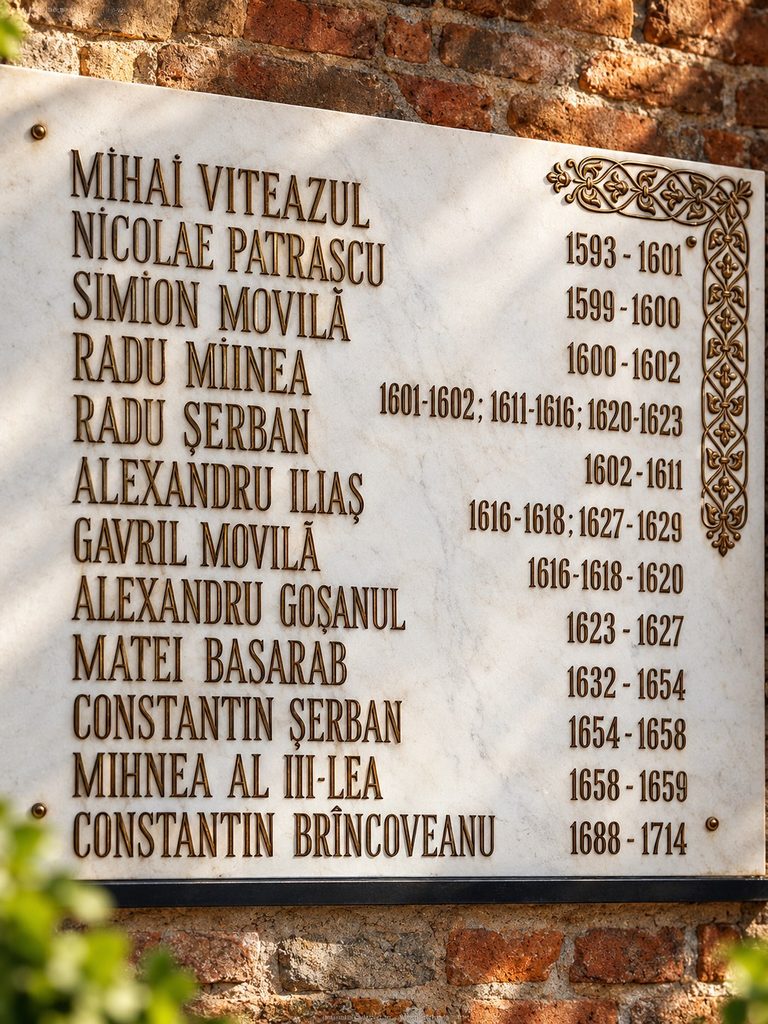
Colour Key: Dynastic Classification
The colours used in this chronology indicate the dynastic affiliation traditionally or historically associated with each ruler:
Neutral background
Early House of Basarab: Rulers of the early Basarab dynasty before the Drăculești and Dănești branches became distinct in the historical record.
Separate section
Later Basarab claims and dynastic tradition: Later rulers who adopted the Basarab name or invoked the dynasty’s legacy. Their inclusion does not necessarily imply proven biological descent from the medieval House of Basarab.
Light blue
Drăculești branch: Rulers traditionally associated with the Drăculești line.
Yellow
Disputed or uncertain affiliation: Rulers whose genealogical relationship to the House of Basarab, or whose precise branch affiliation, remains uncertain or disputed.
Red
Dănești branch: Rulers traditionally associated with the Dănești line.
These colours are intended as a guide to dynastic affiliation, not as a definitive judgement on every genealogical question. Where historical evidence is inconclusive or scholarly interpretations differ, the accompanying notes take precedence over the colour classification.
Early Basarab Rulers
Basarab I Întemeietorul
- Prince of Wallachia: c. 1310-1352
- Traditionally regarded as the founder of the independent Principality of Wallachia, Basarab I consolidated princely authority south of the Carpathians. His victory over the Hungarian Crown at the Battle of Posada in 1330 became a defining moment in the principality’s emergence.
Nicolae Alexandru
- Prince of Wallachia: 1352-1364
- Son of Basarab I, Nicolae Alexandru strengthened the institutions of the principality and obtained recognition of the Metropolitan See of Ungro-Wallachia from the Ecumenical Patriarchate in 1359.
Vladislav I
(Vlaicu Vodă)
- Prince of Wallachia: c. 1364-1377
- Son of Nicolae Alexandru, Vladislav I consolidated princely authority and maintained diplomatic and economic relations with neighbouring powers.
Radu I
- Prince of Wallachia: c. 1377-1383
- Son of Nicolae Alexandru, Radu I continued the development of Wallachia’s political institutions and religious foundations.
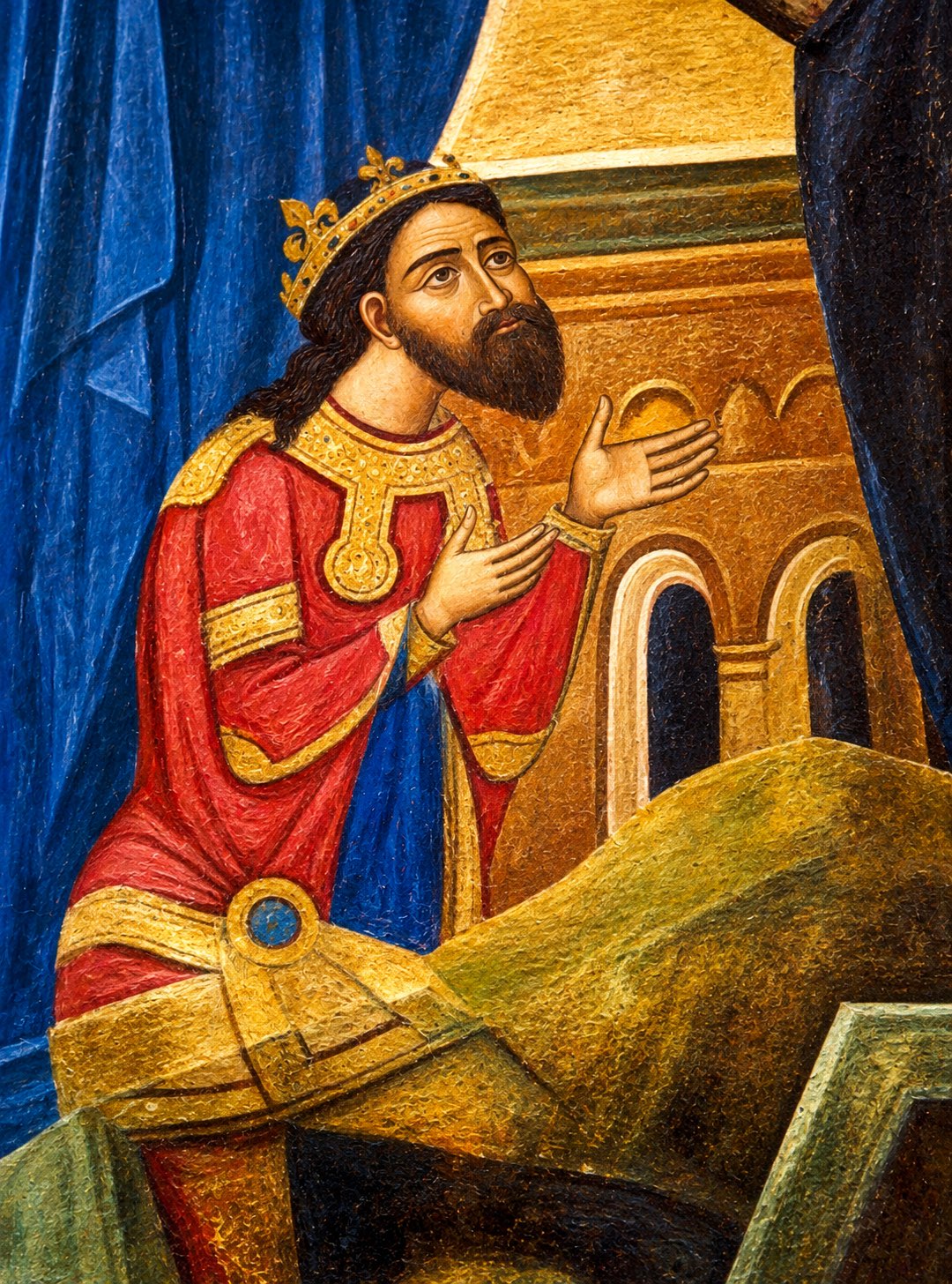
Fresco portrait of Basarab I Întemeietorul from the Princely Church of St. Nicholas in Curtea de Argeș, depicting the founder of the Wallachian state in princely regalia. Digital asset curated by Basarab Heritage.
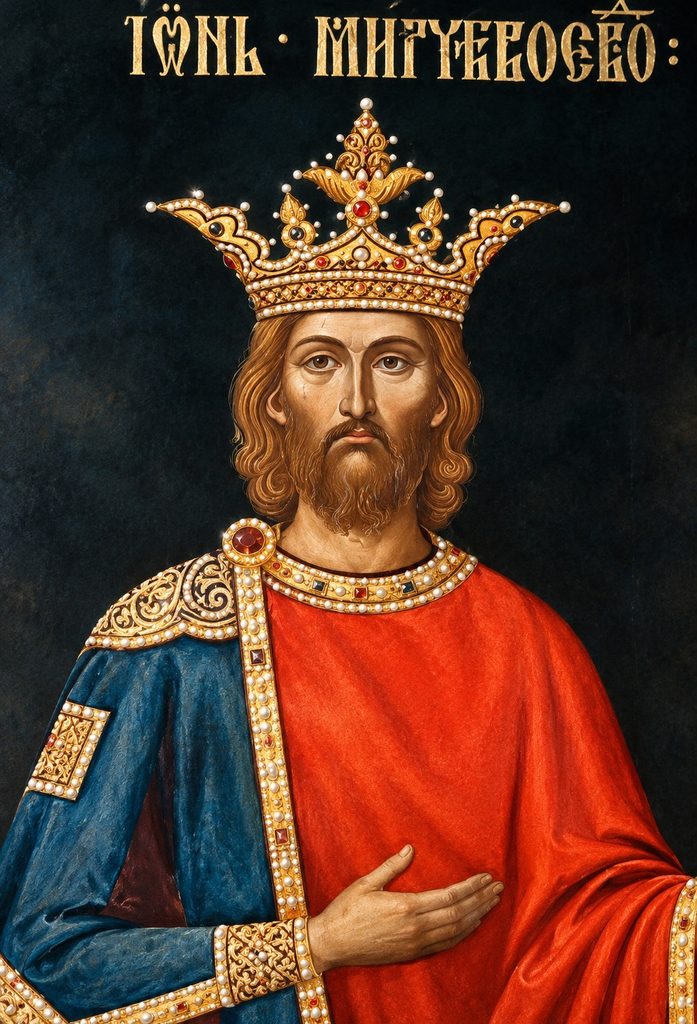
Fresco portrait of Prince Mircea cel Bătrân from the Episcopal Church of Argeș, bearing the Slavonic inscription “Io Mircea Voievod”. Digital restoration and preparation by Basarab Heritage.
Dan I
- Prince of Wallachia: 1383-1386
- Dynastic classification: Dănești
- Son of Radu I, Dan I ruled briefly before his death in 1386. His descendants became associated with the Dănești branch, whose members later competed with descendants of Mircea cel Bătrân.
Mircea cel Bătrân
(Mircea the Elder)
- Prince of Wallachia: 1386-1395; 1397-1418
- Dynastic classification: Drăculești
- Son of Radu I, Mircea the Elder strengthened Wallachia’s military and diplomatic position. His reign was interrupted by a rival claimant in 1395, but he regained the throne in 1397.
Vlad I Uzurpatorul
- Prince of Wallachia: conventionally dated 1395-1397
- Dynastic classification: Traditionally associated with the Dănești
- Traditionally identified as a son of Dan I, Vlad I displaced Mircea cel Bătrân during a period of dynastic conflict. The precise chronology and genealogy of the rival reigns remain subjects of historical debate.
Dan II
(an alternative early chronology)
- Period of rule: Briefly during Mircea cel Bătrân’s reign, according to Pippidi’s reconstruction
- Dynastic classification: Basarab family; precise genealogy depends on the reconstruction followed
- Andrei Pippidi argues that a prince named Dan, traditionally overlooked or conflated with other rulers of the same name, was a brother of Mircea cel Bătrân and briefly interrupted Mircea’s rule. This identification differs from the conventional chronology and should not be confused with the later rulers conventionally known as Dan II.
The Fifteenth-Century Succession
Mihail I
- Prince of Wallachia: 1418-1420
- Dynastic classification: Drăculești
- Son of Mircea cel Bătrân, Mihail I succeeded his father but faced challenges from rival members of the princely family.
Radu II Praznaglava
- Prince of Wallachia: 1420-1422, with subsequent contested periods
- Dynastic classification: Traditionally associated with the Drăculești
- Son of Mircea cel Bătrân in the conventional genealogy, Radu II repeatedly contested the throne with rival claimants. The sequence of early fifteenth-century reigns is complicated by competing historical reconstructions.
Dan III
(in Pippidi’s reconstruction)
- Period of rule: Early fifteenth century; chronology disputed
- Dynastic classification: Basarab family; identified by Pippidi as a son of Mircea cel Bătrân
- Pippidi distinguishes Dan III, whom he identifies as a son of Mircea cel Bătrân, from another prince named Dan traditionally incorporated into the reign of Dan II. The numbering and chronology differ from conventional accounts, so this identification should be read in the context of Pippidi’s proposed reconstruction.
Dan IV
(in Pippidi’s reconstruction)
- Period of rule: Early fifteenth century; chronology disputed
- Dynastic classification: Dănești-related line; identified by Pippidi as a son of Mircea’s brother Dan
- Pippidi identifies Dan IV as the son of Mircea cel Bătrân’s brother Dan. He argues that this prince was distinct from Dan III and that the two cousins competed for the throne while pursuing different political alignments. This interpretation challenges the traditional presentation of a single Dan II whose policies repeatedly changed.
Dan II
(traditional designation)
- Prince of Wallachia: traditionally dated 1422-1426 and 1427-1431
- Dynastic classification: Traditionally Dănești; identification disputed
- Traditional accounts attribute several reigns in the 1420s and early 1430s to Dan II, usually described as a son of Dan I. Pippidi argues that this conventional account conflates distinct rulers named Dan. For that reason, the traditional dates and genealogy should not be treated as a settled identification of a single individual.
Alexandru I Aldea
- Prince of Wallachia: 1431-1436
- Dynastic classification: Traditionally associated with the Drăculești
- A son of Mircea cel Bătrân, Alexandru I Aldea ruled during a period of increasing Ottoman pressure and continuing competition among members of the Basarab dynasty.
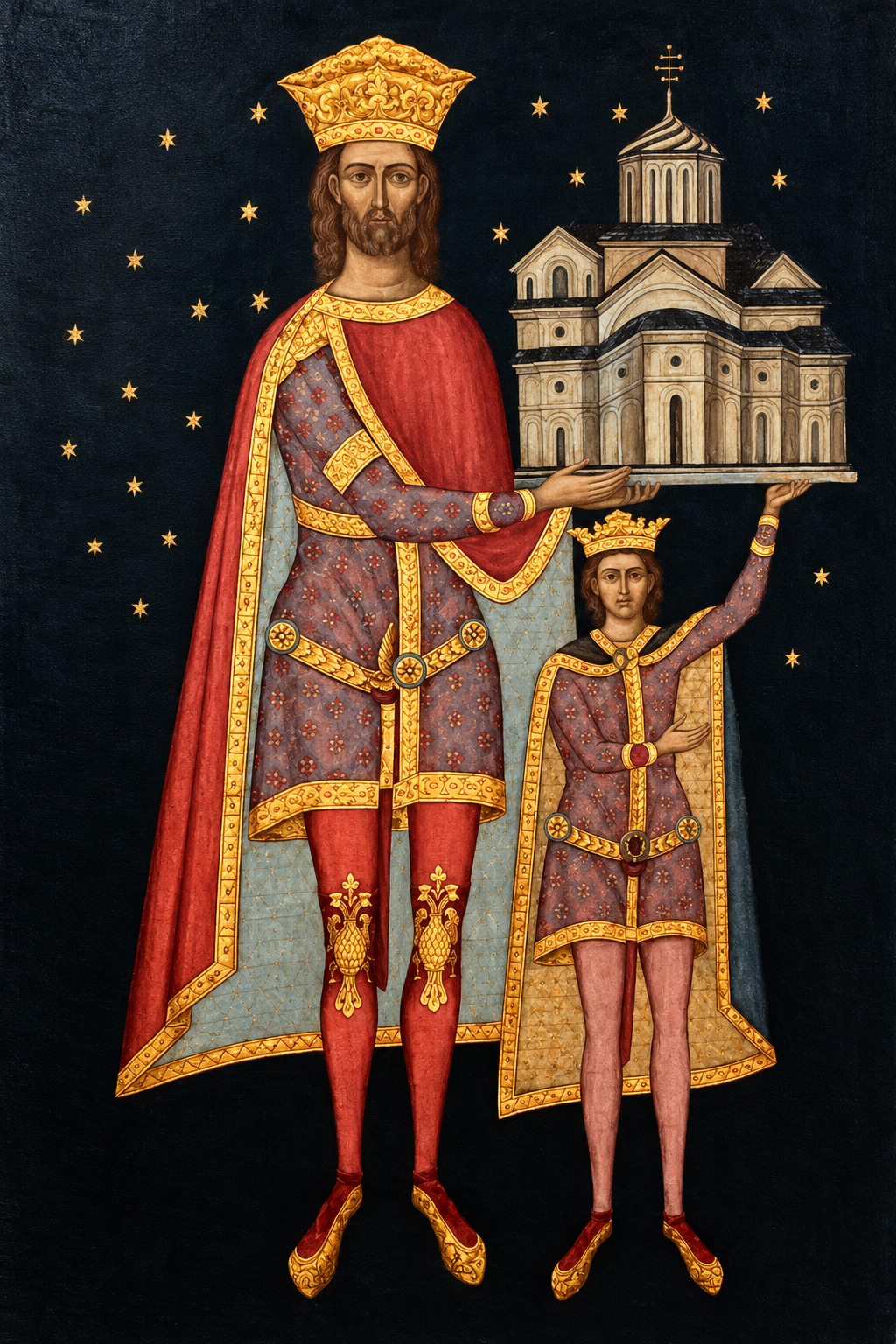
Votive fresco from Cozia Monastery depicting Prince Mihail I (co-ruler and successor of Mircea cel Bătrân) alongside his father. Digital asset curated by Basarab Heritage.
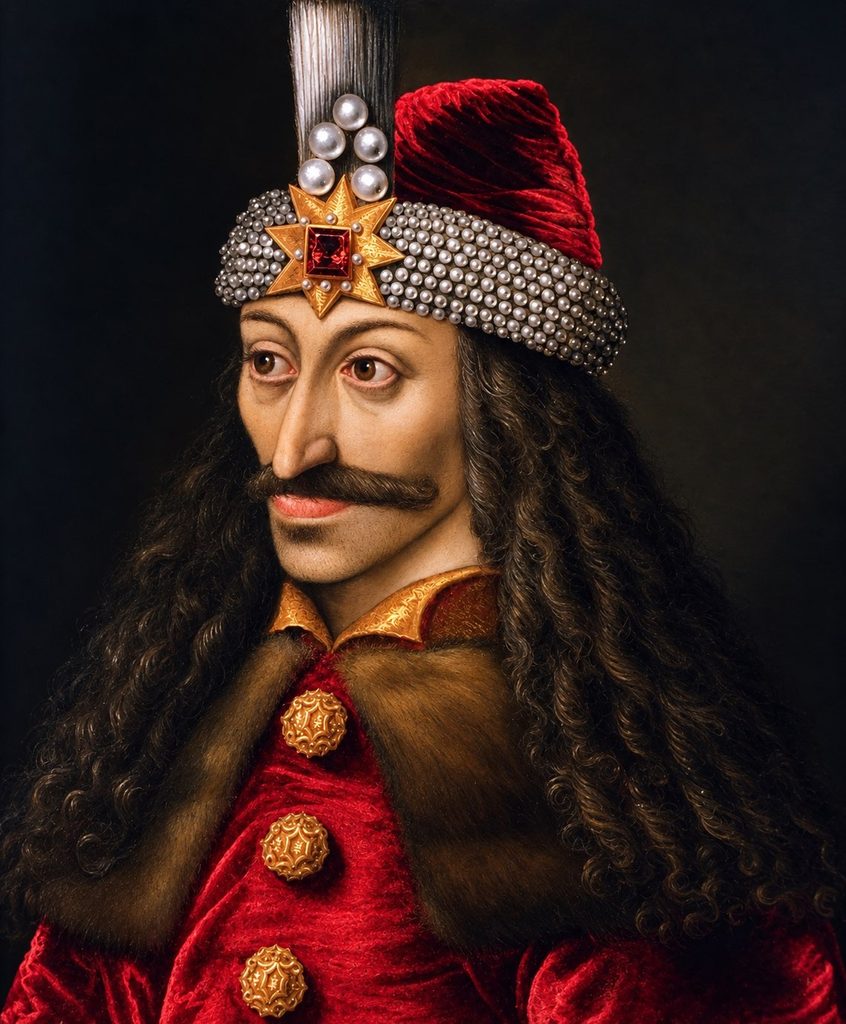
Posthumous portrait of Vlad III Țepeș (Vlad the Impaler), second half of the 16th century (original housed in the Kunsthistorisches Museum, Vienna). Digital restoration and preparation by Basarab Heritage.
Vlad II Dracul
- Prince of Wallachia: 1436-1442; 1443-1447
- Dynastic classification: Drăculești
- Son of Mircea cel Bătrân, Vlad II was associated with the Order of the Dragon, from which he derived the epithet Dracul. His reign was marked by shifting relations with Hungary and the Ottoman Empire.
Mircea II cel Tânăr
- Prince of Wallachia: 1442; 1446-1447
- Dynastic classification: Drăculești
- Son of Vlad II Dracul, Mircea II exercised princely authority during periods of political instability. He was killed in the struggle that culminated in the fall of his father.
Basarab II
- Prince of Wallachia: 1442-1443
- Dynastic classification: Traditionally Dănești
- Traditionally identified as a son of Dan II, Basarab II came to power with support from John Hunyadi during his conflict with Vlad II Dracul. His reign was brief and contested; his precise place in the genealogy depends partly on how the earlier Dan-named princes are identified.
Vladislav II
- Prince of Wallachia: 1447-1448; 1448-1456
- Dynastic classification: Traditionally Dănești
- Vladislav II contested the throne with Vlad III Țepeș and other rivals. His repeated struggle for power illustrates the continuing rivalry between competing branches of the Basarab dynasty.
Vlad III Țepeș
- Prince of Wallachia: 1448; 1456-1462; 1476-1477
- Dynastic classification: Drăculești
- Son of Vlad II Dracul, Vlad III sought to strengthen princely authority and resist Ottoman domination. His reigns were repeatedly interrupted by rival claimants and foreign intervention.
Radu cel Frumos
(Radu III the Handsome)
- Prince of Wallachia: 1462-1473, with subsequent contested reigns
- Dynastic classification: Drăculești
- Younger brother of Vlad III, Radu cel Frumos relied on Ottoman support during much of his struggle for the throne. His rivalry with Vlad III shaped Wallachian politics in the 1460s and early 1470s.
Basarab III Laiotă cel Bătrân
- Prince of Wallachia: 1473-1477, during several interrupted periods
- Dynastic classification: Dănești
- A member of the Dănești branch, Basarab III repeatedly contested the throne with Radu cel Frumos, Vlad III and other claimants.
Basarab IV Țepeluș cel Tânăr
- Prince of Wallachia: 1477-1482, with interruptions
- Dynastic classification: Dănești
- A Dănești ruler who struggled to maintain his position amid competing princely claims and external intervention.
Vlad Călugărul
- Prince of Wallachia: 1481; 1482-1495
- Dynastic classification: Drăculești
- A half-brother of Vlad III, Vlad Călugărul secured the throne after repeated contests with rival claimants. His reign brought greater continuity following the conflicts of the preceding decades.
Radu cel Mare
(Radu IV the Great)
- Prince of Wallachia: 1495-1508
- Dynastic classification: Drăculești
- Son of Vlad Călugărul, Radu cel Mare is remembered for his ecclesiastical patronage and support for religious and cultural institutions in Wallachia.
Mihnea cel Rău
- Prince of Wallachia: 1508-1509
- Dynastic classification: Drăculești
- Son of Vlad III Țepeș, Mihnea cel Rău briefly ruled Wallachia before opposition from the boyars forced him from the throne.
Mircea III Dracul
(Mircea Miloș)
- Prince of Wallachia: 1509-1510
- Dynastic classification: Traditionally associated with the Drăculești
- A member of the Drăculești line, Mircea III briefly held the throne during a period of dynastic instability before being displaced.
Vlad cel Tânăr
(Vlad V)
- Prince of Wallachia: 1510-1512
- Dynastic classification: Drăculești
- A member of the Drăculești line, Vlad cel Tânăr ruled during a period of intense boyar factionalism. He was defeated and killed after Neagoe Basarab asserted his claim to the throne.
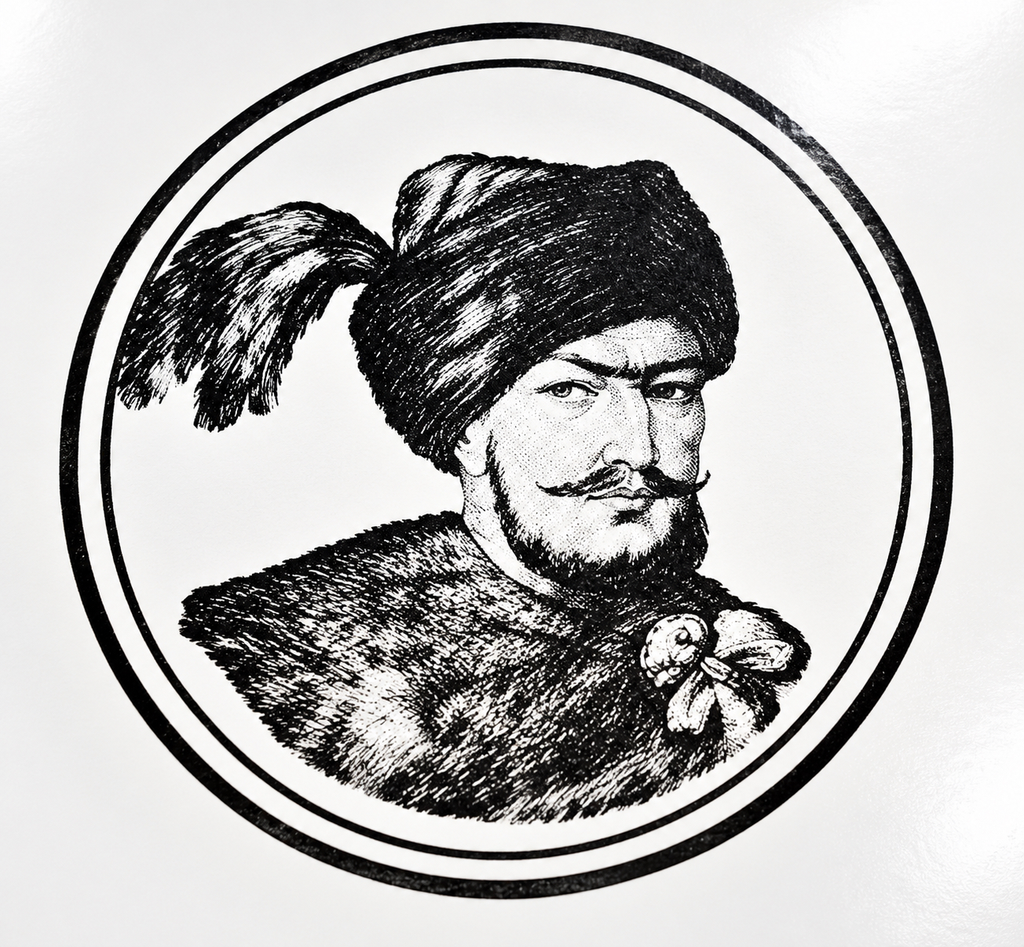
Portrait of Mihnea cel Rău, Voivode of Wallachia (House of Drăculești), based on a 19th-century rendering. Digital restoration and preparation by Basarab Heritage.
Later Rulers and Contested
Dynastic Affiliations
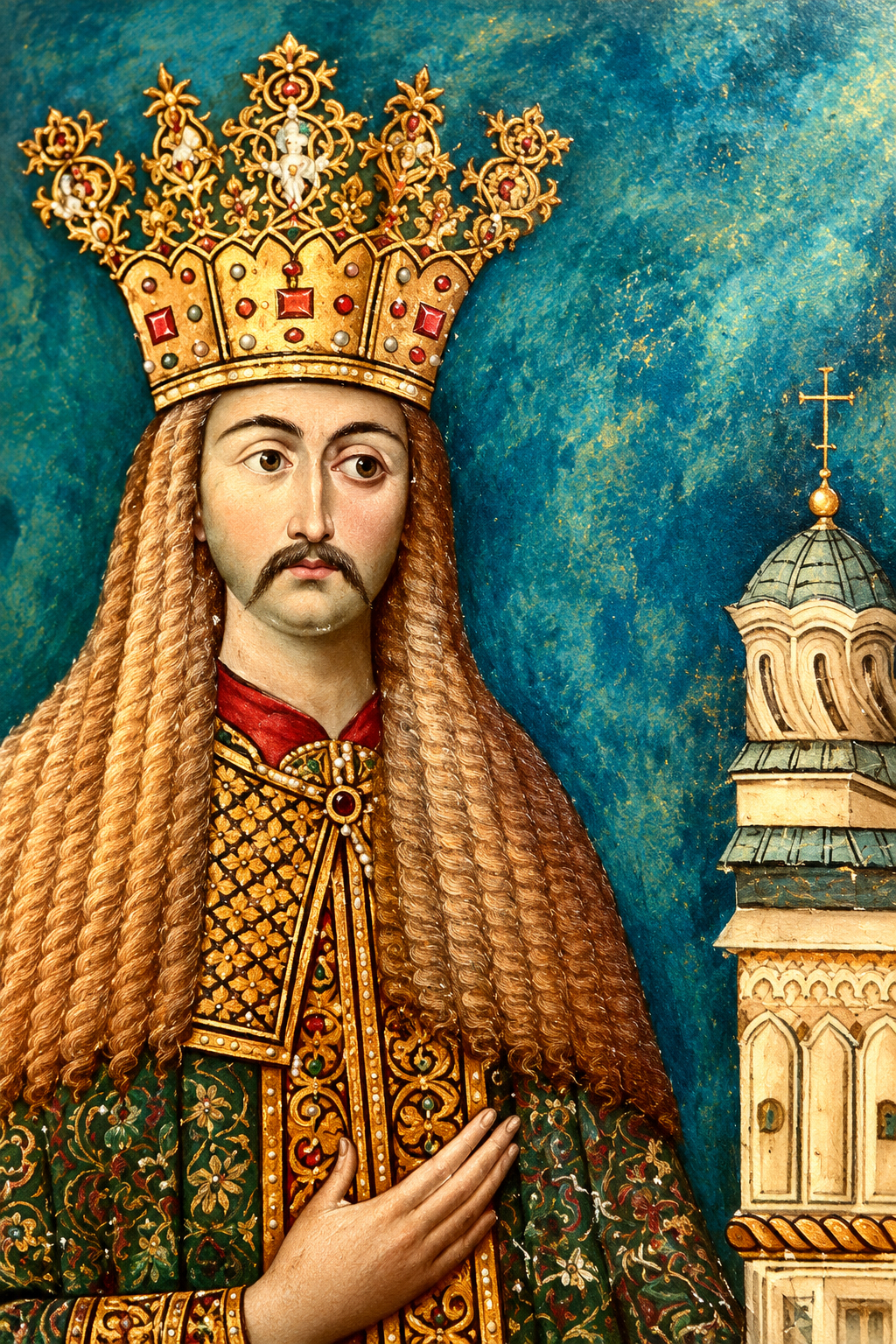
Votive fresco depicting Prince Neagoe Basarab (associated with the Craiovești family and his adoption of the Basarab legacy) as ktetor holding a model of his foundation. Digital restoration and
preparation by Basarab Heritage.
Neagoe Basarab
- Prince of Wallachia: 1512-1521
- Dynastic classification: Craiovești; later Basarab dynastic claim
- Associated with the powerful Craiovești family, Neagoe adopted the Basarab name and promoted a genealogy intended to strengthen his legitimacy. His direct descent from the medieval House of Basarab is not established. His reign is notable for religious patronage and the Teachings of Neagoe Basarab to His Son Theodosius.
Theodosius
- Prince of Wallachia: 1521-1522
- Dynastic classification: Son and successor of Neagoe Basarab
- Son of Neagoe Basarab, Theodosius succeeded his father as a child during a period of political instability. His brief rule was challenged by rival claimants.
Radu de la Afumați
- Prince of Wallachia: 1522-1529, during several interrupted periods
- Dynastic classification: Drăculești
- A descendant of the Drăculești line, Radu de la Afumați repeatedly regained the throne amid rival claims and Ottoman intervention.
Vladislav III
- Prince of Wallachia: 1523, 1524 and 1525
- Dynastic classification: Traditionally Dănești; precise genealogy disputed
- Vladislav III made several short-lived attempts to secure the throne. His repeated accessions reflect the persistence of competing dynastic claims in the sixteenth century.
Radu Bădica
- Prince of Wallachia: 1523-1524
- Dynastic classification: Traditionally associated with the family of Radu cel Mare
- Radu Bădica briefly held the throne before being displaced during the continuing struggle for princely authority. The exact nature of his genealogical relationship to the Drăculești line should be stated cautiously.
Basarab VI
- Prince of Wallachia: 1529
- Dynastic classification: Dynastic affiliation uncertain
- Basarab VI briefly held the throne during the succession crisis of 1529. His exact genealogical relationship to the medieval Basarab dynasty is uncertain and should not be presented as established.
Moise
- Prince of Wallachia: 1529-1530
- Dynastic classification: Traditionally associated with the Dănești; genealogy disputed
- Moise briefly ruled Wallachia before being displaced. His precise genealogical position within the Dănești branch remains uncertain.
Vlad Înecatul
- Prince of Wallachia: 1530-1532
- Dynastic classification: Basarab affiliation traditionally accepted; precise genealogy requires qualification
- Vlad Înecatul succeeded Moise and ruled during a period of continued political competition. His reign ended with his death in 1532.
Vlad Vintilă de la Slatina
- Prince of Wallachia: 1532-1535
- Dynastic classification: Traditionally associated with the Drăculești line
- Vlad Vintilă ruled during a period of Ottoman influence and princely competition. His reign ended with his death in 1535.
Radu Paisie
- Prince of Wallachia: 1535-1545, with contested episodes
- Dynastic classification: Traditionally associated with the Drăculești line
- Traditionally identified as a son of Radu cel Mare, Radu Paisie ruled during a period of strong Ottoman influence and continuing struggles over princely authority.
Mircea Ciobanul
- Prince of Wallachia: 1545-1552; 1553-1554; 1558-1559
- Dynastic classification: Traditionally associated with the Drăculești line
- Mircea Ciobanul repeatedly regained the throne during a turbulent period. His rule was marked by severe conflict with the boyars and efforts to consolidate princely authority.
Radu Ilie Haidăul
- Prince of Wallachia: 1552-1553
- Dynastic classification: Genealogical affiliation requires qualification
- Radu Ilie briefly displaced Mircea Ciobanul before losing the throne. His reign reflects the continuing instability of Wallachian succession.
Pătrașcu cel Bun
- Prince of Wallachia: 1554-1557
- Dynastic classification: Traditionally associated with the Drăculești line
- Pătrașcu cel Bun ruled during a period of political competition and Ottoman influence. His son Petru cel Tânăr later succeeded him.
Petru cel Tânăr
- Prince of Wallachia: 1559-1568
- Dynastic classification: Drăculești
- Son of Pătrașcu cel Bun, Petru cel Tânăr came to the throne as a child and ruled under strong Ottoman influence.
Alexandru II Mircea
- Prince of Wallachia: 1568-1577
- Dynastic classification: Drăculești
- Traditionally identified as a descendant of the Drăculești line, Alexandru II Mircea ruled during a period of increasing Ottoman influence and competition among princely candidates.
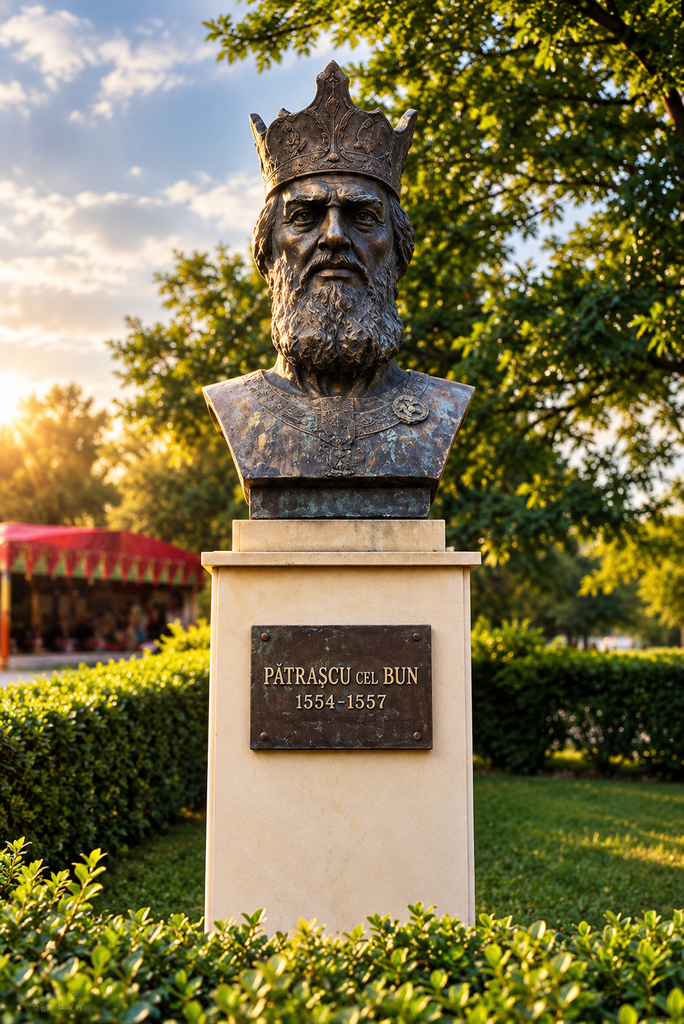
Bronze bust of Voivode Pătrașcu cel Bun (The Good, r. 1554–1558) located in the Chindia Park of Târgoviște, commemorating the Wallachian sovereign within his historic capital. Digital asset curated by Basarab Heritage.

Equestrian statue of Prince Mihai Viteazul (Michael the Brave, r. 1593–1600) in central Târgoviște, commemorating his personal union of the principalities. Digital asset curated by Basarab Heritage.
Mihnea Turcitul
- Prince of Wallachia: 1577-1583; 1585-1591
- Dynastic classification: Drăculești
- Son of Alexandru II Mircea, Mihnea Turcitul repeatedly ruled Wallachia during a period of strong Ottoman influence.
Petru Cercel
- Prince of Wallachia: 1583-1585
- Dynastic classification: Traditionally associated with the Drăculești line
- Traditionally identified as a son of Pătrașcu cel Bun, Petru Cercel was known for his European connections and cultural ambitions. His reign ended after he lost Ottoman support.
Mihai Viteazul
(Michael the Brave)
- Prince of Wallachia: 1593-1600
- Dynastic classification: Proposed Basarab descent disputed
- Mihai Viteazul strengthened princely authority and briefly brought Wallachia, Transylvania and Moldavia under his personal rule. His proposed descent from the medieval Basarab line should not be presented as established genealogy.
Nicolae Pătrașcu
- Political role: Associated with Mihai Viteazul’s rule, 1599-1600
- Dynastic classification: Son of Mihai Viteazul; any Basarab connection depends on the disputed genealogy of his father
- Son of Mihai Viteazul, Nicolae Pătrașcu was associated with his father’s attempt to establish a dynastic succession. His political position depended on the fortunes of Mihai’s regime.
Radu Mihnea
- Prince of Wallachia: 1601-1602; 1611; 1611-1616; 1620-1623
- Dynastic classification: Drăculești
- Son of Mihnea Turcitul, Radu Mihnea belonged to the Drăculești line. He ruled Wallachia on several occasions and also ruled Moldavia, maintaining the family’s place in the political history of the two principalities.
Radu Șerban
- Prince of Wallachia: 1602-1610; 1611
- Dynastic classification: Related to the later Basarab tradition; exact genealogical implications require qualification
- Radu Șerban ruled during a period of political instability and Ottoman intervention. He is often described as a nephew of Neagoe Basarab, but this relationship should be understood in the context of the disputed genealogy and dynastic identity associated with Neagoe.
Alexandru Coconul
- Prince of Wallachia: 1623-1627
- Dynastic classification: Drăculești
- Son of Radu Mihnea, Alexandru Coconul continued the Drăculești line’s involvement in Wallachian politics. He ruled as a young prince during a period in which princely succession was increasingly shaped by Ottoman appointment and intervention.
Later Princes and the
Basarab Dynastic Tradition
The following section includes rulers who adopted the Basarab name or invoked the dynasty’s prestige. Their inclusion does not, by itself, establish biological descent from the medieval House of Basarab. The distinction between documented genealogy, contemporary political claims and later historiographical tradition is essential.
Matei Basarab
- Prince of Wallachia: 1632-1654
- Dynastic classification: Later adopter of the Basarab name and tradition
- Matei Basarab invoked the prestige of the medieval dynasty as part of his princely legitimacy. His long reign is notable for extensive church building, cultural patronage and legal and administrative activity. His use of the Basarab name should be distinguished from proven direct descent from the medieval ruling house.
Constantin Șerban Basarab
- Prince of Wallachia: 1654-1658, with later attempts to regain the throne
- Dynastic classification: Later Basarab designation; genealogical relationship requires qualification
- Constantin Șerban used the Basarab designation during a period of continuing political competition. Accounts associate him with Radu Șerban’s family, but the meaning and evidential basis of the Basarab designation should be distinguished from demonstrable descent from the medieval dynasty.
Șerban Cantacuzino
- Prince of Wallachia: 1678-1688
- Dynastic classification: Include only as a documented dynastic claim or connection
- A member of the Cantacuzino family, Șerban Cantacuzino ruled Wallachia during a period of complex political relations with the Ottoman Empire and the Habsburg Monarchy. Any association with the Basarab tradition should be accompanied by a specific historical or genealogical explanation rather than assumed from his political position alone.
Constantin Brâncoveanu
- Prince of Wallachia: 1688-1714
- Dynastic classification: Later dynastic connection requires qualification
- Constantin Brâncoveanu’s reign is associated with major cultural, architectural and religious patronage. Any claimed connection to the medieval House of Basarab should be distinguished from established genealogical descent and included only where the particular claim can be documented.
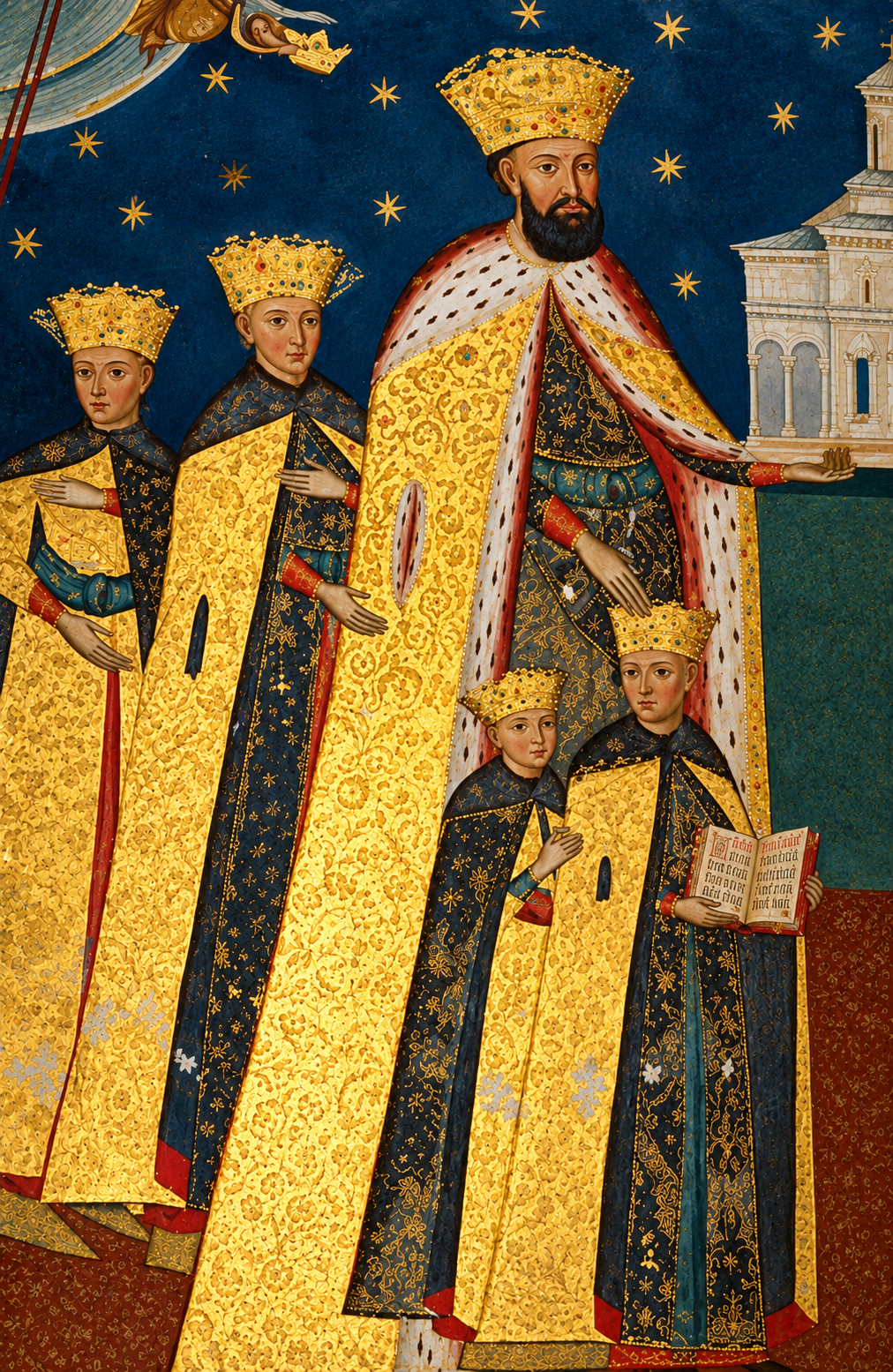
Votive fresco depicting Prince Constantin Brâncoveanu and his four sons (Constantin, Ștefan, Radu, and Matei) as ktetors. Digital restoration and preparation by Basarab Heritage.
Editorial Note
The House of Basarab remained an important source of political legitimacy long after the medieval dynasty’s principal branches had ceased to dominate the succession. Some rulers belonged to lines traditionally associated with the dynasty; others adopted its name or invoked its prestige. These cases should not be treated as equivalent.
The chronology therefore distinguishes between dynastic descent, traditional genealogical attribution, and later claims of Basarab identity. In the early fifteenth century, the numbering and identification of the princes named Dan follow a contested historiographical debate, including Andrei Pippidi’s proposed reconstruction. These distinctions are integral to the historical interpretation of the Basarab legacy.
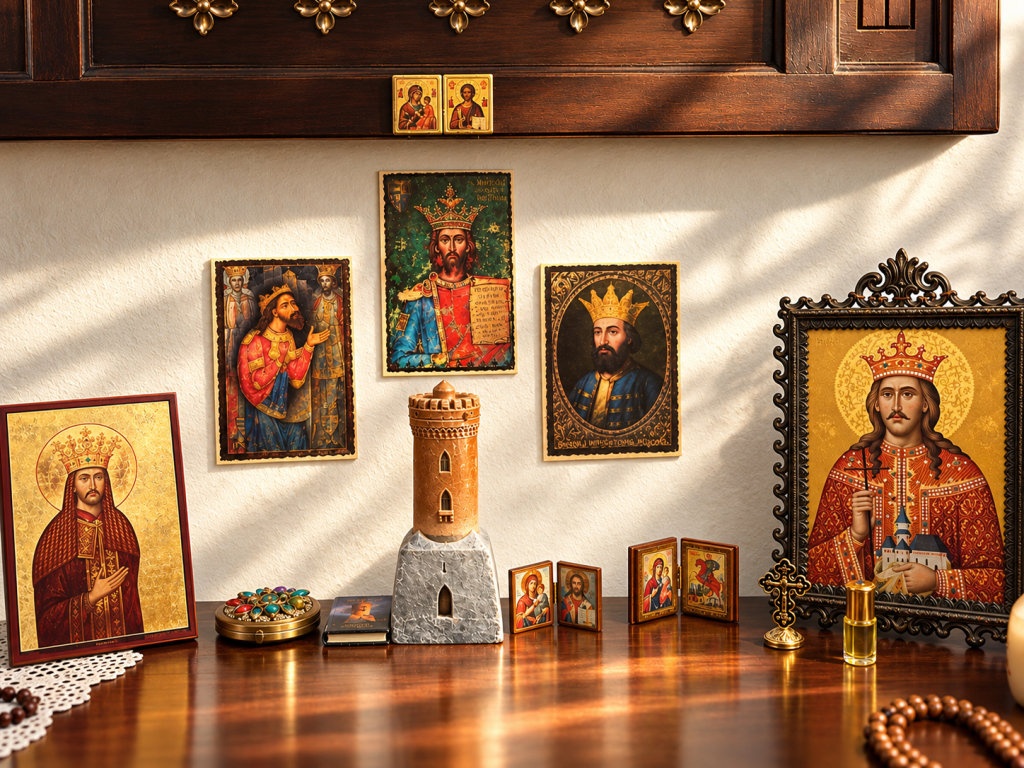
An assembled domestic space dedicated to the preservation and commemoration of Wallachian history. Curated and arranged at the private residence of Vladislav Carol Nicolae, this collection features devotional icons, historical portraits of the House of Basarab – including Basarab I, Mircea the Elder, and Neagoe Basarab – centered around a sculptural model of the Chindia Tower.
Explore Chronicles &
Research
For further sources, heraldic analyses, and detailed genealogical profiles of individual Voivodes, please visit our dedicated repository or reach out to our chancery for inquiries.