
Drăculești
The House of Drăculești: Dynastic Rivalry, Princely Authority, and the Struggle for Wallachia’s Throne
I. Origins and Dynastic Identity
The House of Drăculești occupies a distinguished place in the history of medieval Wallachia. Emerging as one of the principal branches of the Basarab dynasty, the founding princely house of Wallachia, the Drăculești helped shape the political destiny of the principality during a period marked by dynastic rivalry, shifting alliances, and mounting pressure from powerful neighbours.
The lineage takes its name from Vlad II Dracul, son of the celebrated Wallachian ruler Mircea cel Bătrân, or Mircea the Elder. In 1431, Vlad was admitted to the Order of the Dragon, a chivalric order founded by Sigismund of Luxembourg to defend Christendom and uphold the interests of its members against external threats. The dragon emblem associated with the order became inseparable from Vlad’s identity and gave rise to the name Dracul, meaning “the Dragon.” His descendants became known as the Drăculești, a designation that distinguished their branch within the broader Basarab dynasty.
The name would acquire lasting historical significance through Vlad III, known as Vlad Țepeș, whose reign and reputation extended far beyond the borders of Wallachia. Yet the history of the Drăculești cannot be reduced to the life of a single ruler. It belongs to a wider story of princely authority, dynastic continuity, and the determined preservation of Wallachian political identity in a contested region of Europe.
The Drăculești were not merely claimants to a throne. Across successive generations, members of the family participated in the defence, government, and cultural life of a principality whose survival depended upon the ability of its rulers to combine inherited legitimacy with political judgement and effective leadership.
II. Dynastic Legitimacy and the Contest for the Throne
Medieval Wallachian succession was shaped by a combination of dynastic descent, princely recognition, the support of powerful boyar families, and the balance of regional power. In contrast to a system of automatic primogeniture, membership in the ruling lineage could provide a credible claim without guaranteeing accession. A prince’s position depended upon his ancestry, his political following, and his ability to secure recognition at home and support abroad.
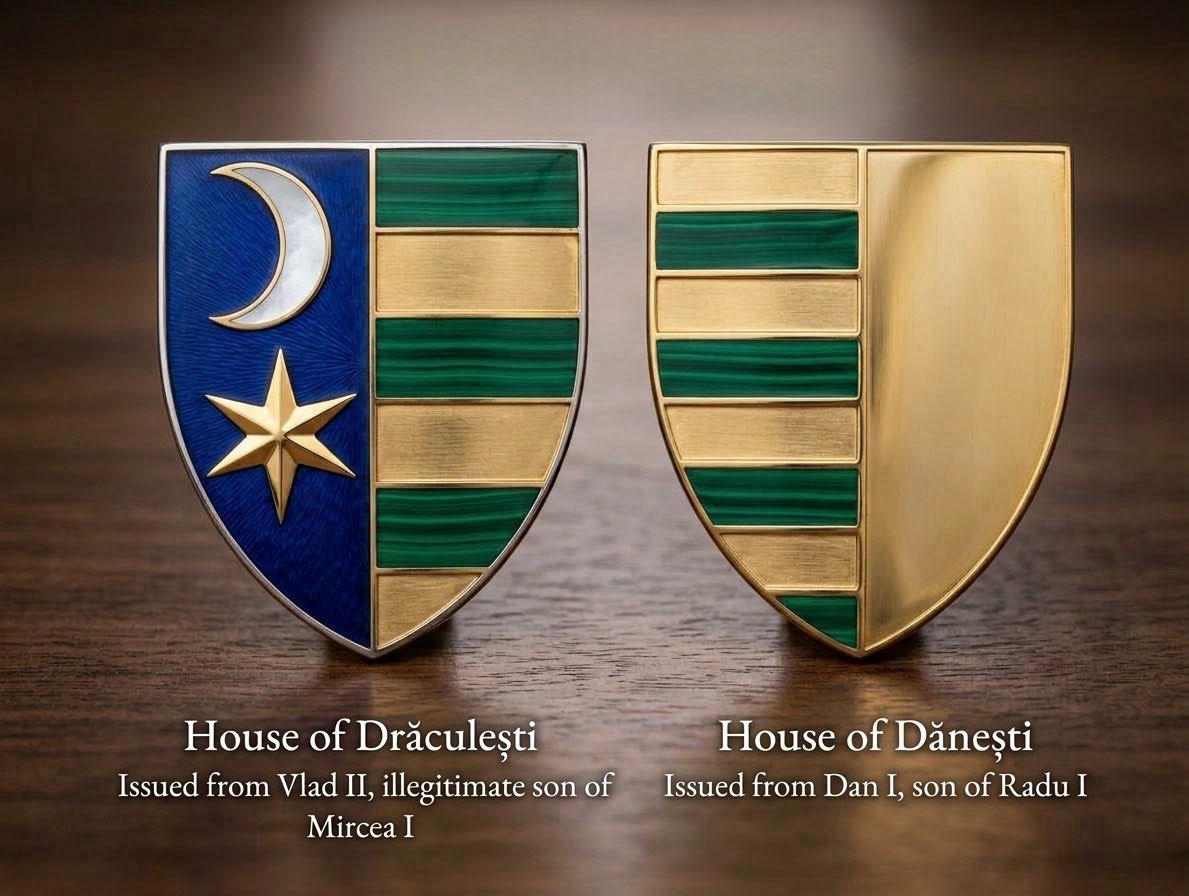
Within the Basarab dynasty, the Drăculești emerged as one of the principal competing lines alongside the Dănești, traditionally associated with Dan I, the brother of Mircea cel Bătrân. Their rivalry became one of the defining features of Wallachian politics during the fifteenth century. Competing candidates could draw upon legitimate dynastic connections, while influential boyars and neighbouring powers sought to advance the claimant most likely to serve their interests.
For the Drăculești, dynastic legitimacy was therefore both an inheritance and a responsibility. Their claim to princely authority rested upon descent from the ruling house, but maintaining that authority required constant political and diplomatic effort. The throne could be won through military intervention and lost through the withdrawal of domestic or foreign support. A rival claimant from another branch of the same dynasty could become the focus of opposition almost as readily as an external adversary.
The wider geopolitical setting intensified these struggles. The Kingdom of Hungary sought to maintain influence south of the Carpathians, while the expanding Ottoman Empire increasingly shaped the region’s political calculations. Wallachian princes had to navigate between these powers without surrendering their own dynastic ambitions or the internal foundations of their rule.
The resulting history was not a simple contest between permanently aligned factions. Alliances shifted according to circumstances, and individual rulers pursued policies shaped by immediate threats and opportunities. Nevertheless, the rivalry between the Drăculești and Dănești illustrates how closely Wallachian sovereignty was connected to the fortunes of its ruling family. Dynastic descent provided the foundation of princely authority; political skill determined whether that authority could be secured and sustained.
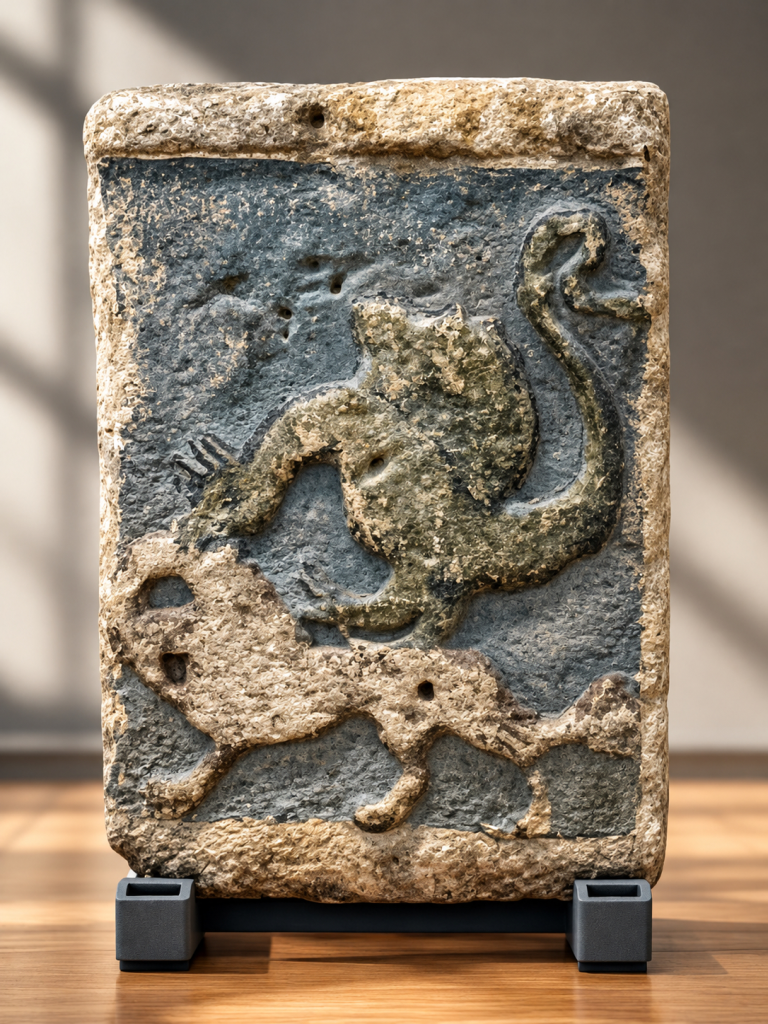
Stone relief featuring the dragon motif, emblematic of the House of Drăculești and its historical association with the chivalric Order of the Dragon.
III. Princely Statecraft and the Defence of Wallachian Autonomy
The history of the Drăculești unfolded at the intersection of military necessity, diplomacy, and the preservation of local institutions. Wallachia occupied a strategically important position between the Carpathian Mountains and the lower Danube, where the interests of Central European and Ottoman powers repeatedly converged. Its rulers faced the challenge of defending their territory while maintaining the political structures that distinguished the principality from the neighbouring states seeking influence over it.
Princely government rested upon the ruler’s authority, the cooperation of the boyar elite, established administrative practices, and the ability to command military forces when circumstances demanded. The princely court served as a centre of political decision-making, diplomacy, justice, and patronage. Târgoviște became one of the most important seats of Wallachian princely power, while Bucharest grew in significance as a further centre of government and residence.
The ability to move between diplomacy and military action was essential. Wallachian rulers might negotiate with the Hungarian crown, seek accommodation with the Ottoman sultan, or resist demands that threatened their position.
Such choices were rarely simple expressions of allegiance.
They reflected the difficult calculations of rulers attempting to preserve their throne, protect their territory, and retain room for independent action amid the ambitions of stronger powers.
Wallachia’s relationship with the Ottoman Empire developed within a framework of suzerainty and tribute, but the principality retained its own rulers, boyar institutions, Orthodox Church, and internal legal and administrative traditions. The degree of practical autonomy varied over time and according to the strength of individual princes. Even so, the continued existence of a native princely government remained a central feature of Wallachian political life.
The Drăculești belonged to this broader tradition of princely statecraft. Their history demonstrates the demands placed upon a ruling house whose authority had to be asserted not only through ancestry, but also through military preparedness, diplomatic judgement, and the preservation of institutions capable of sustaining the principality through periods of instability.
Their political legacy is therefore inseparable from the history of Wallachia itself: a principality that sought to maintain its identity and internal order while confronting pressures from powers whose resources often exceeded its own.
IV. Orthodox Patronage and the Cultural Legacy of Princely Rule
Princely authority in medieval Wallachia was expressed not only through warfare and diplomacy, but also through religious patronage. Churches, monasteries, manuscript production, liturgical objects, and painted decoration all formed part of the cultural world sustained by the ruling house and the wider aristocracy. Patronage carried spiritual significance, strengthened relationships with ecclesiastical institutions, and established enduring memorials to princely piety and legitimacy.
The Drăculești participated in a political culture in which the Orthodox Church occupied a central place in the life of the principality. Religious foundations and donations connected rulers with monastic communities at home and beyond Wallachia’s borders, including the Orthodox centres of Mount Athos. Such relationships placed Wallachian princely patronage within a wider network of Orthodox religious and cultural exchange.
The monasteries of Dealu, Snagov, Comana, and Tismana belong to the broader landscape of Wallachian religious history, though their foundations and periods of princely support differ. Their significance lies in the way monastic institutions preserved worship, learning, artistic practice, and collective memory across successive generations. The relationship between rulers and monasteries was not confined to the Drăculești; it formed a continuing tradition of patronage among Wallachian princes and noble families.
Through commissions and donations, princely and aristocratic benefactors helped sustain the production of manuscripts, ecclesiastical metalwork, icons, and frescoes. These works connected Wallachia to the wider post-Byzantine Orthodox world, while also reflecting the particular political and cultural circumstances of the principality.
This religious and artistic inheritance would continue to develop long after the earliest Drăculești rulers. Later princely patrons, working in changing political circumstances, enriched the traditions that had taken root over centuries. The resulting cultural legacy should therefore be understood not as the achievement of one lineage alone, but as a cumulative expression of Wallachian Orthodox life, sustained by successive rulers, clerics, craftsmen, and benefactors.
Within that longer history, the Drăculești form an important part of the story of princely patronage: a lineage whose political identity belonged to a society in which Orthodox faith, dynastic legitimacy, and cultural continuity were closely intertwined.
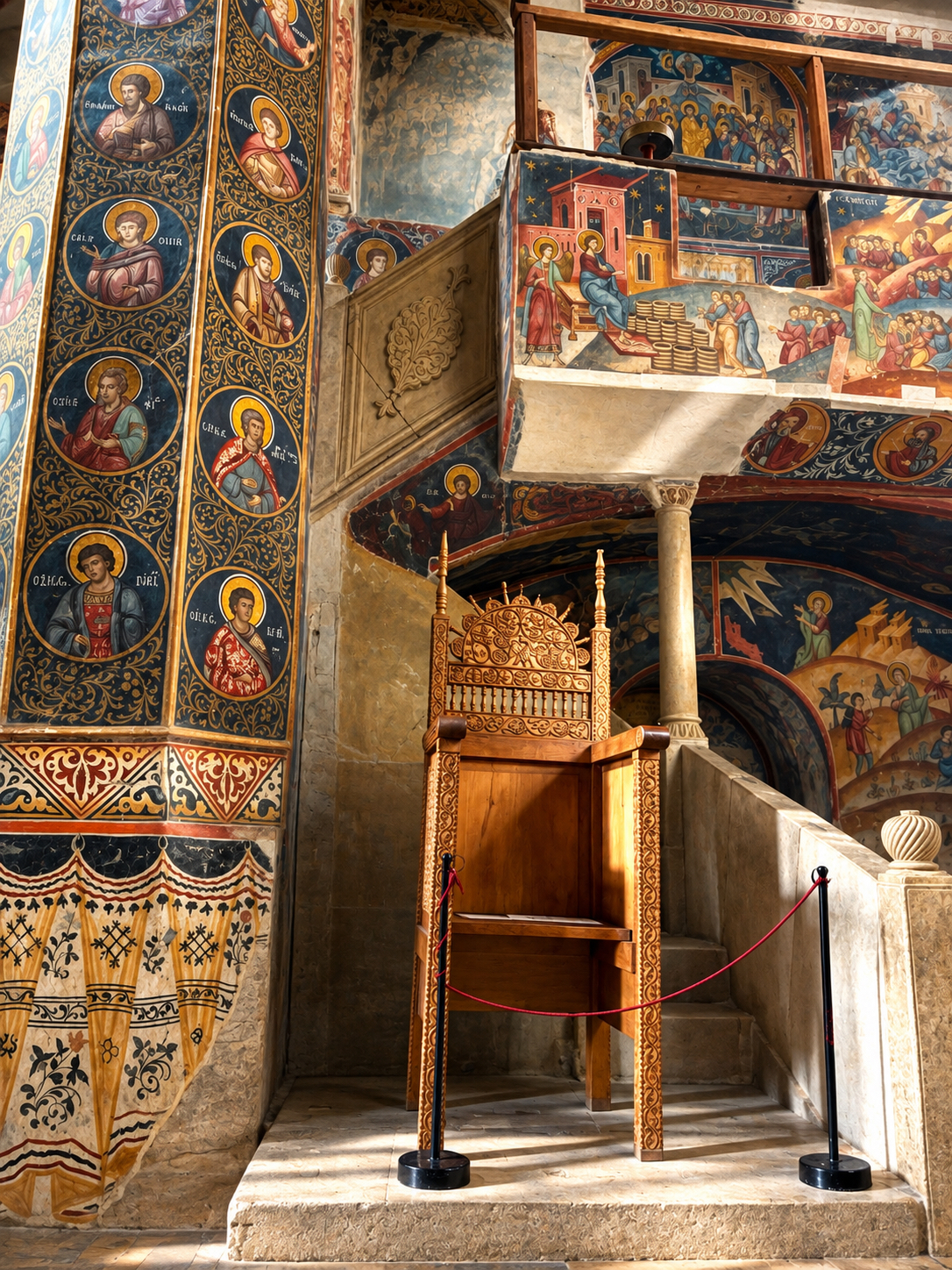
Interior of the Great Princely Church (Biserica Mare Domnească) at the Princely Court of Târgoviște, showcasing the princely throne and post-Byzantine fresco cycles that reflect the religious patronage of Wallachia’s rulers.
V. Historical Legacy Beyond the Legend
The name Drăculești is now known far beyond the region in which the family exercised its authority. Yet the historical significance of the lineage extends well beyond the legends that later gathered around Vlad III. Behind the familiar name stands the history of a ruling house whose members confronted the central challenges of medieval Wallachian government: the preservation of dynastic legitimacy, the management of internal rivalry, the defence of territory, and the maintenance of political autonomy amid powerful external pressures.
The Drăculești were part of the wider Basarab dynasty, whose branches supplied rulers to Wallachia across generations. Their story reveals the importance of lineage in a political system where descent could establish a claim to the throne, but where authority also depended upon the support of the boyars, the strength of alliances, and the ability to govern effectively. Dynastic continuity was never simply a matter of inheritance. It had to be renewed through political action.
The career of Vlad III remains the most internationally recognised chapter in the family’s history. His reign belongs, however, to a much larger account of Wallachia’s struggle to preserve its position between the Hungarian and Ottoman spheres of influence. His historical reputation has often been overshadowed by later literary invention, making it all the more important to recover the political context in which he and other members of the ruling house acted.
The subsequent history of Wallachia also produced new figures and new ambitions. The union of Wallachia, Transylvania, and Moldavia under Michael the Brave in 1600 belongs to this evolving history of princely authority and regional politics. It should not be understood simply as the final expression of the earlier Drăculești–Dănești rivalry, but as part of the changing political landscape that shaped the Romanian lands in the early modern period.
The legacy of the Drăculești rests ultimately upon more than a dramatic name or a celebrated individual. It lies in their place within the formation and defence of Wallachian princely government, in the political traditions of the Basarab dynasty, and in the enduring relationship between dynastic identity, Orthodox heritage, and the history of the principality.
To study the Drăculești is to look beyond legend and recover a consequential chapter in the history of Wallachia: a history of contested sovereignty, determined leadership, and the continuing effort to preserve a distinct political and cultural inheritance.
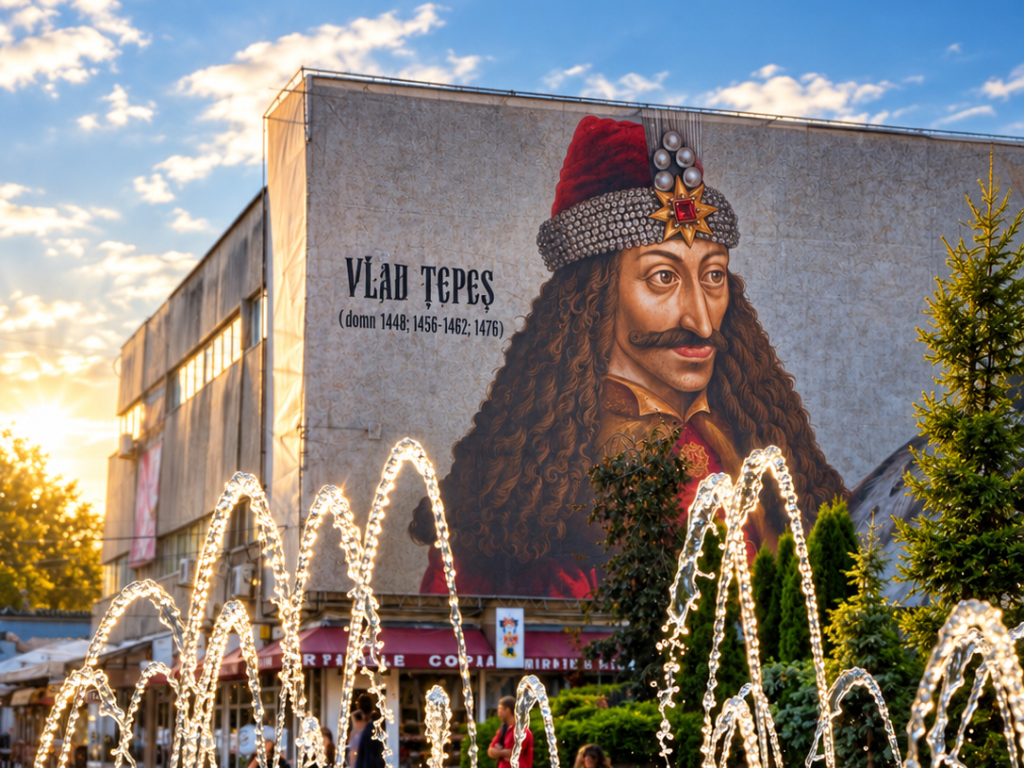
A former public mural of Vlad III Țepeș at Piața Tricolorului in Târgoviște, depicting the prince alongside his reigning years (1448; 1456–1462; 1476) – an archival glimpse into modern public memory at the historic princely seat.
Chronology of Drăculești Voivodes
The following chronology presents the principal rulers of Wallachia associated with the House of Drăculești, a major branch of the Basarab dynasty. Medieval Wallachian succession was shaped by dynastic descent, political alliances, and the support of influential boyar families. Consequently, some reigns were interrupted, contested, or separated by periods of exile. Dates and genealogical attributions are given according to the commonly accepted historical tradition, with disputed affiliations identified where necessary.
Vlad II Dracul
- Prince of Wallachia: 1436-1442, 1443-1447
- Son of Mircea cel Bătrân, Vlad II became the defining figure of the Drăculești lineage. His admission to the Order of the Dragon in 1431 gave his name and dynastic identity a lasting association with the dragon emblem and the chivalric traditions of Central Europe.
Mircea II
- Prince of Wallachia: 1442
- The eldest legitimate son of Vlad II Dracul, Mircea II briefly exercised princely authority during a period of intense dynastic and geopolitical conflict.
Vlad III Țepeș
(The Impaler)
- Prince of Wallachia: 1448, 1456-1462, 1476
- Known as Vlad the Impaler, Vlad III remains the most internationally recognised member of the Drăculești. His reign was marked by efforts to strengthen princely authority and defend Wallachia’s position amid mounting Ottoman pressure and regional rivalries.
Radu III cel Frumos
(The Handsome)
- Prince of Wallachia: 1462-1475, with interruptions
- Known as Radu the Handsome, he was a son of Vlad II Dracul and a central figure in the prolonged struggle for the Wallachian throne. His intermittent reigns reflected the shifting balance between competing dynastic claimants and the interests of neighbouring powers.
Vlad IV Călugărul
(The Monk)
- Prince of Wallachia: 1481, 1482–1495
- Known as Vlad the Monk, he was a son of Vlad II Dracul. His long second reign helped restore continuity to Drăculești rule and provided the dynastic foundation for the reign of his son, Radu cel Mare.
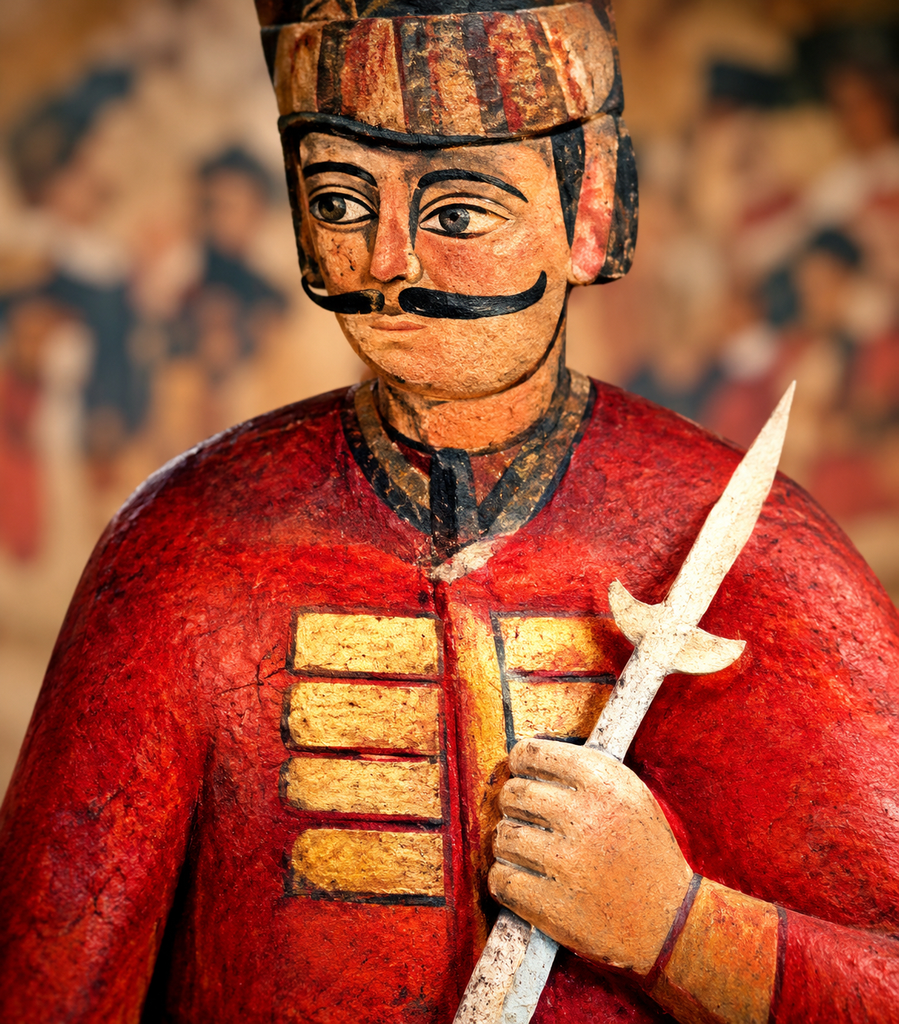
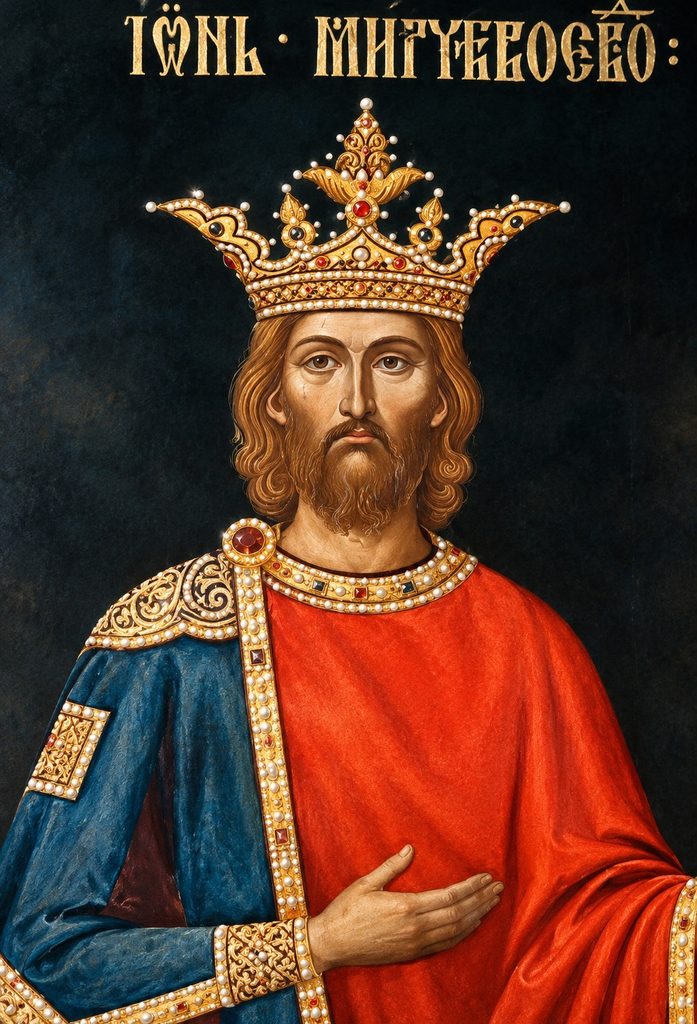
Vlad II Dracul, Wallachian sovereign and progenitor of the House of Drăculești.
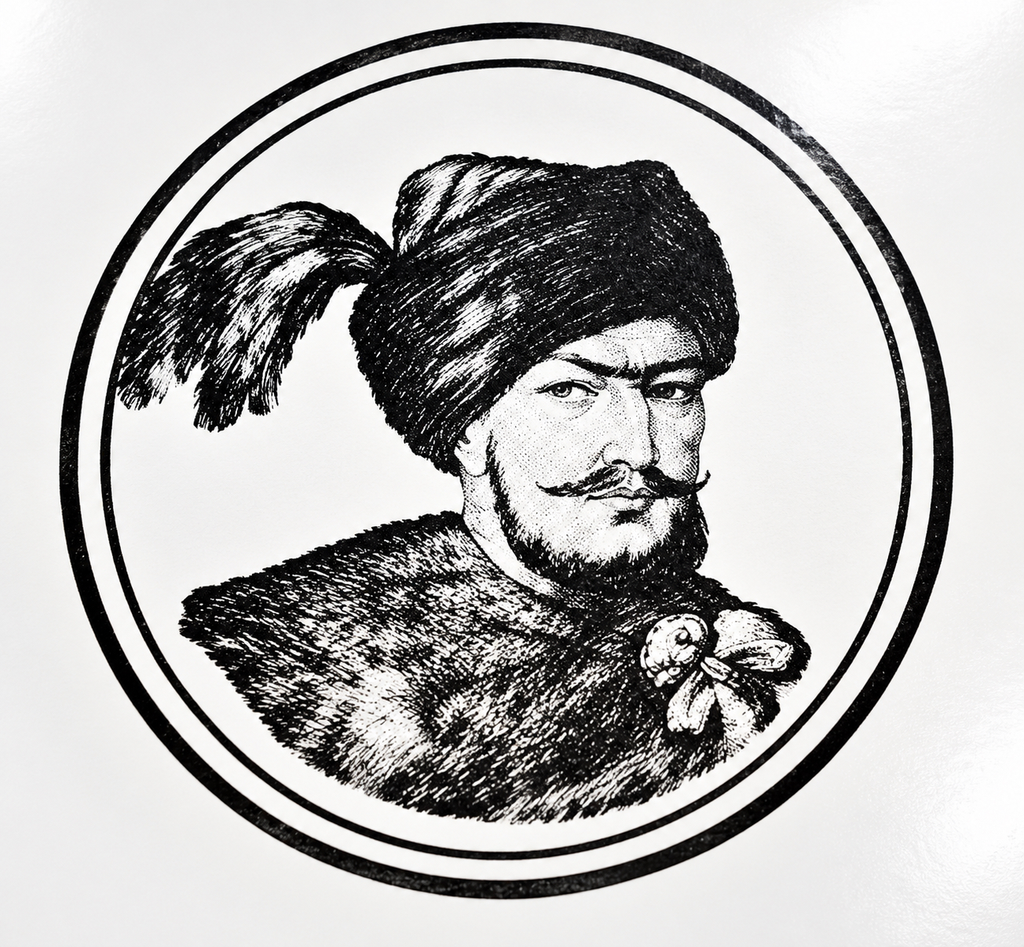
19th-century portrayal of Voivode Mihnea I cel Rău (The Bad), son of Vlad III Țepeș and ruler of Wallachia (1508–1509).
Radu IV cel Mare
(The Great)
- Prince of Wallachia: 1495-1508
- Known as Radu the Great, he was the son of Vlad IV Călugărul. His reign is remembered for the development of princely administration and his support for Orthodox ecclesiastical culture, including the growth of printing and manuscript production in Wallachia.
Mihnea I cel Rău
(The Bad)
- Prince of Wallachia: 1508-1509
- A son of Vlad III Țepeș, Mihnea I inherited a difficult political landscape in which princely authority remained dependent upon the balance between the ruler, the boyars, and external powers.
Mircea III Dracul
- Prince of Wallachia: circa 1509–1510
- The son of Mihnea I cel Rău, Mircea III briefly held the throne during a period of rapid political change. He should be distinguished from Mircea Ciobanul, a later Wallachian prince of the same broader dynastic tradition.
Vlad V cel Tânăr
(The Younger)
- Prince of Wallachia: 1510-1512
- Known as Vlad the Younger, he was a son of Vlad IV Călugărul. His reign unfolded amid continuing factional struggles and the growing influence of neighbouring powers over Wallachian succession.
Vlad (Dragomir) Călugărul
- Brief claimant or ruler: 1521 (Identification and dynastic position require caution.)
- A figure associated with the turbulent succession crisis of 1521, Vlad Dragomir is identified in some historical lists as a possible son of Vlad cel Tânăr. Because his identity and position in the succession are less securely established than those of the principal rulers, he is best treated separately from the firmly documented line of princes.
Radu V de la Afumați
- Prince of Wallachia: 1522–1523, 1524, 1524–1525, 1525–1529
- A son of Radu cel Mare, Radu de la Afumați repeatedly regained the throne during a period of intense political instability. His reign illustrates the importance of dynastic legitimacy, military support, and diplomacy in maintaining princely authority.
Radu VI Bădica
- Prince of Wallachia: 1523–1524
- Another son of Radu cel Mare, Radu Bădica briefly occupied the throne amid the competing claims that characterised Wallachian politics in the early sixteenth century.
Vlad VI Înecatul
(The Drowned)
- Prince of Wallachia: 1530–1532
- Known as Vlad the Drowned, he was a son of Vlad cel Tânăr. His short reign ended with his death in 1532.
Vlad VII Vintilă de la Slatina
- Prince of Wallachia: 1532-1535
- Traditionally identified as a son of Radu cel Mare, Vintilă de la Slatina ruled during a period in which the prince’s relationship with the boyars and the Ottoman court remained central to the stability of Wallachian government.
Radu VII Paisie
- Prince of Wallachia: 1535-1545
- Radu Paisie is traditionally associated with the Drăculești line and was represented as a son of Radu cel Mare. His precise parentage, however, remains disputed in historical scholarship. His reign nevertheless belongs to the wider history of the Basarab princely tradition and its continuing relationship with the Orthodox Church.
Mircea III Ciobanul
(The Shepherd)
- Prince of Wallachia: 1545–1552, 1553–1554, 1558–1559
- Known as Mircea the Shepherd, he was a son of Radu cel Mare. His several periods of rule reflected the volatility of Wallachian politics, in which the prince’s authority was repeatedly challenged and restored.
Radu VIII Ilie Haidăul
- Prince of Wallachia: 1552–1553
- A son of Radu de la Afumați, Radu Ilie briefly held the throne during one of the interruptions in Mircea Ciobanul’s rule.
Pătrașcu cel Bun
(The Good)
- Prince of Wallachia: 1554–1557/1558
- Known as Pătrașcu the Good, he was traditionally identified as a son of Radu Paisie. His reign formed part of the continuing Drăculești-associated princely succession, although some genealogical details surrounding this branch remain debated.
Petru I cel Tânăr
- Prince of Wallachia: 1559–1568
- Known as Petru the Younger, he was the son of Mircea Ciobanul. He came to the throne as a child, and his mother, Doamna Chiajna, played an important role in the political life of the principality during his reign.
Alexandru II Mircea
- Prince of Wallachia: 1568–1574, 1574–1577
- Alexandru II Mircea was the son of Mircea III Dracul. His reign was shaped by the pressures of Ottoman suzerainty, court politics, and the continuing effort to maintain princely authority.
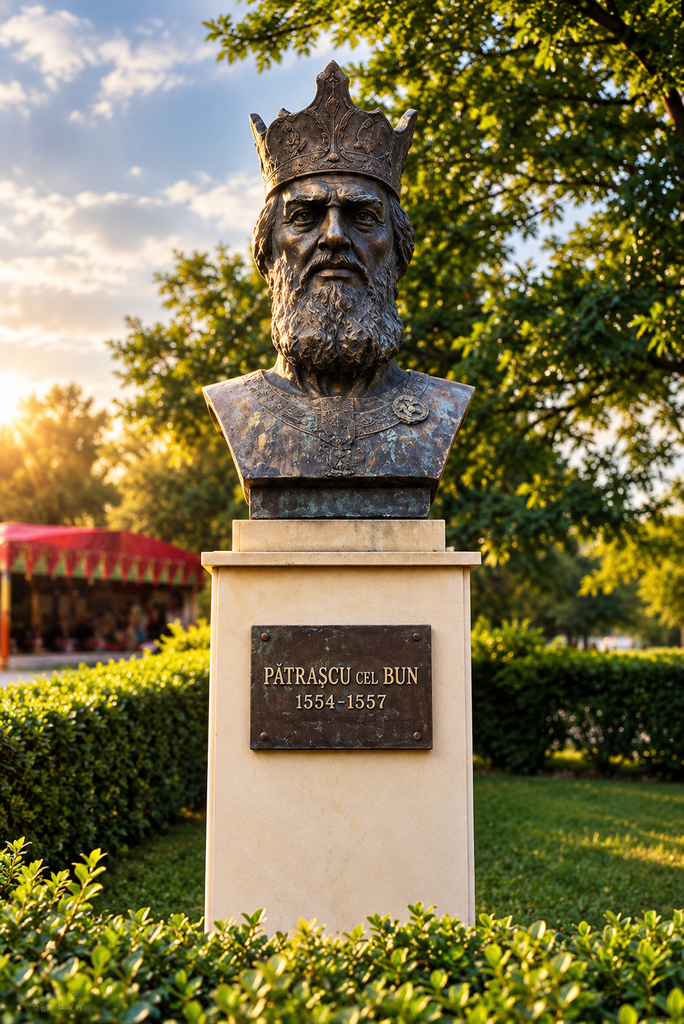
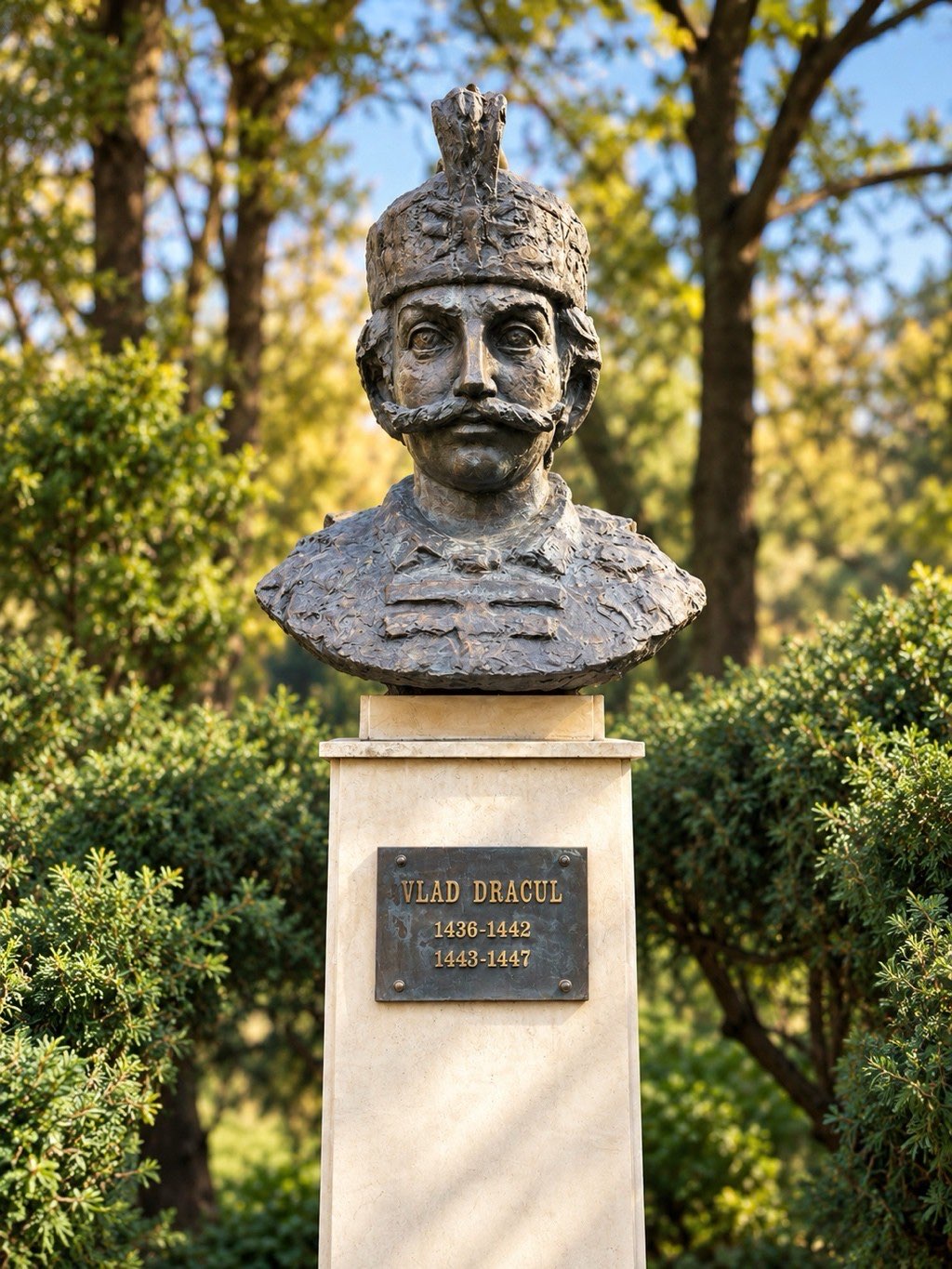
Bronze bust of Voivode Pătrașcu cel Bun (The Good, r. 1554–1558) located in the Chindia Park of Târgoviște, commemorating the Wallachian sovereign within his historic capital.
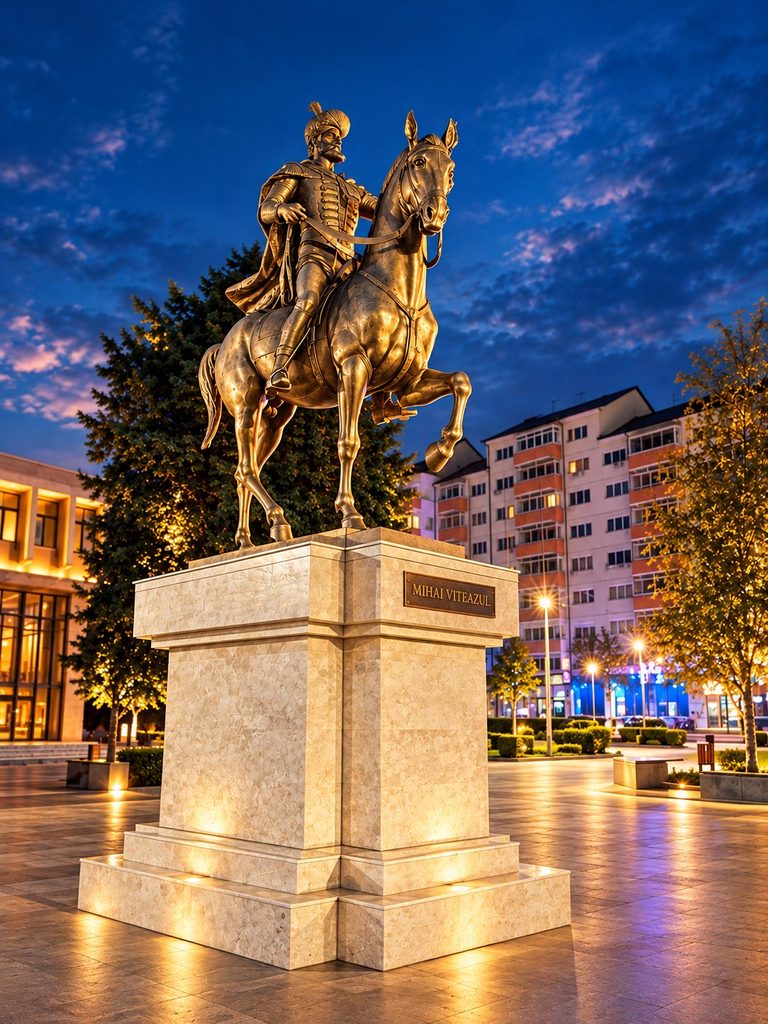
Equestrian monument of Voivode Mihai Viteazul (Michael the Brave, Prince of Wallachia, 1593–1600), commemorating his role in the political union of Wallachia, Transylvania, and Moldavia in 1600.
Vintilă
- Brief reign: 1574
- Vintilă briefly claimed or exercised princely authority during the succession struggles of 1574. His precise position within the dynastic succession should be presented with care, as the chronology of this episode is not consistently recorded across historical summaries.
Mihnea II Turcitul
- Prince of Wallachia: 1577–1583, 1585–1591
- The son of Alexandru II Mircea, Mihnea II ruled in two separate periods. His reign reflects the close relationship between Wallachian succession and the political calculations of the Ottoman court.
Petru Cercel
- Prince of Wallachia: 1583–1585
- Petru Cercel was traditionally identified as a son of Pătrașcu cel Bun. His reign is notable for his cultivated court and his engagement with Renaissance-influenced forms of princely representation.
Mihai Viteazul
(Michael the Brave)
- Prince of Wallachia: 1593–1601
- Known as Michael the Brave, Mihai Viteazul became one of the most consequential rulers in the history of the Romanian lands. In 1600, he briefly brought Wallachia, Transylvania, and Moldavia under a single ruler. His traditionally asserted descent from Pătrașcu cel Bun remains a matter of genealogical debate and should not be presented as conclusively established.
The history of the Drăculești is inseparable from the broader history of the Basarab dynasty and the principality of Wallachia. Their succession illustrates the enduring importance of lineage, political judgement, military power, and religious patronage in the government of a principality situated between the competing interests of Central Europe and the Ottoman world.