The Land and Its Memory
A country is first known through the land that sustains it: its rivers, mountains, settlements and roads. Yet its deeper identity is preserved in more than geography. It lives in the names passed from one generation to another, in old churches and their icons, in the language of inherited stories, and in documents that record the decisions and aspirations of those who ruled before us.
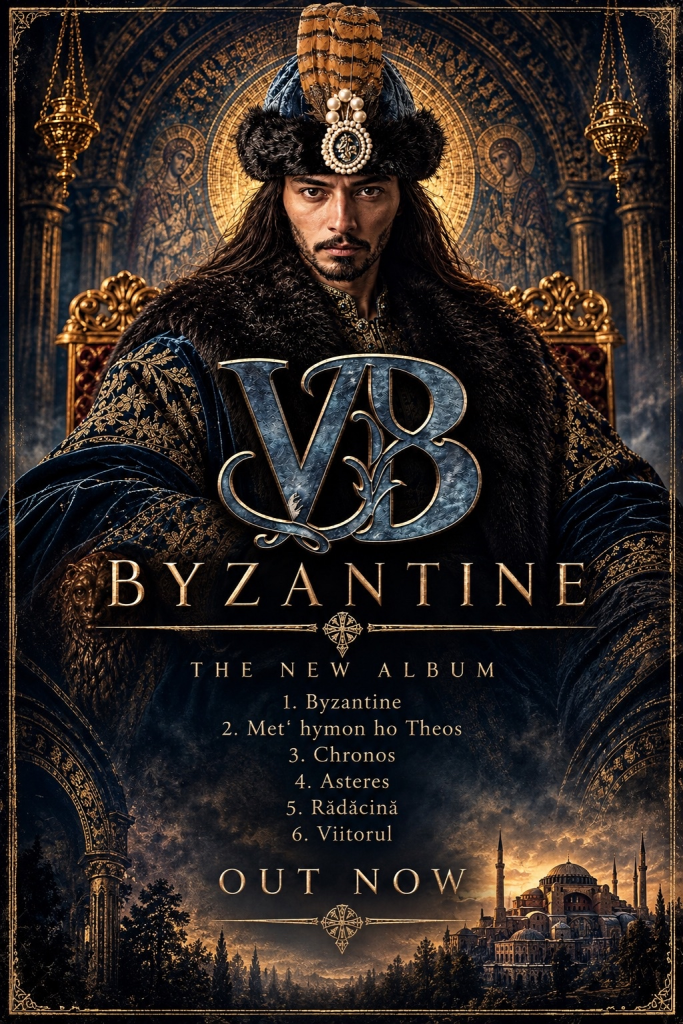
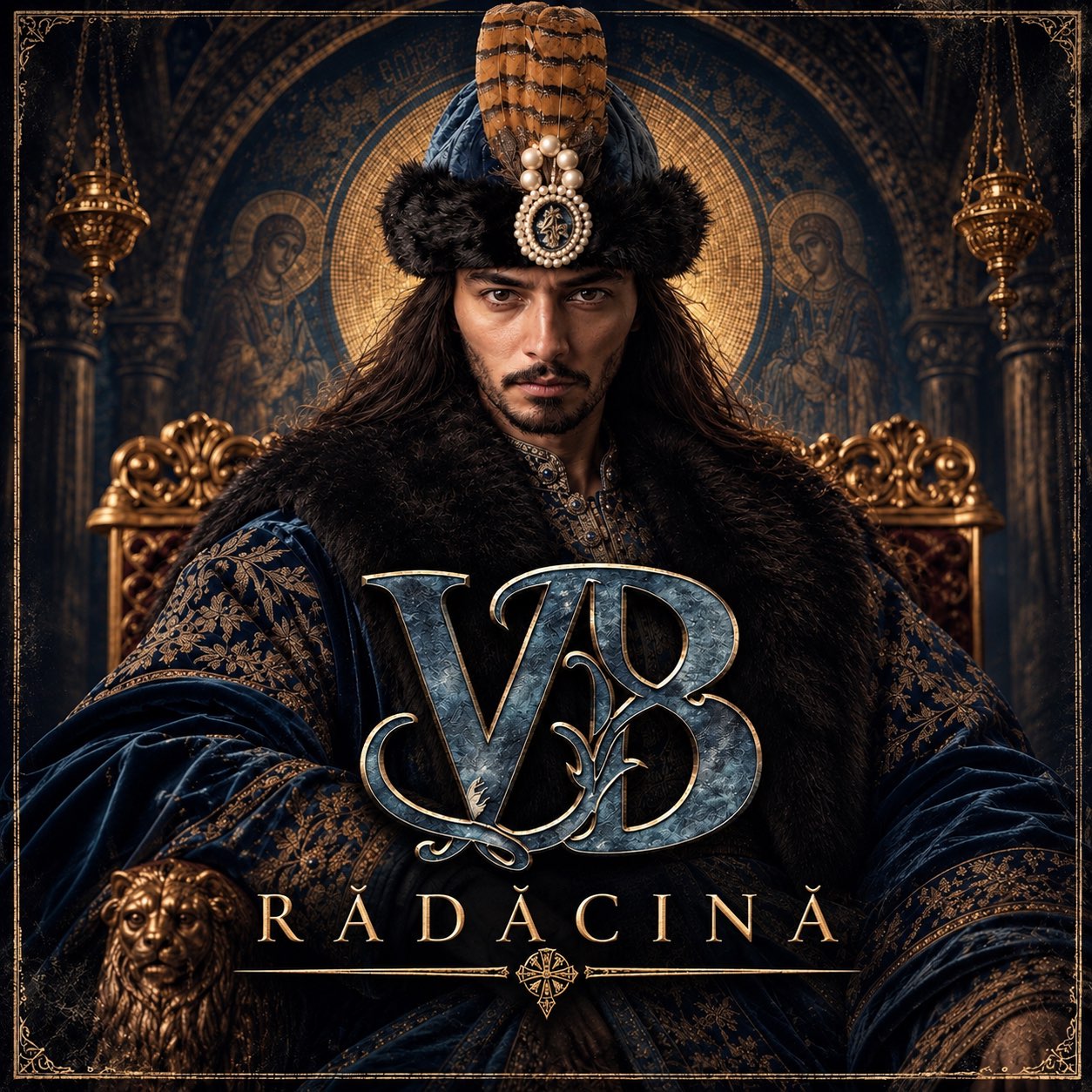
Rădăcină – “Root” – begins in this intimate world of memory. Its voice belongs to the land of Wallachia, remembered through the Carpathians, its waters, ancient walls and ancestral speech. The past first appears as something close and familiar, held in stone, bells and old princely charters. But the memory of the land gradually opens a door onto a wider horizon.
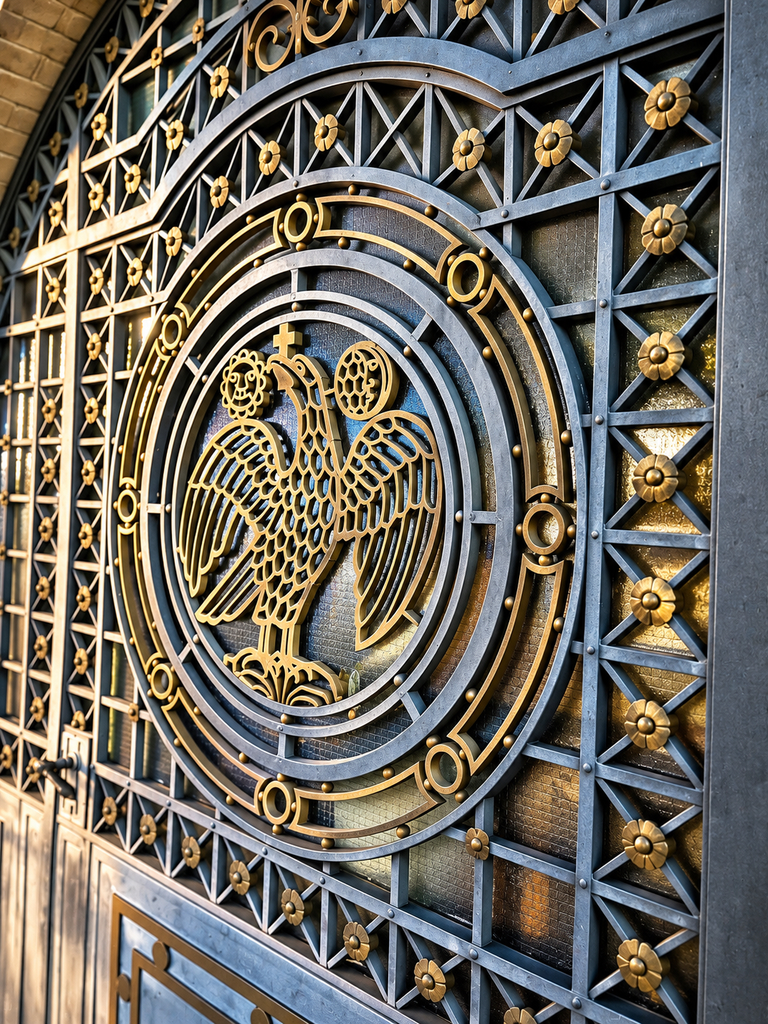
The protagonist initially imagines his world as bounded by the Carpathians and the borders of his own country. Then the icons reveal another road. The light comes from Byzantium, travelling through centuries and across lands and seas. What had seemed to be a self-contained history is recognised as part of a much larger spiritual and cultural landscape.
The prince in the song is best understood as a literary figure rather than a portrait of one identifiable historical ruler. His discovery gives the composition its timeless quality: the moment when a people begins to understand its own past not in isolation, but through the relationships that connect it to neighbouring and distant worlds.
Wallachia and the Byzantine World: A Medieval Relationship
This discovery has a firm historical foundation. Wallachia took shape as a principality in the fourteenth century, in a region where several political and cultural spheres met. Its formation was shaped by local power structures and dynastic ambitions, but also by contact with the Kingdom of Hungary, the South Slavic lands, the Byzantine world and the political communities of the steppe.
The Byzantine connection was particularly significant in matters of religion, ecclesiastical organisation, political symbolism and artistic culture. Yet it should not be imagined as a simple process in which a newly formed Wallachian state merely copied Constantinople. The rulers and elites of Wallachia selected, adapted and combined influences from different traditions, shaping institutions and forms of authority suited to their own circumstances.
An important milestone came in 1359, when the Ecumenical Patriarchate formally recognised the Metropolitanate of Ungro-Wallachia. Its first metropolitan was Iachint, previously associated with the see of Vicina, in the region of the lower Danube. The metropolitan see was established at Argeș, conventionally identified with Curtea de Argeș, one of the principal centres of early Wallachian princely power. The recognition took place under Prince Nicolae Alexandru and placed the Wallachian Church within the canonical structure of the Orthodox world centred on Constantinople.
The significance of this development was considerable. It provided an established ecclesiastical framework for the principality and strengthened its connections with the wider Orthodox community. But ecclesiastical recognition should not be confused with political incorporation into the Byzantine Empire. Wallachia remained a distinct principality, governed by its own rulers and shaped by its own political interests.
The relationship was therefore one of connection, exchange and adaptation – not political identity.
A Principality Between Political Worlds
The position of Wallachia made such relationships especially important. Situated north of the Danube and south of the Carpathians, the principality occupied a strategic space between powerful neighbours and competing political interests. Its rulers had to negotiate with the Kingdom of Hungary, maintain relations with other Balkan powers and, increasingly from the later fourteenth century onwards, respond to the expansion of Ottoman power.
These circumstances did not prevent Wallachia from developing its own institutions. Princely authority, the court, the chancery and the Church all contributed to the consolidation of the principality. The reign of Mircea cel Bătrân (c. 1386-1418), for example, illustrates the growing capacity of Wallachian rulers to conduct diplomacy, issue charters, patronise monasteries and assert authority across a complex political landscape.
Byzantine models could serve as valuable resources in this process. Religious patronage, titles, ceremonial forms and visual expressions of authority helped articulate the status of the prince and the Christian character of his rule. But these forms were not adopted mechanically. They were interpreted within the political realities of Wallachia and combined with influences from other traditions.
This distinction matters. The Byzantine heritage of Wallachia was not simply a memory of a distant empire. It became part of the principality’s own political and cultural vocabulary, while remaining one element among several that shaped its development.
The Light from Byzantium
In the song, Byzantium appears not primarily as a vanished imperial capital, but as a source of spiritual light travelling across time and geography.
Historically, this image can be understood through several overlapping connections. The Orthodox Church maintained institutional links with the Patriarchate of Constantinople. Religious books, liturgical practices, iconographic models and artistic traditions circulated through networks that connected the Danubian principalities with the Balkans, Mount Athos and other centres of Orthodox learning and devotion.
Church architecture and painting also reveal these connections. Byzantine artistic language was not confined to the territories once ruled by the emperors. It continued to shape the appearance and meaning of Orthodox churches far beyond the political borders of the empire. Local patrons and craftsmen adapted inherited forms to their own settings, creating works that were at once part of a wider tradition and distinctly local in their expression.
The relationship did not end with the fall of Constantinople in 1453. Byzantine political authority disappeared, but many of its religious and cultural traditions continued through the Orthodox Church, monastic communities, artistic practice and networks of patronage. Wallachian rulers and benefactors became important supporters of Orthodox institutions beyond their own borders, including monasteries on Mount Athos and elsewhere.
This later history should not be projected unchanged onto the fourteenth century. The connections developed over time, and their character varied from one period to another. Nevertheless, the continuity of religious and cultural exchange helps explain why Byzantium remained an important point of reference long after the empire itself had ceased to exist.
Three Languages, Three Historical Voices
The multilingual structure of Rădăcină gives this journey an additional dimension. Romanian, Greek and Church Slavonic do not simply repeat the same message in different forms. Each evokes a distinct historical and cultural register.
Romanian is the voice of the homeland: the land, its remembered past, its ancestral speech and the continuity of generations. It gives the song its local grounding. The story begins in a particular country, among its mountains, rivers, churches and documents.
Greek evokes the Byzantine and Orthodox world. It is the language associated with the theological and liturgical heritage of Constantinople and with the intellectual and ecclesiastical traditions that circulated throughout the Orthodox world. Its presence in the song gives expression to a spiritual horizon extending beyond the borders of Wallachia. Greek also had a more specific historical presence in the principalities, particularly in ecclesiastical contacts and, in later periods, in the correspondence and intellectual life of some princely and aristocratic circles. It should not, however, be mistaken for the principal language of the medieval Wallachian chancery.
Church Slavonic introduces another essential part of the medieval history of the Romanian principalities. For centuries, it served as a major language of Orthodox worship, religious writing and princely documentary culture in Wallachia and Moldavia. Its use was connected to the wider South Slavic and Byzantine Orthodox world, through which many religious texts and practices had travelled. The surviving Wallachian documents show that Church Slavonic was especially important in the princely chancery, while Romanian increasingly appears in written records over time. These languages had different functions and coexisted in a changing linguistic landscape.
The three languages therefore represent related but distinct inheritances. Their meeting in the composition is not an attempt to recreate a particular medieval ceremony or document. It is an artistic expression of the different cultural channels through which the history of Wallachia became connected to the wider Orthodox world.
From the Same Root
The refrain brings the song’s central idea into focus:
From the same root,
From the same memory;
One communion in Christ,
One faith unto the ages.
The image of a common root is powerful precisely because it does not erase difference. The lands remain different. Their rivers, languages, political histories and customs are not made identical by a shared confession. What connects them is a spiritual inheritance that crosses borders and survives changes of dynasty and empire.
The Greek expression μία ἐν Χριστῷ κοινωνία speaks of one communion or fellowship in Christ. The word koinonia carries a deep meaning of participation and shared life. In this context, it expresses a bond that is spiritual rather than territorial: a fellowship sustained by faith, worship and memory.
The song’s Wallachian protagonist therefore does not abandon his homeland when he discovers Byzantium. He understands it more fully. His country is not diminished by its place within a larger history; its own story becomes richer and more intelligible through that connection.
This is also the meaning of the bridge. The search for the history of one’s ancestors leads beyond the borders of the principality, not to the loss of identity, but to the discovery of a wider family bound by a common spiritual inheritance.
A Personal Journey Through History
There is also a contemporary dimension to this theme. For Vladislav Carol Nicolae, the movement from Wallachian history towards the Byzantine world has a personal resonance.
His engagement with the history of Wallachia provides a starting point: the rulers, documents, monasteries and monuments through which the principality’s past can be approached. Yet the more closely one studies this history, the clearer it becomes that it cannot be understood in isolation. The political and religious life of Wallachia was connected to a much wider world, whose institutions, ideas and artistic traditions extended across the Balkans and beyond.
The song gives artistic form to that process of discovery. Its prince begins with the history of his own land and gradually recognises the larger framework to which that history belongs. In a similar way, the study of Wallachian heritage can lead from local monuments and dynastic history towards the wider Byzantine and Orthodox traditions that helped shape them.
The parallel is a meeting of two journeys: one imagined in the voice of a medieval prince, the other undertaken through historical research and artistic expression.
Songtext
The following is the complete text of Rădăcină. The translation seeks to preserve the meaning, imagery and solemn character of the original. It is not intended as a strict word-for-word rendering, but as a faithful English version that can be read and understood independently.
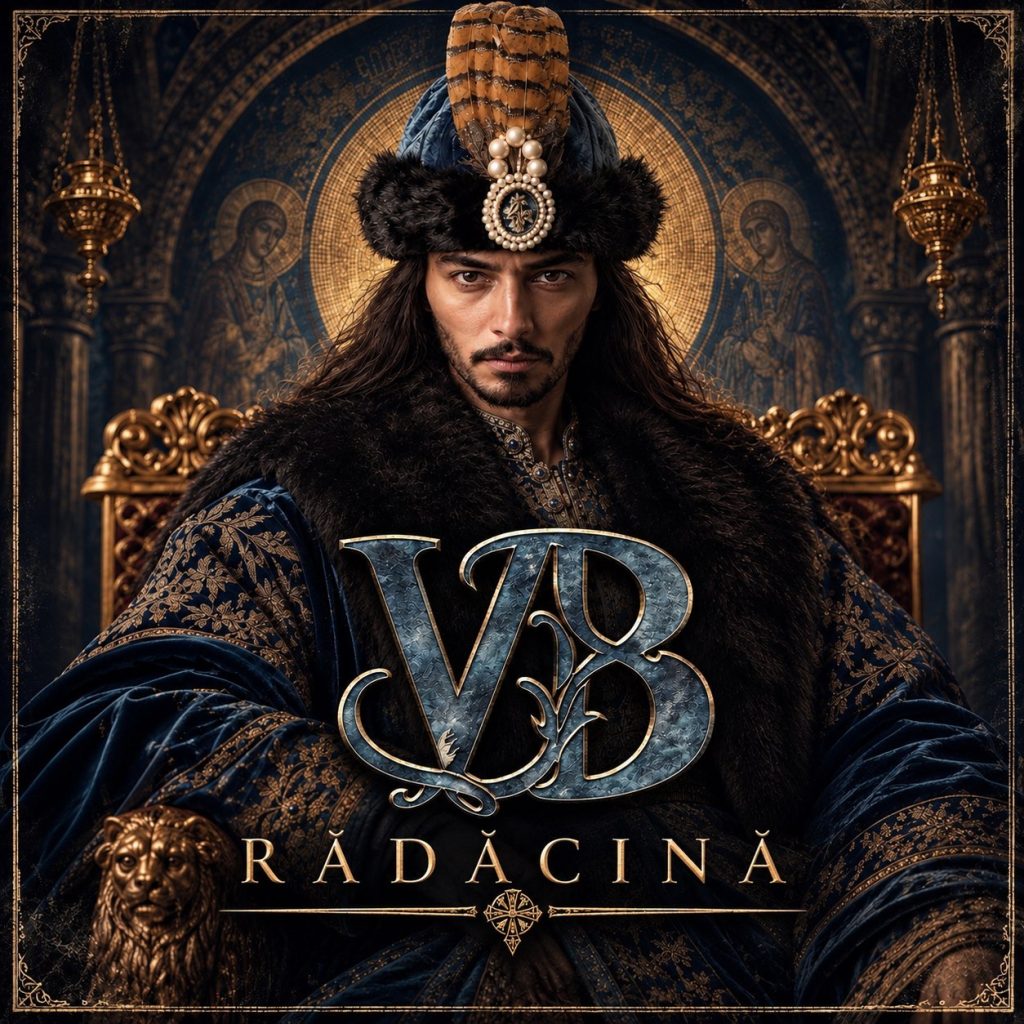
Rădăcină
Ἐκ τῆς Αὐτῆς Ῥίζης • Din aceeași rădăcină • From the Same Root
Ι.
Sub cerul vechi al țării mele,
Pe lângă ape și Carpați,
Am ascultat povești uitate,
În ziduri vechi și-n grai străbun.
Din piatră, clopot și tăcere,
Din nume scrise-n vechi hrisoave,
Se ridica o amintire
Ce mă chema din alte vremuri.
ΙΙ.
Ἄλλη γῆ, ἄλλος ποταμός,
μία πίστις, εἷς οὐρανός.
Ἄλλαι φωναί, μία προσευχή,
μία μνήμη ἐν τῇ καρδίᾳ.
ΙΙΙ.
Credeam că lumea mea se-ntinde
Între Carpați și-al meu hotar.
Dar vechi icoane-mi arătară
Un drum mai lung, un vechi altar.
Dinspre Bizanț venea lumină,
Prin veacuri, peste țări și mări.
Nu eram singuri în credință,
Nici străini între popoare.
IV.
Ἐκ τῆς αὐτῆς ῥίζης,
ἐκ τῆς αὐτῆς μνήμης·
μία ἐν Χριστῷ κοινωνία,
μία πίστις εἰς τοὺς αἰῶνας.
Din aceeași rădăcină,
Din aceeași veche credință,
Țări depărtate, suflete-aproape,
Sub cerul care ne unește.
V.
Слава Тебѣ, Боже нашъ,
слава Тебѣ.
VI.
Am căutat în vechi izvoare
Povestea neamului meu străbun.
Dar am găsit dincolo de hotare
O familie-n același legământ.
Οὐκ ἦν μόνη ἡ πατρίς μου,
οὐκ ἦν μόνη ἡ ψυχή μου·
ἐν τῇ πίστει ἦσαν αἱ ῥίζαι μου,
καὶ ἐν τῇ μνήμῃ εὗρον ἀδελφούς.
VII.
Nu uit pământul ce mă ține,
Nici graiul celor ce-au plecat.
Port mai departe amintirea
A tot ce timpul n-a șters.
Ἐκ τῆς αὐτῆς ῥίζης,
ἐκ τῆς αὐτῆς μνήμης·
μία ἐν Χριστῷ κοινωνία,
μία πίστις εἰς τοὺς αἰῶνας.
Din aceeași rădăcină – Ἐκ τῆς αὐτῆς ῥίζης!
Din aceeași credință – Μία πίστις εἰς τοὺς αἰῶνας!
Слава Тебѣ, Боже нашъ,
слава Тебѣ.
Din aceeași rădăcină…
Ἐκ τῆς αὐτῆς ῥίζης…
I.
Beneath the ancient sky of my country,
Beside its rivers and the Carpathians,
I listened to forgotten stories,
In old walls and in the ancestral tongue.
From stone, from bell and from silence,
From names written in ancient charters,
A memory was rising,
Calling me from other times.
II.
Another land, another river,
One faith, one heaven.
Other voices, one prayer,
One memory in the heart.
III.
I believed my world extended
Between the Carpathians and my own frontier.
But old icons showed me
A longer road, an ancient altar.
From Byzantium came the light,
Through the centuries, across lands and seas.
We were not alone in faith,
Nor strangers among the peoples.
IV.
From the same root,
From the same memory;
One communion in Christ,
One faith unto the ages.
From the same root,
From the same ancient faith,
Distant lands, souls close to one another,
Beneath the heaven that unites us.
V.
Glory to Thee, O our God,
Glory to Thee.
VI.
I searched in ancient sources
For the story of my ancestral people.
But beyond the borders I discovered
A family bound by the same covenant.
My homeland was not alone,
My soul was not alone;
My roots were in the faith,
And in memory I found brothers.
VII.
I shall not forget the soil that sustains me,
Nor the tongue of those who have departed.
I carry the memory onward
Of all that time has not erased.
From the same root,
From the same memory;
One communion in Christ,
One faith unto the ages.
From the same root – From the same root!
From the same faith – One faith unto the ages!
Glory to Thee, O our God,
Glory to Thee.
From the same root…
From the same root…
Listen to the Song
Memory as a Bridge
The closing verses return to the land from which the song began. The protagonist does not forget the soil that sustains him, nor the language of those who came before. He carries forward the memory of what time has not erased.
This return is important. The discovery of a wider spiritual world does not dissolve the local past. It gives that past a larger setting. Wallachia remains Wallachia; its history is neither a mere extension of Byzantium nor a detached story of its own. It is a distinct history formed through encounters with many worlds, among which the Byzantine tradition holds a particularly important place.
Rădăcină thus speaks of belonging without uniformity. It recalls a medieval world in which political borders did not prevent the circulation of religious ideas, artistic forms and cultural practices. It also offers a contemporary reflection on the value of looking beyond familiar boundaries in order to understand one’s own inheritance more deeply.
The root is not a border. It is a source of life from which branches may extend in different directions. And the memory carried by those branches can remain shared, even when the lands and peoples themselves follow distinct paths.
Basarab Heritage
— A.C.