
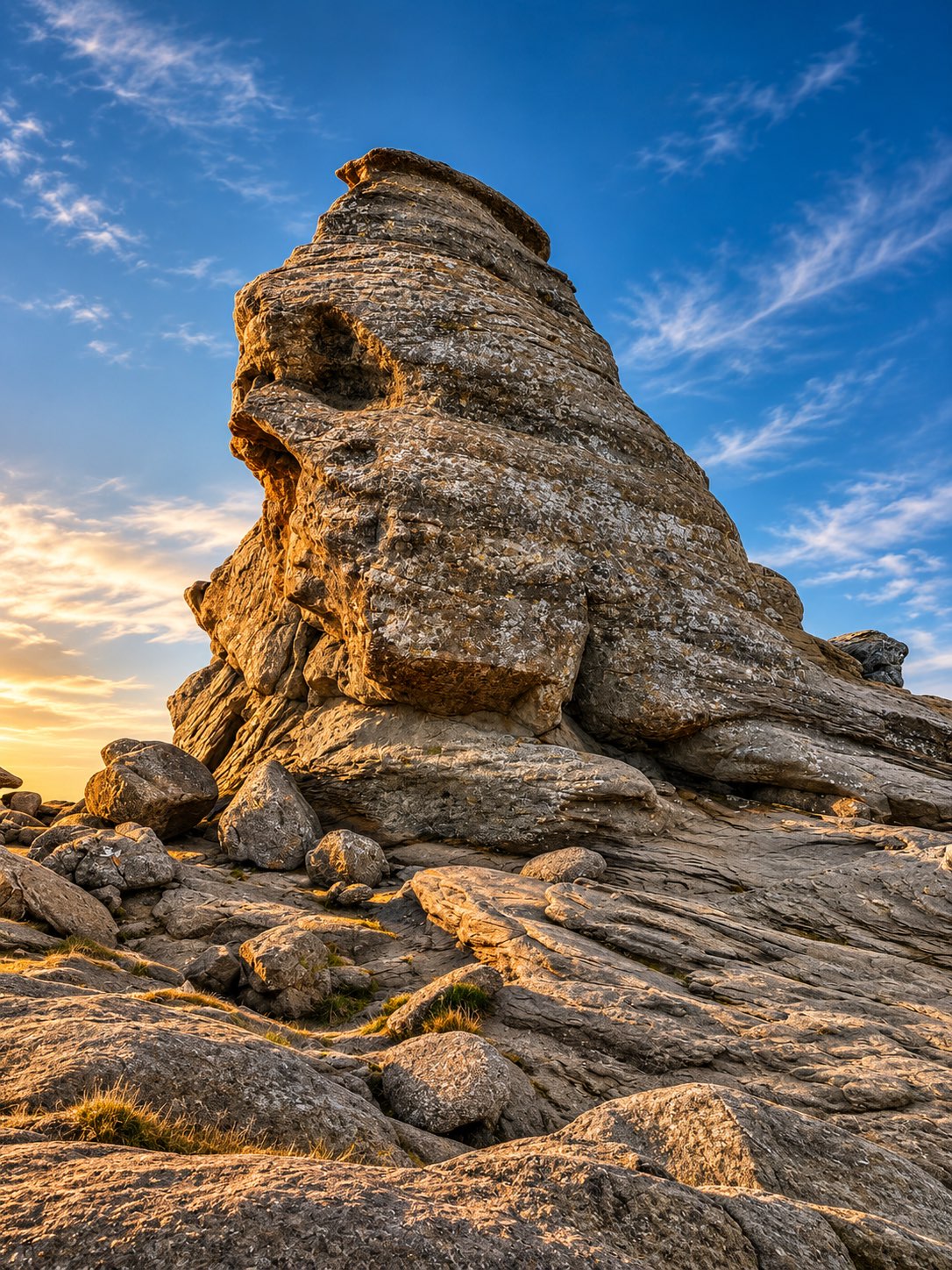
High above the Prahova Valley, where the forested slopes of the Southern Carpathians give way to open alpine plateaus and weathered stone, the Bucegi Mountains present one of Romania’s most distinctive landscapes. Their broad summit plateau, dramatic escarpments and unusual rock formations have long attracted researchers, mountaineers and travellers. Among their most recognisable features are two formations whose names seem almost to invite interpretation: the Sphinx of the Bucegi and the Babele, or “Old Women”.
The Sphinx appears, from a particular angle, to gaze across the mountains with a monumental human profile. Nearby, the Babele rise in rounded, mushroom-like shapes, as though a gathering of ancient figures had been turned to stone. Their silhouettes have inspired stories and speculation, some connected with the region’s older cultural traditions, others belonging to the modern world of esoteric literature and conspiracy narratives.
Yet the Bucegi do not need supernatural explanations to be extraordinary. Their geology, their caves and the long history of human imagination surrounding them provide more than enough material for a journey into one of Romania’s most fascinating mountain landscapes.
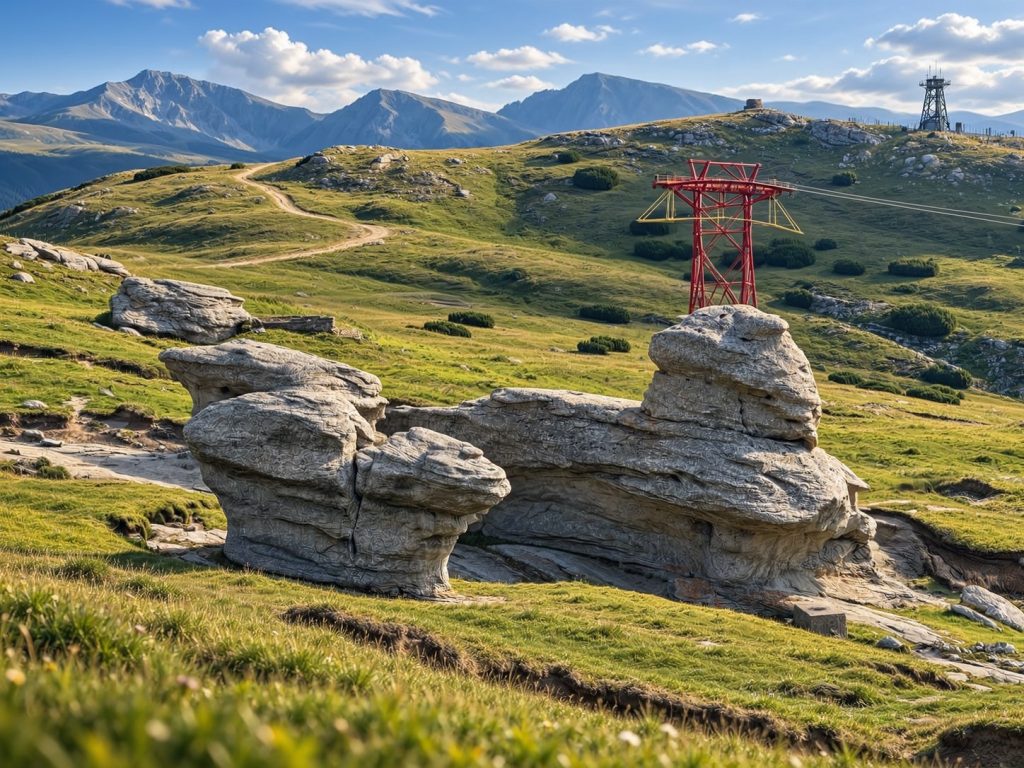
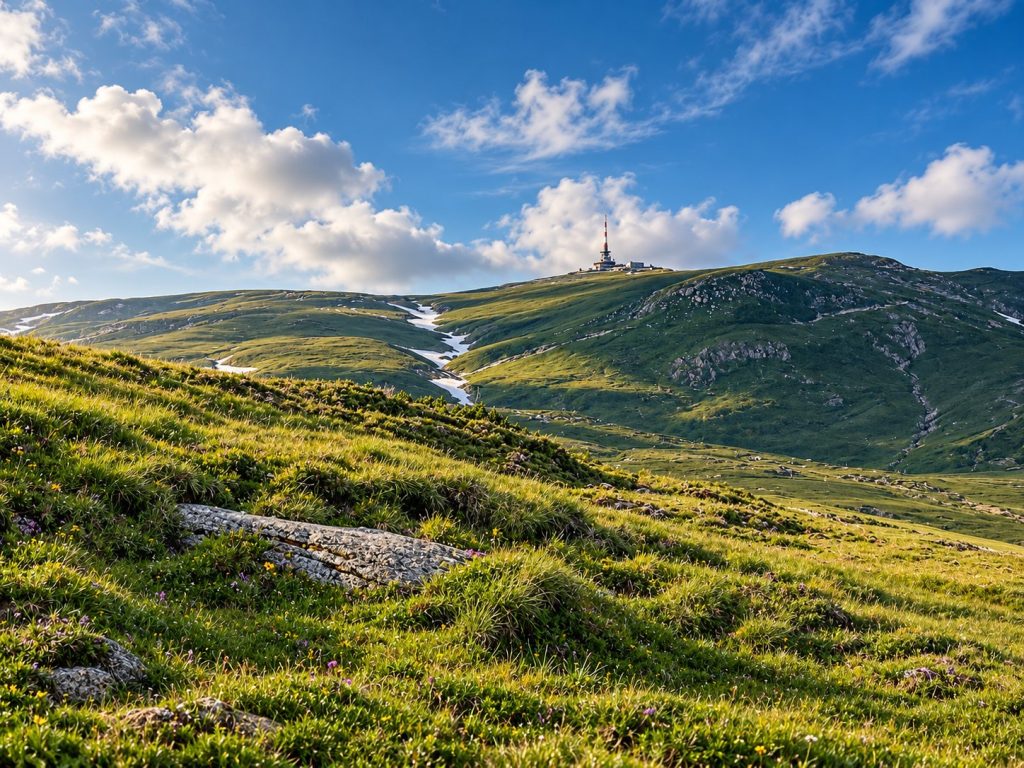
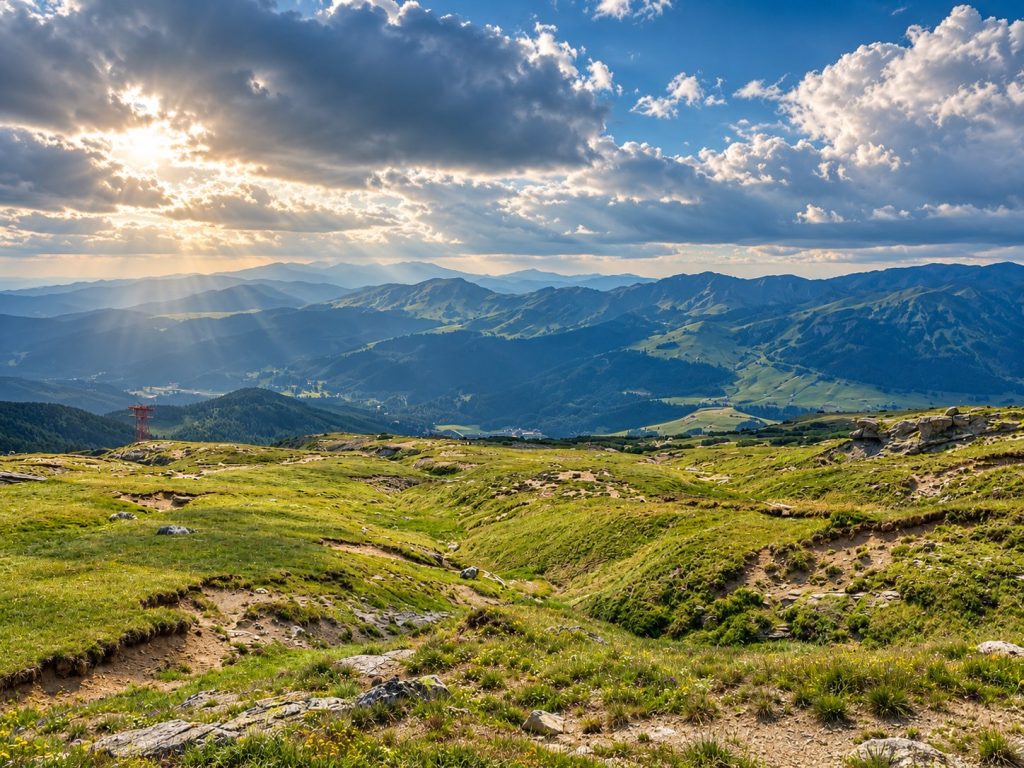
Weathered conglomerate formations and alpine grasslands across the high plateau of the Bucegi Mountains, with a cable car pylon rising against the mountain ridges.
A Mountain World Above the Prahova Valley
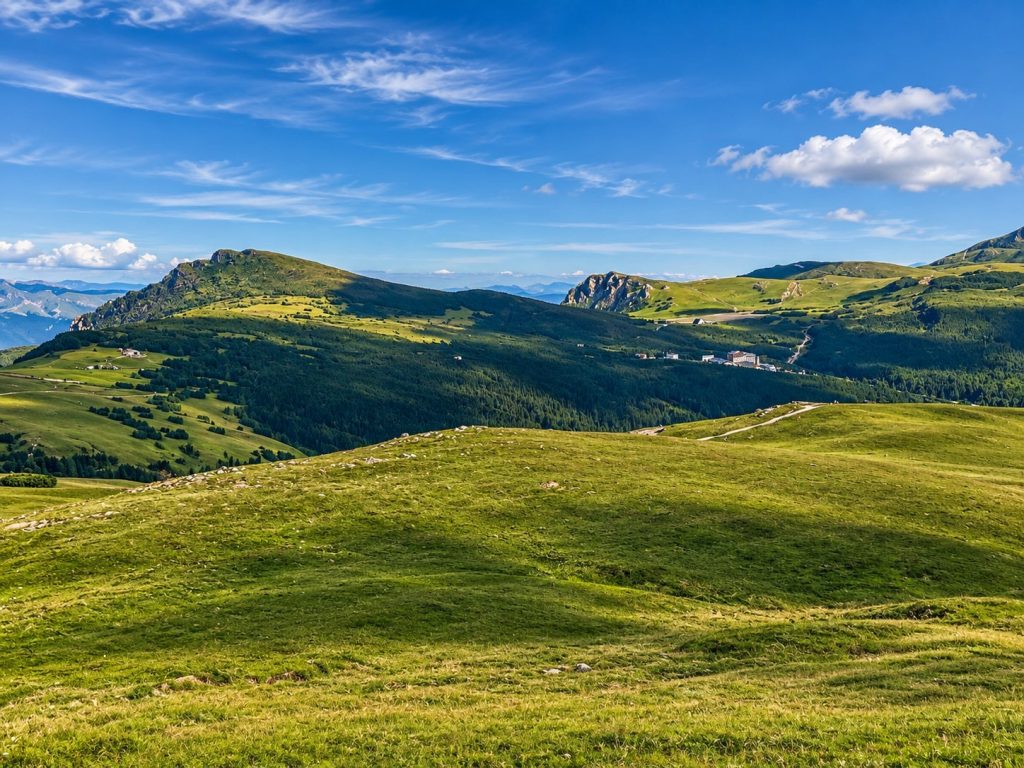
The Bucegi Massif forms part of the Southern Carpathians, rising between the Prahova Valley to the east and the Bran-Rucăr corridor to the west. Its steep eastern escarpment dominates the landscape above mountain resorts such as Bușteni and Sinaia, while the upper plateau opens into a different world of alpine grassland, rocky outcrops and expansive horizons.
The massif has a distinctive horseshoe-like structure, with two principal mountain ridges enclosing the upper basin of the Ialomița River. Its highest summit, Omu Peak, reaches 2,505 metres above sea level. From this elevated region, valleys descend towards the surrounding settlements, while the plateau itself is exposed to wind, snow and sudden changes in weather.
The Bucegi are also of considerable ecological importance. Their varied elevations and geological conditions support a rich range of mountain habitats, from forests and subalpine vegetation to alpine meadows and rocky environments. The Bucegi Natural Park protects approximately 32,500 hectares, encompassing much of the massif as well as smaller adjoining areas, including parts of the neighbouring Leaota Mountains.
The history of nature protection in the region reaches back to the first half of the twentieth century. Scientific work, particularly in botany, helped establish the case for protecting its exceptional flora, and an early act concerning nature reserves and monuments dates from 1943. The park’s present administrative and legal framework developed through subsequent measures, notably during the period around 2000-2003. Today, its management seeks to reconcile conservation with responsible tourism and the needs of local communities.
The distinction between the Bucegi Massif and the Natural Park is worth remembering: the park has defined administrative boundaries and includes some neighbouring mountain territory, rather than corresponding exactly to every geographical understanding of the massif.
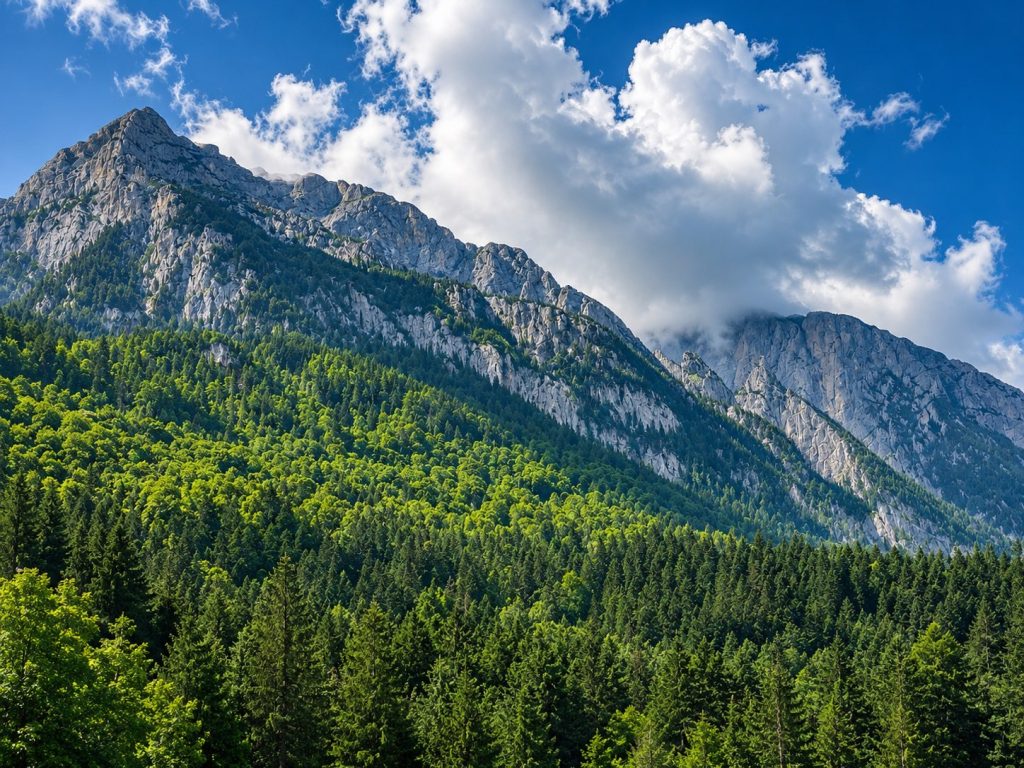
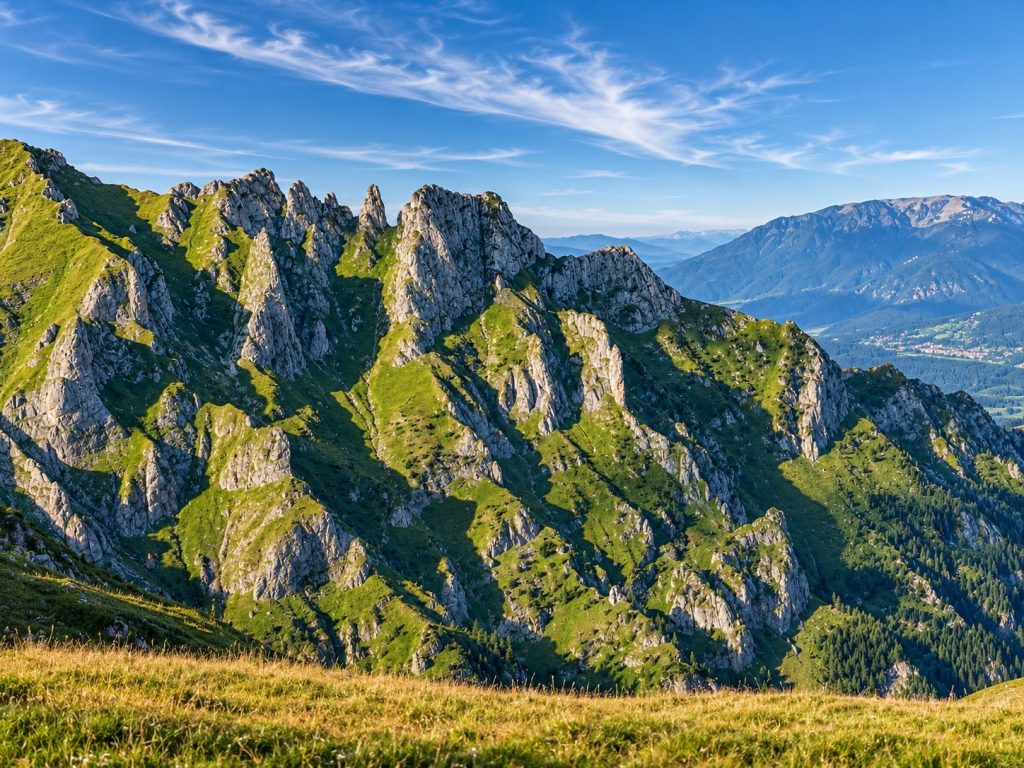
The steep eastern escarpment of the Bucegi Massif rising above forested slopes, illustrating the dramatic relief that shapes the mountain landscape.
A Landscape Shaped by Geological Time
The striking forms of the Bucegi plateau are the result of geological processes operating over immense periods. The massif is built from a succession of sedimentary rocks, including Jurassic limestones and Cretaceous conglomerates and sandstones. The extensive Bucegi Formation, which contributes much of the character of the high plateau and its surrounding escarpments, consists predominantly of polymict conglomerates with layers of coarse sandstone.
Conglomerate is a sedimentary rock made up of rounded fragments of older stones held together by a natural cement. The composition and resistance of these layers vary. Some are relatively durable; others are more easily broken down by weathering. This variation is essential to understanding the unusual forms scattered across the plateau.
Water runs over exposed surfaces and penetrates cracks. During winter, freezing water expands within fissures and gradually weakens the rock. Wind acts upon exposed surfaces, carrying fine particles that can contribute to abrasion, while rain and snowmelt wash away loosened material. Over long periods, these processes produce differential erosion: harder sections remain prominent as surrounding material is gradually worn away.
The official management plan identifies wind erosion, freeze-thaw processes and surface runoff among the forces responsible for the residual rock formations of the Bucegi plateau. Their shapes are therefore not the work of a single agent, but the accumulated result of several natural processes acting upon rocks of differing composition and resistance.
The Sphinx and the Babele belong to this geological history. Their resemblance to faces and figures is a matter of natural form and human perception, rather than evidence of deliberate carving. That explanation does not diminish their appeal. It places their creation within a timescale far greater than that of any human monument.
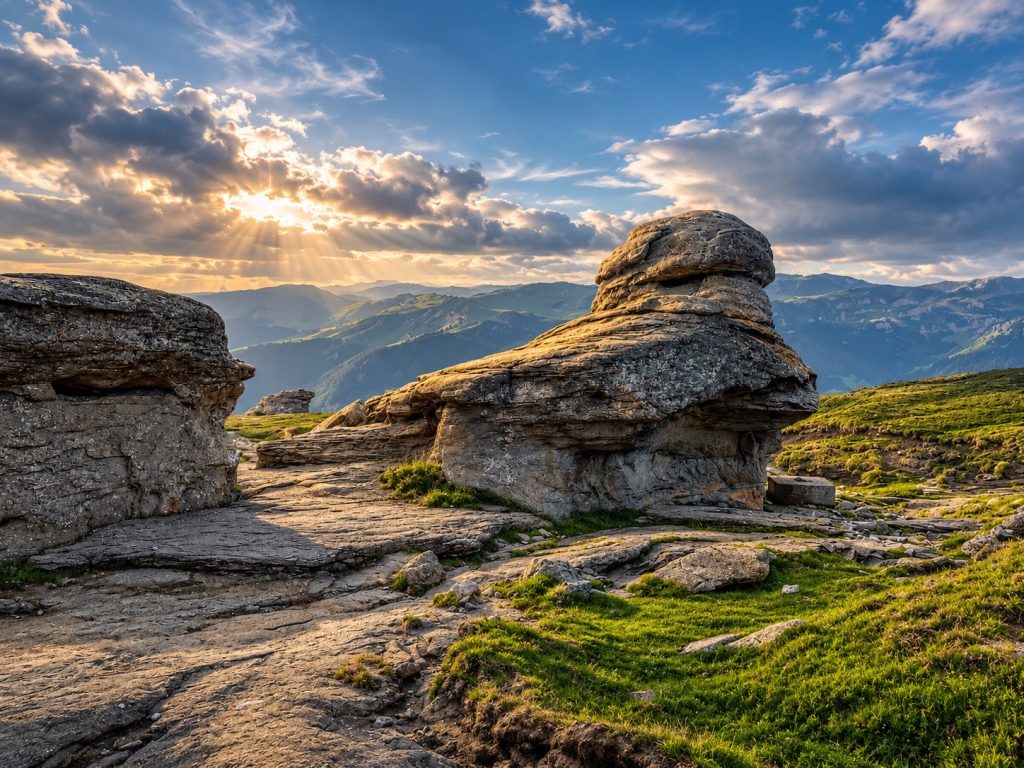
Weathered stone formations on the high plateau, where natural erosion creates suggestive silhouettes against the mountain horizon.
Babele: The Old Women of the Mountains
Among the most recognisable formations on the plateau are the Babele. Their Romanian name means “the Old Women”, reflecting the impression created by their rounded and irregular silhouettes. Some resemble mushrooms, with broad upper sections resting on narrower bases; others appear like figures bent by age or gathered in conversation.
Their shapes are closely connected with the differing resistance of the rock layers. Where a more resistant upper section protects the material beneath it, the softer rock around the base may be worn away more rapidly. Over time, this differential erosion can produce the familiar mushroom-like outline. The precise form of each rock depends on its geological structure and exposure to the elements.
The Babele are more than picturesque curiosities. They are recognised in the park’s geological documentation as distinctive residual landforms, valuable for understanding the geomorphological development of the plateau.
Their popular name also reveals something about the relationship between people and the mountain environment. A landscape becomes familiar not only through maps and scientific descriptions, but through the names given to its features. The Babele are at once geological formations and figures of popular imagination.
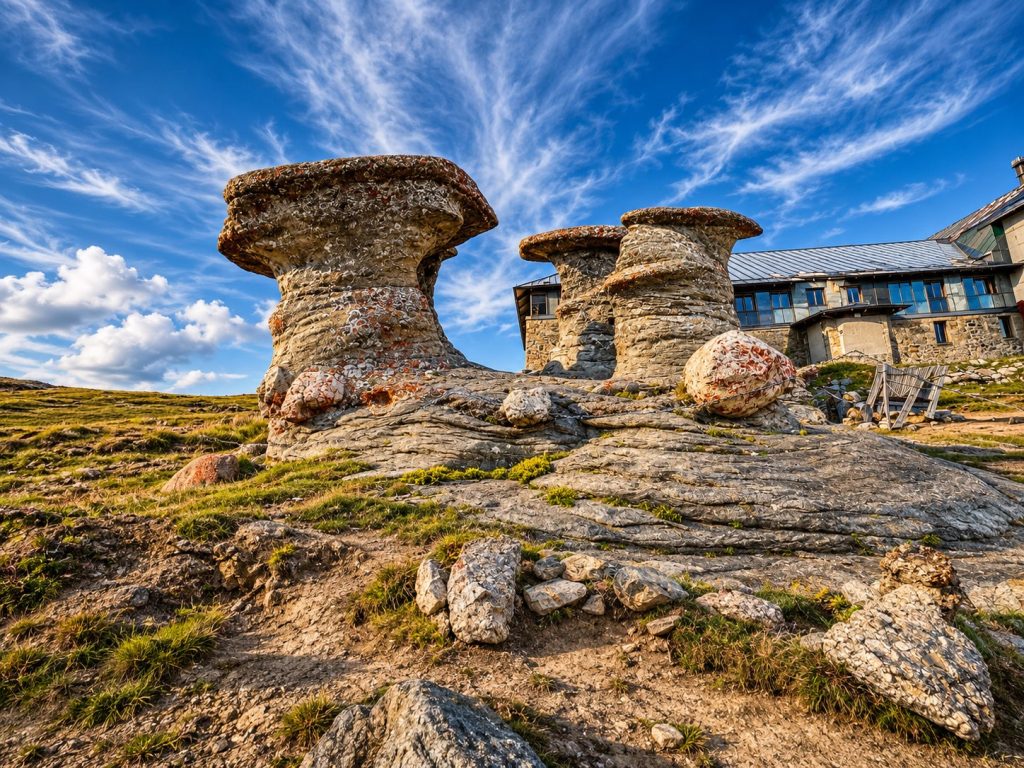
Babele (“the Old Women”), where natural stone silhouettes stand alongside the mountain refuge on the high plateau.
Sfinxul: The Stone Face of the Carpathians
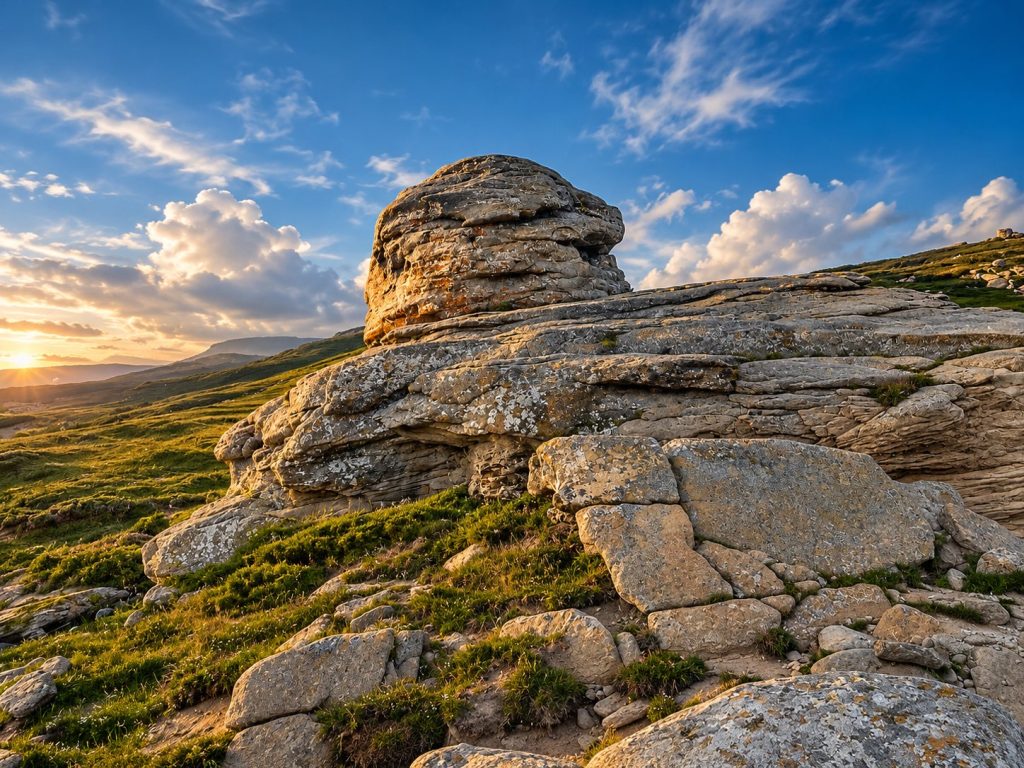
The Sfinxul, or Sphinx, is perhaps the most famous natural formation of the Bucegi. Situated at approximately 2,225 metres above sea level, it has become one of the defining images of the Romanian Carpathians.
Its outline, particularly when viewed from a favourable angle, suggests a monumental human head. The resemblance is sufficiently striking to invite comparison with the Great Sphinx of Giza, and it is from this visual association that the Romanian formation takes its name.
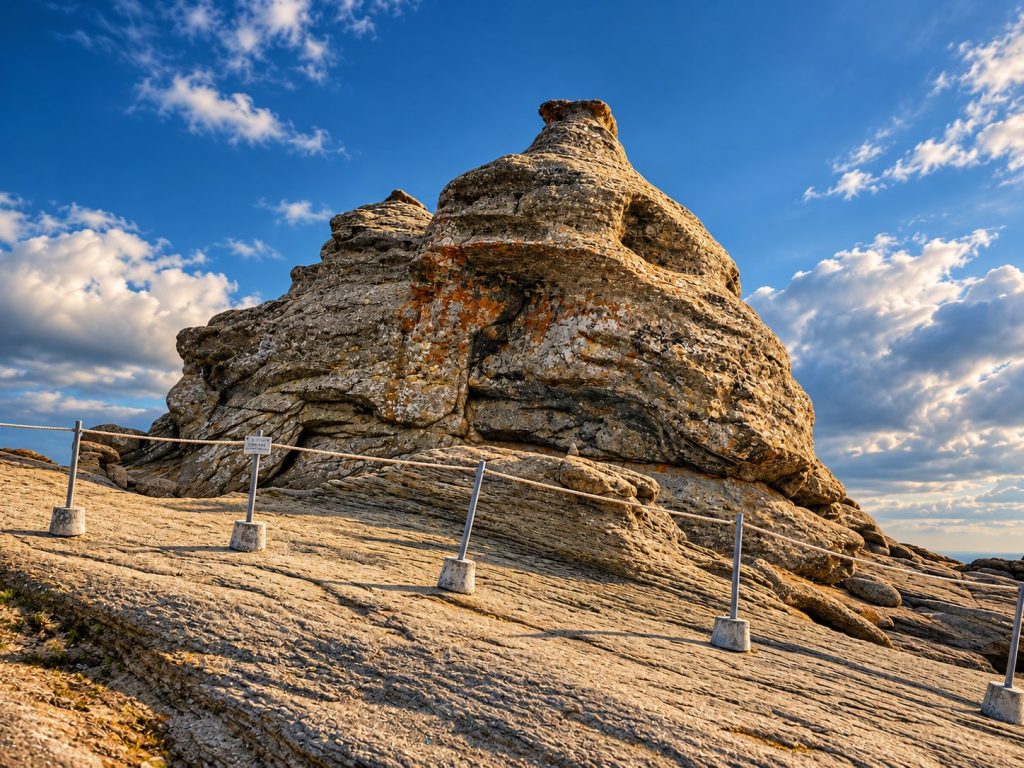
The comparison, however, concerns appearance rather than origin. There is no archaeological evidence that the Sfinxul was carved by an ancient civilisation or deliberately fashioned as a monument. Its shape belongs to the same geological history that produced the other weathered formations of the plateau.
The familiar profile is also dependent on perspective. From certain viewpoints, the face-like outline is immediately recognisable; from others, the formation appears less anthropomorphic. Changes in light, shadow, snow cover and atmospheric conditions can alter the impression considerably. The Sphinx is thus both a physical feature and an optical experience: the rock remains unchanged, while the way it is perceived varies with the observer.
Its fame has made it a popular destination for visitors reaching the upper plateau. Yet its significance extends beyond tourism. Together with the Babele, it illustrates the distinctive geomorphology of the Bucegi and the slow interaction between geological structure and the forces of weathering.
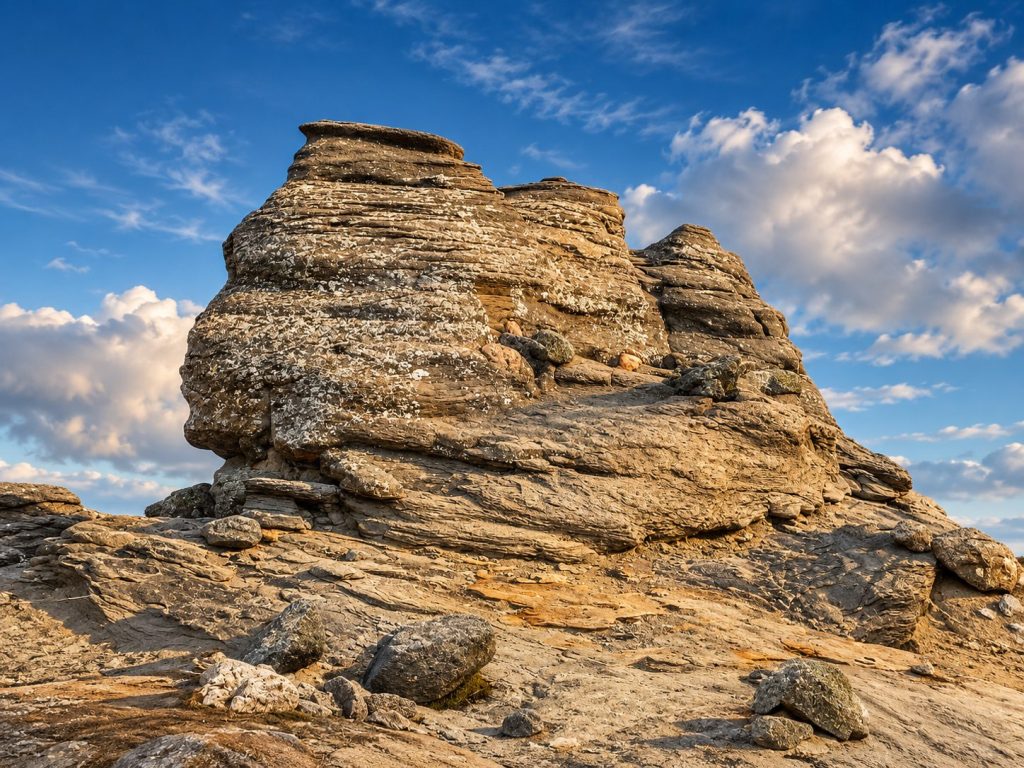
The Sfinxul (Sphinx) on the Bucegi plateau, showing its layered conglomerate structure and the silhouette that gives the formation its name.
The Sacred Mountain and the Cave of Zamolxis
The Bucegi have also acquired a place in discussions of the ancient religious world of the Getae and Dacians. One of the most intriguing names associated with this subject is Zamolxis, a figure described by several ancient writers in connection with the religious beliefs of the Getae.
Herodotus, writing in the fifth century BC, recounts a story in which Zamolxis withdraws into an underground chamber and later reappears. His account is generally understood as a report of a tradition concerning death, return and the promise of another form of existence. It is an ancient literary testimony, not a geographical description that identifies a particular cave.
Strabo, writing several centuries later, refers to a sacred mountain associated with Zamolxis and a cave in which he was said to have withdrawn. The mountain is known in later discussions as Kogaionon or Kogaion. Strabo’s account has encouraged generations of writers and researchers to search for a precise geographical identification, but it does not provide sufficient detail to establish the location beyond doubt.
One proposal connects the ancient tradition with the Ialomița Cave in the Bucegi. The suggestion is understandable: the cave lies within a dramatic mountain setting and has long attracted attention as a place of natural and religious significance. Nevertheless, the identification remains unproven. No archaeological evidence has established that the Ialomița Cave was the sanctuary or retreat described in the ancient accounts.
The cave itself is a genuine and remarkable natural feature. Unlike the conglomerate formations of the upper plateau, it is developed in Jurassic limestone and was formed through the action of water. Its passages extend for approximately 840 metres on two levels, according to the park’s management documentation.
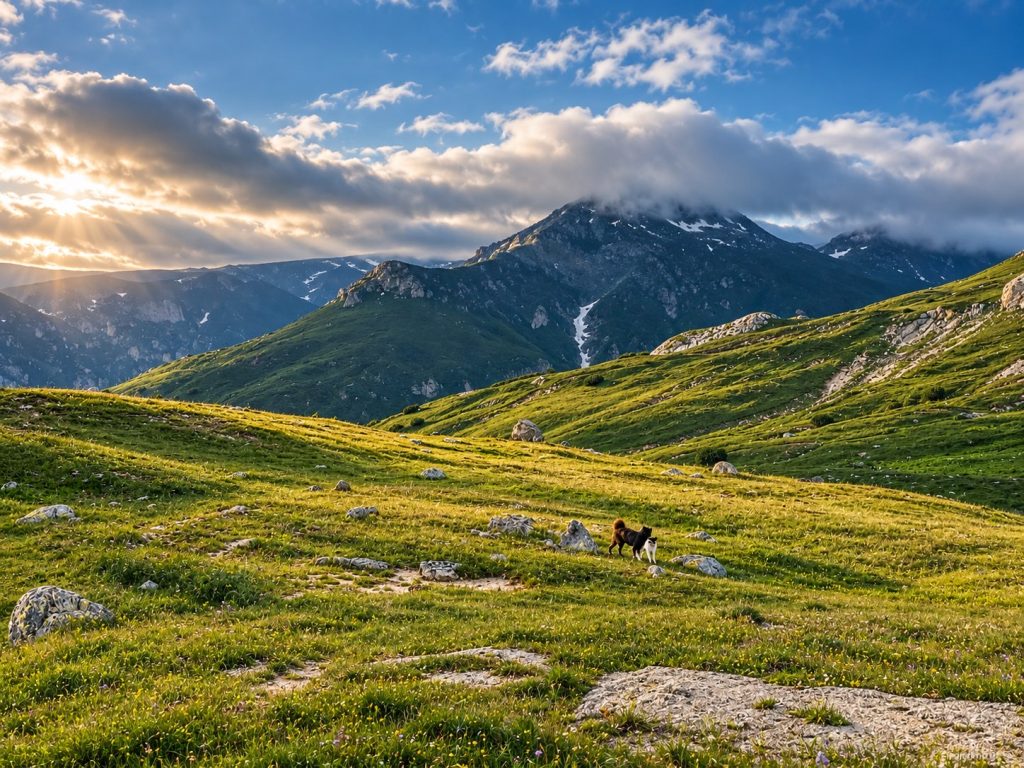
The wider Bucegi area contains numerous caves and vertical shafts, reflecting the complexity of its limestone and conglomerate systems.
The Ialomița Cave also possesses a documented Christian history. A hermitage stands at its entrance, and scholarly research associates its foundation with the early sixteenth century and the Wallachian prince Mihnea cel Rău, whose reign lasted from 1508 to 1509. The Christian significance of the site is therefore distinct from the much older and uncertain traditions concerning Zamolxis.
The distinction is important. A place may acquire several layers of meaning over the centuries. The Ialomița Cave can be appreciated for its geological character, its Christian associations and its place in interpretations of ancient mythology without being presented as the proven location of a Dacian sanctuary.
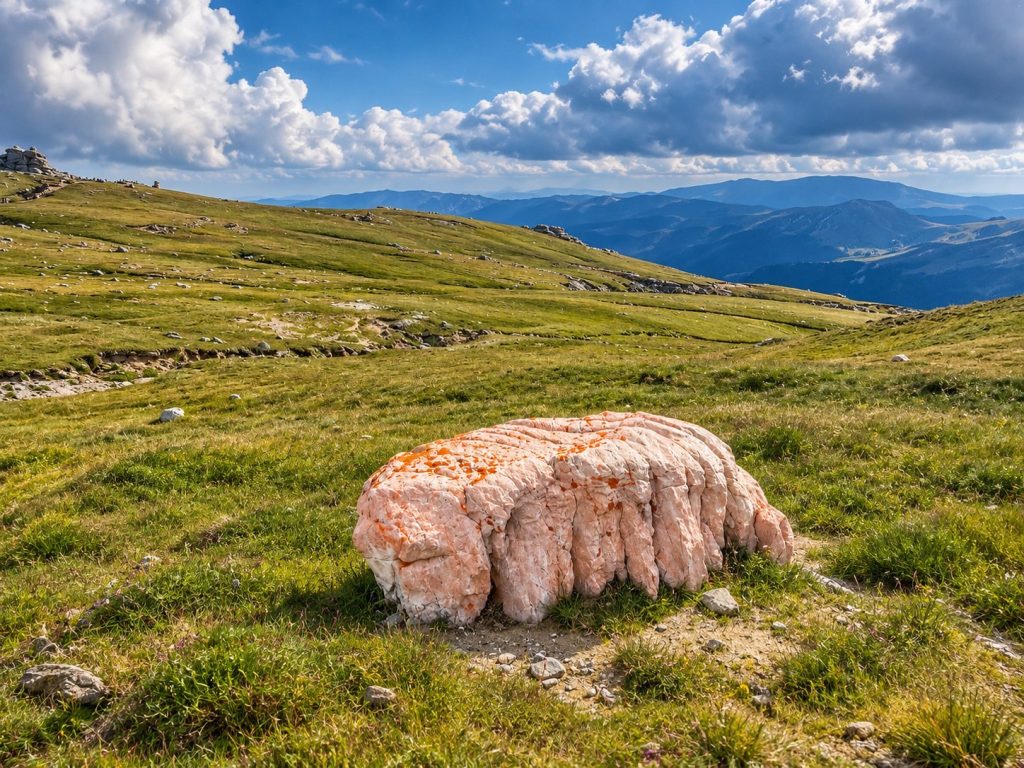
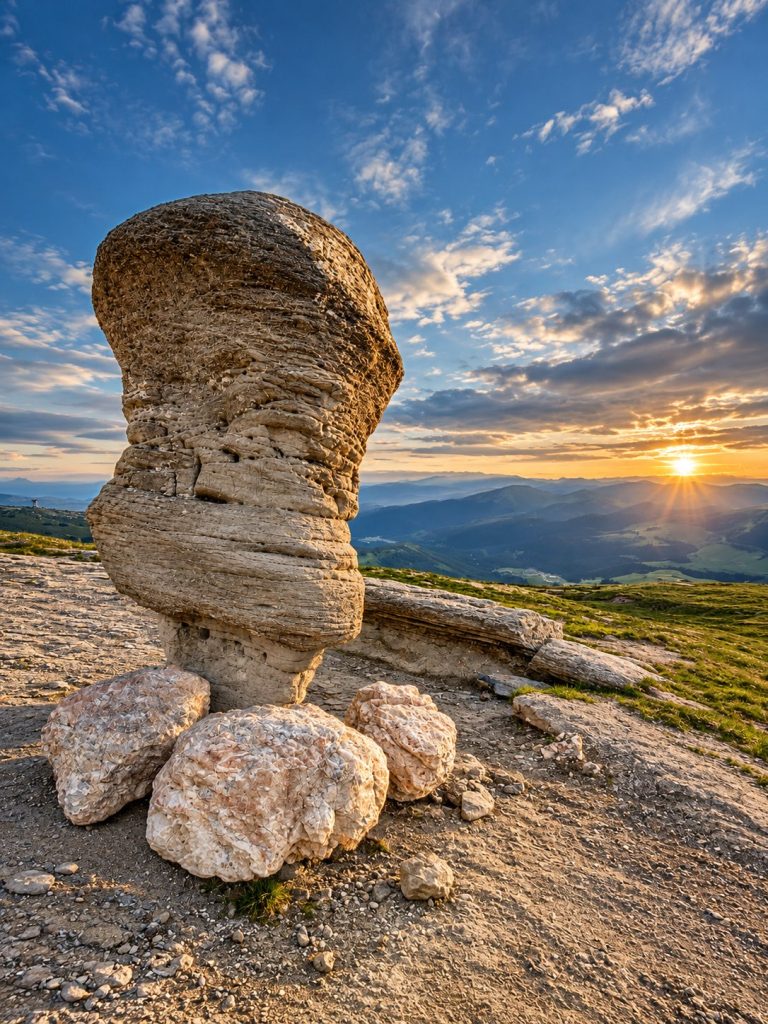
A fluted stone block resting on the grassy slopes of the Bucegi plateau, shaped by weathering against a wide mountain panorama.
Secrets Beneath the Mountains?
Few mountain ranges have escaped the attraction of stories about hidden passages, lost chambers and forgotten civilisations. In the Bucegi, these themes have developed into a particularly elaborate modern mythology.
Some popular accounts describe enormous underground halls extending deep beneath the plateau, connected by tunnels supposedly reaching distant regions of the world. Other versions speak of ancient technological installations, mysterious energy fields, hidden archives or a subterranean complex built by a highly advanced civilisation. Such stories are sometimes linked to alleged secret military operations involving Romanian and foreign authorities.
A further element concerns extraterrestrial visitors. In some narratives, the mountains are said to conceal evidence of contact between humanity and beings from beyond Earth, or to contain technologies whose origins lie outside known human history.
These accounts have circulated through books, online publications and popular discussions. Among the works most closely associated with the modern Bucegi mystery narrative are those published under the name Radu Cinamar. Beginning in 2003, the series presented purported discoveries of extraordinary underground structures, secret expeditions and knowledge attributed to a lost civilisation. The books helped bring the Bucegi into the international world of esoteric and speculative literature.
The stories are imaginative, and their appeal is easy to understand. A remote mountain plateau, caves, unusual rock formations and the existence of restricted areas elsewhere in the world provide a ready setting for tales of concealed secrets. Yet the distinction between an evocative narrative and a documented discovery remains essential.
There is no reliable archaeological, geological or scientific evidence for the vast artificial tunnel systems, ancient technological complexes or extraterrestrial installations described in these accounts. Nor does the existence of military facilities or restricted zones in a country establish the existence of secret underground civilisations beneath a particular mountain range. Claims of this scale require independently verifiable evidence, not simply the repetition of allegations.
The real underground world of the Bucegi is already remarkable. The massif contains genuine caves, shafts, underground drainage systems and karst features, some of which have been studied by speleologists. The official management plan records dozens of caves and shafts in the protected area, including the Ialomița Cave and the extensive Rătei Cave system. These are part of the natural geological history of the mountains, not evidence of the artificial networks described in modern speculative literature.
The distinction does not mean that every underground feature has been fully explored. Caves and mountain systems can be difficult environments to investigate, and scientific knowledge continues to develop. But an unexplored passage is not evidence of a lost civilisation, just as a geological mystery is not proof of extraterrestrial intervention. Curiosity is most rewarding when it remains open to discovery without abandoning the standards of evidence.
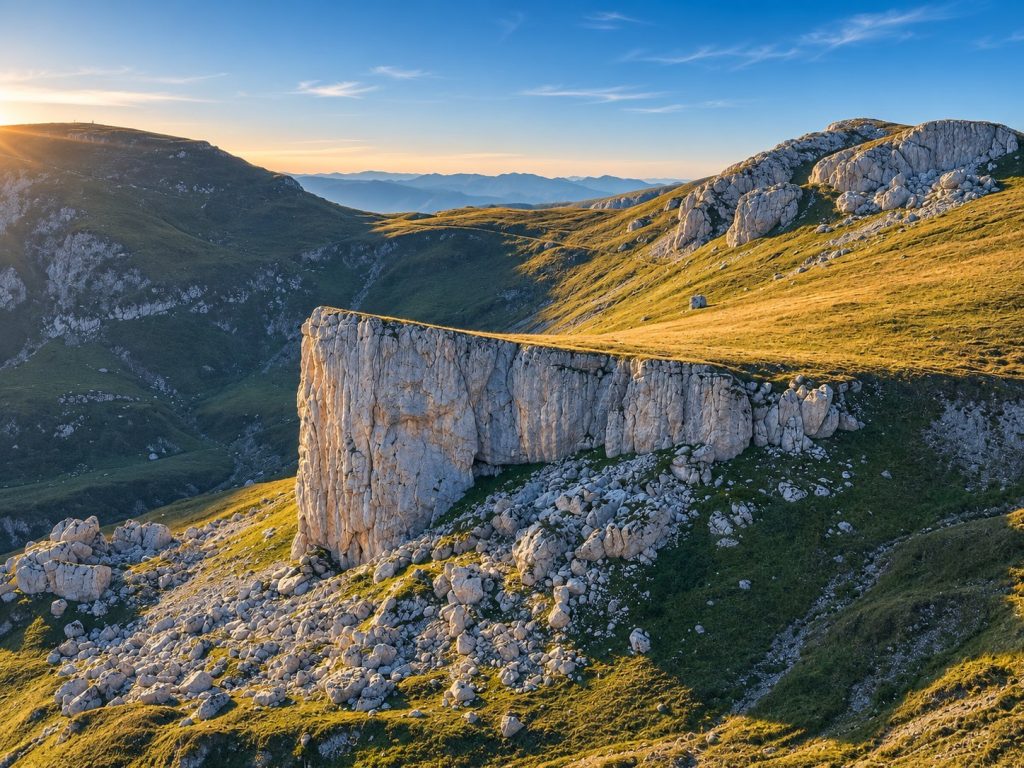
A sharp limestone or conglomerate cliff above talus slopes and mountain valleys in the Bucegi landscape, where dramatic relief meets layered interpretation.
Between Geological Reality and Modern Myth
The stories surrounding the Bucegi belong to different historical layers and should not be treated as though they were all of the same kind.
The accounts of Zamolxis and Kogaionon come from ancient literature. They offer evidence for what Greek writers understood or reported about the religious world of the Getae, although they cannot establish the precise location of the places described.
The association of Kogaionon with the Bucegi, and of the cave of Zamolxis with the Ialomița Cave, belongs to later interpretation. It is an intriguing hypothesis, not an established archaeological identification.
The stories about giant tunnels, secret chambers and extraterrestrial technology belong to modern popular mythology. They can be studied as examples of contemporary folklore, esoteric thought and conspiracy narratives, but they should not be presented as discoveries confirmed by archaeology or geology.
There is something revealing about the way such stories develop. Distinctive natural features invite human interpretation. A rock resembles a face; a cave suggests a hidden sanctuary; a remote plateau seems an appropriate setting for secrets. Over time, separate impressions and traditions can be woven into a larger narrative.
The result may be entertaining and may become part of the cultural identity associated with a place. But cultural significance and historical proof are not the same thing. A legend is worth preserving as a legend; it need not be transformed into a claim about the demonstrable past.
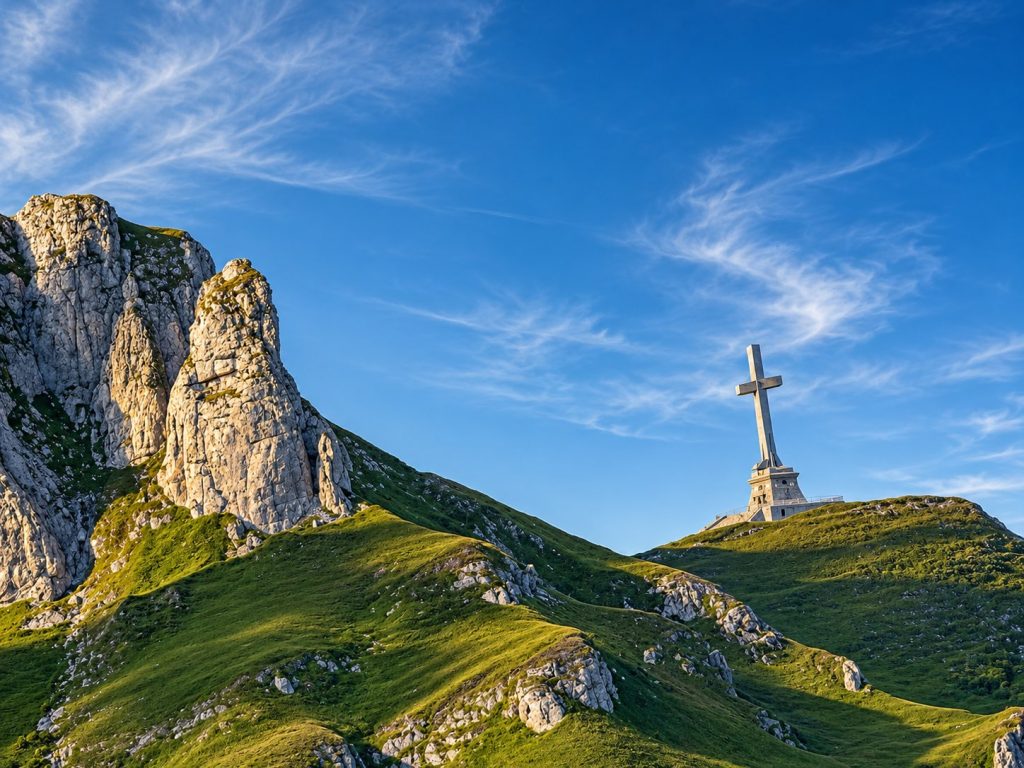
Dramatic cliffs and alpine slopes along the eastern side of the Bucegi Massif, with the Caraiman monument rising on the ridge.
A Protected Natural Heritage
The Sphinx and the Babele are among the best-known features of the Bucegi plateau, but they form only a small part of a much wider natural heritage. The massif contains dramatic escarpments, limestone gorges, caves, mountain meadows, forests and habitats supporting a rich variety of wildlife.
The protected-area framework seeks to preserve these features while regulating activities that may damage them. Managing a popular mountain landscape is a delicate task. Tourism brings economic opportunities to nearby communities and allows visitors to appreciate the Carpathians, but concentrated footfall, litter, disturbance of wildlife and careless interaction with geological formations can undermine the very qualities that attract people.
The Sphinx and the Babele are particularly exposed to visitor pressure. Their preservation is not simply a matter of keeping a famous silhouette available for photographs. It is part of a broader responsibility to safeguard geological features that record the natural history of the region.

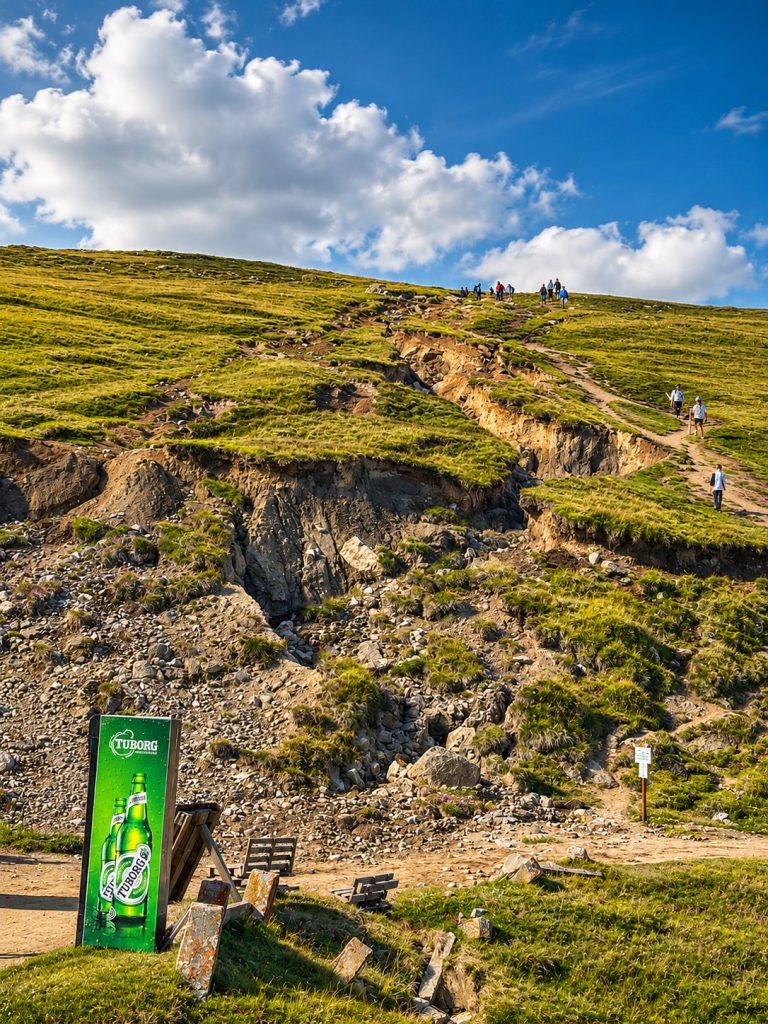
Visitors should therefore follow marked routes, respect the rules established by the park administration and avoid climbing or damaging vulnerable formations. The mountains are not a stage set, but a living natural environment.
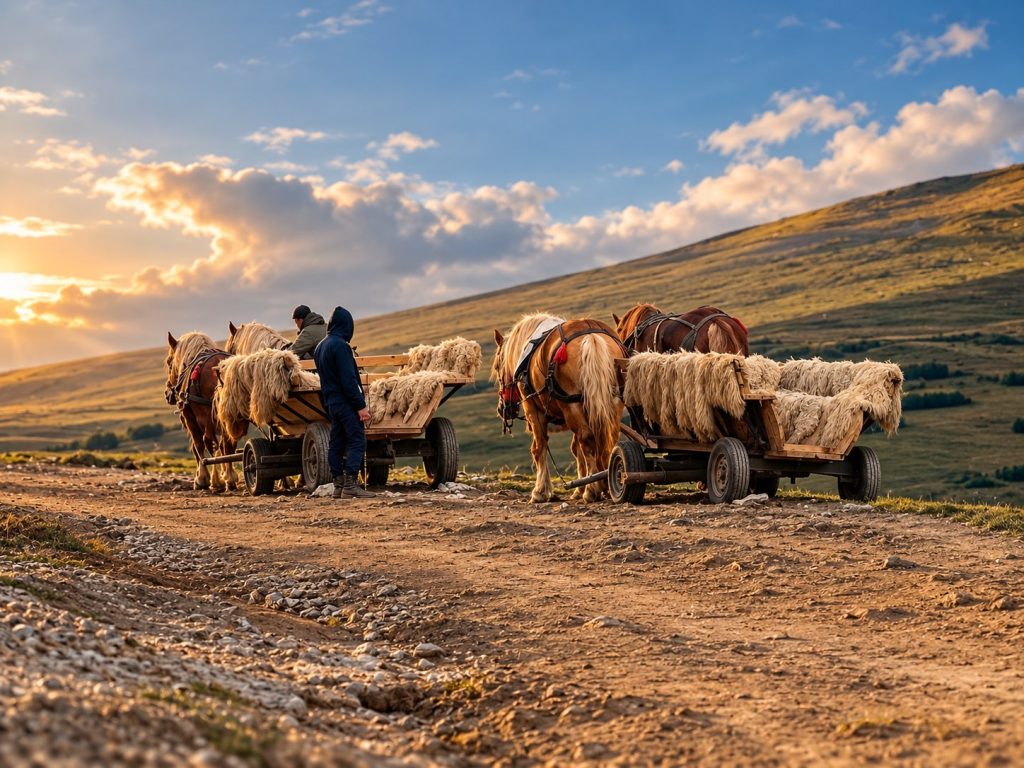
Traditional transport along a mountain track on the Bucegi plateau beneath evening clouds.
The Enduring Fascination of the Bucegi
The Bucegi Mountains bring together several forms of fascination. Their geology tells a story of ancient sedimentation, tectonic development, weathering and erosion. Their caves reveal a subterranean landscape shaped by water and time. Their high plateau preserves a distinctive mountain environment, while the Sphinx and the Babele have become enduring symbols of the Romanian Carpathians.
Around these natural features, successive generations have created stories. Some draw upon ancient accounts of sacred mountains and religious figures; others belong to local tradition; still others are modern narratives of hidden worlds and unexplained phenomena. Each reveals something about the human desire to find meaning in unusual landscapes.
The most rewarding way to approach the Bucegi is neither to dismiss their legends nor to accept every extraordinary claim at face value. It is to understand where each story comes from, what evidence supports it and where imagination begins.
The Sphinx does not need to have been carved by an ancient hand to command attention. The Babele do not need to be petrified priestesses to look remarkable against the open sky. Their true history is written in the layers of stone and in the slow work of natural forces.
Perhaps that is the greatest wonder of all: that a landscape shaped over millions of years can still surprise the human eye, awaken the imagination and inspire stories that continue to grow long after the wind has passed over the plateau.
Basarab Heritage
— A.C.
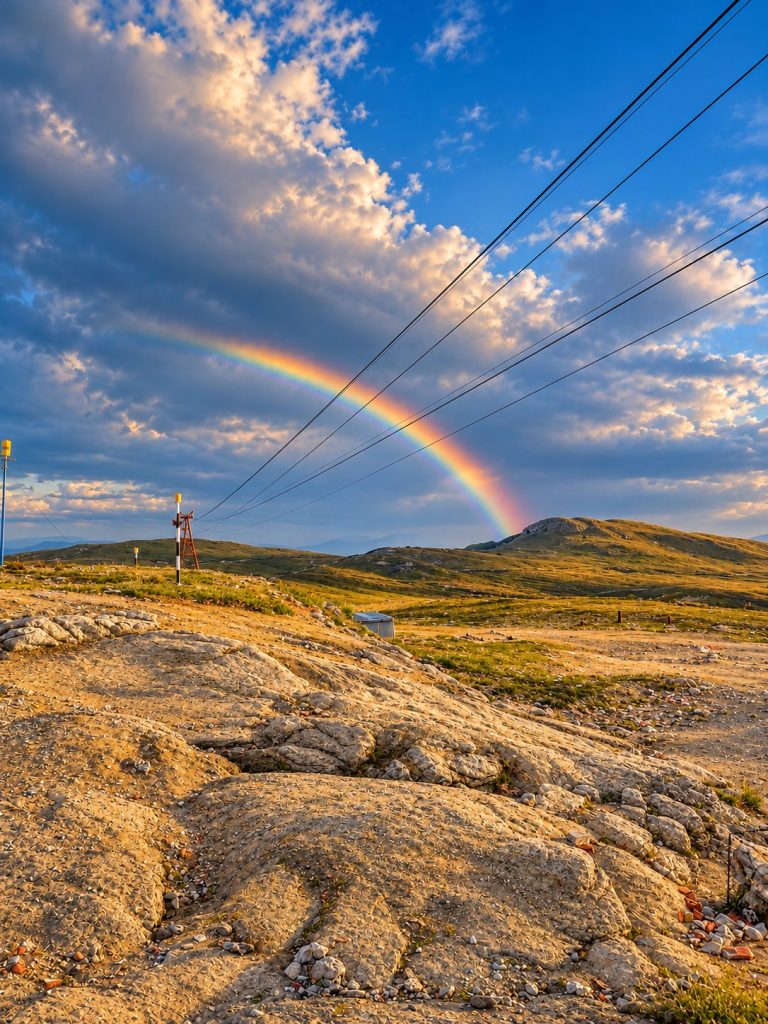
A rainbow arching over the weathered rock surfaces of the Bucegi plateau, capturing the shifting weather and enduring atmosphere of the Southern Carpathians.