In January 1859, a remarkable political achievement changed the course of Romanian history. In the aftermath of the Crimean War, the political future of Moldavia and Wallachia was shaped by the international settlement established through the Treaty of Paris of 1856 and the Convention of Paris of 1858.
Although the Convention provided for two separate principalities under Ottoman suzerainty, with distinct institutions and administrations, the unionist movement pursued a common political future for the two lands.
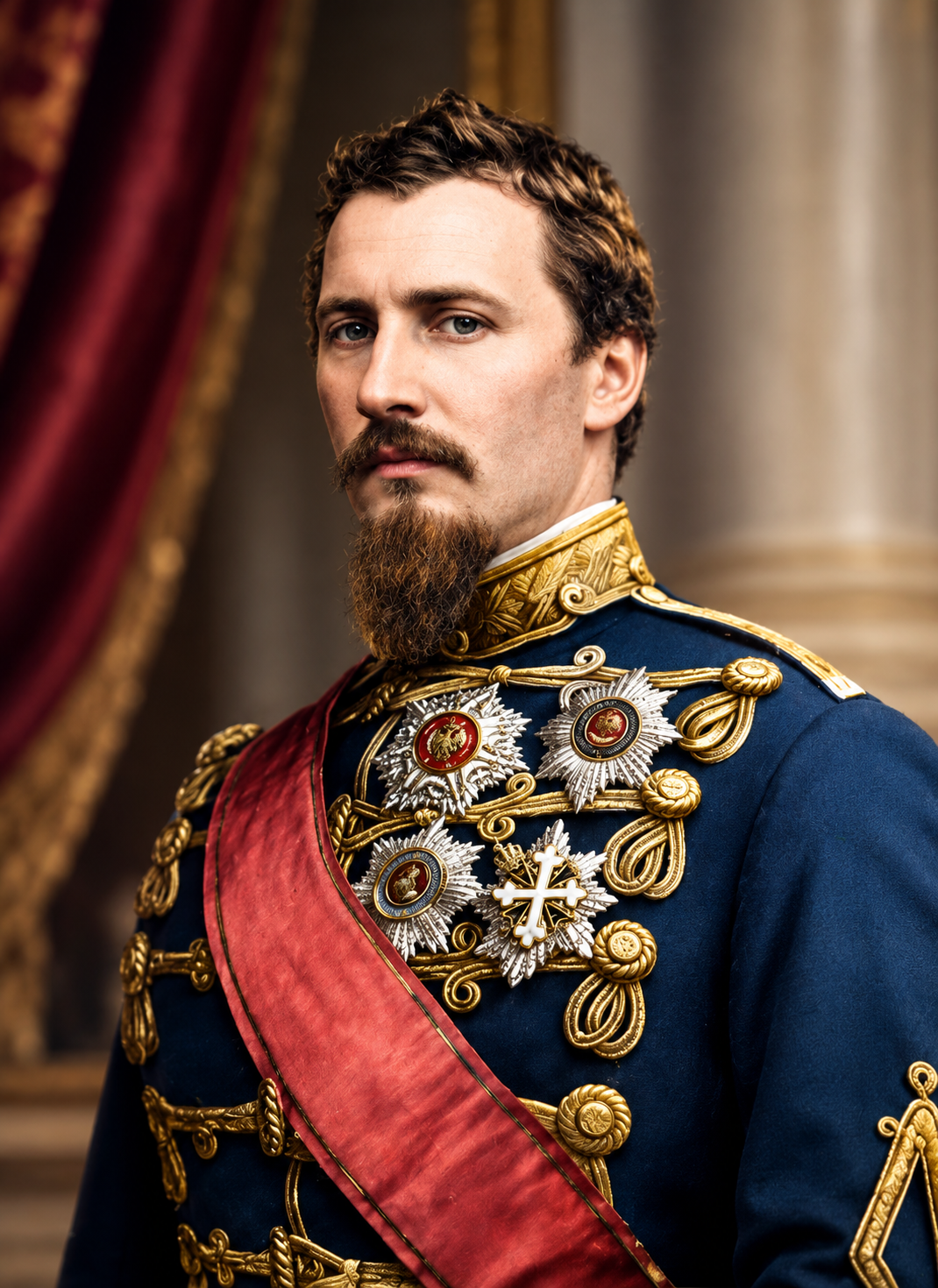
On 5 January 1859, Alexandru Ioan Cuza, a colonel and prominent figure of the unionist movement, was elected Prince of Moldavia in Iași. On 24 January, the elective assembly in Bucharest elected him Prince of Wallachia as well. By choosing the same ruler for both principalities, the political leaders of the unionist movement achieved a personal union that laid the foundations for the modern Romanian state.
The process of unification continued during Cuza’s reign (1859–1866). In 1862, Moldavia and Wallachia were brought together under a single government and administration, with Bucharest as their capital. This institutional union marked a decisive stage in the emergence of modern Romania.
Cuza’s reign also witnessed far-reaching reforms that transformed the country’s legal, social, and administrative structures. The secularization of monastic estates in 1863 strengthened the state’s control over substantial economic resources. The agrarian reform of 1864 addressed the traditional obligations of the peasantry and redistributed land to hundreds of thousands of farming families. New civil and criminal codes, influenced by European legal traditions, helped modernize the legal system, while the Education Law of 1864 established the foundations of free and compulsory primary education.
These transformations were neither simple nor uncontested. They reflected a broader struggle to reconcile inherited institutions, social structures, and political traditions with the demands of a modernizing European state.
At Basarab Heritage, we explore the people, institutions, and historical developments that shaped the Romanian lands. The union of Moldavia and Wallachia stands as a defining chapter in this history, demonstrating how political vision, collective action, and institutional reform contributed to the formation of modern Romania.
Alexandru Ioan Cuza’s legacy remains inseparable from the complex and transformative process through which the Romanian Principalities became a modern state.
Basarab Heritage
— A.C.