
There are towns whose history can be discovered in a single monument, and there are others whose streets, squares and buildings together form a remarkable historical record. Sighișoara belongs unmistakably to the latter. Rising above the valley of the Târnava Mare, its towers and steep-roofed houses create one of the most distinctive urban landscapes in Transylvania. Yet its significance extends far beyond its picturesque appearance. The historic centre preserves the structure of a medieval town, the architectural legacy of the Transylvanian Saxons, and the traces of centuries of political, commercial and cultural change.
To understand Sighișoara, one must look at the town as a whole. Its fortified upper town, the streets and houses of the Lower Town, its churches, defensive walls and public spaces are not separate attractions assembled for the visitor. They belong to a historical urban ensemble that developed in close relationship with the landscape and with the needs of the community that inhabited it.

A Town Shaped by Its Landscape
Sighișoara lies in the heart of Transylvania, in present-day Mureș County, where the Târnava Mare flows through a landscape of wooded hills and broad valleys. The historic centre occupies a particularly striking position. The fortified Citadel stands on a steep plateau overlooking the river valley, while the Lower Town extends around its foot and along the neighbouring slopes.
This arrangement is central to the character of Sighișoara. The upper settlement offered a naturally defensible position, while the lower area provided space for trade, workshops, roads and the expanding life of the town. The relationship between the two was never merely geographical: it reflected the organisation of a medieval community, in which defence, administration, commerce and residence were closely connected.
The historic centre developed around the Citadel Hill and the lower ground at its foot. Its streets and buildings follow the contours of the terrain rather than imposing a rigid geometric plan upon it. The result is an urban landscape of steep approaches, narrow lanes, irregular squares and closely grouped houses. A street may open unexpectedly into a small square, turn between historic façades, or reveal a tower rising above the rooftops.
This close relationship between settlement and terrain gives Sighișoara much of its distinctive character. The town is not simply a fortified hilltop separated from its surroundings. Its upper and lower sections form an interconnected historic centre, whose development can still be read in the arrangement of streets, buildings and open spaces.
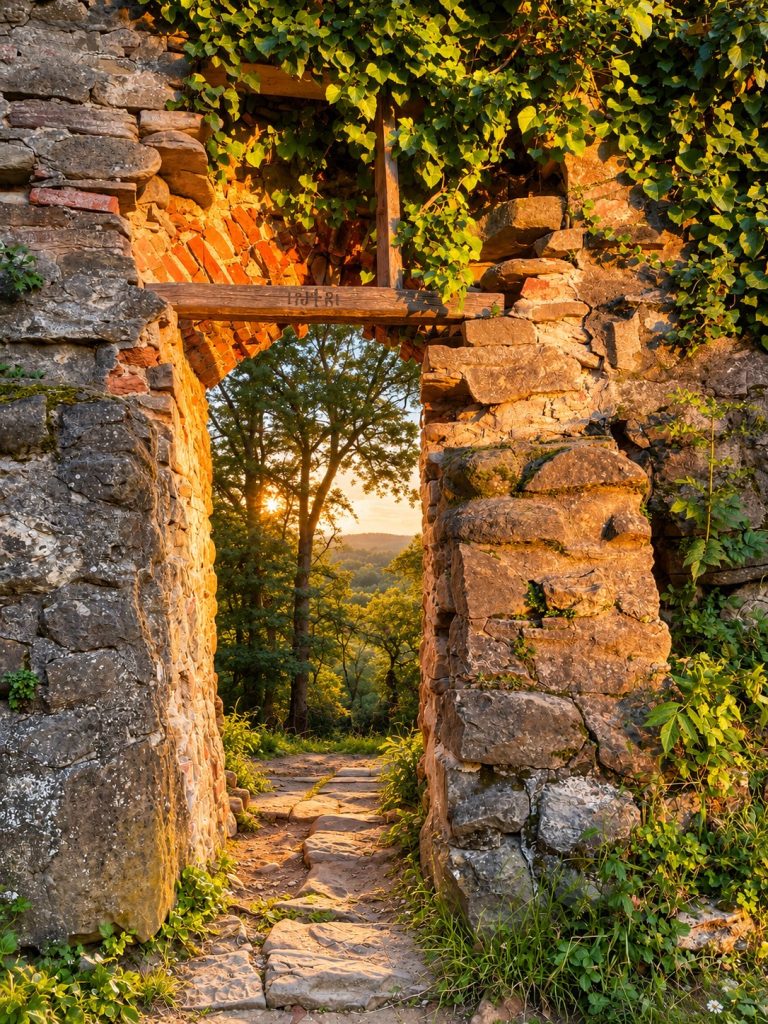
An ancient stone gateway framed by greenery, offering a view onto the historic landscape and symbolising a respectful path toward preserving Transylvanian heritage.
The Beginnings of Medieval Sighișoara
The region surrounding Sighișoara has a history of human settlement extending far beyond the Middle Ages. Archaeological discoveries in the wider area attest to prehistoric, Dacian and Roman-period activity. Among the best-known sites are the Bronze Age settlement associated with the Wietenberg culture and the remains of a Roman military installation in the vicinity.
These earlier traces form part of the deeper history of the Târnava valley, but they should be distinguished from the documented development of the medieval town itself. The history of Sighișoara as a medieval urban settlement is closely associated with the German-speaking colonists who came to Transylvania during the twelfth and thirteenth centuries.
Their arrival took place within the framework of the Hungarian Kingdom’s efforts to develop and secure its eastern territories. The settlers, traditionally known as the Transylvanian Saxons, established communities in several parts of the region. The historical term does not mean that all these settlers originated exclusively from the territory of modern Saxony; it came to designate the German-speaking communities of medieval Transylvania, whose origins were diverse.
Their settlements contributed to the development of towns, crafts, commerce and local institutions. Sighișoara emerged within this broader process of urban and economic development, in a location that combined access to important routes with the defensive advantages of its hill.
The earliest securely documented reference to the medieval settlement dates from 1280, when it appears under the name Castrum Sex. A German form, Schespurch, is recorded in 1298. These documentary references provide firm historical points of departure. An earlier date, 1191, is sometimes given as the beginning of medieval Sighișoara, following the account of the seventeenth-century chronicler Georg Krauss. It is best treated as a traditional historical date rather than as an independently confirmed foundation year.
During the fourteenth century, Sighișoara grew in importance. In 1337 it became the centre of an administrative district, and in 1367 it was referred to as a civitas – a town. Its growing standing reflected the development of civic institutions, commercial activity and craft production. Sighișoara had become an important centre within the network of Transylvanian Saxon towns.
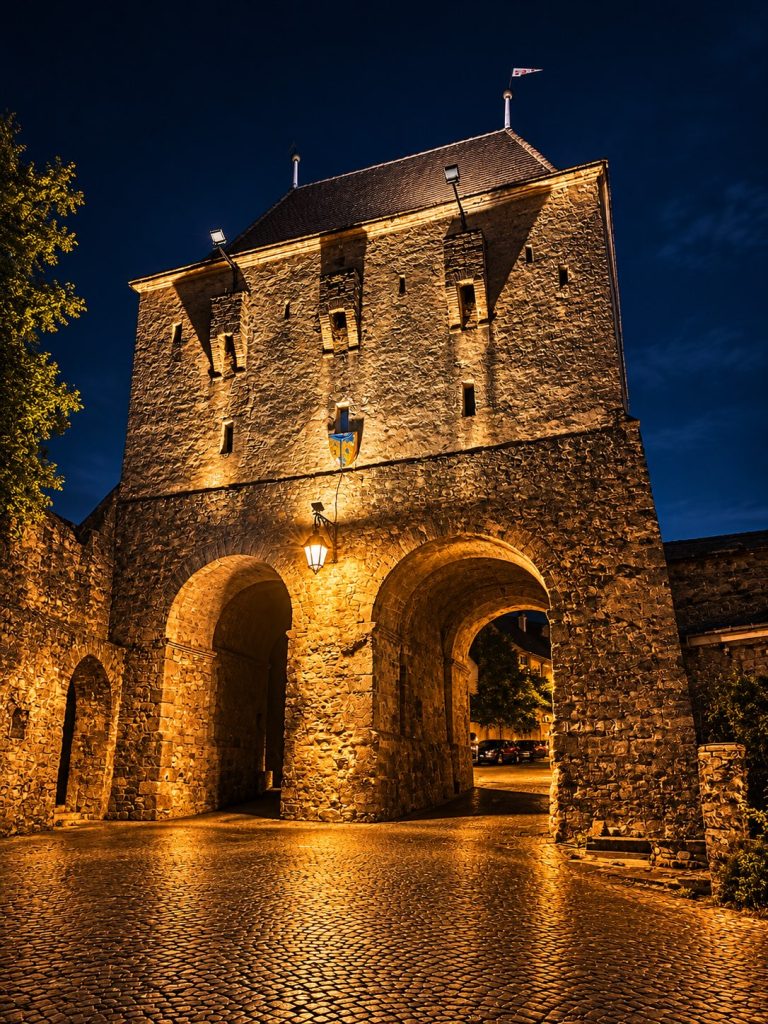
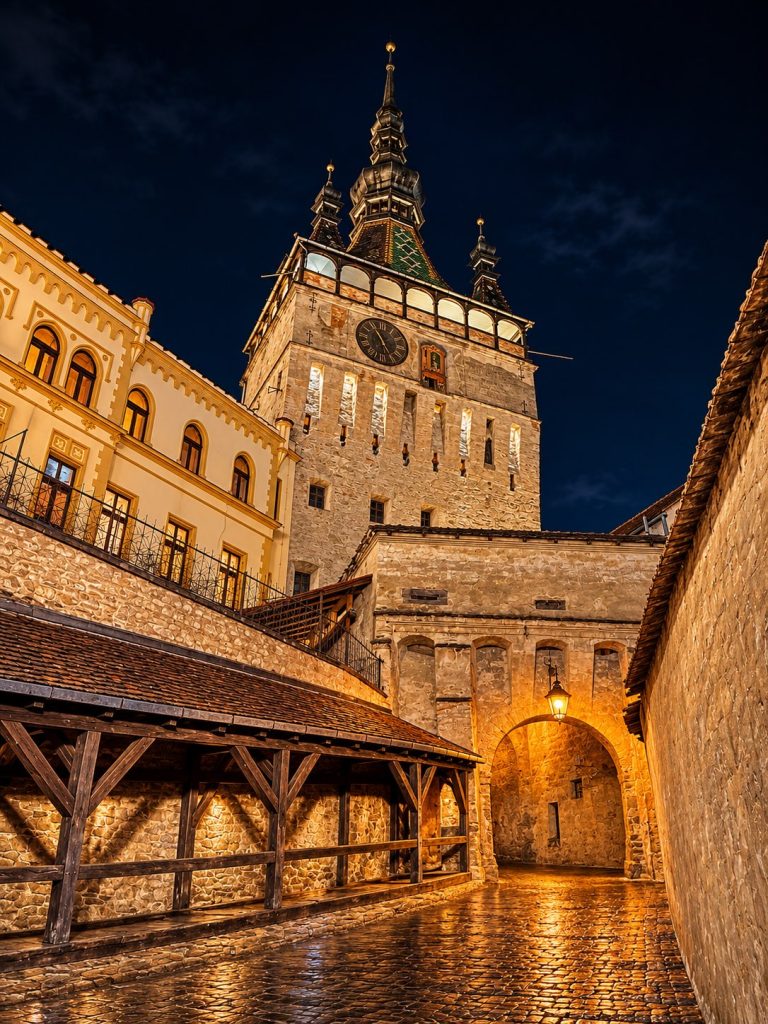
The illuminated Blacksmiths’ Tower at night, presenting one of the surviving fortified gateway structures maintained by the medieval craft guilds of Sighișoara.
The Citadel: A Town Within Walls
The fortified upper town is the most immediately recognisable part of Sighișoara. Its defensive system was not created in a single building campaign. The walls and towers were constructed and modified over generations, responding to the changing political circumstances and military requirements of the late Middle Ages.
The fortifications gradually enclosed the elevated settlement, following the contours of the hill and adapting to its natural defensive advantages. The surviving walls preserve evidence of different construction phases, particularly from the fifteenth and sixteenth centuries, when changes in military technology required modifications to older defensive arrangements.
The original defensive system comprised fourteen towers and four bastions. Nine towers and three bastions survive today. The surviving towers include the Tinsmiths’ Tower, the Ropemakers’ Tower, the Butchers’ Tower, the Furriers’ Tower, the Tailors’ Tower, the Shoemakers’ Tower, the Blacksmiths’ Tower, the Tanners’ Tower and the imposing Clock Tower.
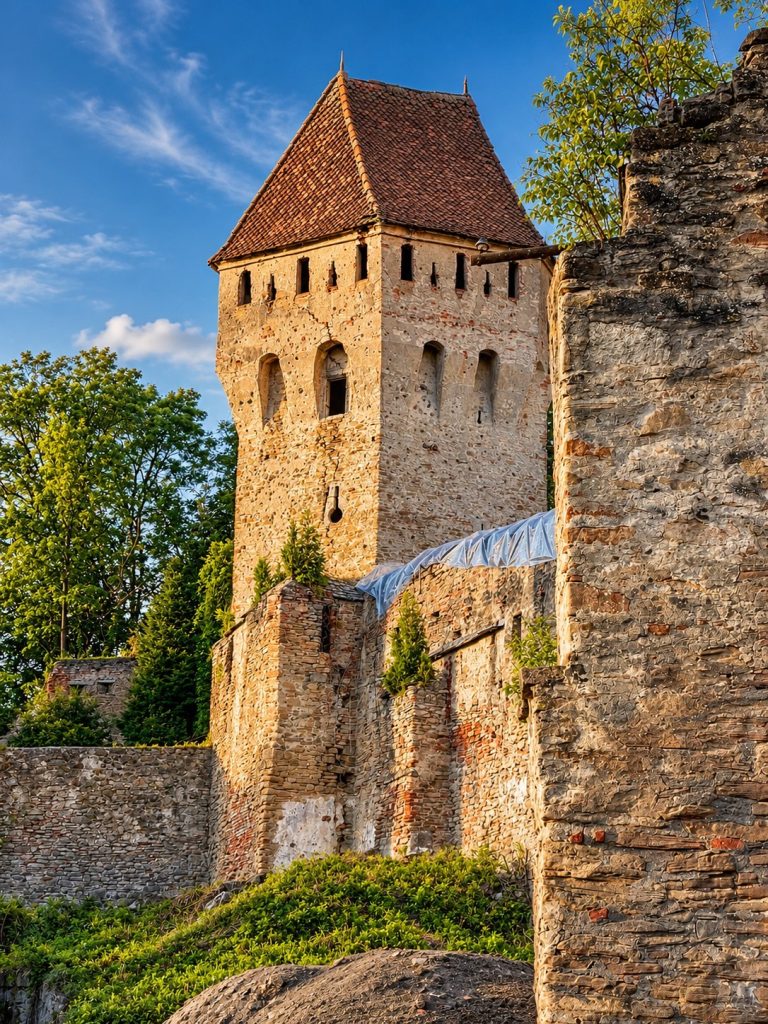
Their names preserve the memory of the craft guilds that played an important role in the town’s civic and defensive organisation. In a fortified medieval town, the maintenance and defence of the walls required considerable resources and careful organisation. The guilds were important corporate bodies within urban society, and responsibility for particular sections of the fortifications was associated with the different crafts.
These structures were therefore more than architectural ornaments. They expressed the relationship between the economic life of the town and its collective defence. The guilds regulated professional activity, represented the interests of their members and contributed to the maintenance of the urban community. Their role extended well beyond the workshop.
The surviving towers also reveal that the fortifications were not uniform. Their shapes, positions and construction details differ, reflecting the practical demands of their locations and the periods in which they were altered. Walking along the perimeter of the Citadel, one can still appreciate how the defensive line follows the contours of the plateau.
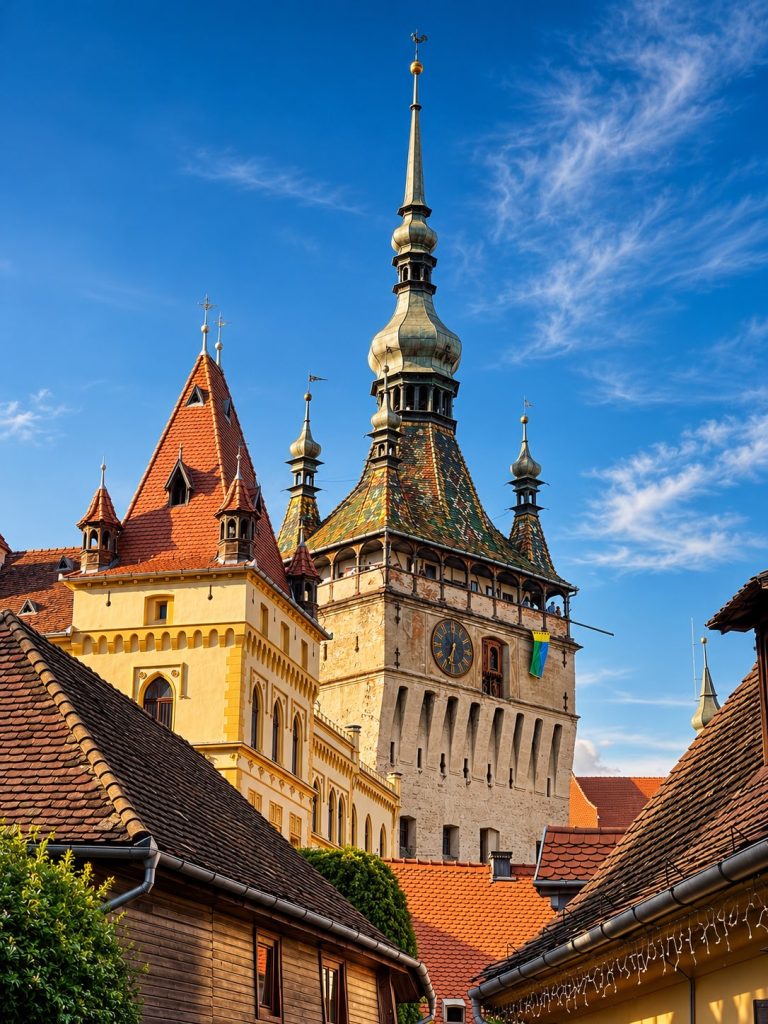
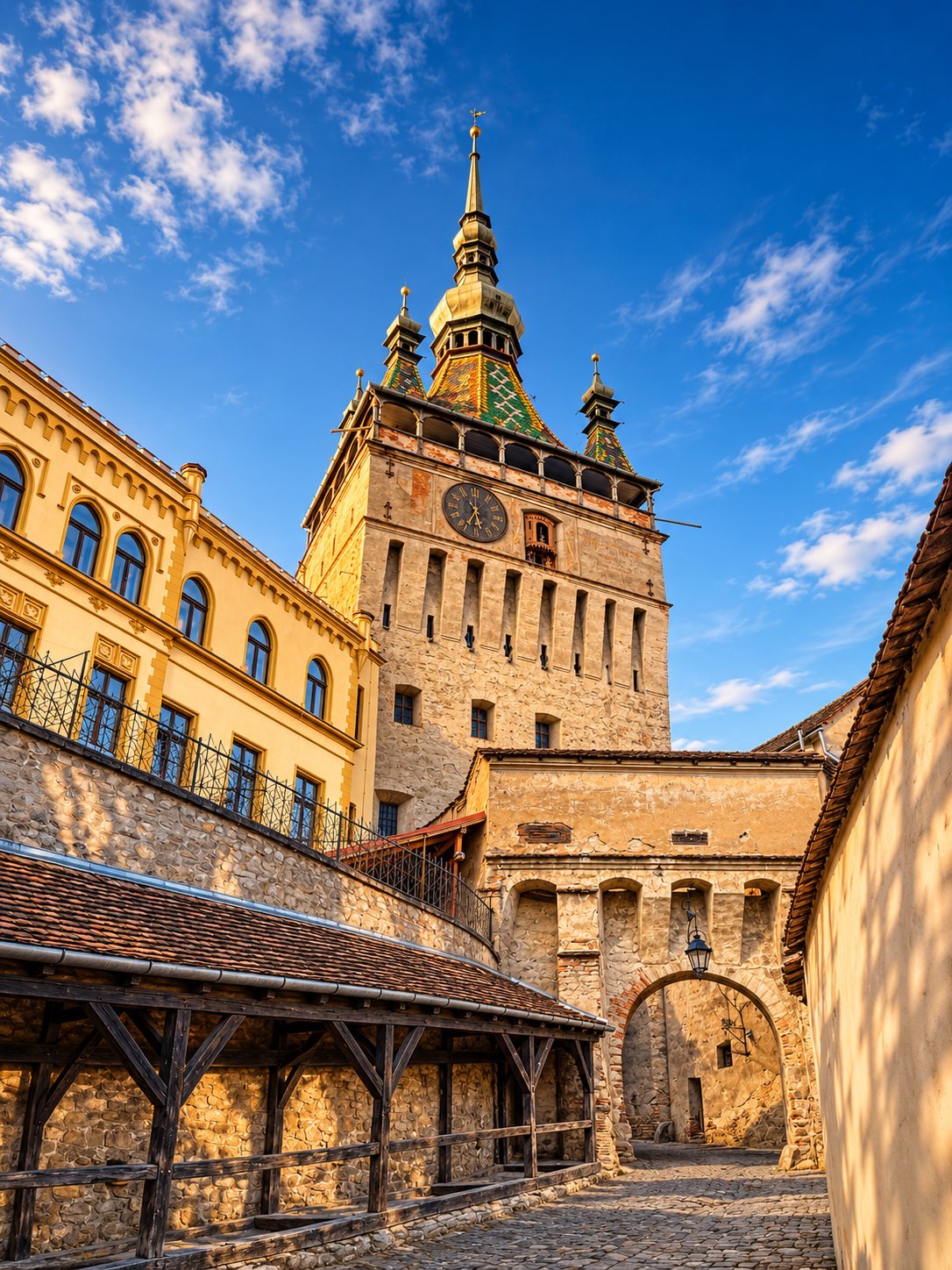
The most imposing structure is the Clock Tower, which guards the southern entrance to the Citadel and connects the upper town with the Lower Town. Unlike the towers associated with individual crafts, it was under the responsibility of the civic authorities. It served as an important administrative and defensive structure and became the most recognisable architectural symbol of Sighișoara.
The tower’s present appearance reflects several periods of construction and rebuilding. A major fire in 1676 caused extensive damage to the town and led to the reconstruction of important parts of the tower. Its distinctive roof and decorative features belong to the later architectural history of the building. Today, the Clock Tower houses the History Museum and continues to dominate the town’s skyline.
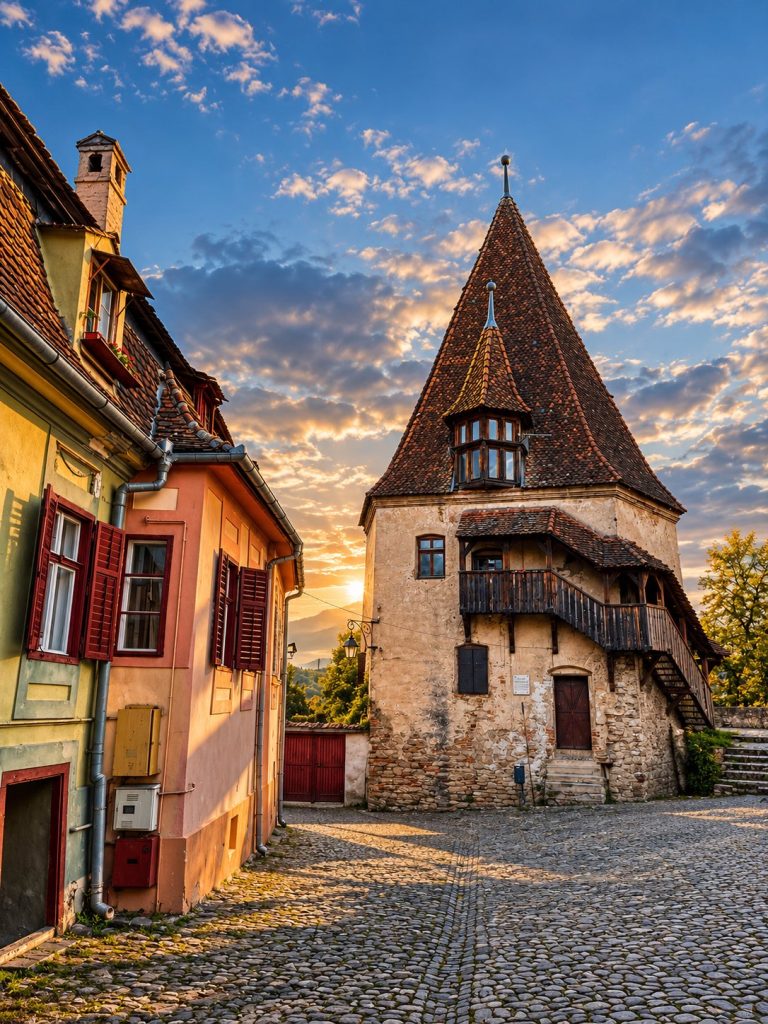
One of the historic defensive towers of Sighișoara, constructed and maintained by the medieval artisan guilds as part of the citadel’s fortification system.
Streets, Squares and Historic Houses
The character of Sighișoara is not pnly defined by its fortifications. Much of its historical value lies in the ordinary fabric of the town: the houses, narrow lanes, courtyards and public spaces that have preserved the scale and organisation of a medieval settlement.
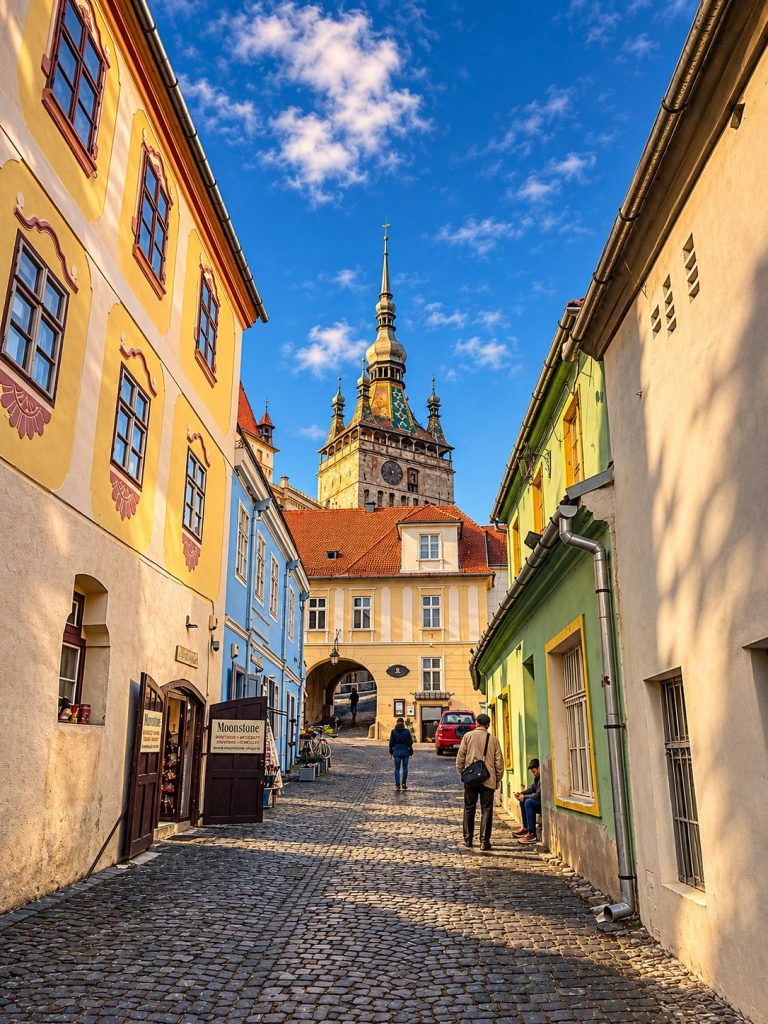
Within the Citadel, the streets follow a structure adapted to the plateau. Buildings stand close together, and their façades create continuous street fronts interrupted by passages, courtyards and occasional openings towards the surrounding landscape. The historic plots and the arrangement of houses preserve much of the town’s older urban pattern.
The houses themselves are diverse. Their façades, rooflines, entrances and decorative details reflect different periods of construction and adaptation. Some retain features associated with late medieval domestic architecture; others display Renaissance, Baroque or later elements. Their appearance is the result of successive generations of owners who altered and maintained their properties according to changing needs and tastes.
Among the best-known buildings is the Stag House, recognisable by the painted stag’s head on its corner façade. The Venetian House, with its distinctive architectural treatment, offers another example of the stylistic variety found within the Citadel. Such buildings are important not simply because of their individual appearance, but because they form part of a wider architectural ensemble.
The main squares and open spaces likewise reflect the evolution of the town. They served as places of exchange, assembly and public life, linking the commercial and administrative functions of the settlement. Their present appearance incorporates changes from several centuries, and not every open space visible today should be assumed to have existed in precisely the same form during the Middle Ages.
The result is an urban landscape in which different periods remain legible. Sighișoara’s historical character does not depend upon every building being medieval. It arises from the survival of the town’s overall structure and from the way later architecture has become part of that inherited setting.
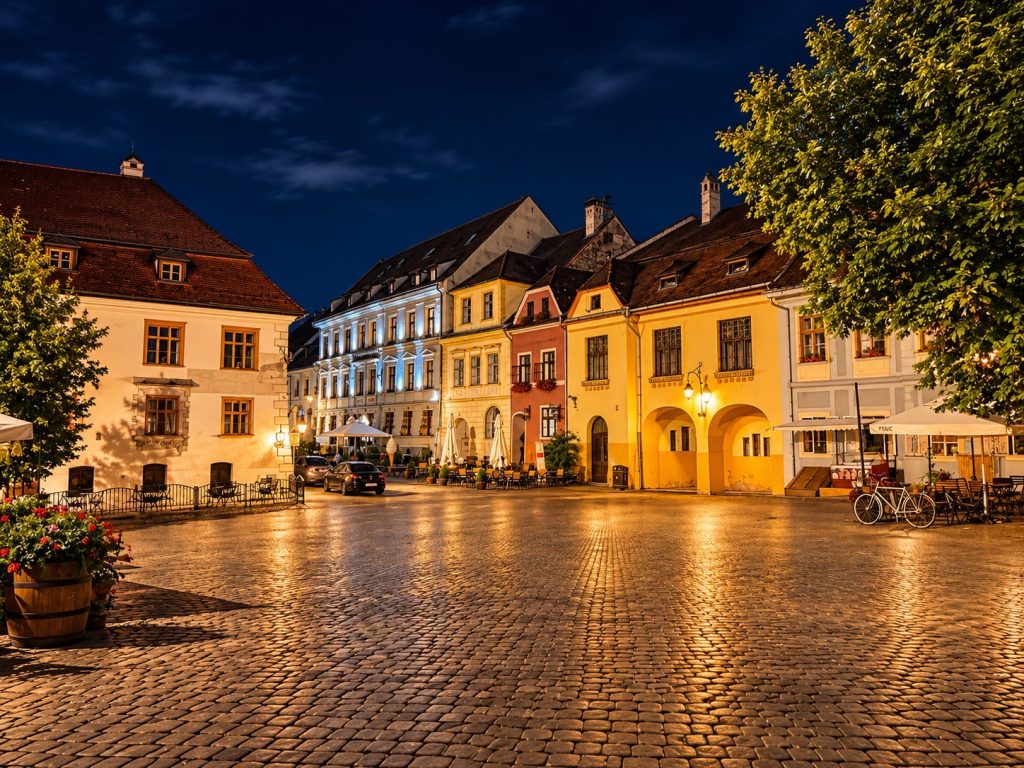
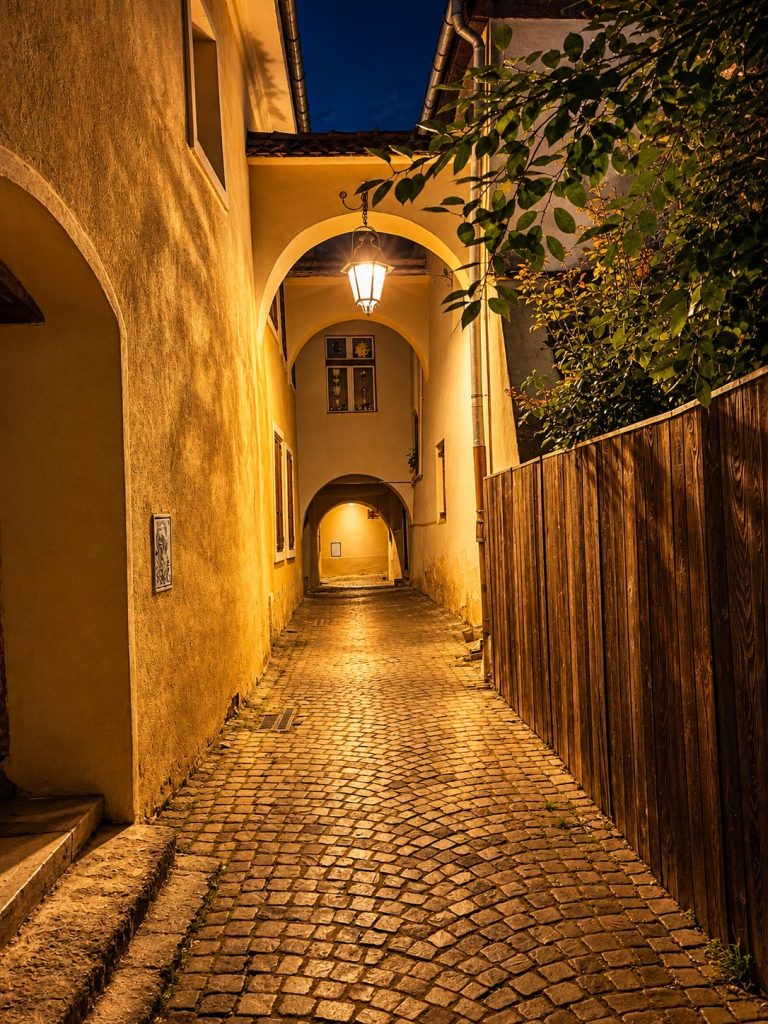
Evening view within the historic citadel of Sighișoara, reflecting the architectural layers and urban heritage shaped by the Transylvanian Saxons.
Churches, Schools and the Spiritual Life of the Town
The religious and educational buildings of Sighișoara provide another essential dimension of its history. They reflect the spiritual life of the community and the importance of ecclesiastical institutions in the development of the town.
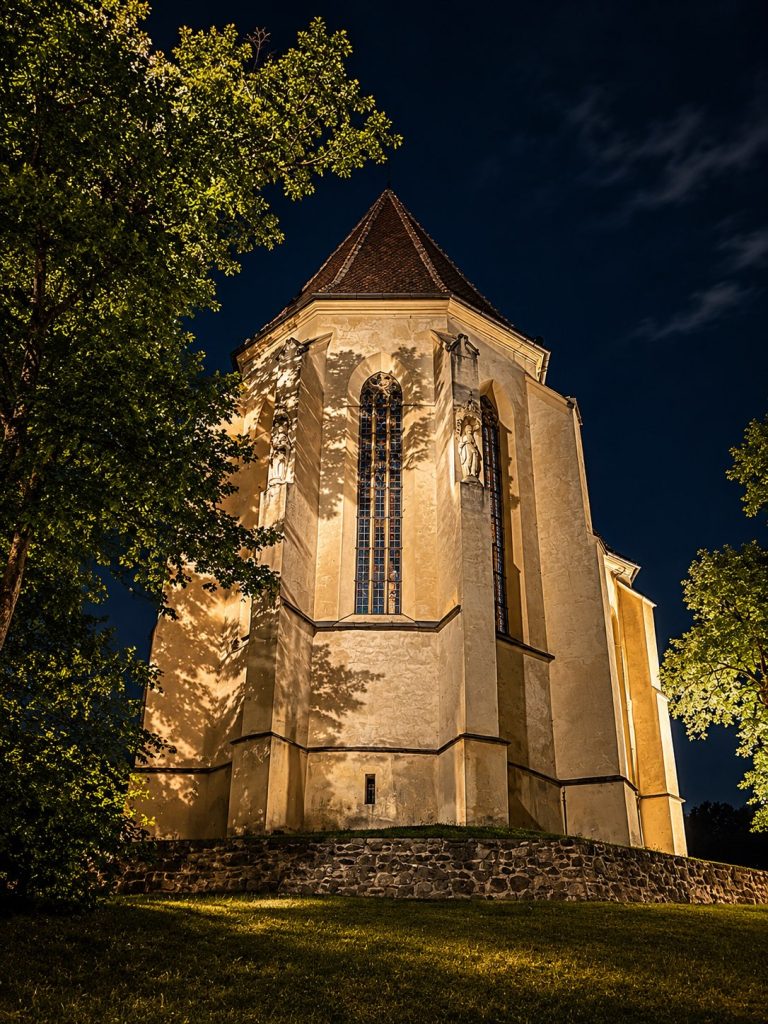
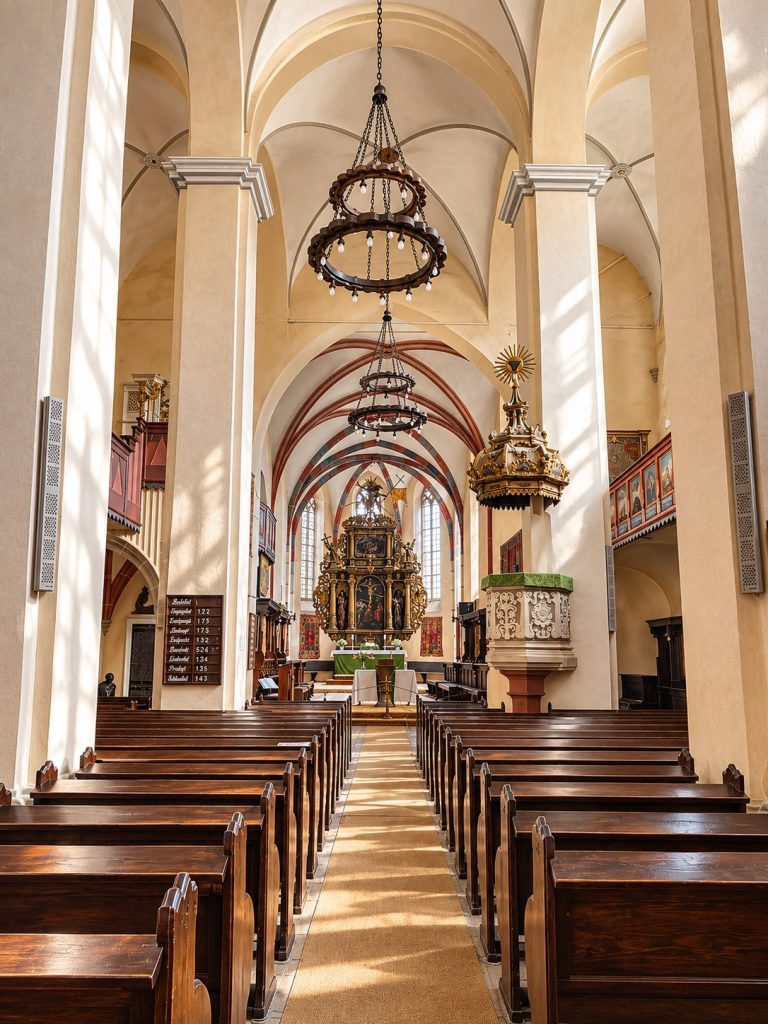
The Church on the Hill, dedicated to Saint Nicholas, occupies a commanding position above the Citadel. Its construction developed over several phases during the fourteenth and fifteenth centuries. It is one of the principal examples of Gothic architecture in Transylvania and is particularly notable for its hall-church arrangement, in which the three naves rise to approximately the same height.
The church’s architectural history is complex, and its present appearance should be understood as the result of successive building campaigns and later interventions. Its interior preserves important historical features, including medieval wall paintings from the fourteenth and fifteenth centuries, as well as historic furnishings, funerary monuments and a Gothic altarpiece. The building is also closely associated with the educational history of Sighișoara, as the area around it became an important centre of learning.
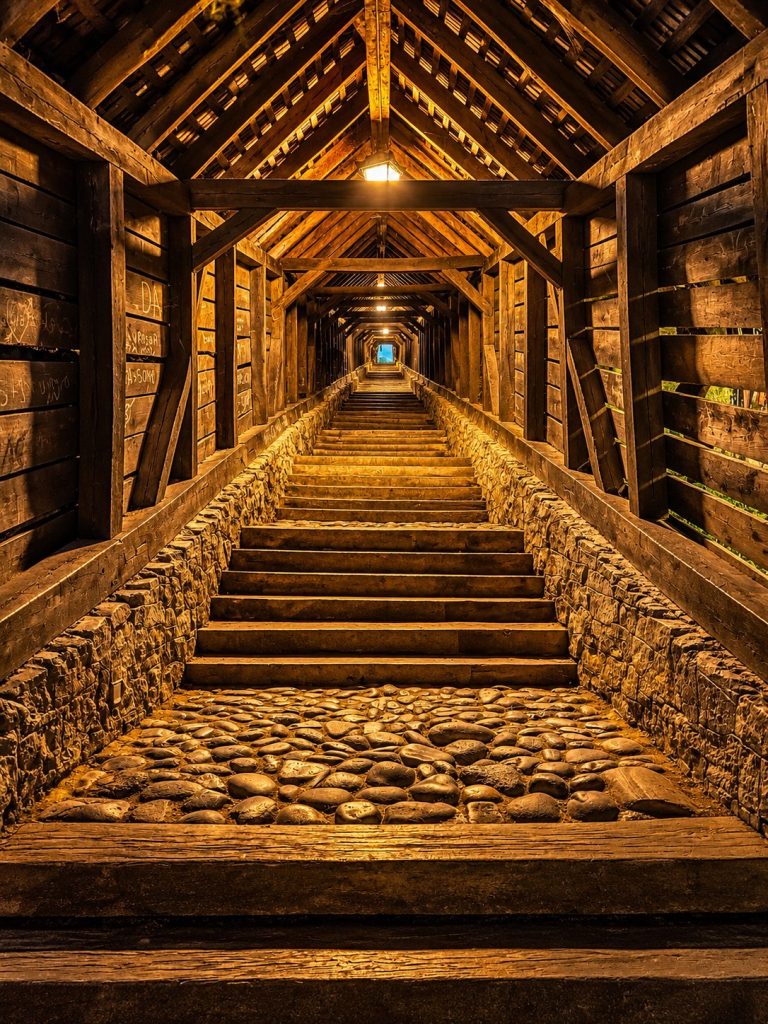
The Covered Scholars’ Stairs, traditionally dated to 1642, connect the lower part of the Citadel with the Church on the Hill and the former school buildings. Their covered construction offered protection from the weather and made the steep ascent easier. Today, the stairs remain one of the most evocative routes through the historic town, linking the civic and residential centre with its religious and educational institutions.
Another important building is the Monastery Church, dedicated to Saint Mary and situated close to the Clock Tower. It dates from the second half of the thirteenth century and was associated with the Dominican monastery that once stood beside it. The monastery buildings were demolished in the nineteenth century, but the church survived. Following the Reformation, it became part of the Lutheran religious life of the town.
The church preserves important architectural and artistic features, including Gothic elements, a Baroque altar dating from 1680 and a collection of oriental carpets. Its history reflects the religious changes that transformed Transylvania during the sixteenth century and beyond.
Together, these churches and their surroundings reveal that Sighișoara was not merely a military stronghold or a trading settlement. It was also a centre of worship, education and cultural life, shaped by the institutions of its inhabitants.
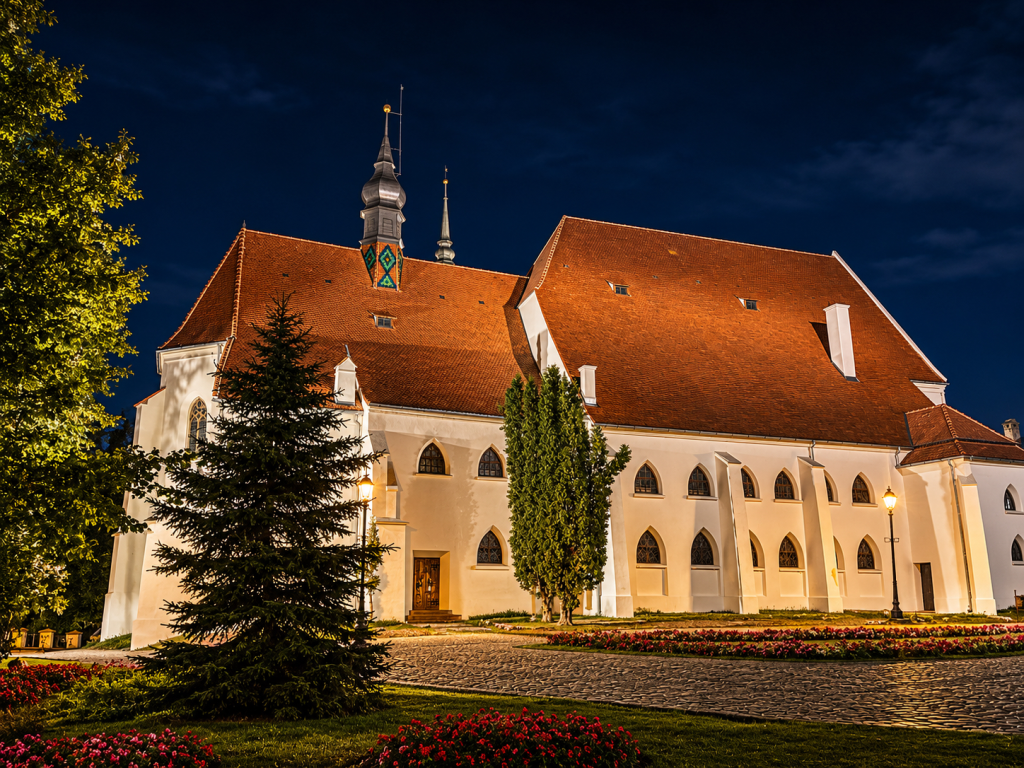
The illuminated Dominican Monastery Church of Sighișoara, standing as a monumental testament to the town’s complex spiritual and architectural heritage.
A Town Through the Centuries
Sighișoara’s medieval development took place within a region marked by changing political allegiances and recurring military threats. As part of the historical Kingdom of Hungary and later the Principality of Transylvania, the town occupied a position within a complex political landscape linking Central and South-Eastern Europe.
Its fortifications were a response to this environment, but the town’s history cannot be reduced to warfare. Trade, craft production, administration and the privileges of the Saxon communities were equally important in shaping its development.
The craft guilds regulated professional life, maintained standards and protected the interests of their members. Their influence extended into the organisation of the town and, as the surviving towers demonstrate, into its defence. The relationship between guilds and urban authority was an essential feature of medieval civic society.
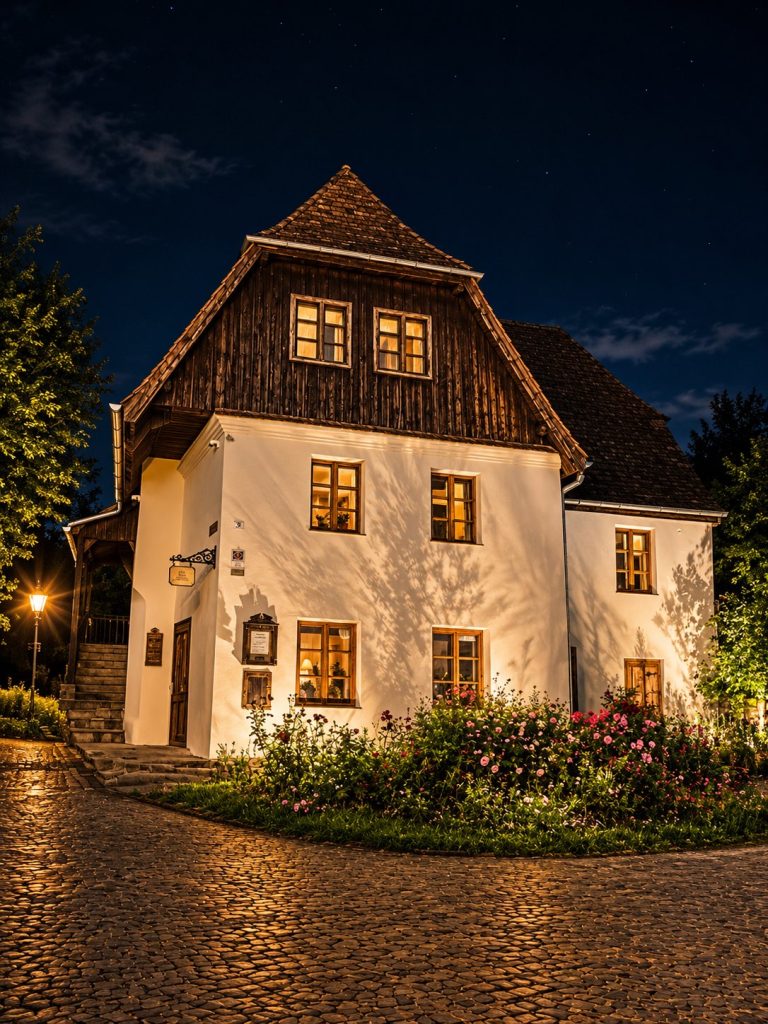
The fifteenth century also brought Sighișoara into closer contact with the political history of Wallachia. Between 1431 and 1435, Vlad II Dracul, father of Vlad III, resided in the town. His presence is associated with the house now known as Casa Vlad Dracul. This connection forms an important part of the historical relationship between Transylvania and Wallachia.
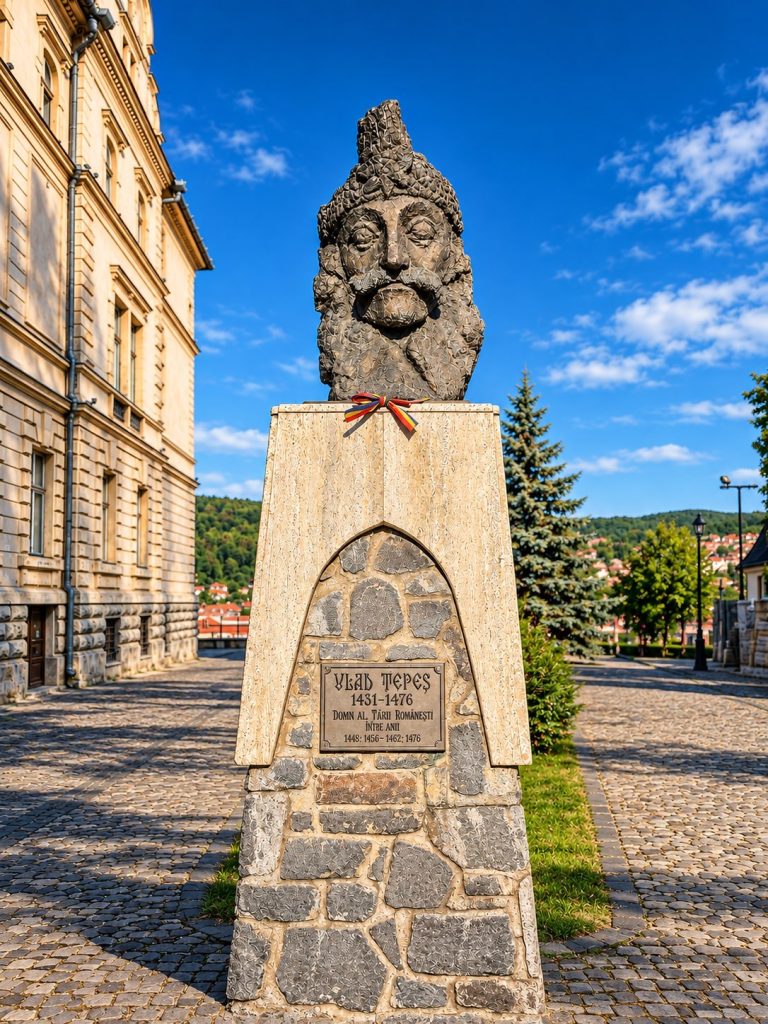
The house is also linked by tradition to the birth of Vlad III, commonly known as Vlad the Impaler. However, the claim that he was born there is not securely established by contemporary documentary evidence. It is important to distinguish the documented presence of his father from the later tradition concerning the son’s birthplace.
The Reformation brought significant religious change. The Dominican establishment ceased to function in its former form, and Lutheranism became the principal confession of the Saxon community. This transformation altered the religious institutions and cultural life of Sighișoara, while leaving much of the town’s inherited urban structure intact.
The early modern period brought further challenges. The town experienced military occupations and political disturbances, while fires and natural disasters caused considerable damage. The great fire of 1676 destroyed a substantial part of Sighișoara and led to extensive rebuilding. In 1709, an outbreak of plague claimed many lives. The earthquake of 1738 and a severe flood in 1771 added to the difficulties faced by the inhabitants.
These events altered the town, but they did not erase its essential structure. Rebuilding took place within the inherited urban framework, and successive generations continued to adapt their houses, public buildings and fortifications to changing circumstances.
During the nineteenth century, the economic and administrative life of Sighișoara increasingly extended into the Lower Town. The old fortifications gradually lost their original military purpose, and parts of the defensive system disappeared as the settlement expanded and modernised. Nevertheless, the historic centre retained much of its characteristic structure.
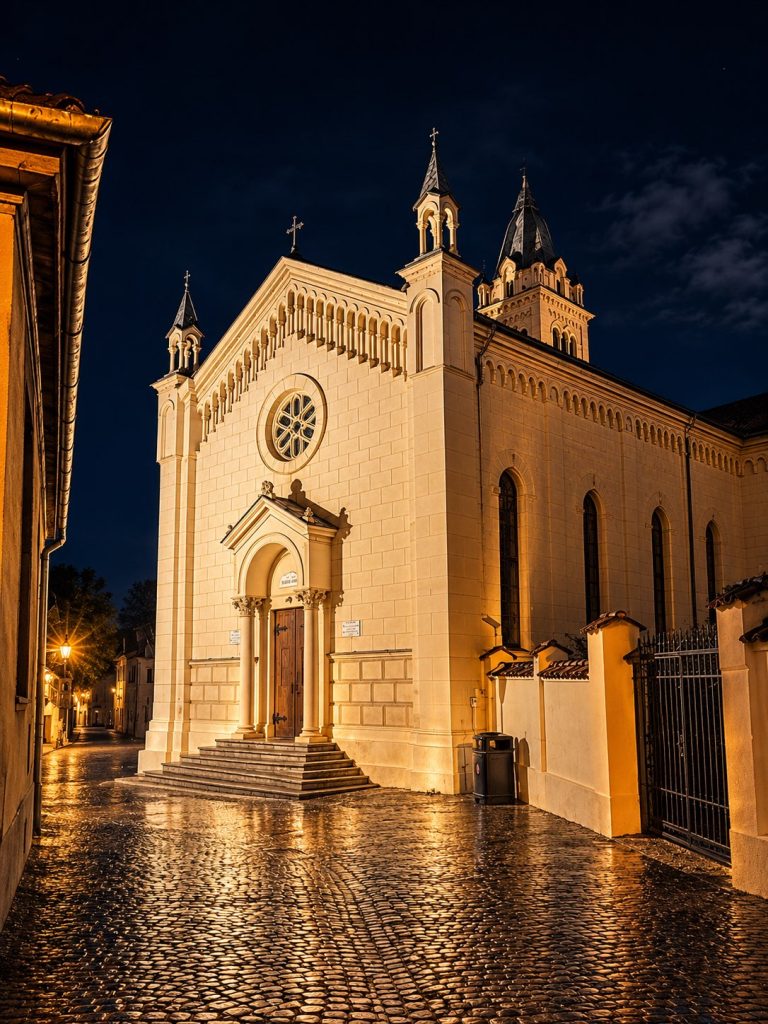
The twentieth century brought further political and demographic transformations. The end of the First World War and the incorporation of Transylvania into the Kingdom of Romania marked a new political chapter. Later decades, particularly the period after the Second World War and the changes of 1989, profoundly affected the social composition of the town and the wider Transylvanian Saxon community.
Yet the architectural and urban inheritance of earlier generations remains visible. The streets, towers, churches and houses continue to tell the story of a community whose history forms an integral part of Transylvania’s broader cultural heritage.
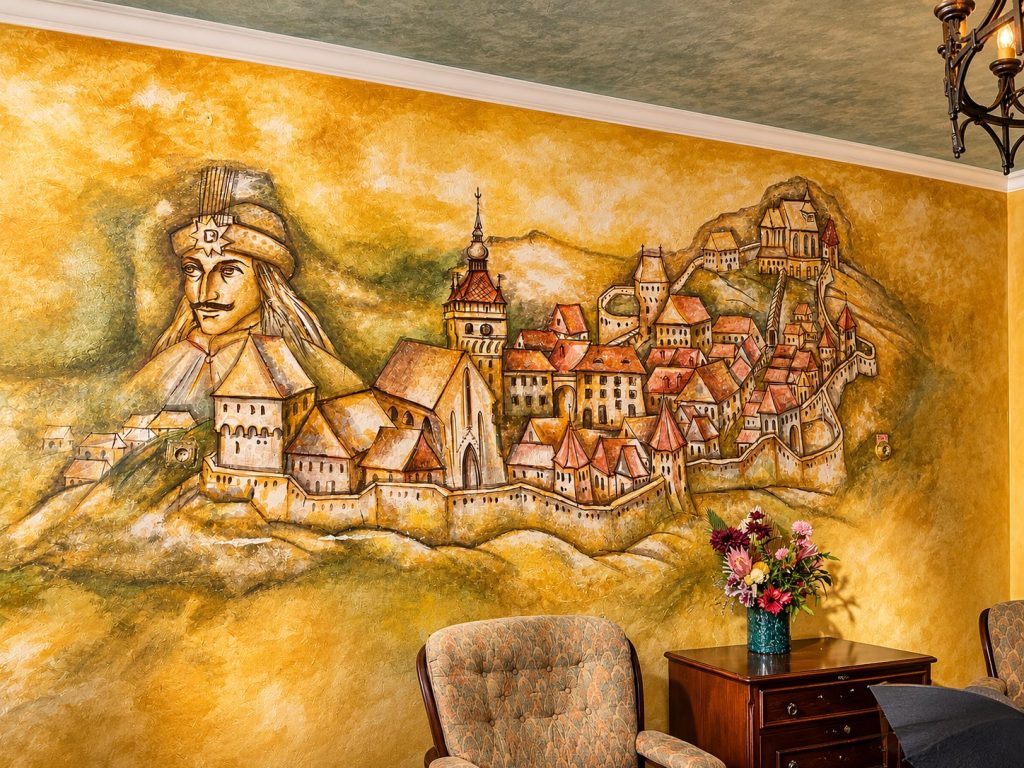
Mural depicting Vlad III alongside the citadel of Sighișoara – a popular association rooted in childhood years spent in the town, though modern historical research points toward alternative origins such as Nuremberg, illustrating the gap between commercial tourist legends and historical evidence.
A UNESCO World Heritage Site
On 4 December 1999, the Historic Centre of Sighișoara was inscribed on the UNESCO World Heritage List under criteria (iii) and (v).
The inscription recognises the town as an outstanding testimony to the culture of the Transylvanian Saxons and as an exceptional example of a small fortified medieval town in the historical border region between Central and South-Eastern Europe.
The recognised property covers both the fortified Citadel and the Lower Town. This is an important distinction: the heritage value of Sighișoara does not rest solely upon its walls and towers, but upon the relationship between its two historic urban sectors, their buildings, streets and setting.
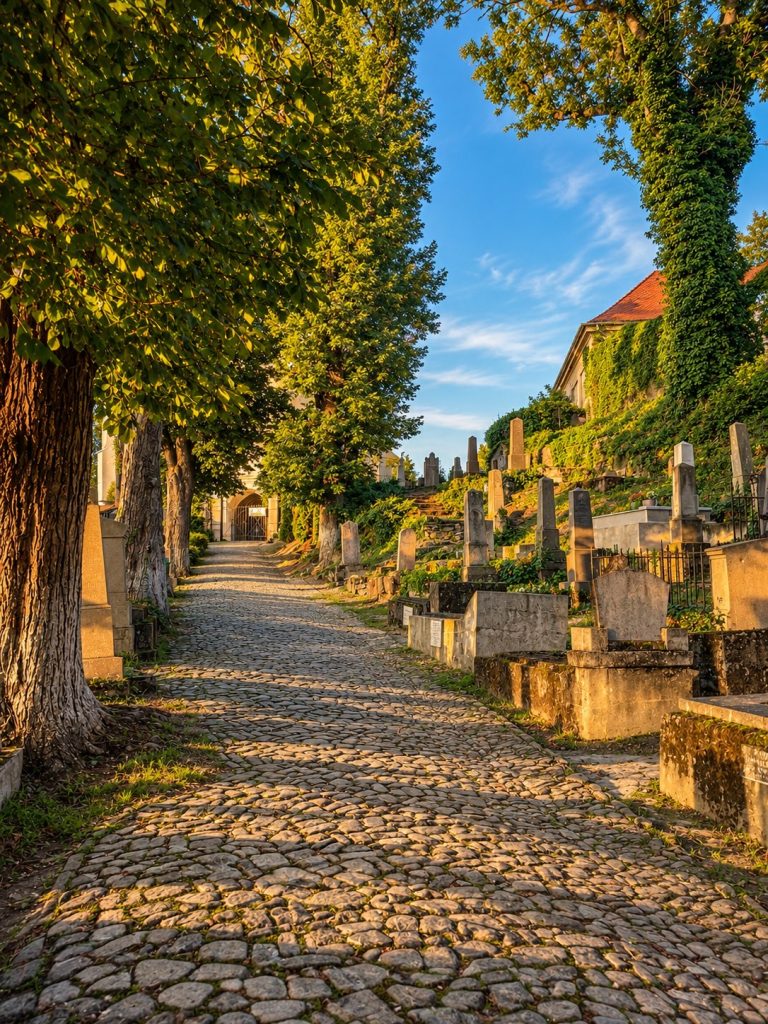
The UNESCO nomination describes the historic centre as an integrated ensemble shaped by the relationship between human settlement and the natural terrain. Its surviving street network, historic plots and architectural variety preserve much of the character of a medieval town.
The inscription also acknowledges the significance of the Transylvanian Saxon contribution to the development of the region. This is not to suggest that the town’s entire history belongs to one community alone, but to recognise the particular role that Saxon urban culture played in shaping its historic form.
Sighișoara’s heritage is therefore not a collection of isolated monuments. It is a coherent historic landscape in which the relationship between architecture, settlement and terrain remains unusually clear.
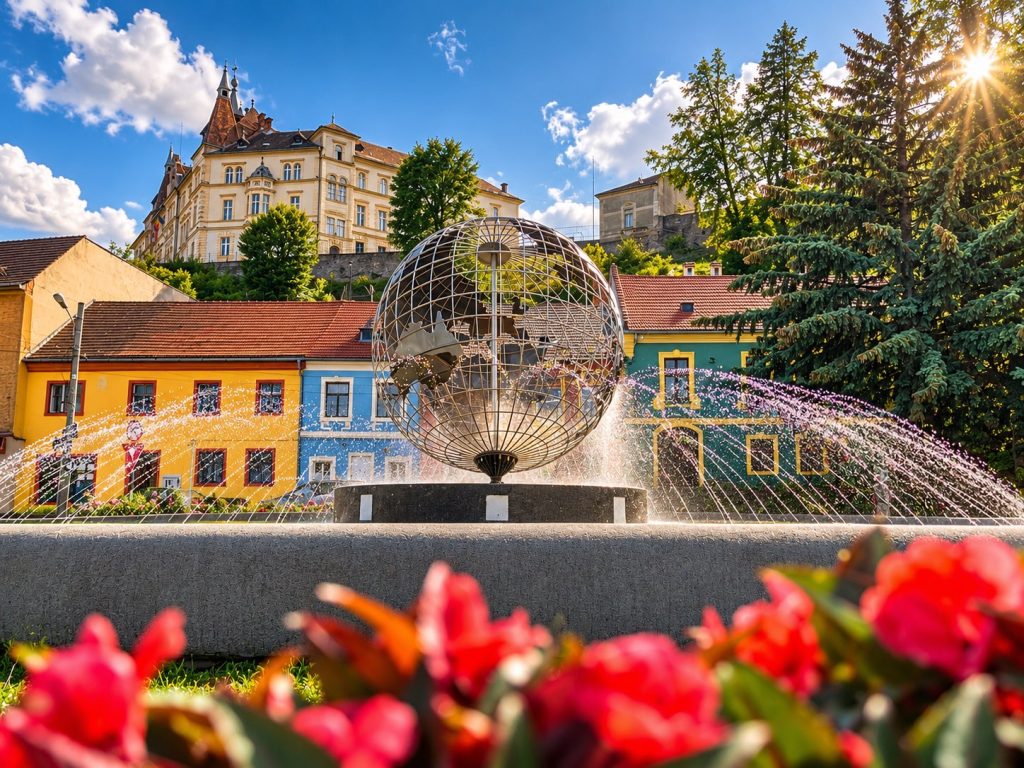
The lower town square of Sighișoara with its landmark fountain, welcoming visitors from around the world to a UNESCO World Heritage site whose international significance rests on authentic historical interpretation.
A Living Historic Centre
One of the most remarkable qualities of Sighișoara is that its historic centre is not simply an archaeological site or an architectural museum. It remains part of the living town. Its streets are still used, its buildings continue to serve residential and public functions, and its churches preserve their religious significance.
This continuity brings both opportunity and responsibility. A historic town must accommodate contemporary life while safeguarding the character that gives it cultural and historical value. Conservation therefore requires more than the restoration of individual façades or monuments. It calls for an understanding of the entire urban ensemble: its scale, spatial organisation, materials, setting and accumulated historical layers.
The Transylvanian Saxon heritage is central to this story, but Sighișoara’s history also belongs to the wider history of Romania. The town developed through centuries of interaction between communities, institutions and cultural traditions. Its significance lies precisely in this historical depth and diversity.
To walk through Sighișoara is to encounter more than a beautiful medieval setting. It is to follow the traces of a town shaped by geography, defended by its inhabitants, sustained by crafts and commerce, and transformed by successive political and cultural changes.
Its towers may define the skyline, and its churches may preserve some of its most important architectural treasures. But the true monument is the town itself: the relationship between the Citadel and the Lower Town, the streets that connect them, the houses that line those streets, and the landscape that has shaped them all.
Sighișoara deserves to be understood in its entirety. Its history is not confined to one famous building, one celebrated name or one romantic legend. It lives in the whole of its historic centre – a remarkable testimony to the many generations who made this Transylvanian town what it is today.
Basarab Heritage
— A.C.
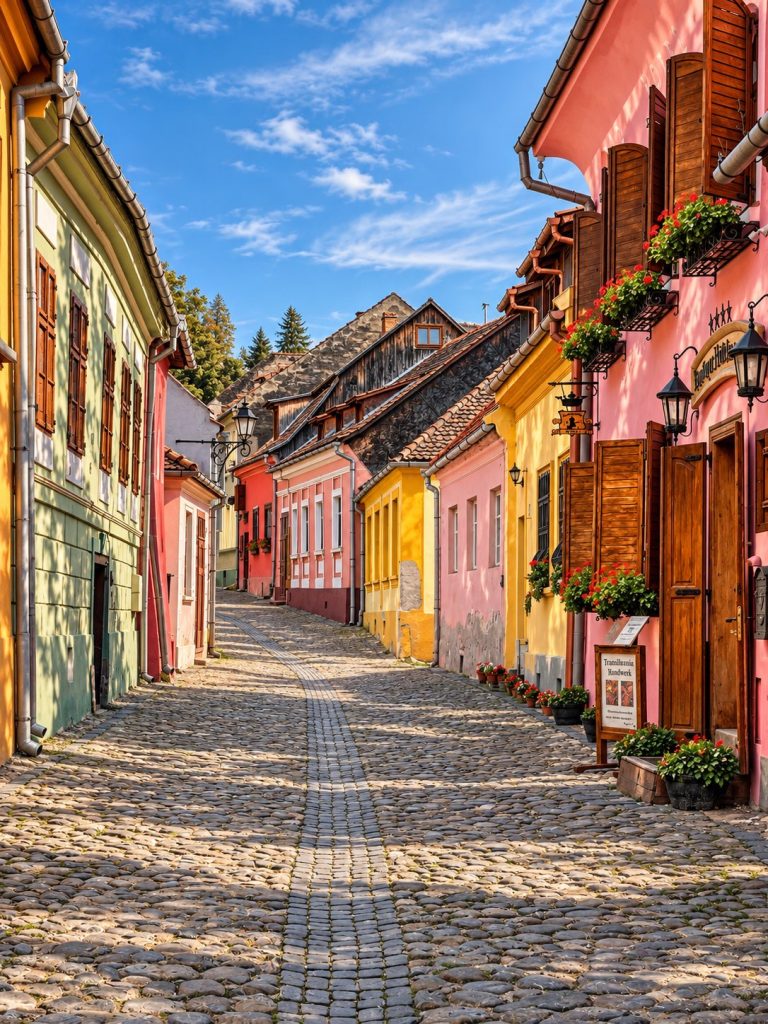
Cobblestone street lined with colourful historic houses within the citadel, testifying to centuries of urban craftsmanship and civic life in Sighișoara.