
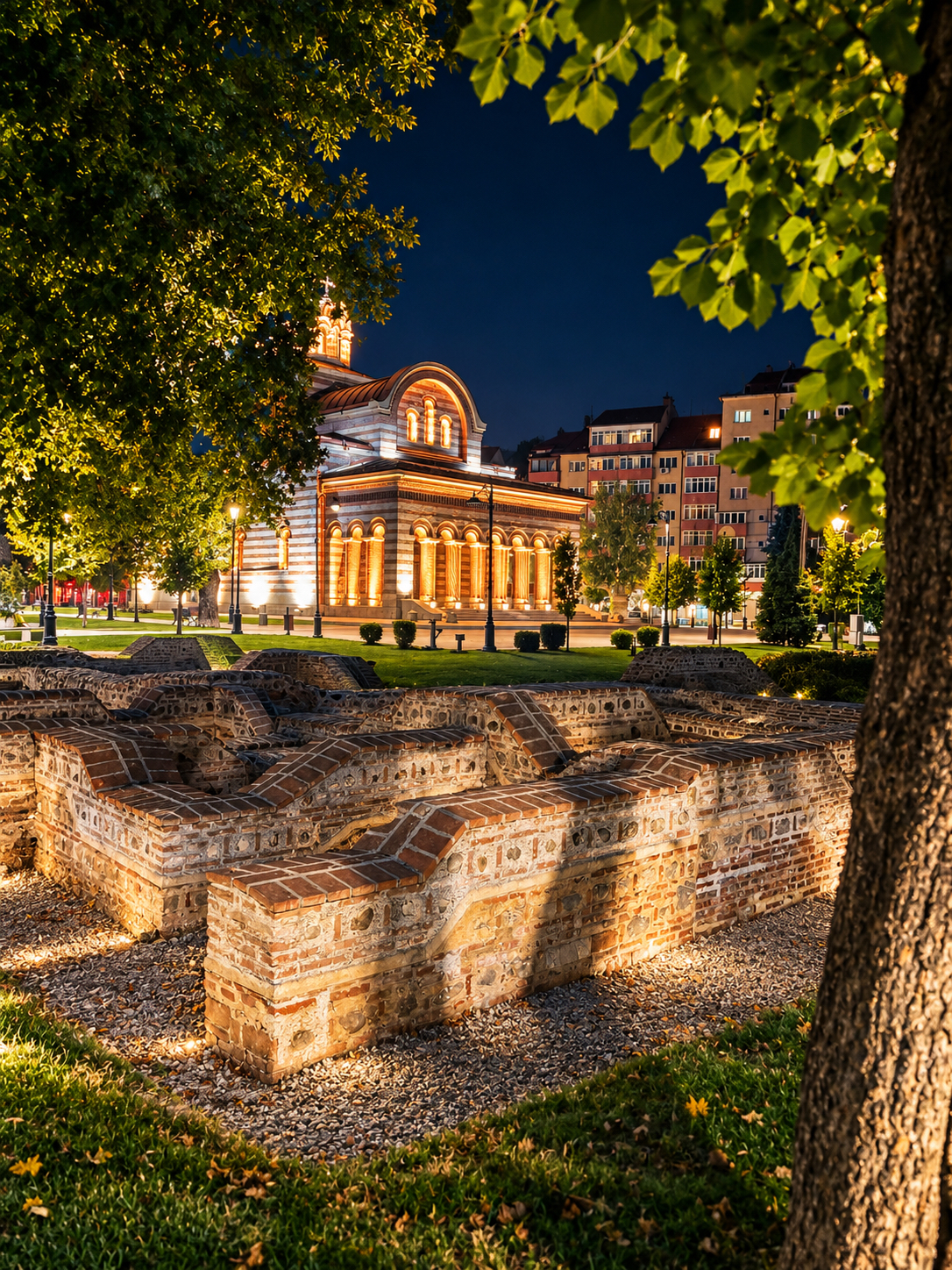
Beyond the walls of the former Princely Court, the historic centre of Târgoviște preserves other traces of the city’s long history. Churches, squares, monuments and archaeological remains reveal a landscape in which the medieval capital has not entirely disappeared, but survives in fragments within the modern city.
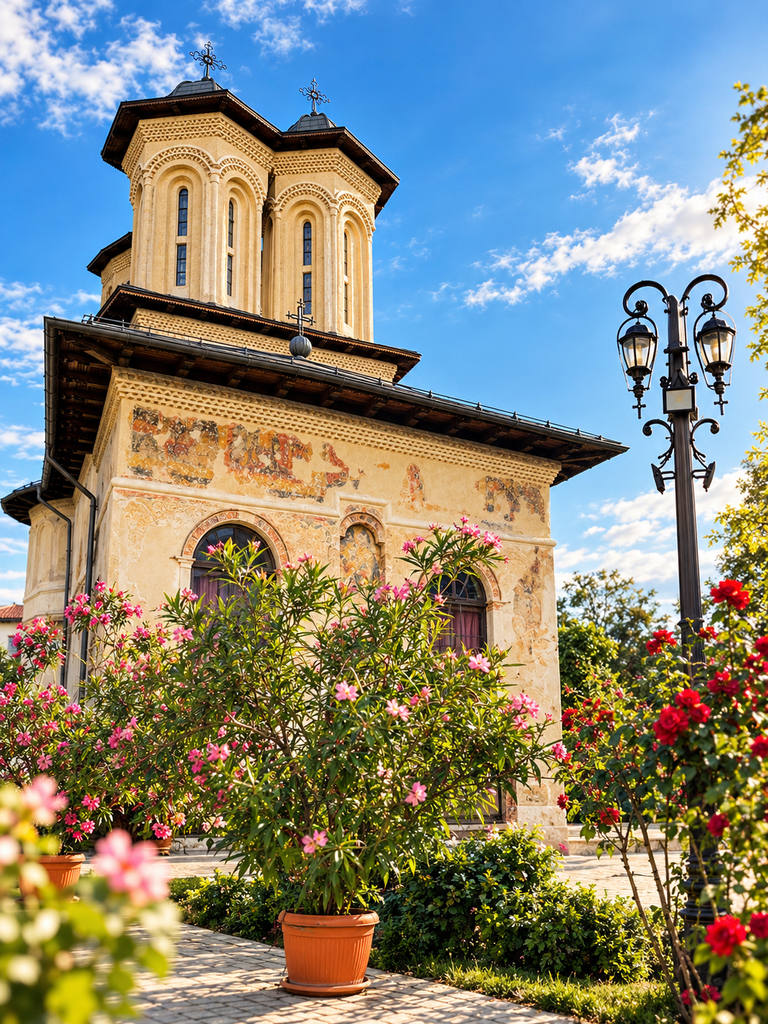
Among its most prominent landmarks stands the Metropolitan Cathedral. The metropolitan see of Wallachia, established in 1359 and originally based at Curtea de Argeș, was transferred to Târgoviște during the reign of Neagoe Basarab. The construction of the great church began in 1518, and it was consecrated on 17 May 1520, while still unfinished. After Neagoe’s death, Radu Paisie continued the work, which was completed in 1537. For centuries, the metropolitan establishment remained one of Wallachia’s principal ecclesiastical centres, closely connected with the religious and political life of the princely capital.
The medieval complex did not survive intact. Its buildings gradually disappeared, and the old church was demolished in 1889 by the architect André Lecomte de Nouy. The present cathedral, built on the site in a different architectural form, was consecrated in 1933. It therefore represents both continuity and loss: the metropolitan institution remains part of Târgoviște’s identity, while the building itself serves as a reminder that the medieval architectural landscape has been substantially transformed.
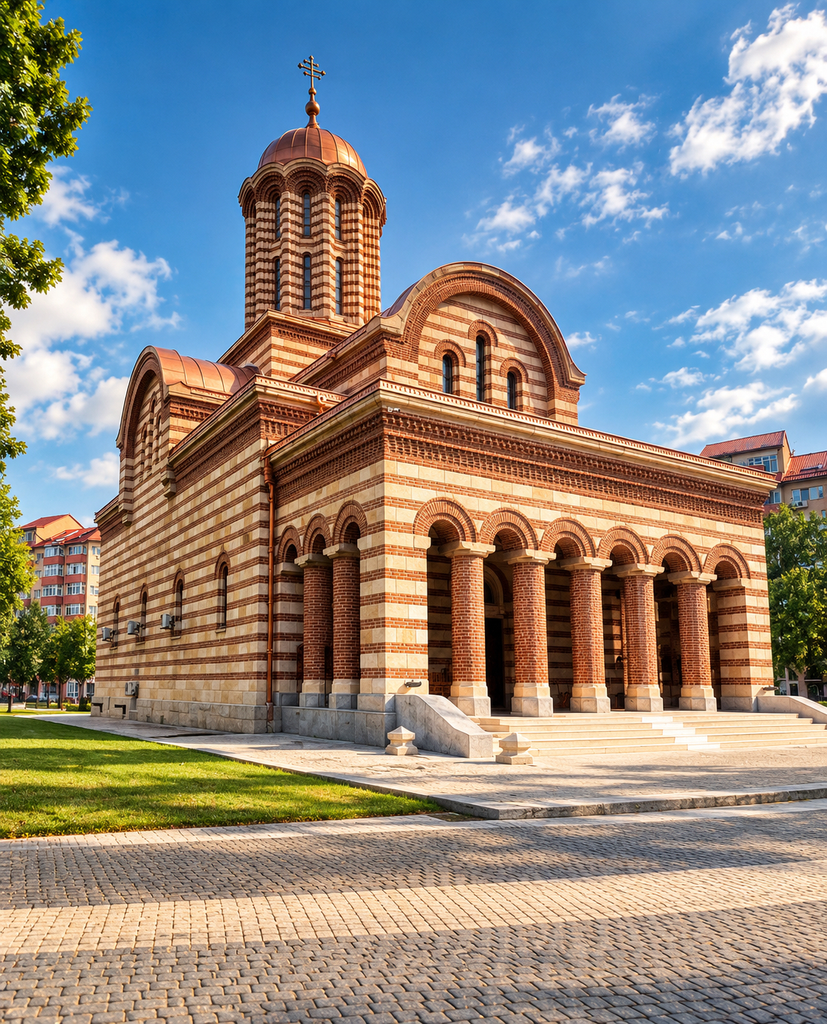
The Metropolitan Cathedral in Târgoviște. Originally founded in the 16th century under Neagoe Basarab, the current structure was consecrated in 1933 following major rebuilding works.
Beyond the cathedral, archaeology offers another way to explore the city’s past. Excavations across Târgoviște have revealed successive phases of urban occupation, including houses, workshops, defensive structures and other features associated with the medieval and early modern town. These discoveries help reconstruct a city whose former streets and buildings have often been altered or lost as the modern urban centre developed.
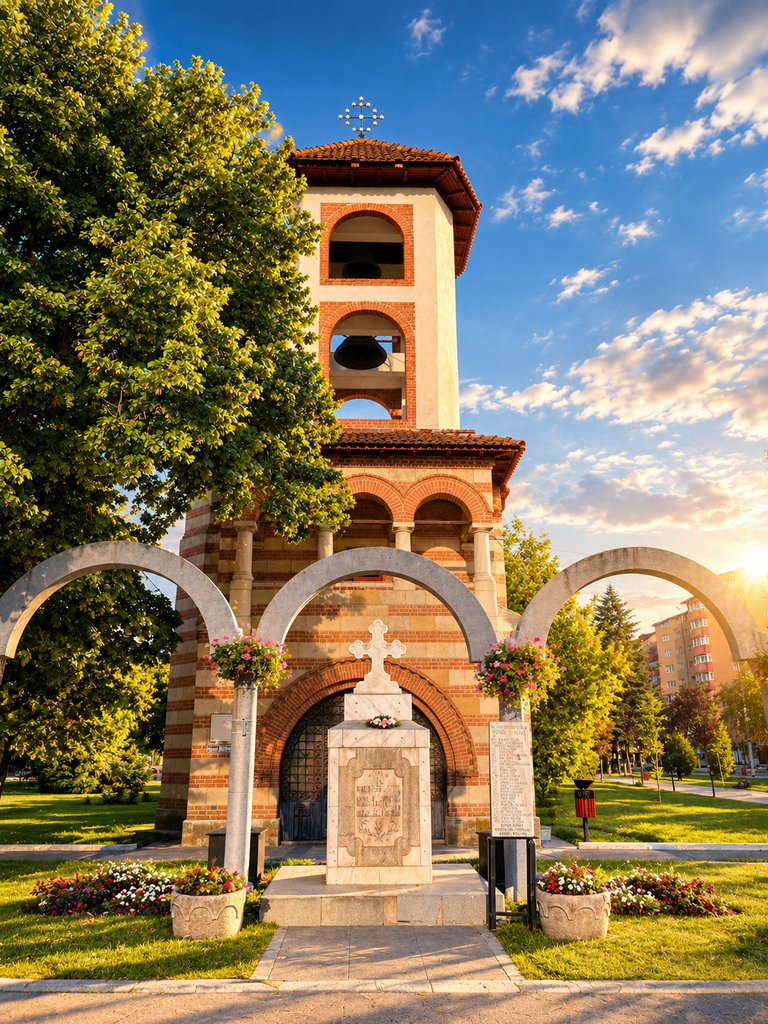
The city’s defensive history is particularly visible in the surviving and reconstructed remains of its seventeenth-century fortifications. During the reign of Matei Basarab, Târgoviște was protected by an extensive system of earthworks, ditches and gates, strengthening the defences of the princely residence. The fortifications formed part of a wider landscape of urban entrances and routes connecting the city with other parts of Wallachia.
One important remnant is the Poarta Brăilei şi Buzăului, associated with the southern approach to the city. Its foundations were uncovered during archaeological excavations in 1988, when work on an underground passage revealed part of the defensive system known as the Șanțul și valul cetății – the city’s ditch and rampart. The fortifications are dated to around 1645, during Matei Basarab’s reign. Archaeological evidence indicates that the gate remained in use until approximately the middle of the nineteenth century. Its reconstructed form can still be seen today, offering a tangible connection to the defensive landscape of early modern Târgoviște.
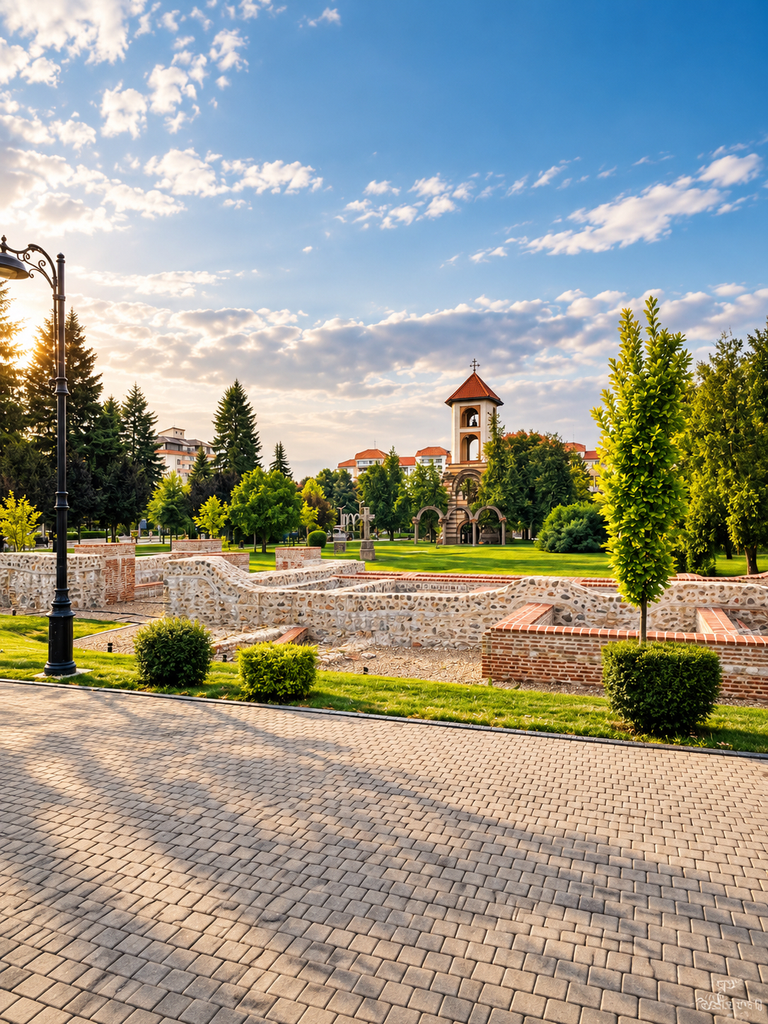
Archaeological remains and the surrounding green spaces in Târgoviște, illustrating how successive historical layers emerge within the modern cityscape.
Such remains are significant not only as isolated monuments, but also as evidence of the city’s former organisation. Gates, defensive ditches, churches, markets and princely buildings once formed an interconnected urban landscape. Although much of that landscape has disappeared or been altered, archaeological discoveries and surviving structures allow parts of its historical geography to be traced within the modern city.
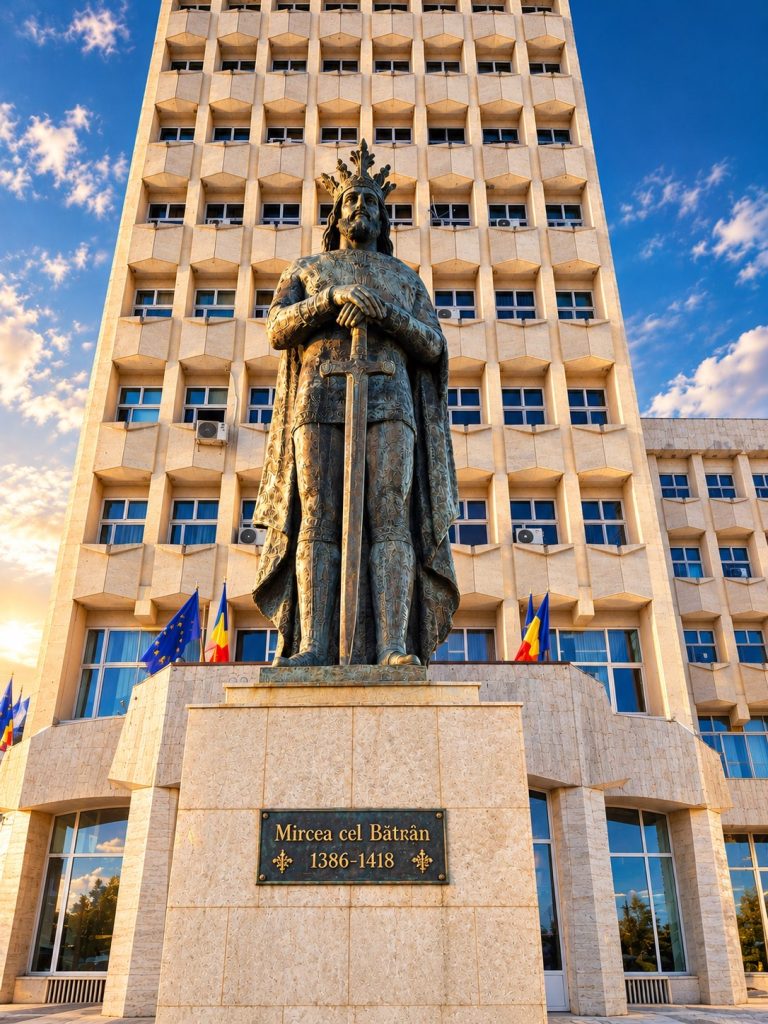
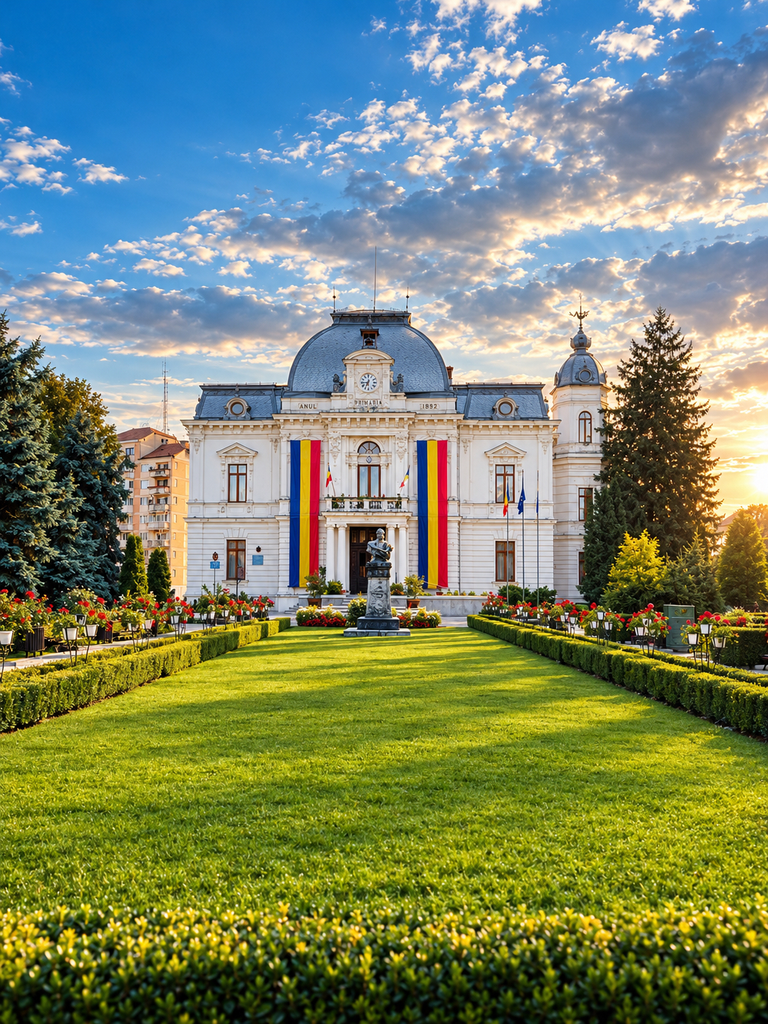
Târgoviște’s past is also recalled through its public monuments. In the Piața Tricolorului, the monument to Mircea cel Bătrân commemorates a ruler whose reign was closely associated with the city’s development as an important centre of Wallachian government and princely residence. Elsewhere in the historic centre, the equestrian monument to Mihai Viteazul evokes a later chapter in the principality’s history, recalling the political and military struggles of the late sixteenth century, when Târgoviște again played an important role in Wallachian affairs.
Together, these monuments connect different periods of Wallachian history within the modern city. They do not preserve the medieval capital intact, but they help explain the political and cultural significance of the places in which they stand. The metropolitan complex recalls Târgoviște’s ecclesiastical importance; the fortifications preserve traces of its defensive organisation; archaeological discoveries reveal successive phases of urban life; and the monuments keep the memory of prominent rulers present in the public spaces of the city.
What remains in the historic centre is therefore not a single monument, nor a single historical period. It is a city shaped by successive princely, ecclesiastical, defensive and civic layers. Some remain visible above ground; others survive only through archaeological evidence. Together, they offer a way to understand Târgoviște not simply as a former capital, but as a historic city whose past continues to emerge within its modern streets and squares.
The accompanying photographs were taken during visits to Târgoviște in the company of Vladislav Carol Nicolae. They document the cathedral, historic squares, monuments and surviving traces of the old city.
Basarab Heritage
— A.C.