Cultural and spiritual heritage does not end at national borders. For communities living far from their historical homelands, churches can become places where faith, language, tradition and collective memory continue to meet.
In Berlin, the Greek Orthodox Parish of the Ascension of the Lord (Analepsis tou Kyriou; Christi Himmelfahrt) offers a particularly meaningful example of this continuity. Its history reflects not only the development of Orthodox Christianity in the German capital, but also the enduring importance of religious institutions in sustaining a living connection between generations, cultures and places.
The Historical Roots of Orthodox Christianity in Berlin
The history of the Greek Orthodox presence in Berlin reaches back well before the construction of the present church.
In 1797, the Prussian authorities took steps to address the pastoral needs of Orthodox Christians living in the capital. During the following century, the Orthodox community gradually developed, reflecting the presence of Greek merchants, families and other residents whose religious traditions connected them with the wider Orthodox world.
A Greek Orthodox parish was established in Charlottenburg in 1904. During the twentieth century, the community worshipped in different locations before a permanent church was established in Berlin-Steglitz.
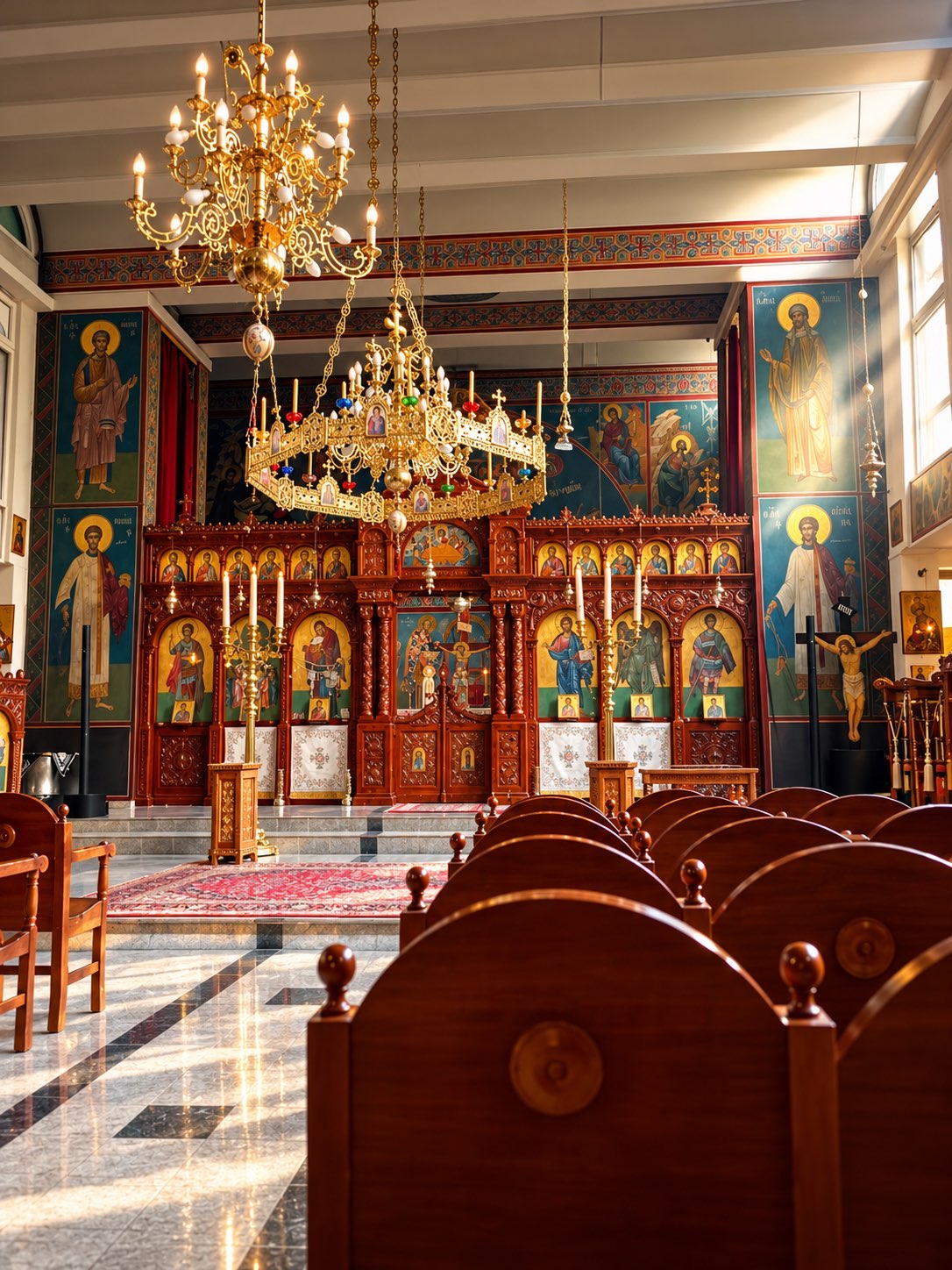
The present Church of the Ascension of the Lord was consecrated in 1976. It remains the centre of the parish’s religious life and a visible expression of the continuity of Greek Orthodox Christianity in Berlin. Today, the parish belongs to the Greek Orthodox Metropolis of Germany under the Ecumenical Patriarchate of Constantinople.
The church is therefore both a place of worship and a witness to a history extending across several generations. Its story forms part of the wider history of Orthodox communities that established lasting religious institutions throughout Western and Central Europe.
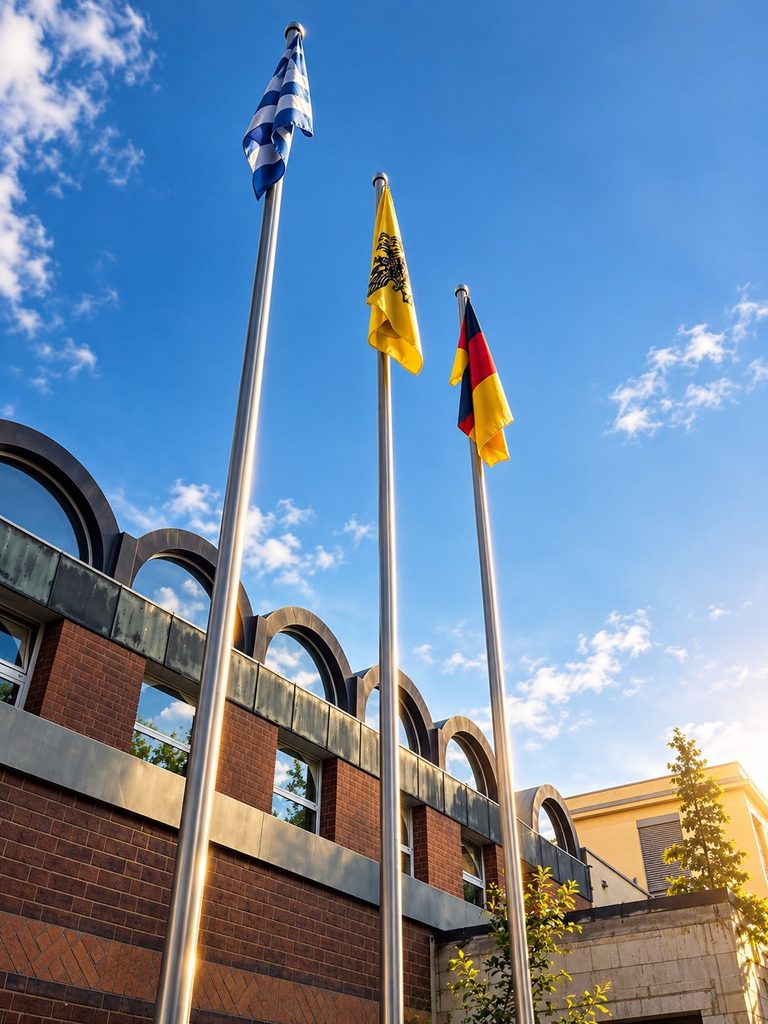
The Greek national flag, the Byzantine double-headed eagle flag, and the German federal flag flying outside the Greek Orthodox Church of the Ascension of the Lord in Berlin-Steglitz.
The Church as a Place of Cultural Continuity
For Orthodox Christians living outside their ancestral homelands, a parish can fulfil several interconnected roles.
It preserves the liturgical traditions of the Church, including its sacred music, iconography, feast days and forms of prayer. It also provides a setting in which religious knowledge and practice can be passed from one generation to the next.
Language may change, and the circumstances of daily life may differ considerably from those experienced by earlier generations. Yet the rhythm of the liturgical year, the veneration of the saints and the celebration of the Divine Liturgy provide recognisable points of continuity.
This does not mean that Orthodox heritage belongs exclusively to one nation or linguistic community. The Orthodox Church encompasses many peoples and languages, united by a shared sacramental and liturgical tradition. A Greek Orthodox parish in Berlin can therefore preserve the distinctive inheritance of the Greek Church while also participating in the wider life of Orthodox Christianity in Germany.
The Berlin parish’s engagement with other Orthodox communities and its participation in ecumenical dialogue further illustrate how a religious institution can maintain its own tradition while remaining connected to the society around it.
Beyond the Boundaries of the Historical Homeland
The experience of the Berlin parish has a wider significance.
Throughout Europe, Orthodox communities have established churches and monasteries far from the regions in which their traditions first developed. These institutions connect contemporary life with the historical landscapes of Greece, Romania, Serbia, Bulgaria, Georgia and other parts of the Orthodox world.
For families living abroad, the parish may become a place where children encounter the religious practices of their parents and grandparents, where important feast days retain their meaning, and where community life is shaped by a shared spiritual inheritance.
Such continuity should not be understood merely as the preservation of a past that no longer exists. Traditions remain living realities because communities continue to practise, interpret and transmit them in changing circumstances.
The church in the diaspora thus occupies a distinctive position: rooted in an inherited tradition, present within a new social environment, and open to future generations.
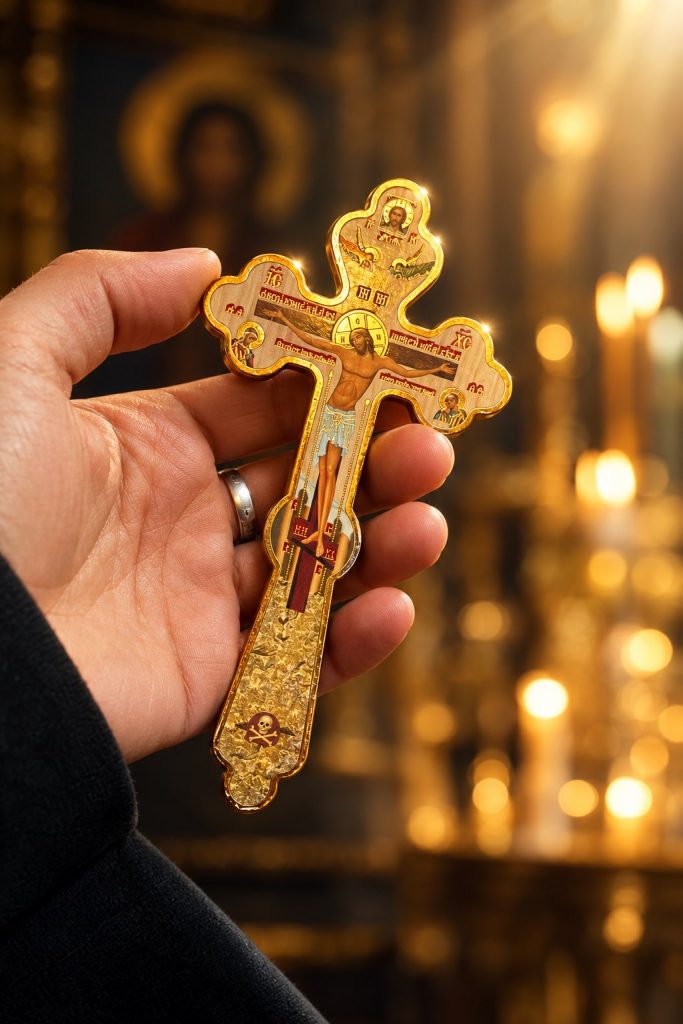
Orthodox hand cross gifted by Princess Silvia Lucia in August 2026, accompanying Vladislav Carol Nicolae during the celebration of the Holy Mass.
The Protection of the Mother of God: A Tradition of Spiritual Shelter
The Orthodox devotion to the Protection of the Most Holy Mother of God offers a fitting reflection on the significance of such places.
The feast commemorates the traditional account of the Virgin Mary appearing in prayer above the faithful gathered in the Church of Blachernae in Constantinople, spreading her veil as a sign of protection and intercession.
The feast is celebrated on 1 October in many Slavic Orthodox traditions, while the Greek Orthodox Church observes it on 28 October. Its history and liturgical observance therefore also illustrate the diversity that exists within the wider Orthodox tradition.
The image of the protecting veil speaks to a central aspect of Orthodox spiritual life: the church as a place of prayer, consolation and communion. For those living far from the places associated with their family histories, a parish can provide a similar sense of continuity – not by replacing the historical homeland, but by sustaining a living relationship with the faith and traditions inherited from previous generations.
A Living Heritage
The Greek Orthodox Parish of the Ascension of the Lord in Berlin stands within a history shaped by migration, religious commitment and the gradual establishment of a lasting Orthodox presence in Germany.
Its significance extends beyond the walls of the church itself. It belongs to a wider story of how communities preserve their spiritual and cultural inheritance while becoming part of new social and historical environments.
For Basarab Heritage, this history also offers a broader lesson. Heritage is not confined to dynasties, monuments or the territories in which historical events took place. It also survives through institutions, practices and communities that continue to give meaning to the past.
A church can preserve more than architecture or the memory of its founders. Through worship, tradition and the transmission of faith, it can remain a living link between generations and between the places people have come from and the places they now call home.
Basarab Heritage
— A.C.
Visitor Information
Greek Orthodox Parish of the Ascension of the Lord
(Analepsis tou Kyriou / Griechisch-Orthodoxe Christi-Himmelfahrts-Kirche)
Mittelstraße 32, 12167 Berlin, Germany
Information regarding the Divine Liturgy, feast days, and pastoral hours can be found on the official website of the Greek Orthodox Metropolis of Germany: orthodoxie.berlin