
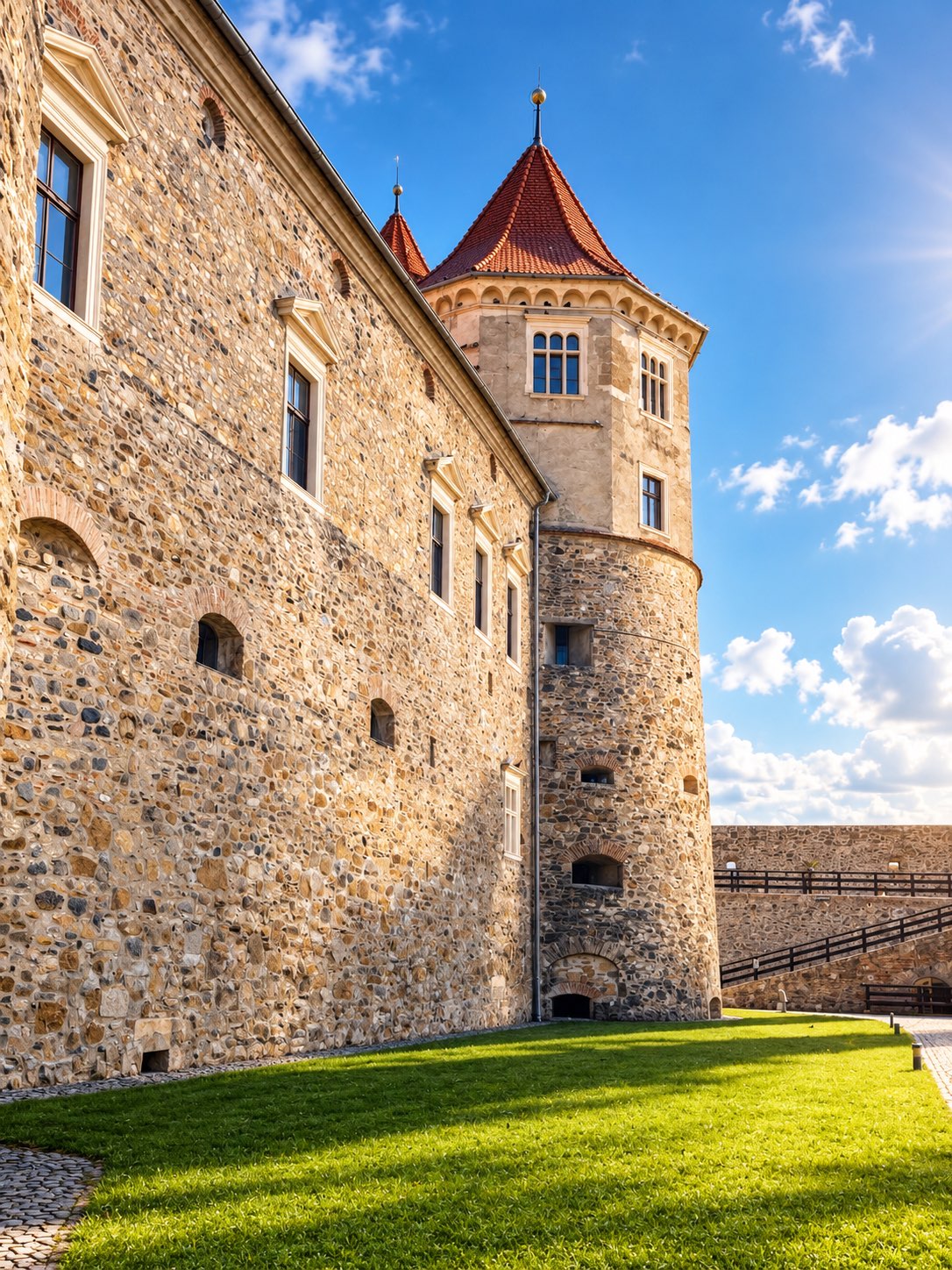
At the foot of the Făgăraș Mountains, in southern Transylvania, stands one of the region’s most remarkable historic fortresses. Făgăraș Fortress (Cetatea Făgărașului) is more than a monument of medieval military architecture. Its history reflects centuries of changing political authority, princely ambition and cultural exchange between Transylvania and the lands south of the Carpathians.
The fortress developed over several centuries, evolving from an early defensive stronghold into a fortified aristocratic residence and, eventually, an important centre of Transylvanian princely government. Its story is closely connected with the history of Wallachia, whose rulers held the surrounding domain for a period during the later Middle Ages.
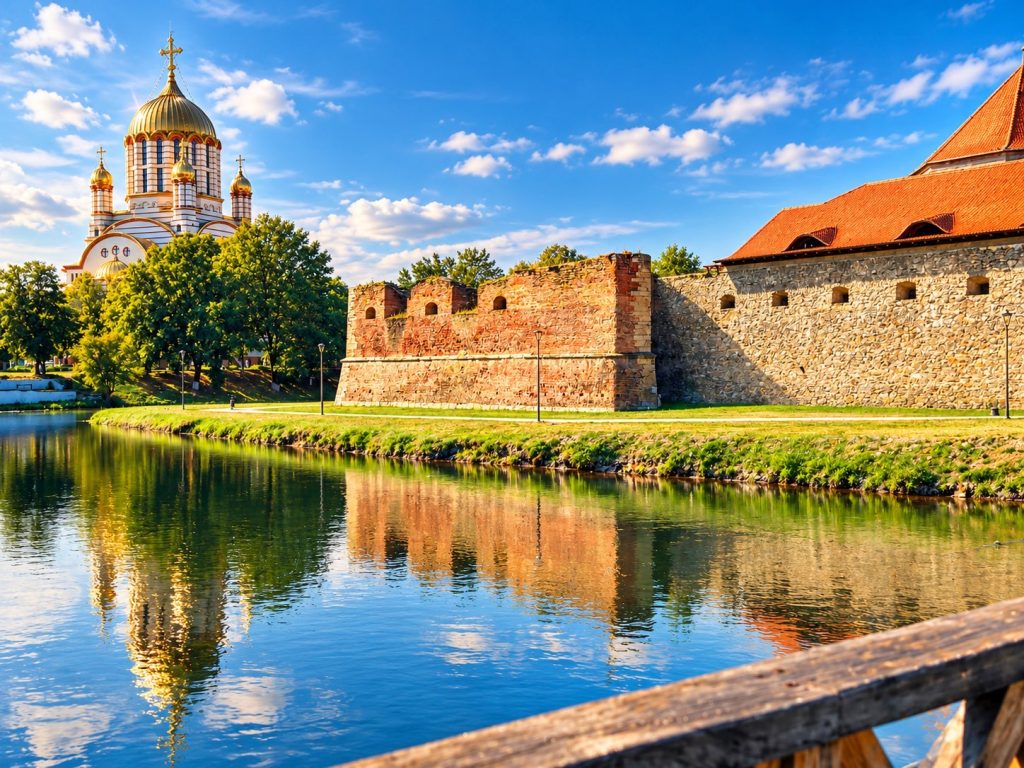
The outer walls, moat and bastion of Făgăraș Fortress, with the domes of the city’s Orthodox cathedral visible in the background.
Early Fortifications and a Strategic Position
The origins of Făgăraș Fortress reach back to the medieval period. An early wooden fortification, surrounded by earthworks, is traditionally associated with the beginning of the fourteenth century. This earlier structure was later destroyed, and the site underwent successive phases of rebuilding and expansion.
The stone fortress that emerged over time was shaped by its strategic location. Situated in southern Transylvania, near routes crossing the Carpathians, Făgăraș occupied a position of military and political importance. The surrounding territory, known as Țara Făgărașului, connected Transylvanian communities with Wallachia and formed part of a wider network of routes, estates and political relationships.
The fortress was not built in a single campaign. Its surviving architecture reflects successive generations of rulers and landholders, each adapting the site to changing defensive needs and political circumstances.
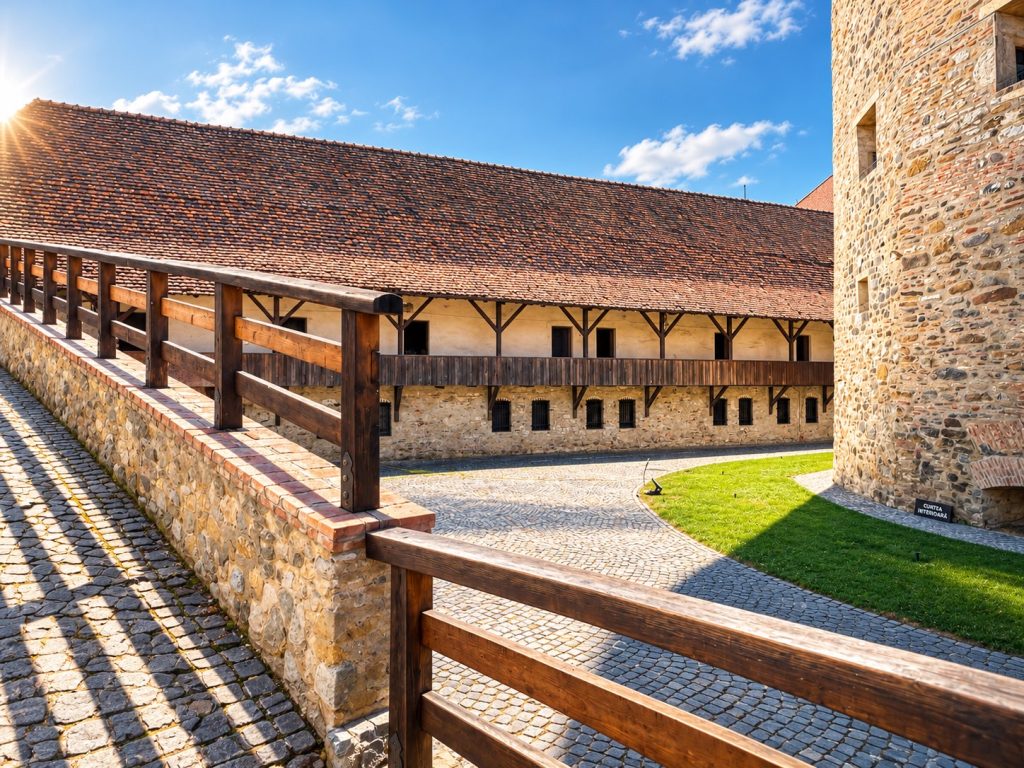
The inner ramp and courtyard galleries of Făgăraș Fortress, illustrating the structural adaptations of the complex over successive centuries.
A Historic Connection with Wallachia
One of the most significant episodes in the history of the Făgăraș domain began in 1369, when King Louis I of Hungary granted the royal estates of Făgăraș to Vladislav I, Voivode of Wallachia.
This grant established an important connection between the territory north of the Carpathians and the ruling house of Wallachia. The domain remained associated with Wallachian rulers for a substantial period, although its political and administrative status changed over time.
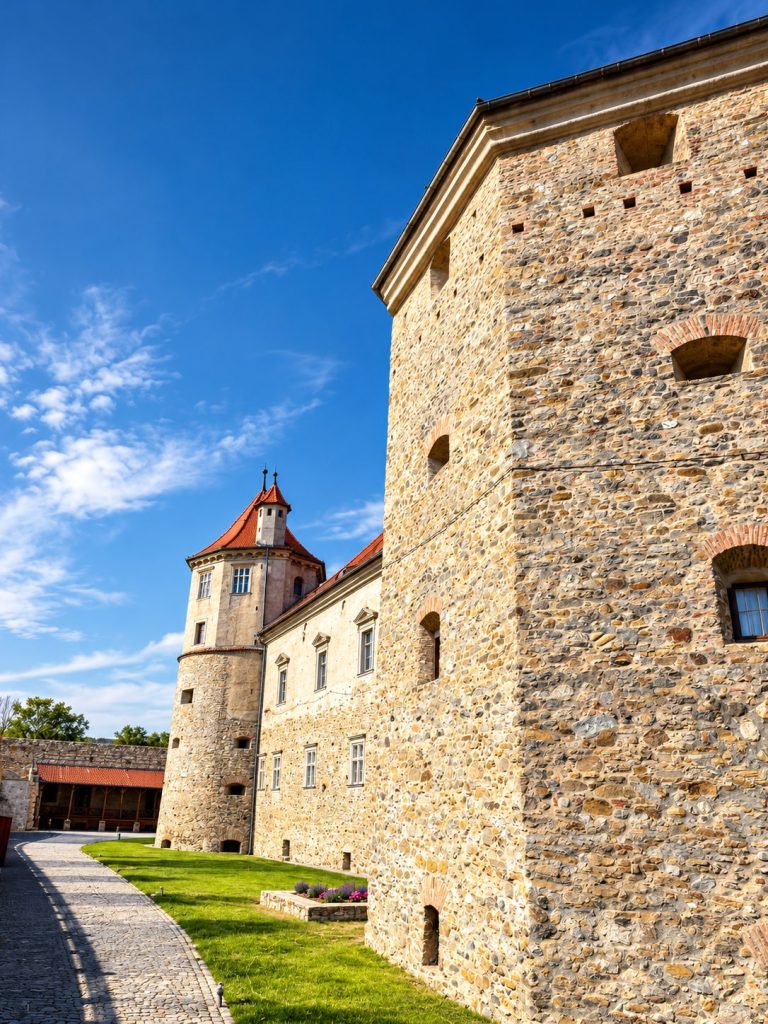
The relationship was more than a matter of territorial possession. The lands around Făgăraș formed part of a border region in which dynastic interests, military obligations and economic relationships linked communities on both sides of the mountains.
The history of Țara Făgărașului therefore provides an important reminder that the medieval political landscape cannot be understood solely through modern national boundaries. Authority was shaped by grants, inheritance, allegiance and negotiation, and the same territory could occupy different positions within changing political arrangements.
Ștefan Mailat and the Transformation of the Fortress
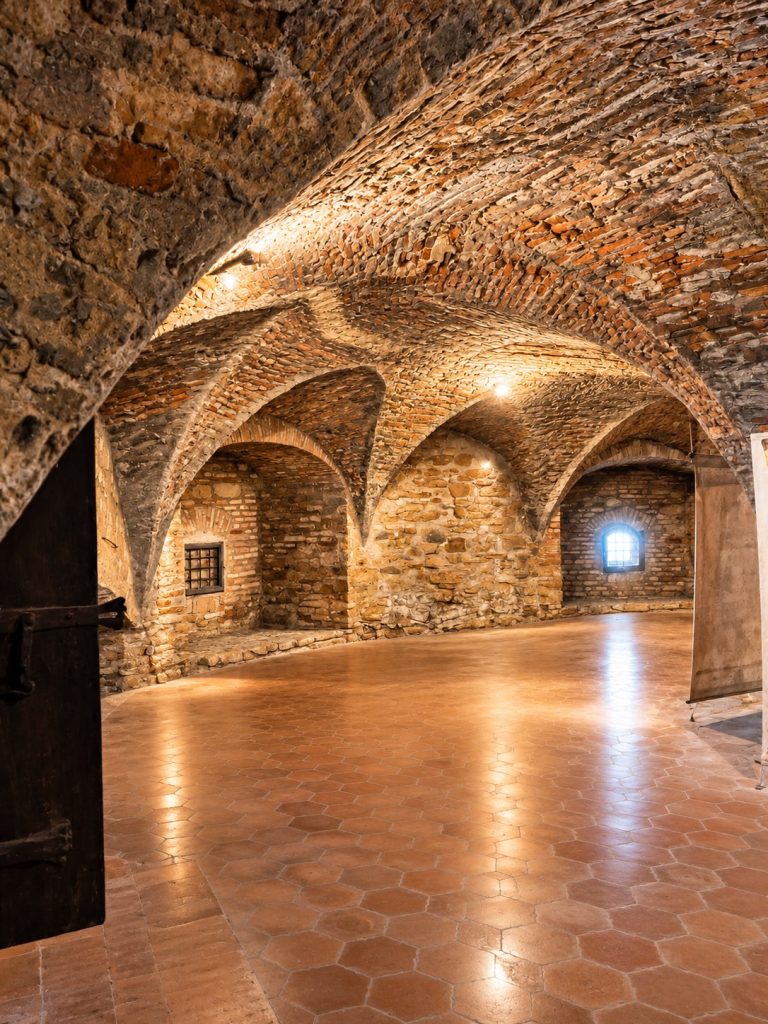
During the sixteenth century, Făgăraș underwent a major transformation. Between 1528 and 1541, Ștefan Mailat, who controlled the domain and later became Voivode of Transylvania, developed the earlier military stronghold into a more substantial fortified residence.
A new outer enclosure was constructed, and the eastern tower was incorporated into the entrance complex. The defensive system was adapted to the growing importance of artillery, while new residential spaces reflected the needs of an aristocratic household.
These changes altered the character of the site. Făgăraș remained a fortress, but it was increasingly designed to accommodate the political, administrative and domestic functions of a powerful lord’s residence.
Mailat’s role also illustrates the close relationship between territorial control and political authority in sixteenth-century Transylvania. The possession of a strategically placed domain could provide a foundation for wider political ambitions, although those ambitions were shaped by the shifting alliances and conflicts of the period.
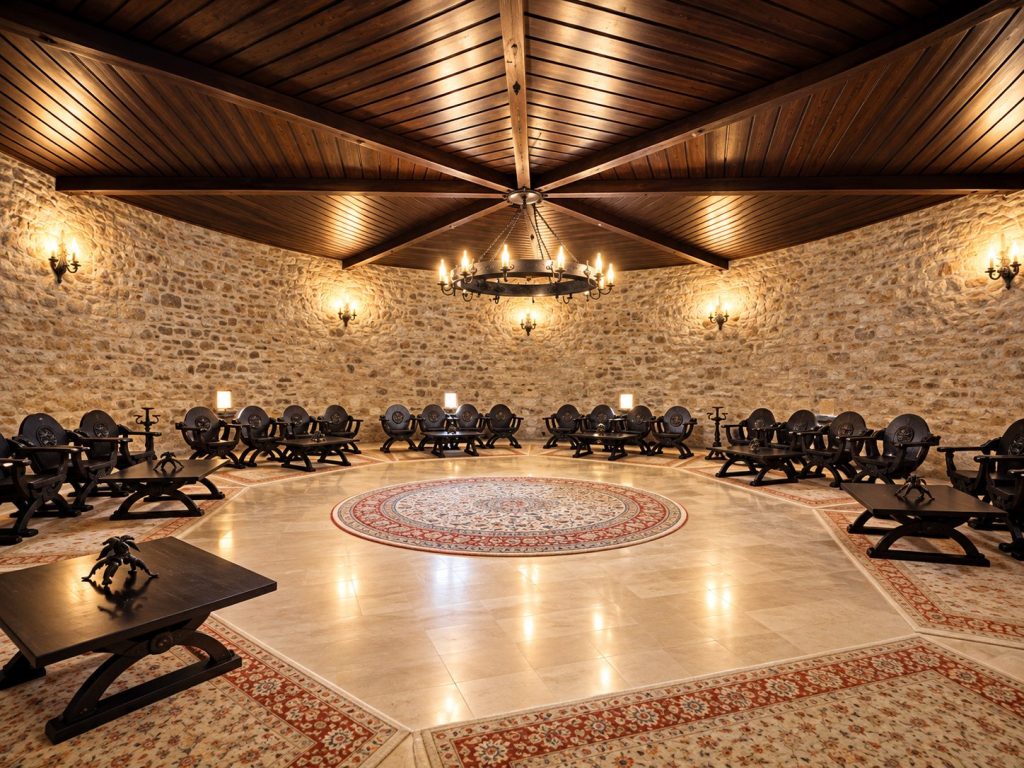
The interior assembly hall within one of the towers of Făgăraș Fortress, illustrating the site’s historical role as an administrative and council venue.
From Military Stronghold to Renaissance Residence
The transformation continued under the princes of Transylvania during the seventeenth century. In particular, Gabriel Bethlen, who ruled from 1613 to 1629, sponsored substantial building works that gave the fortress a more distinctly Renaissance character.
Italian architectural influences appeared in decorative stucco, heraldic ornament and arcaded loggias. At the same time, the defensive system was strengthened with corner bastions adapted to contemporary military techniques.
Under George I Rákóczi, further improvements reinforced the outer defences. Sections of the walls were strengthened from within, additional buildings were constructed and the surrounding moat was enlarged and deepened. Supplied with water from the Olt River, the moat formed a significant part of the fortress’s defensive landscape.
These works reflected the dual purpose of Făgăraș. It had to remain defensible in a period of military uncertainty, but it also served as a residence suitable for the political and ceremonial life of Transylvania’s ruling elite.
The resulting complex combined military architecture with the forms and decoration of a princely residence. Its development was gradual, and the building visible today represents the accumulated work of several generations rather than the vision of a single ruler.
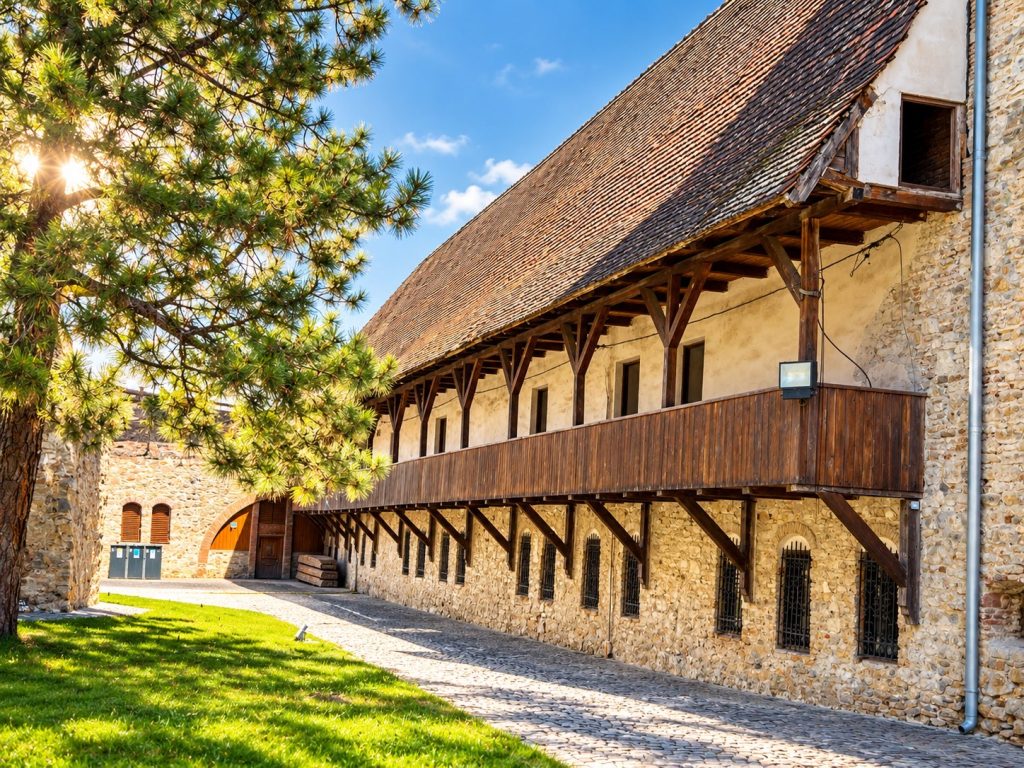
The inner courtyard and wooden galeria of Făgăraș Fortress, combining defensive masonry with residential architectural elements.
Mihai Viteazul and the Events of 1599–1600
Făgăraș occupies a particularly important place in the history of Mihai Viteazul, or Michael the Brave, who ruled Wallachia from 1593 to 1601.
In 1599, during his campaign in Transylvania, Mihai brought the Făgăraș domain under his authority. The fortress became a useful strategic base, and the territory was closely connected with the affairs of his household. Historical accounts associate the domain with his wife, Doamna Stanca, and describe Făgăraș as a place of residence and protection for the family during this turbulent period.
Mihai’s campaigns culminated in 1600, when he briefly exercised authority over Wallachia, Transylvania and Moldavia. This extraordinary political achievement has often given Făgăraș a prominent place in narratives of the history of the Romanian principalities.
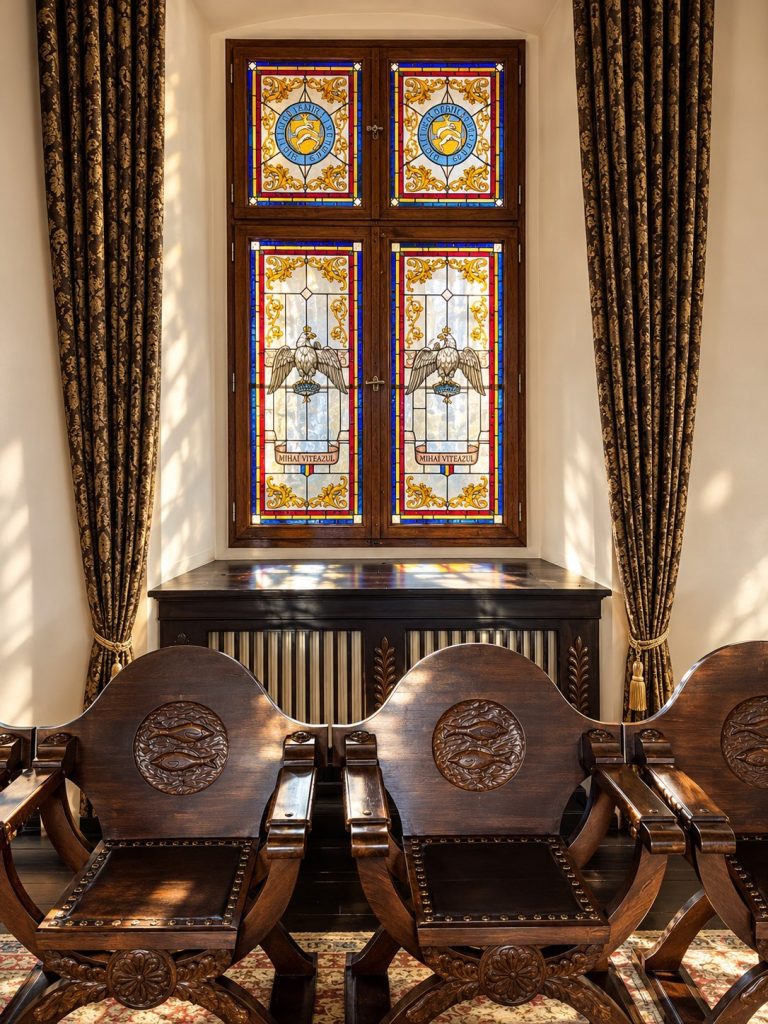
Yet the fortress’s significance should not be confined to this brief episode. Its importance arose from its location, its administrative role and its long history as a contested and strategically valuable domain. Mihai’s presence represents one chapter in a much longer story of political connections across the Carpathians.
A Centre of Princely Government
During the seventeenth century, Făgăraș developed into an important centre of administration and princely life. Its fortified residence, extensive domain and strategic position made it valuable to the rulers of Transylvania.
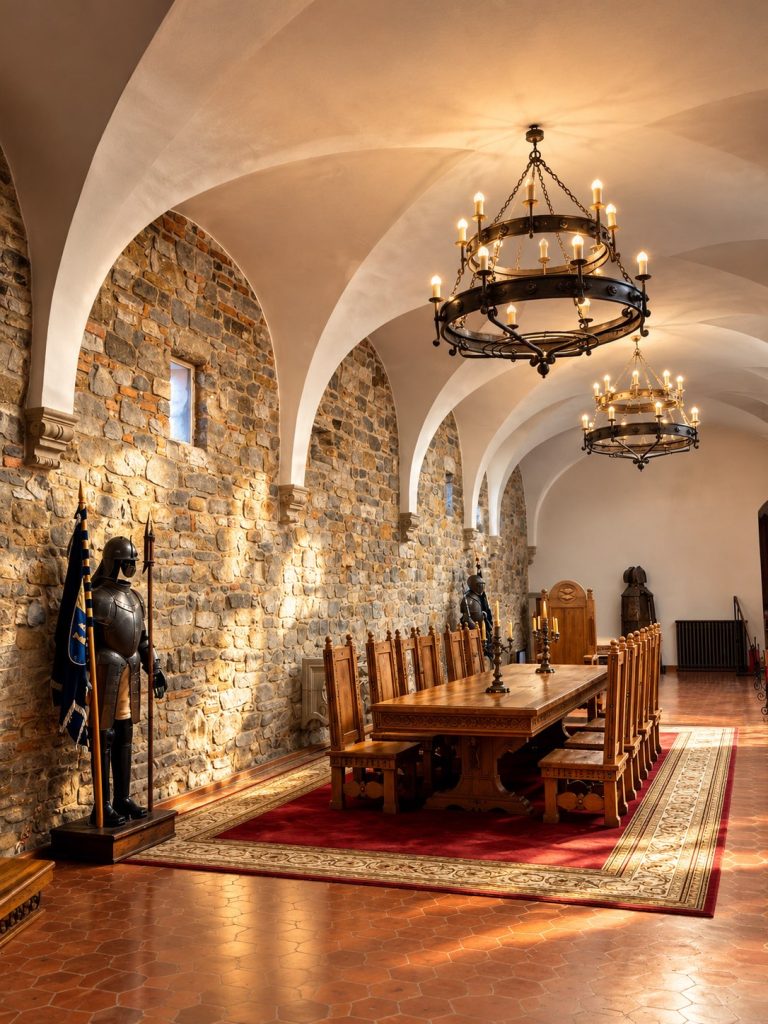
The fortress was associated with successive princely households and underwent further adaptation as its functions changed. Military protection, residential comfort, ceremonial display and administrative work were increasingly brought together within the same complex.
The political history of the period was marked by instability and changing regional power. Făgăraș nevertheless remained a significant centre within southern Transylvania, demonstrating how a fortified residence could serve as both a defensive installation and an instrument of government.
Its architecture records this dual role. Bastions, walls and the water-filled moat reflect the demands of defence, while the residential buildings and Renaissance details reveal the ambitions of the princely court.
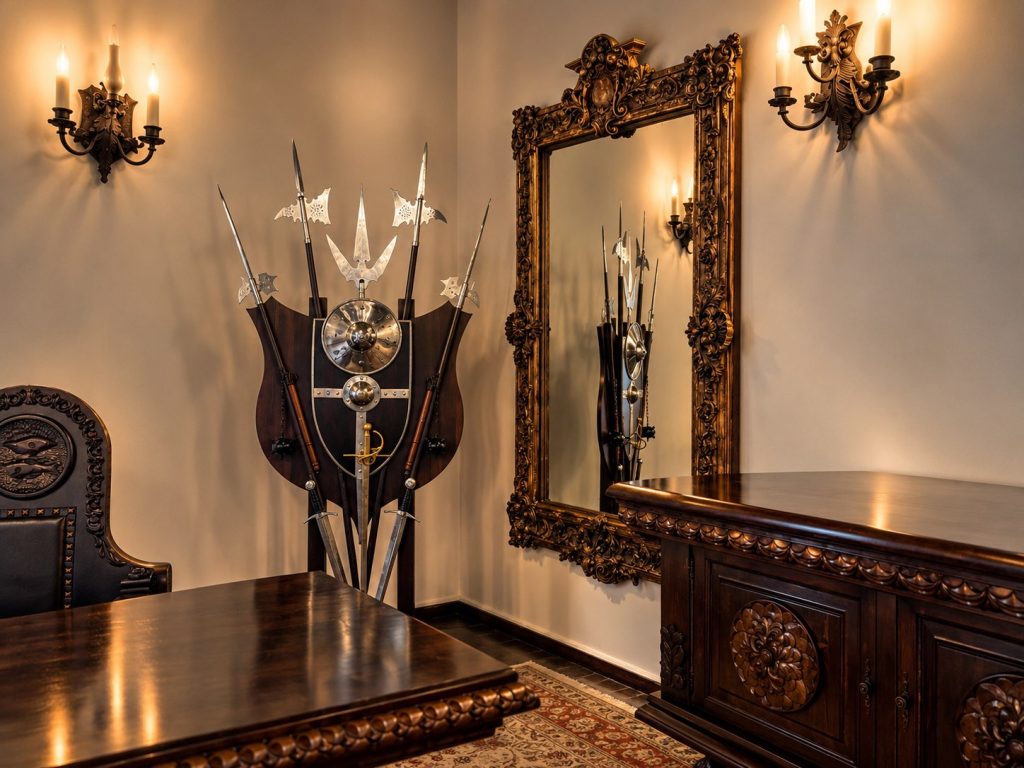
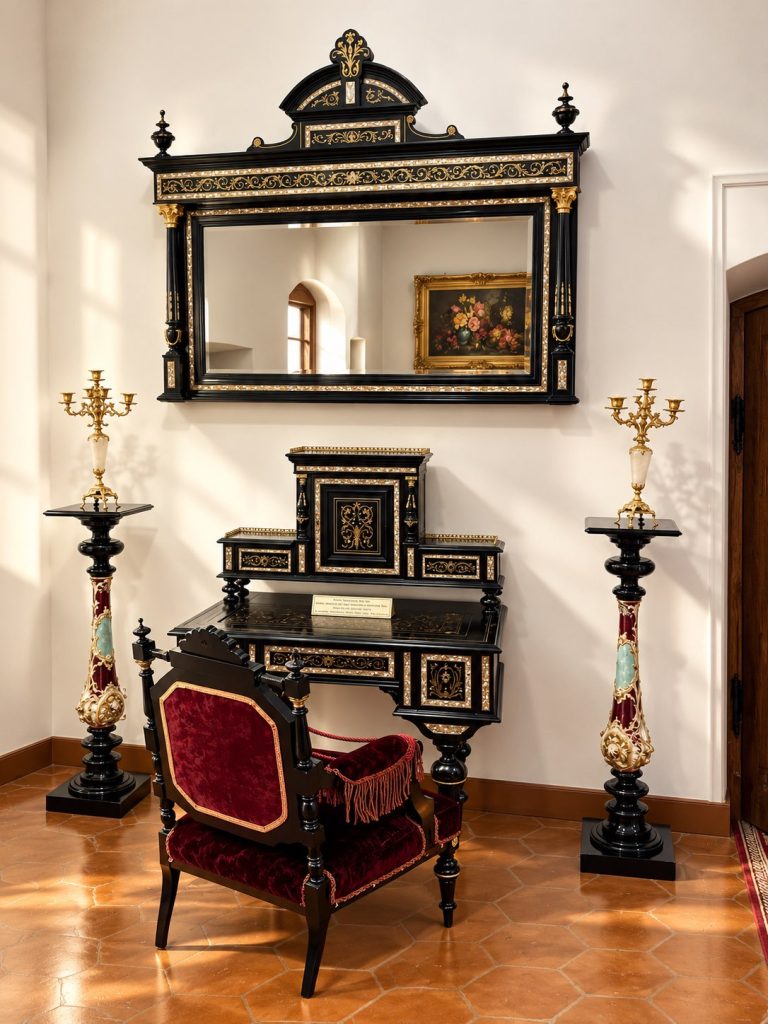
Restored interior furnishings and heraldic weaponry display inside Făgăraș Fortress, illustrating the ceremonial and administrative character of the princely residence.
A Monument of Shared Regional History
Today, Făgăraș Fortress stands as a tangible record of the region’s complex past. Its walls and towers preserve traces of medieval defence, aristocratic residence and princely administration, while its history reveals the shifting relationships between Transylvania and Wallachia.
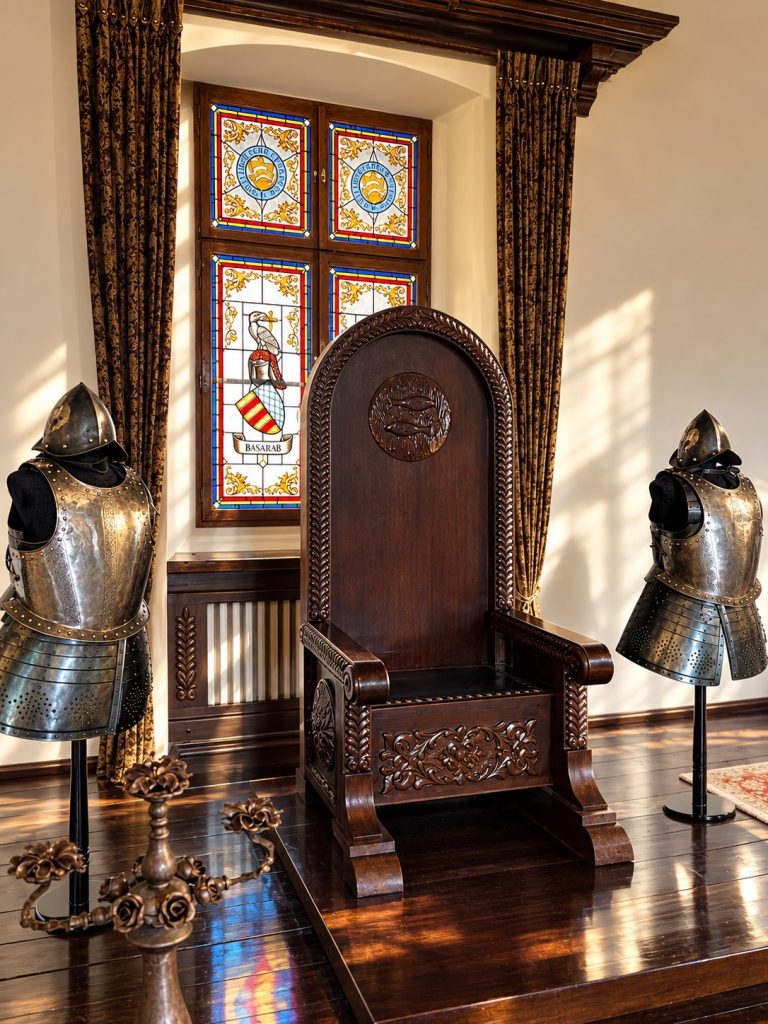
The connection established in 1369, the transformations undertaken under Ștefan Mailat, the Renaissance works of Gabriel Bethlen and George I Rákóczi, and the events associated with Mihai Viteazul all form part of this wider history.
Făgăraș reminds us that the past of Wallachia cannot be studied in isolation. Its rulers and institutions were connected to territories beyond the Carpathians through landholding, diplomacy, warfare and family relationships. The fortress offers a particularly clear view of these connections because its architectural development and political history are inseparable.
To study Făgăraș is therefore to look beyond the walls of a single monument and into the history of a region shaped by movement, negotiation and changing authority.
Basarab Heritage
— A.C.
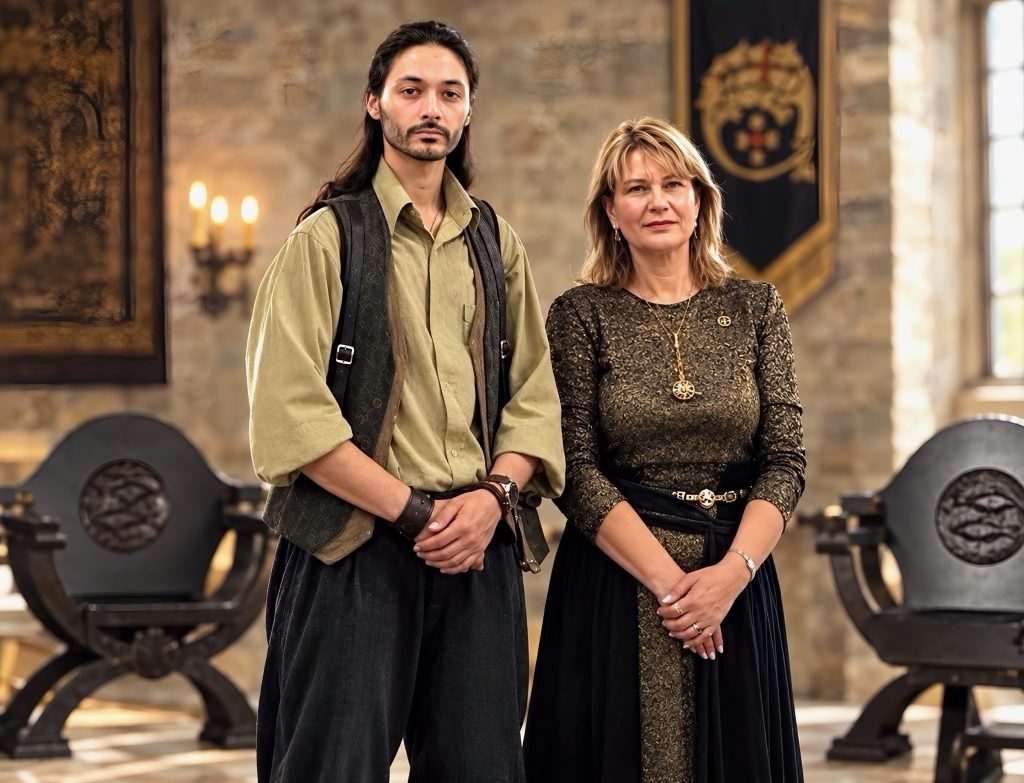
Vladislav Carol Nicolae and HIH Princess Silvia Andronik Cantacuzino during their visit at Făgăraș Fortress.
⸻
Visitor information
Făgăraș Fortress (Cetatea Făgărașului)
Address: Str. Mihai Viteazul 1, Făgăraș, Brașov County, Romania
Access: Located in the town centre of Făgăraș, easily accessible via the DN1 / E68 road between Sibiu and Brașov. Parking is available nearby.
Visiting: The interior halls, courtyard, and museum exhibits are open to the public according to seasonal opening hours.