
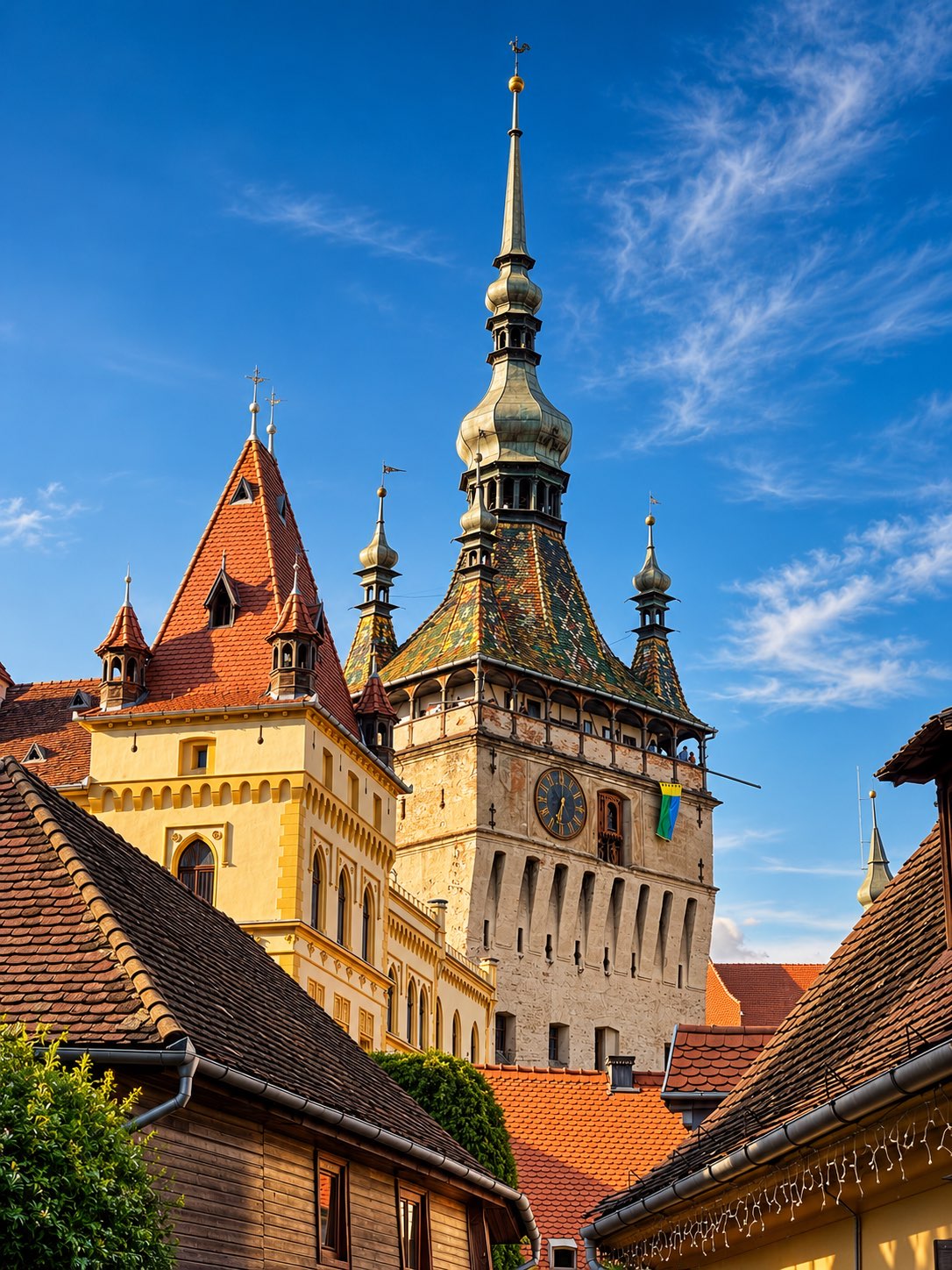
Basarab Heritage welcomes an initiative to preserve the authentic history of the Transylvanian Saxons.
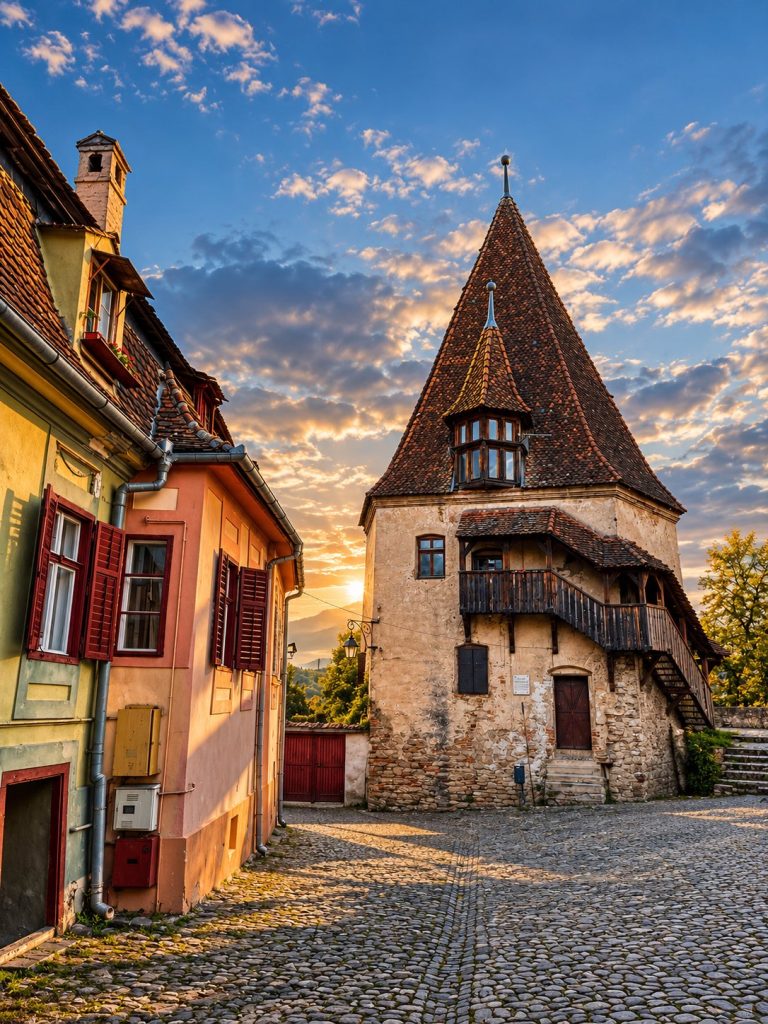
History is more than a collection of old buildings, picturesque streets and stories told to visitors. It is the memory of the people who shaped a place, built its institutions, practised their crafts and passed their traditions from one generation to the next. Preserving that history means preserving not only its visible monuments, but also the truth about the communities that created them.
This principle lies at the heart of Basarab Heritage. It is also why we wish to draw attention to an initiative recently launched by Cristina Rus, a native of Sighișoara, who is calling for a more accurate and responsible presentation of the Transylvanian Saxon heritage in her home town.
Her appeal concerns the historical information displayed within the medieval citadel of Sighișoara, as well as the presentation of the town’s traditional guilds and craftsmen. Through a public petition, she seeks to ensure that the people whose history is inseparable from the development of the town are properly represented in its public interpretation.
We consider this a matter worthy of attention, not only for the history of Sighișoara, but also for the wider question of how Romania presents and preserves its remarkable cultural heritage.
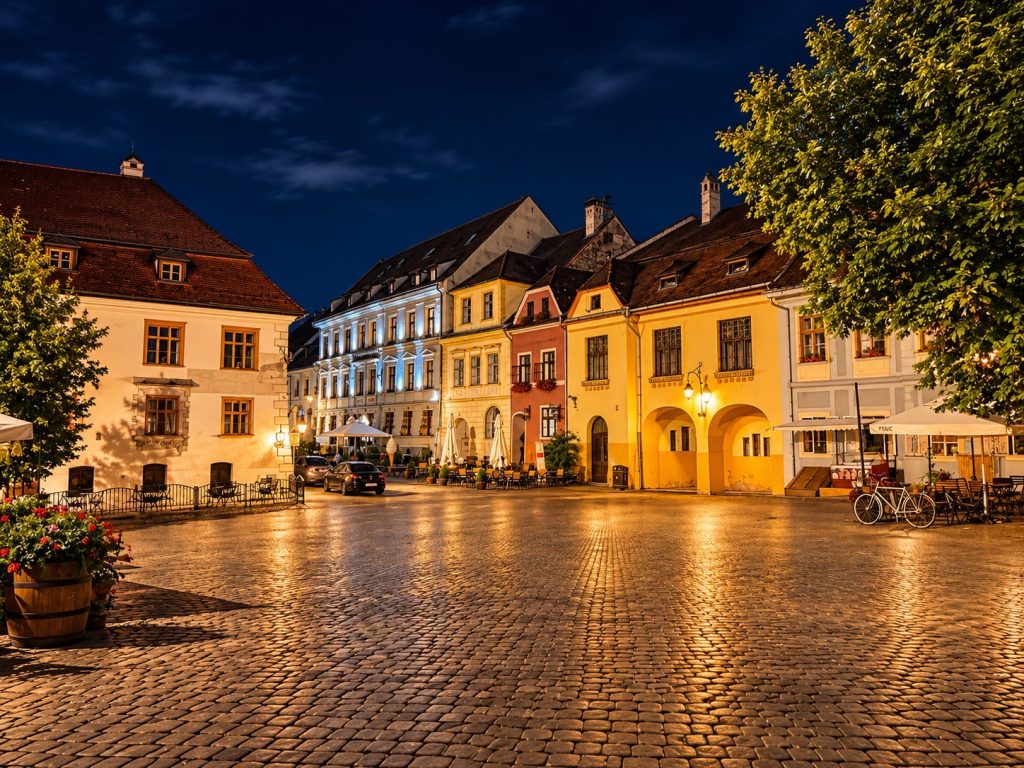
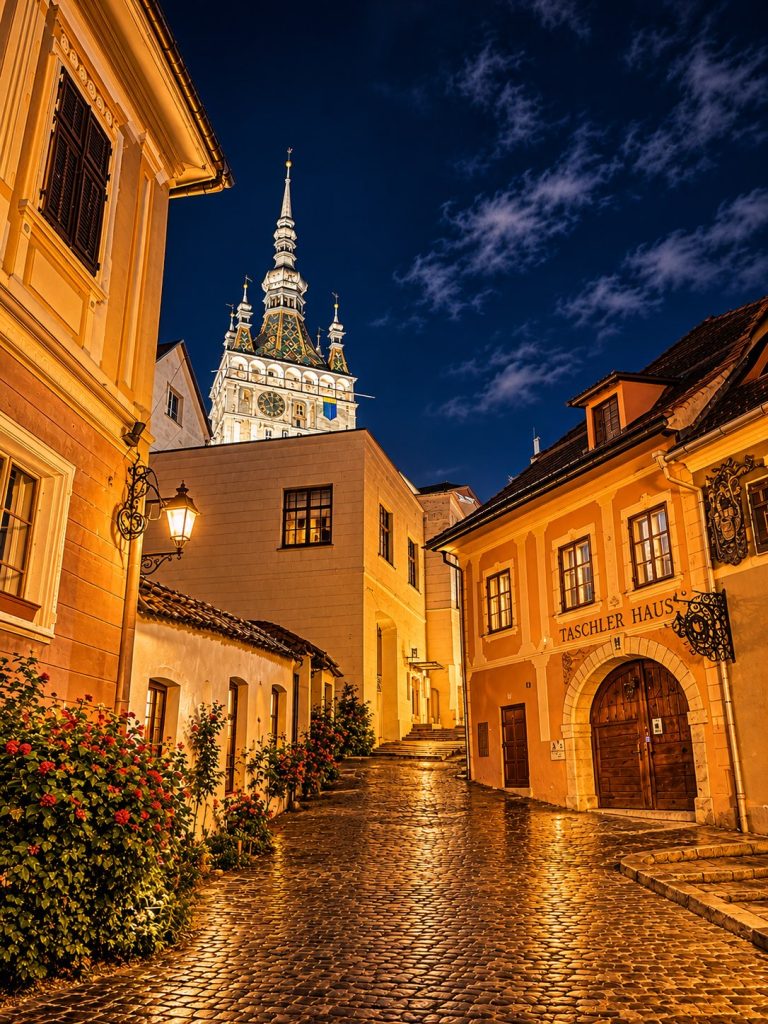
Evening view within the historic citadel of Sighișoara, reflecting the architectural layers and urban heritage shaped by the Transylvanian Saxons.
Sighișoara: A City with Many Historical Layers
The history of the area around Sighișoara reaches much further back than the medieval citadel familiar to visitors today. Archaeological discoveries in the surrounding landscape bear witness to prehistoric settlement, including remains associated with the Bronze Age Wietenberg culture, as well as later Dacian and Roman-period sites. These earlier traces form part of the wider history of the region, although they should not be confused with the origins of the medieval town itself.
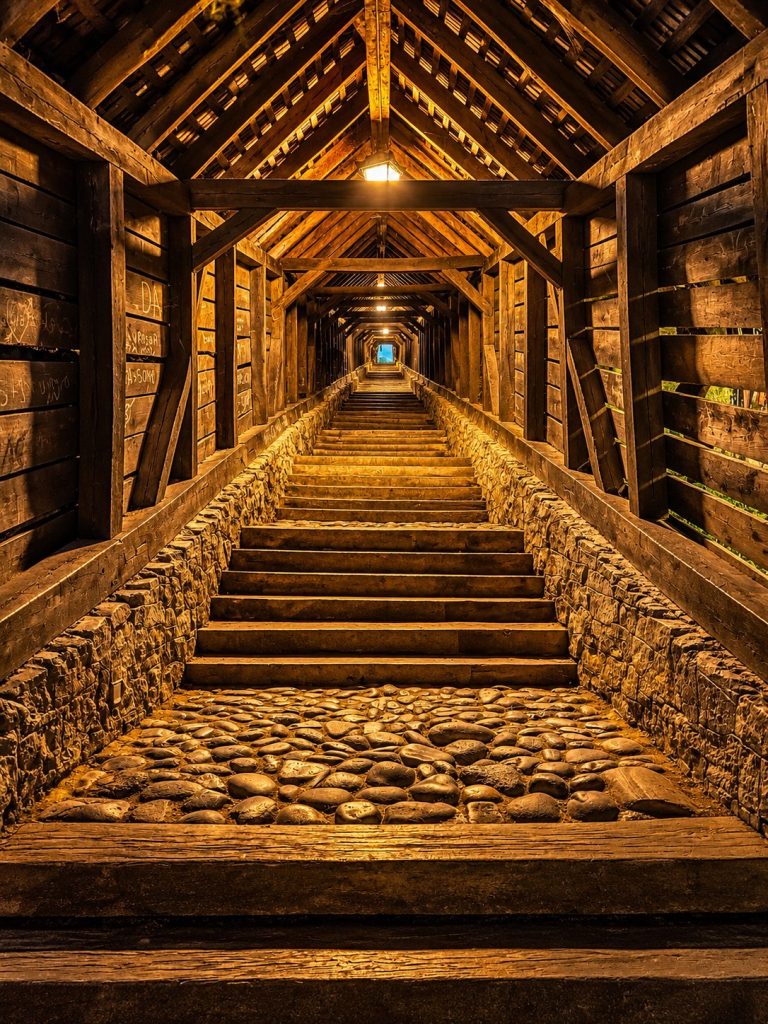
The development of medieval Sighișoara is closely associated with the German-speaking settlers known as the Transylvanian Saxons. Their settlement in Transylvania took place during the period of the Hungarian kings, particularly in the twelfth and thirteenth centuries. They established communities, developed agriculture, crafts and trade, and contributed to the network of towns and fortified settlements that became characteristic of medieval Transylvania.
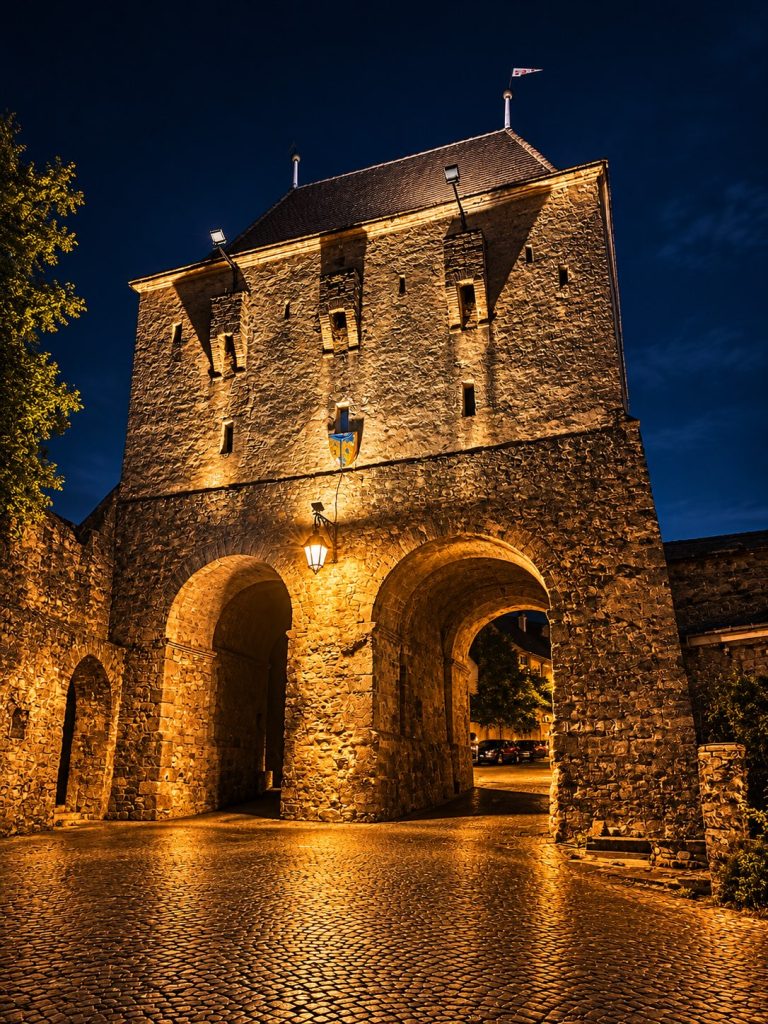
Sighișoara is first documented in 1280 under the name Castrum Sex. A further medieval reference, from 1298, records a form of the German name, Schespurch. By 1337, the settlement had become the centre of an administrative district, the Seat of Sighișoara, and in 1367 it received the status of civitas – a recognised town.
Its position along the Târnava Mare and its regional connections helped it develop into an important centre of commerce and craftsmanship. The fortified settlement on the hill gradually acquired its walls and defensive towers, while the town expanded below it. The resulting urban landscape reflects the close relationship between topography, defence, trade and civic life.
The town’s development was therefore not the work of a single generation. It was the result of centuries of settlement, construction and institutional organisation. Yet the particular urban character preserved in the historic centre is inseparable from the community of Transylvanian Saxons that shaped and maintained it.
This historical context is essential when considering how the citadel is presented to visitors today.
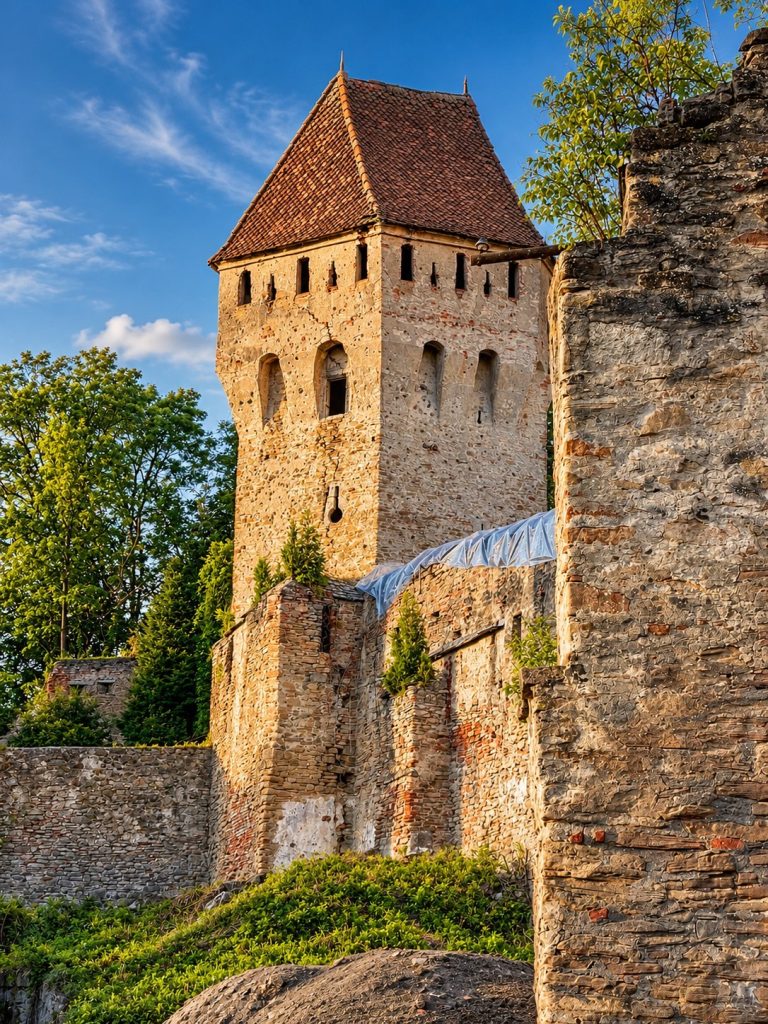
One of the historic defensive towers of Sighișoara, constructed and maintained by the medieval artisan guilds as part of the citadel’s fortification system.
The Guilds and the People Behind the Towers
Among the most distinctive features of medieval Sighișoara was its organisation of craftsmen into guilds. These associations regulated professional activity, safeguarded the interests of their members and helped maintain standards of production. They were also important institutions in the civic and defensive life of the town.
The earliest documentary reference to guilds in Sighișoara dates from 1376. Further records from the fifteenth and sixteenth centuries attest to a growing range of crafts and trades, including shoemakers, coopers, locksmiths, blacksmiths, furriers, weavers, tailors and goldsmiths. By the sixteenth and seventeenth centuries, the town is believed to have had at least fifteen guilds comprising approximately twenty branches of craftsmanship.
The guilds were not merely economic organisations. Their members also shared responsibility for the defence of the fortified town. The towers of Sighișoara became associated with particular guilds, which were responsible for their maintenance and defence. The names still borne by several of these towers preserve the memory of that civic system.
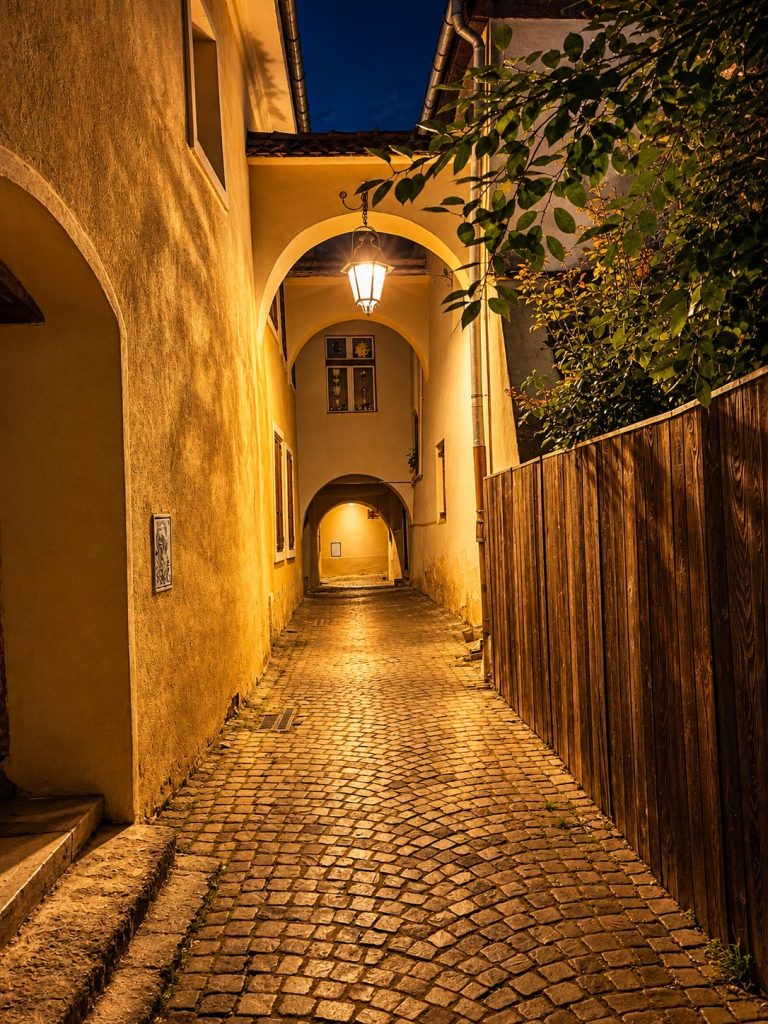
Behind the stone walls and defensive structures stood a highly organised urban society. The craftsmen who worked in their workshops, the merchants who maintained commercial connections, and the citizens who contributed to the town’s administration and defence were all part of the historical world that produced the Sighișoara we admire today.
An exhibition devoted to the guilds should therefore do more than display tools and objects. It should help visitors understand the people, institutions and social structures behind them. The material remains are important, but their historical meaning becomes clear only when they are placed in the context of the community that created and used them.
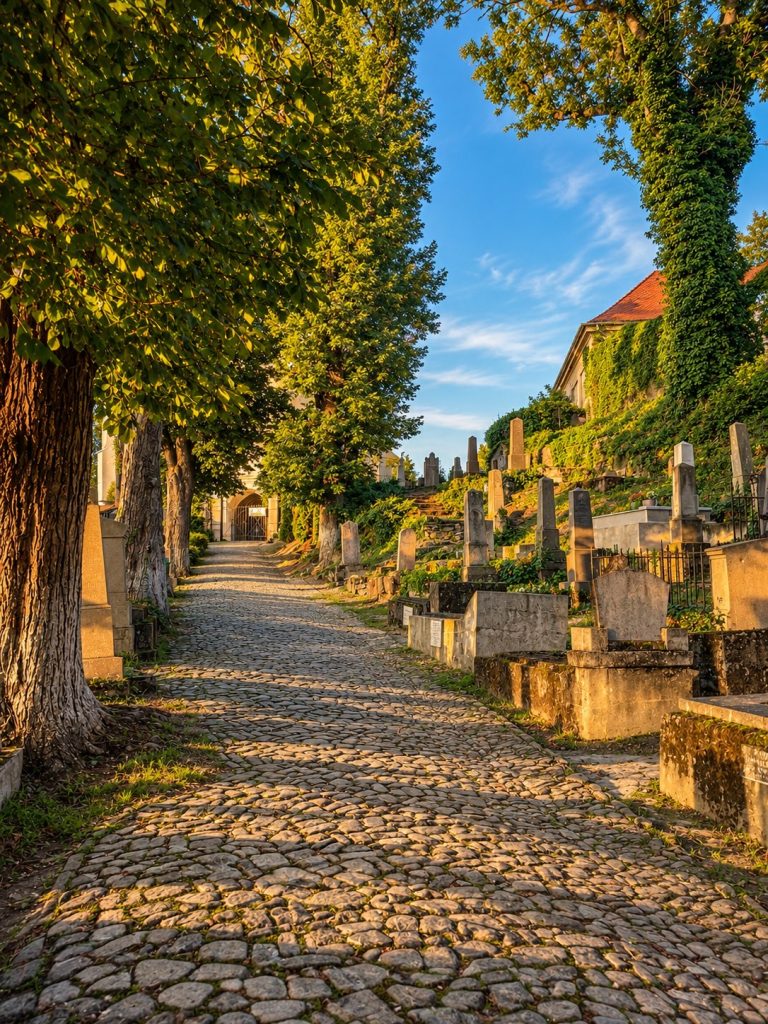
Historic gravestones and shaded pathways within the hillside cemetery, bearing silent witness to the generations of the Transylvanian Saxon community.
A UNESCO Recognition of Historical Significance
The importance of Sighișoara’s Transylvanian Saxon heritage is not simply a matter of local or community memory. It is also explicitly recognised at international level.
In 1999, the Historic Centre of Sighișoara was inscribed on the UNESCO World Heritage List under criteria (iii) and (v). The UNESCO documentation identifies the town as an outstanding testimony to the culture of the Transylvanian Saxons and as an exceptional example of a small fortified medieval town situated in a historical border region between Central and South-Eastern Europe.
The official description also identifies German craftsmen and merchants, known as the Saxons of Transylvania, as the founders of the historic centre. Its fortified urban structure, commercial and strategic importance, and surviving architectural character are all part of the reasons for its international recognition.
This does not mean that every chapter of Sighișoara’s history can be reduced to one community. Nor does it suggest that the wider history of the region began with the medieval Saxon settlement. Rather, it identifies the particular historical and cultural contribution that gives the World Heritage property much of its distinctive character.
The UNESCO recognition therefore provides an important point of reference for the present discussion. If the Saxon contribution forms part of the internationally recognised significance of the historic centre, it deserves to be clearly and accurately explained in the interpretation presented to the public.
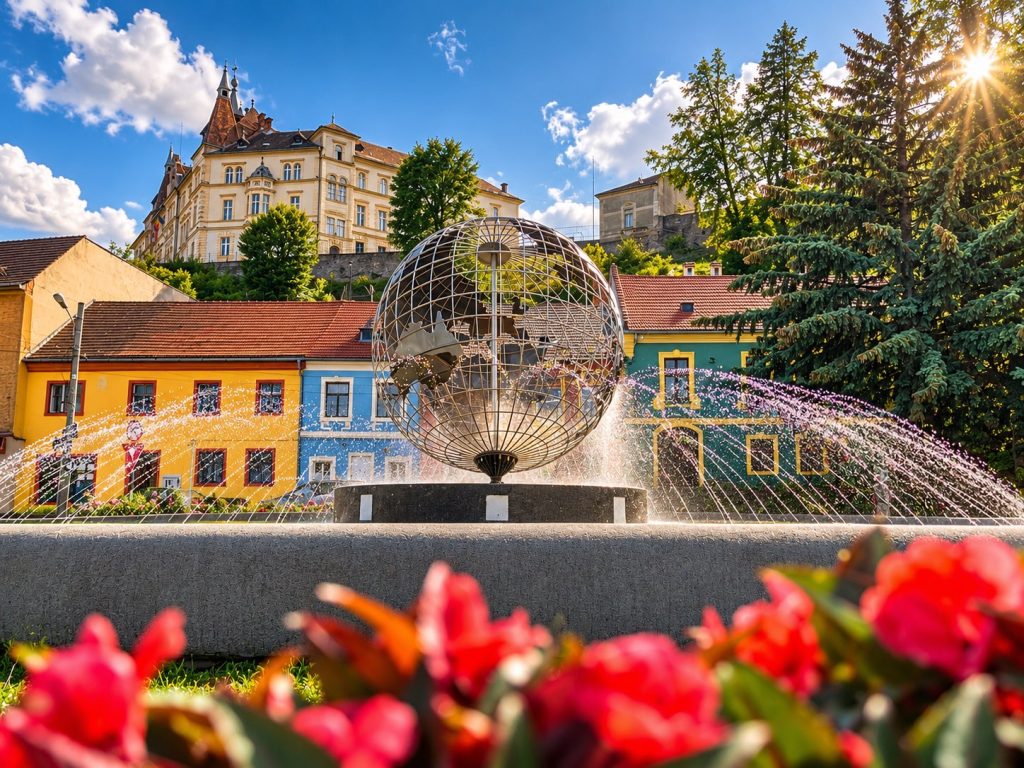
The lower town square of Sighișoara with its landmark fountain, welcoming visitors from around the world to a UNESCO World Heritage site whose international significance rests on authentic historical interpretation.
Cristina Rus and Her Initiative
In an article published by the Siebenbürgische Zeitung on 30 October 2026, Cristina Rus described her concerns regarding the presentation of the Transylvanian Saxon history of Sighișoara.
One of the issues she raises concerns the official information panels within the UNESCO-listed citadel. In her view, these panels do not adequately acknowledge the formative contribution of the Transylvanian Saxons to the town’s development.
A second example concerns the exhibition known as Casa Breslelor – the House of the Guilds. The exhibition presents tools, equipment and machinery associated with the work of Saxon craftsmen from Sighișoara and its surroundings. Cristina Rus questions the historical appropriateness of its promotional imagery, which depicts a man in traditional Romanian peasant clothing as a representative of a guild master.
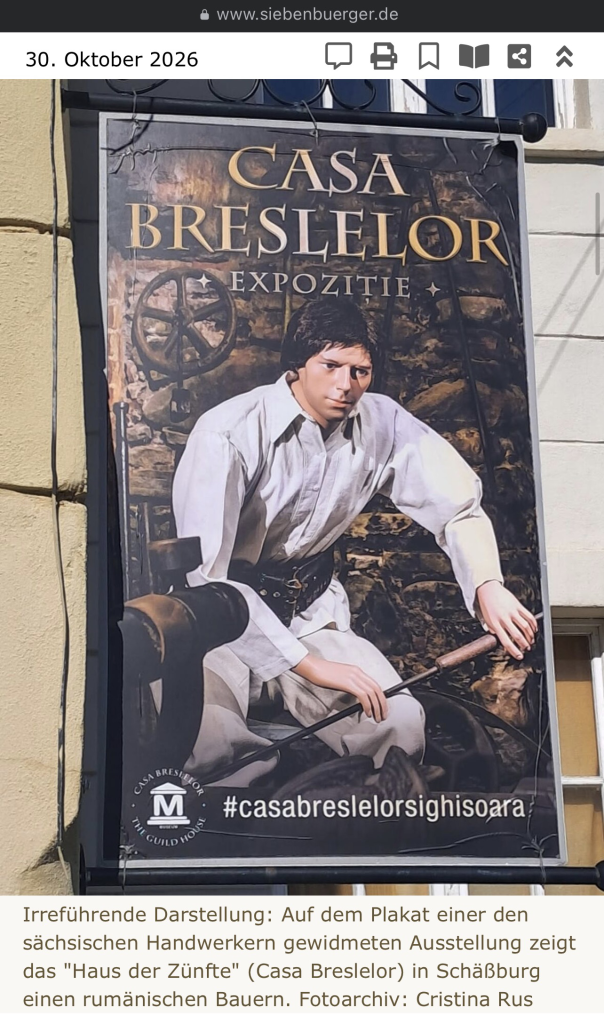
She argues that this creates a misleading visual association between the urban guild culture of the Saxon craftsmen and a form of rural folk dress belonging to a different historical and social context.
Her criticism should not be understood as a rejection of Romanian folk culture. The issue is one of historical attribution and context. An exhibition devoted to the history of Saxon urban craftsmen should use imagery that corresponds to the historical world it seeks to explain.
This distinction deserves to be taken seriously. Cultural heritage is best served when each tradition is presented in its own historical context, without unnecessary conflation or misleading symbolism.
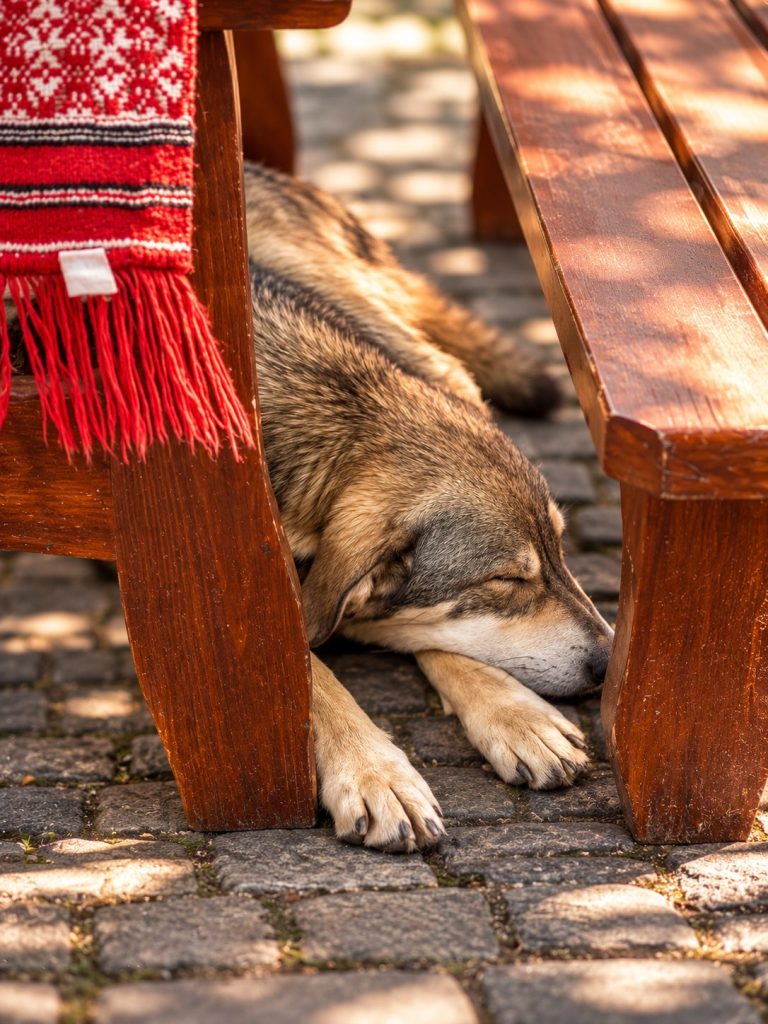
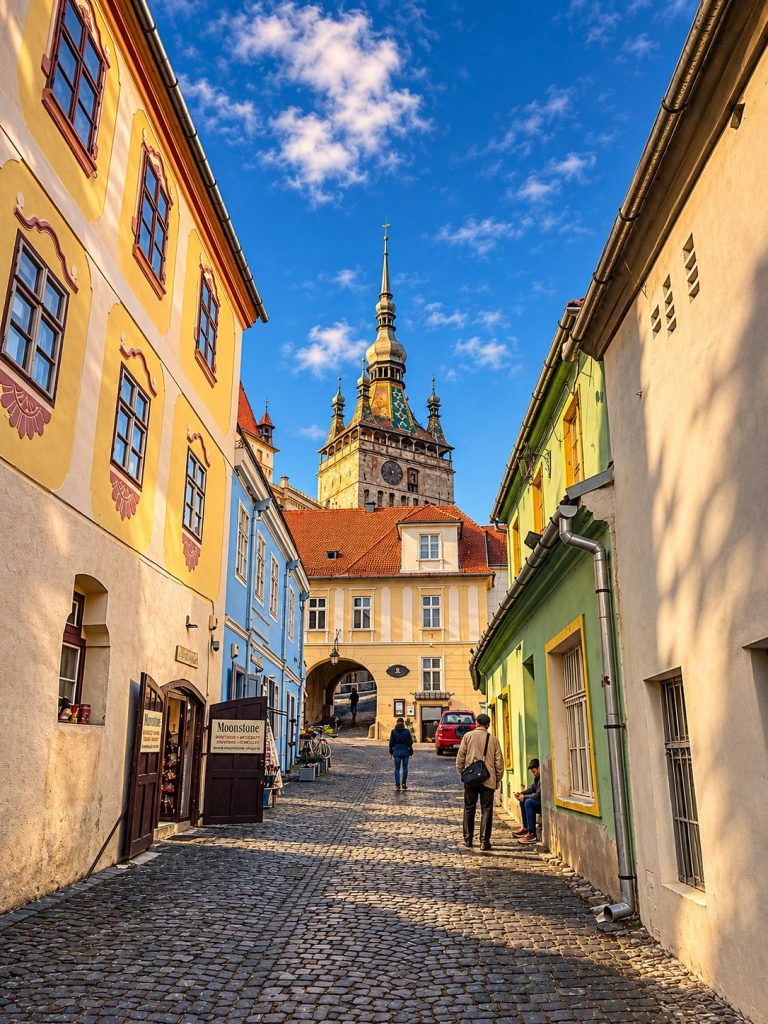
A quiet daily moment amidst traditional textiles and cobbles, reflecting the authentic, unscripted atmosphere of Sighișoara beyond modern commercial marketing.
The Petition: A Call for a More Accurate Presentation
To bring these concerns before the responsible institutions, Cristina Rus has launched a public petition entitled:
„Puneți istoria sașilor în panourile Cetății Sighișoara” – “Put the History of the Saxons on the Information Panels of the Sighișoara Citadel.”
The petition calls upon the Municipality of Sighișoara, the Local Council and the Mureș County Directorate for Culture to review the existing information panels within the citadel and ensure that the historical contribution of the Transylvanian Saxons is properly represented.
Among its principal requests are:
- A clear acknowledgement of the historical contribution of the Transylvanian Saxons to the development and defence of Sighișoara.
- The inclusion of the town’s historical German and Hungarian names, Schäßburg and Segesvár, where historically appropriate.
- The presentation of information in Romanian, German and English.
- The involvement of relevant cultural and historical institutions, including the Sighișoara History Museum, the Democratic Forum of Germans in Romania and the Evangelical Church A.C., in preparing historically documented texts.
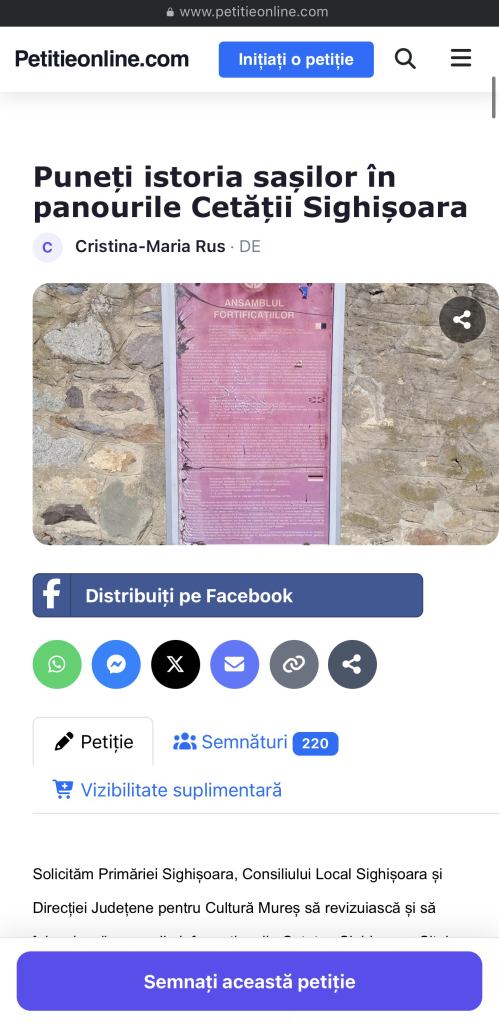
Cristina Rus intends to submit the petition together with a formal memorandum to the Municipality of Sighișoara and the Mureș County Directorate for Culture.
The initiative is therefore not simply a protest against particular wording or imagery. It is an appeal for a more carefully documented and historically responsible approach to the interpretation of the town’s heritage.
The petition can be read and signed here:
Put the History of the Saxons on the Information Panels of the Sighișoara Citadel
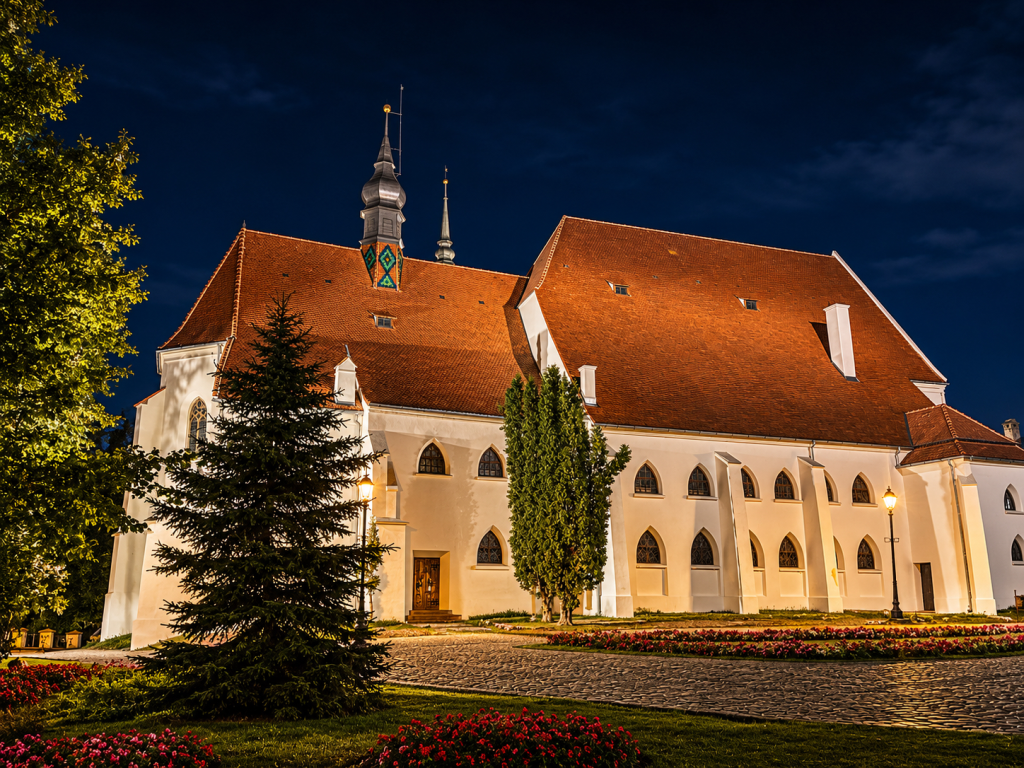
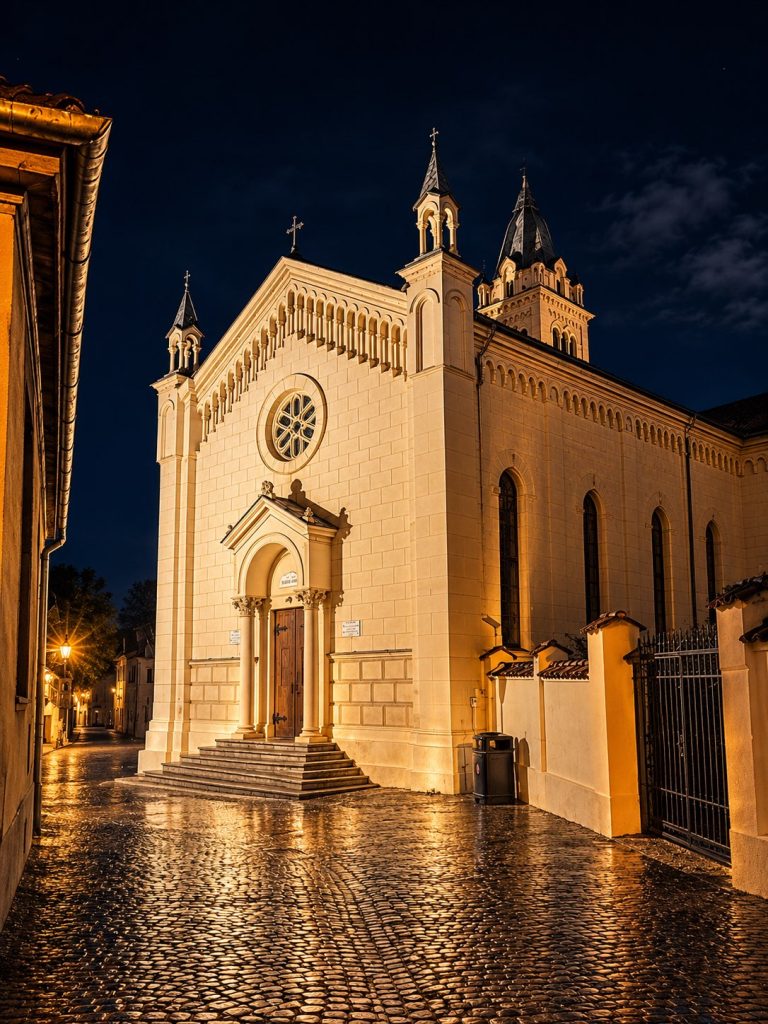
The illuminated Dominican Monastery Church of Sighișoara, standing as a monumental testament to the town’s complex spiritual and architectural heritage.
The Difference Between Living Tradition and Historical Distortion
There is, of course, nothing wrong with telling legends. Myths, local traditions and stories have always been part of the cultural life of historic towns. They can give visitors a sense of atmosphere, encourage curiosity and introduce them to places they might otherwise overlook.
Sighișoara, like many medieval towns, possesses a wealth of legends and popular stories. Some have been handed down through generations; others have been adapted, embellished or newly created for the modern visitor. Properly identified, they form part of the town’s cultural reception and folklore.
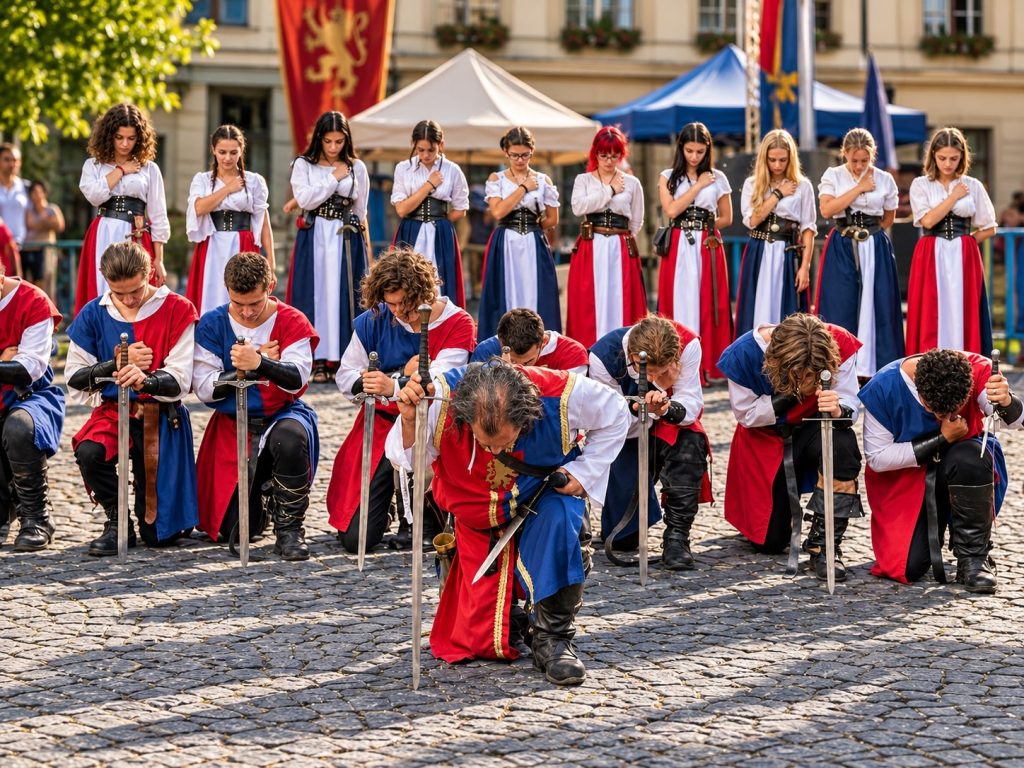
But a distinction must always be maintained between what belongs to historical evidence and what belongs to legend.
A legend may be fascinating, but it is not a historical document. A romantic narrative may make a monument more appealing, but it cannot replace the circumstances of its construction, the identity of its founders or the social structures that sustained it. Nor should popular entertainment obscure the historical contributions of the communities whose lives are reflected in the surviving heritage.
The problem arises when the boundary between these categories disappears – when invented stories are presented as established fact, when visual symbols are detached from their historical setting, or when the authentic history of a place becomes secondary to a more marketable narrative.
For Basarab Heritage, this distinction is fundamental. Our purpose is not to deprive history of its human interest or to reject the appeal of traditional stories. It is to ensure that the past is presented with respect for evidence, context and historical reality.
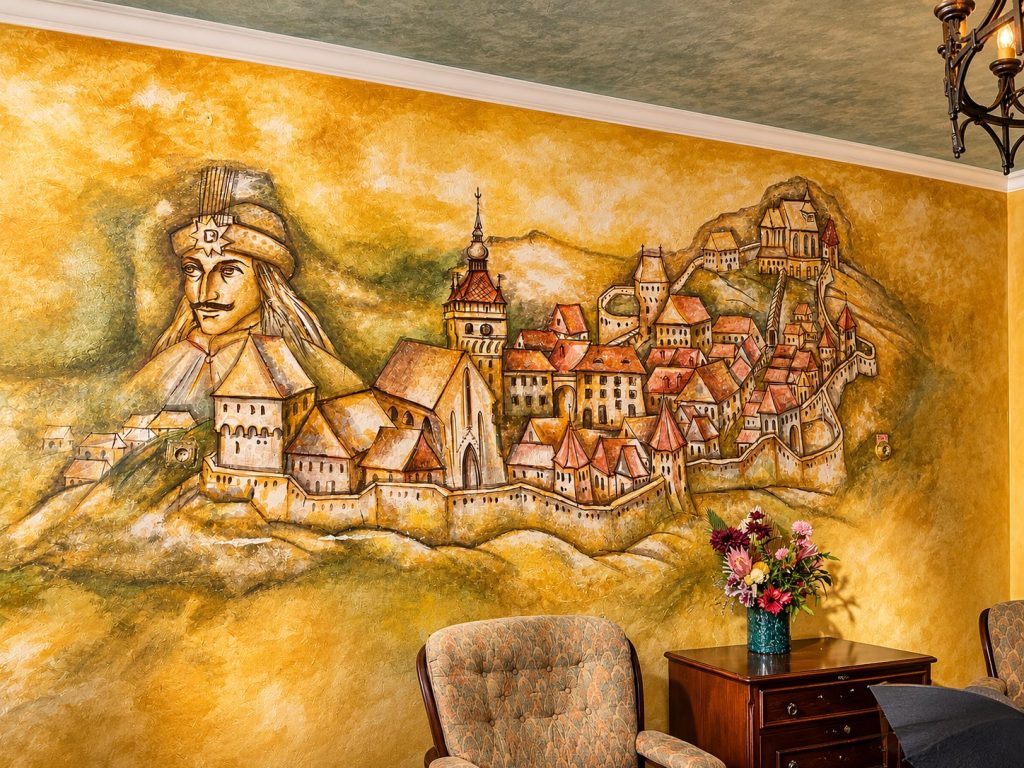
Artistic representation blending the imagery of Vlad III with the medieval townscape, contrasting popular marketing narratives with ongoing scholarly debates regarding his true birthplace.
The Richness of Romania Lies in Its Many Histories
The question raised by Cristina Rus reaches beyond Sighișoara and the history of the Transylvanian Saxons. It touches upon a principle that should guide the preservation and presentation of heritage throughout Romania.
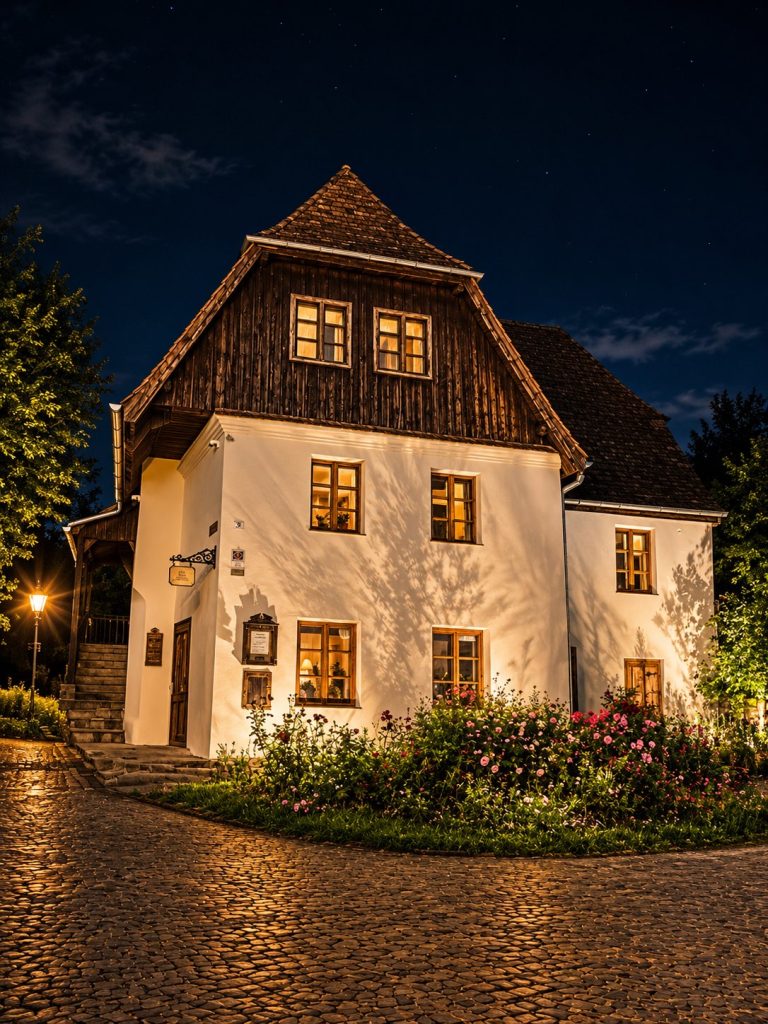
Every historical region of the country deserves to have its rich past represented in its entirety. Transylvania, Wallachia, Moldavia, the Banat, Crișana, Maramureș, Dobruja and the other historic lands of present-day Romania each possess distinctive experiences, traditions and cultural legacies. Their histories have been shaped by different communities, political traditions, languages, religions and historical circumstances.
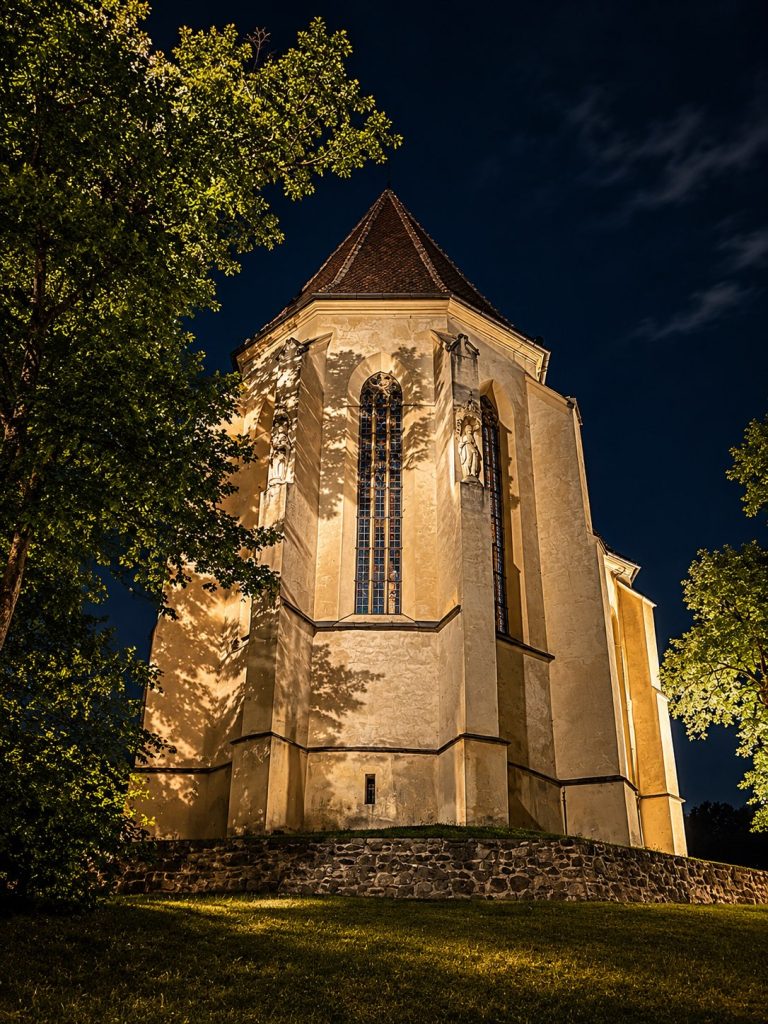
The character of Romania cannot be understood through a single narrative. Its cultural richness lies precisely in the encounter and coexistence of these different histories. Romanians, Transylvanian Saxons, Hungarians, Szeklers, Armenians, Jews, Roma and other communities have all contributed, in different ways and in different places, to the country’s historical development.
Recognising one community’s contribution does not diminish another’s. On the contrary, a fuller account of each makes the history of the whole country more complete.
This is particularly important in the presentation of heritage to visitors. A historic town should not be reduced to a convenient national narrative, just as its history should not be fragmented into isolated stories without regard for the wider context. The task is to show how its different communities and traditions fit into the larger historical picture.
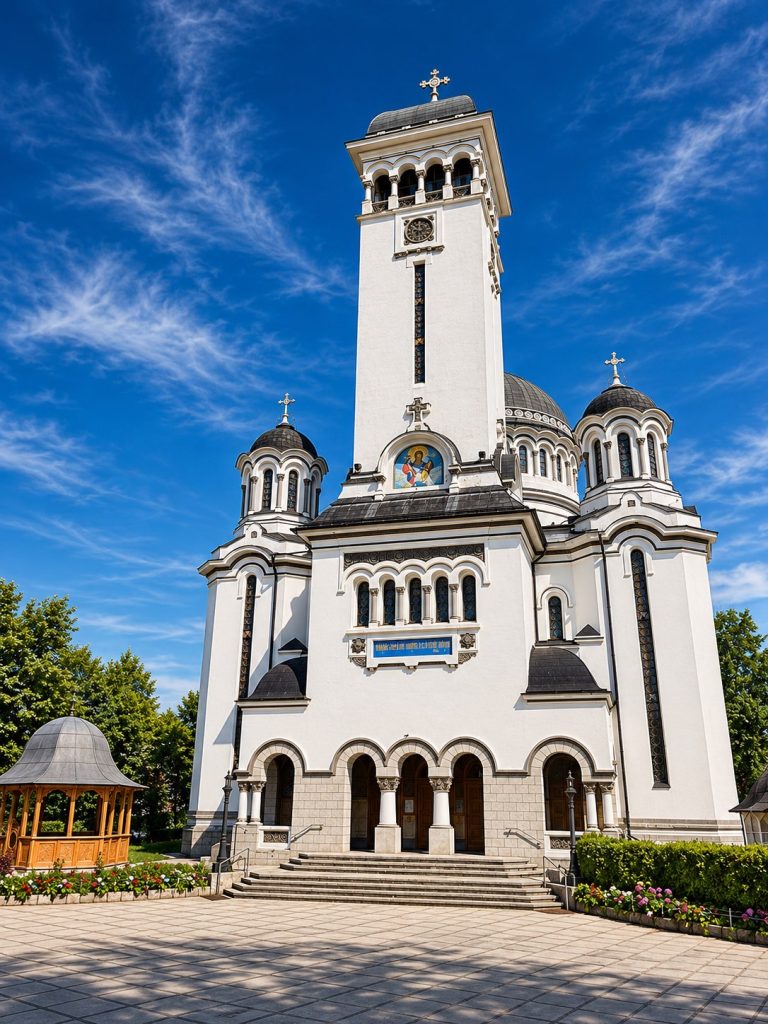
That is what gives Romania much of its distinctive character and fascination: not a simplified image of a uniform past, but the depth and variety of the histories that have come together within its present borders.
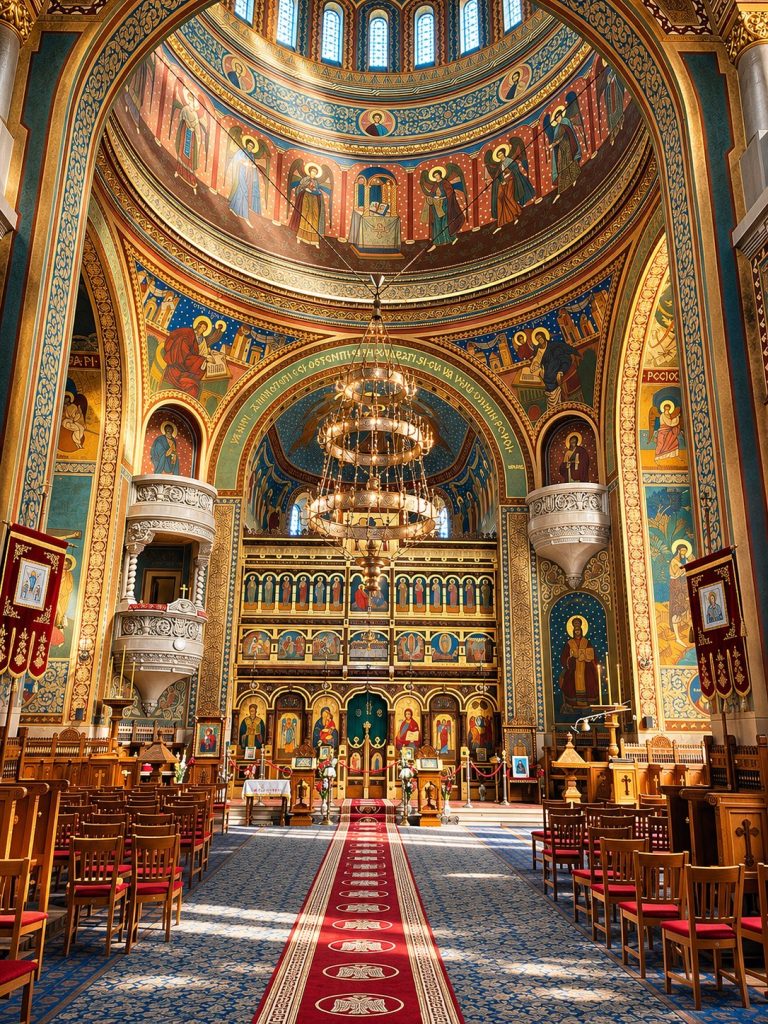
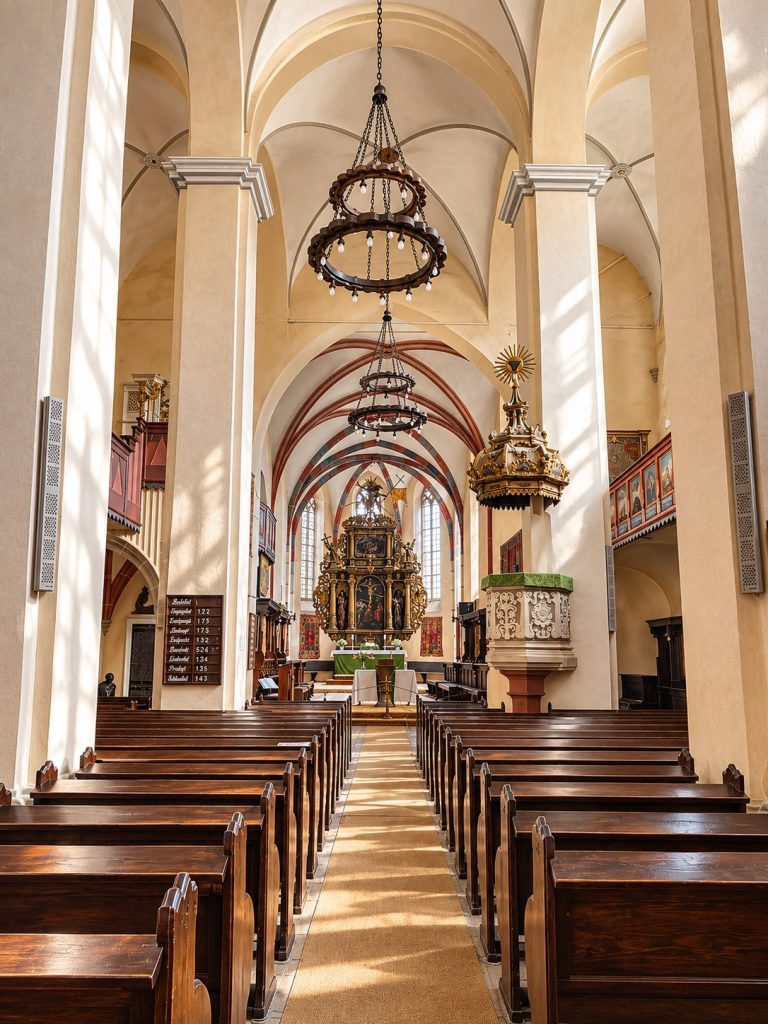
Side-by-side interiors of the Orthodox Holy Trinity Cathedral and the Evangelical Church on the Hill, reflecting the rich confessional and cultural diversity that shapes the spiritual landscape of Sighișoara and Romania.
A Principle Already Reflected in Our Work
The question of how history should be remembered and communicated is not new to our work.

In the fourth volume of Vladislav Carol Nicolae’s book series Ion & Der Drachenprinz, entitled Reise nach Siebenbürgen, the subject of historical memory and the relationship between popular narratives and the past is also explored.
Literature and historical research naturally approach the past in different ways. A work of fiction may draw upon legend, imagination and historical atmosphere; a heritage platform, by contrast, must distinguish carefully between documented events, later traditions and creative interpretation. These approaches need not contradict one another. Indeed, they can complement each other when their respective purposes are made clear.
What matters is that readers and visitors are never left with the impression that an attractive story is necessarily an established historical fact.
The same principle applies to exhibitions, information panels, museums and tourist presentations. They need not be dry or inaccessible to be historically responsible. On the contrary, the authentic history of a town – its craftsmen, merchants, rulers, religious communities and ordinary inhabitants – is often far more compelling than any invented tale.
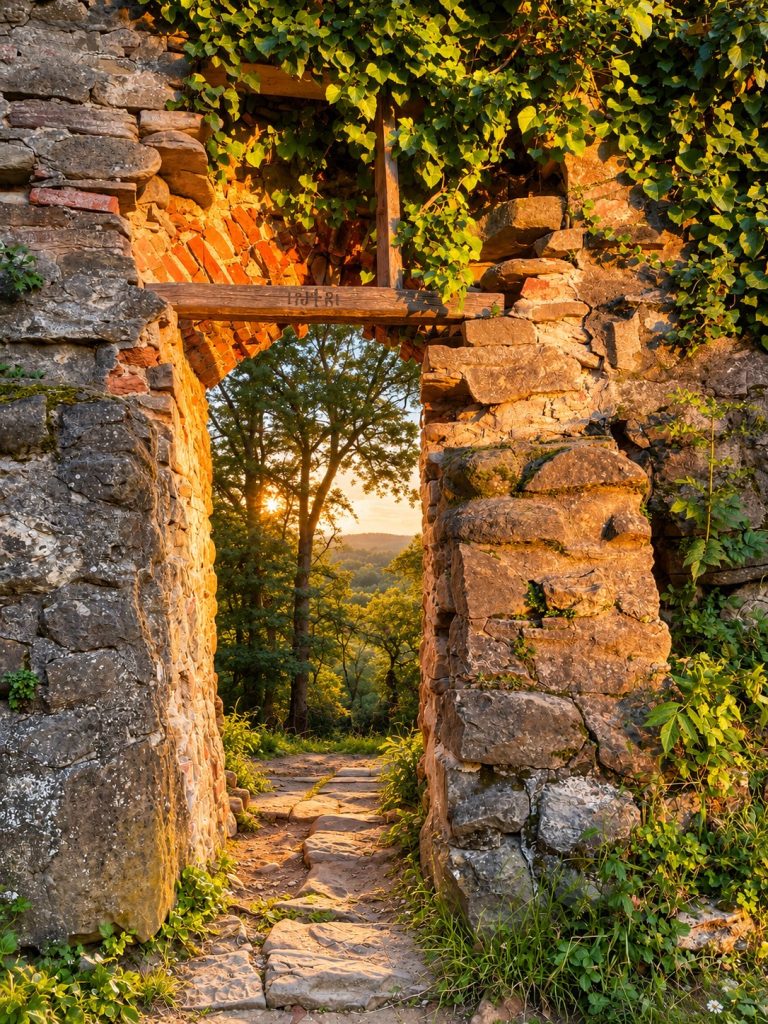
An ancient stone gateway framed by greenery, offering a view onto the historic landscape and symbolising a respectful path toward preserving Transylvanian heritage.
Preserving the Heritage of Sighișoara
The initiative of Cristina Rus addresses a question that extends beyond the walls of Sighișoara. It concerns the responsibility of all those who present, interpret and promote historic places.
A UNESCO designation recognises the outstanding universal value of a heritage site. It also places particular importance on its conservation and on the quality of the information through which its significance is communicated. The physical preservation of a monument and the responsible interpretation of its history are different tasks, but both contribute to the way future generations understand it.
Sighișoara’s heritage belongs to a wider Transylvanian history shaped by several communities. Acknowledging the formative role of the Transylvanian Saxons does not diminish the contributions of Romanians, Hungarians or others who have also shaped the region. Historical accuracy is not a competition between communities. It is an obligation to recognise each contribution in its proper context.
For this reason, we welcome the effort to bring the historical presence of the Saxons more clearly into the public presentation of the citadel and its guild heritage. We hope that the petition will encourage a constructive dialogue between the initiator, the local authorities and the cultural institutions concerned.
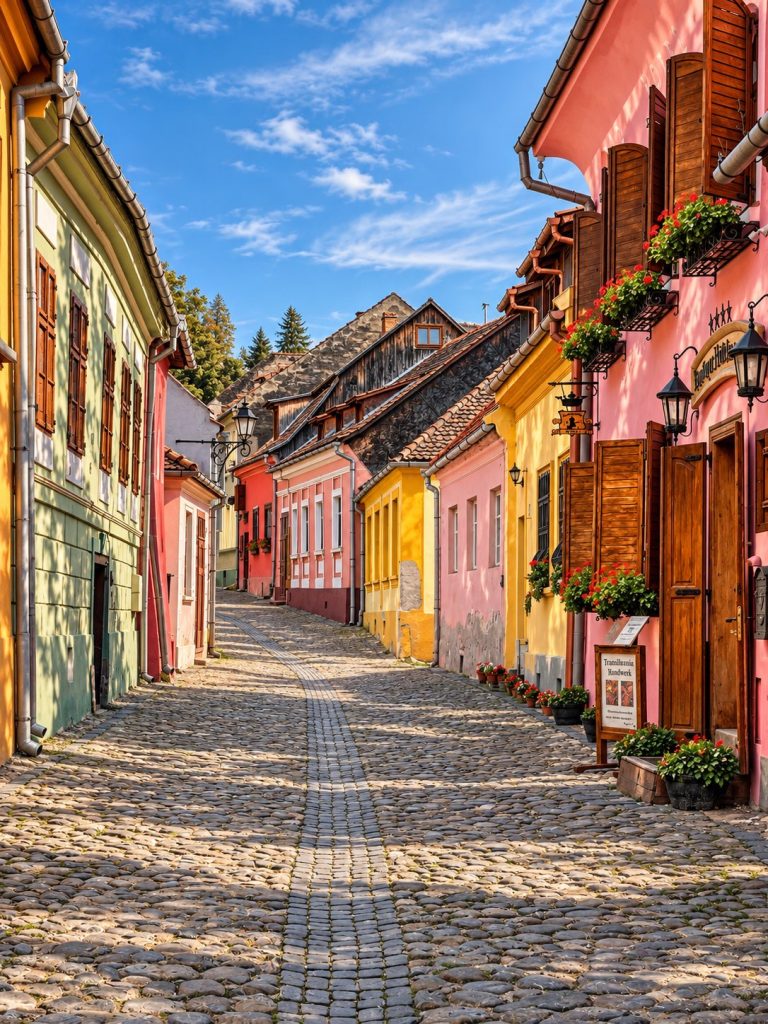
Cobblestone street lined with colourful historic houses within the citadel, testifying to centuries of urban craftsmanship and civic life in Sighișoara.
History Deserves More Than a Convenient Story
Historic places should certainly be allowed to inspire wonder. Their legends may be told, their traditions celebrated and their stories shared with visitors from around the world. Yet the fascination of the past should begin with what actually happened – not with what might make the most entertaining tale.
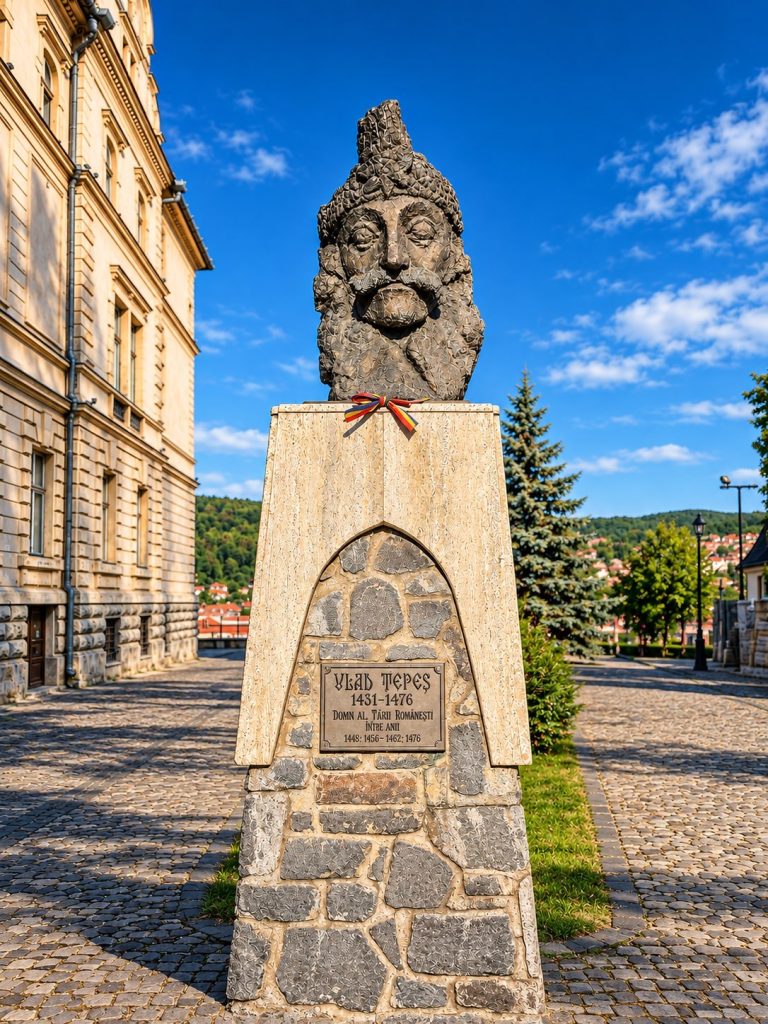
Behind the towers of Sighișoara stand generations of craftsmen, merchants, citizens and families. Their achievements, institutions and traditions are not secondary details of the town’s history. They are part of the very reason why the citadel exists in the form in which we know it today.
To remember them accurately is not an act of nostalgia, nor an attempt to claim history for one community alone. It is an act of respect.
Basarab Heritage therefore welcomes Cristina Rus’s initiative and draws attention to her petition. We hope that her appeal will contribute to a historically sound, balanced and meaningful presentation of Sighișoara’s heritage – one in which the truth of the past is not overshadowed by convenient myths, but allowed to speak for itself.
Basarab Heritage
— A.C.
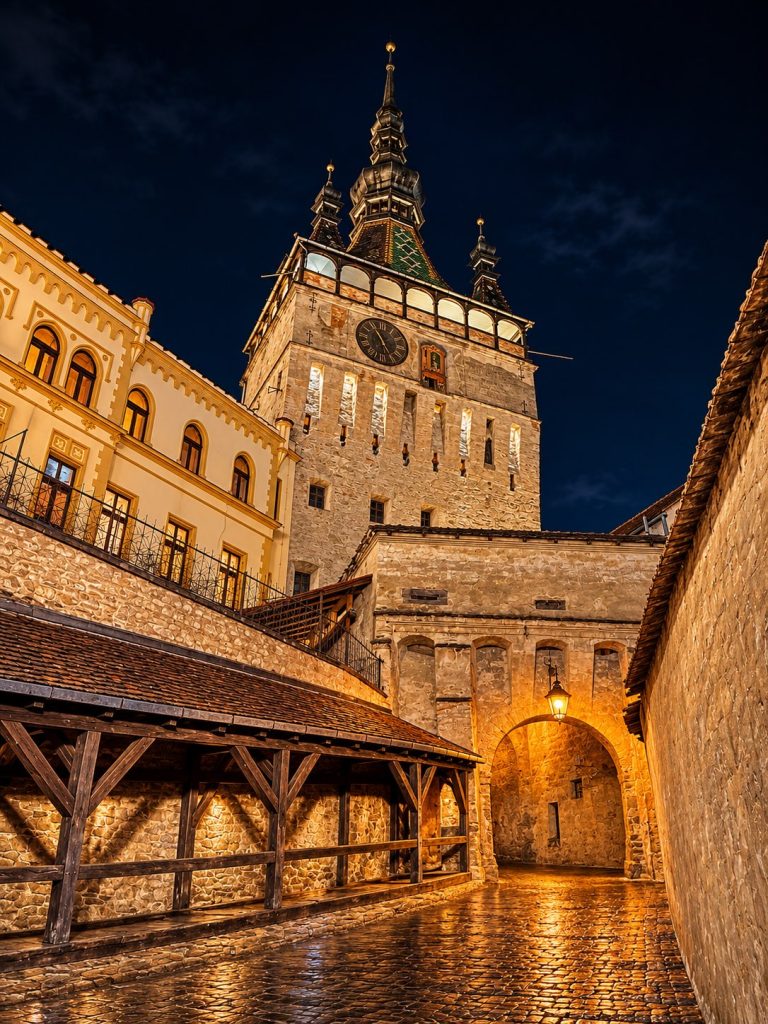
The illuminated Clock Tower at night, standing as the iconic central gate tower and administrative heart of medieval Sighișoara.