
Rising above Piața Huet in the historic heart of Sibiu, the Evangelical Church preserves centuries of Transylvanian religious, artistic and civic history. Within its walls lies Mihnea cel Rău, Prince of Wallachia and son of Vlad III Țepeș, whose violent death in 1510 brought the turbulent politics of Wallachia into the heart of a Transylvanian Saxon town.
A Monument at the Heart of Sibiu
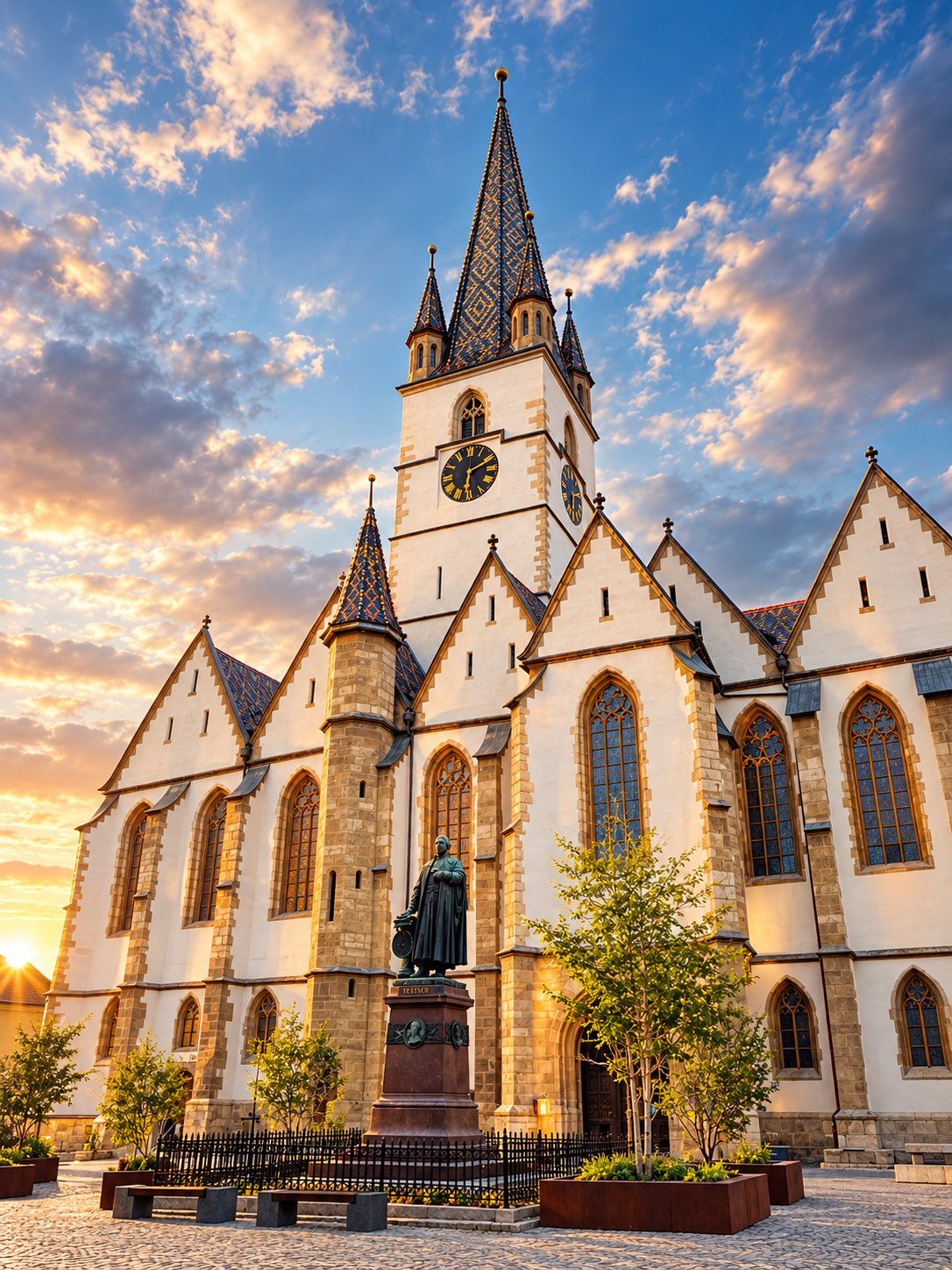
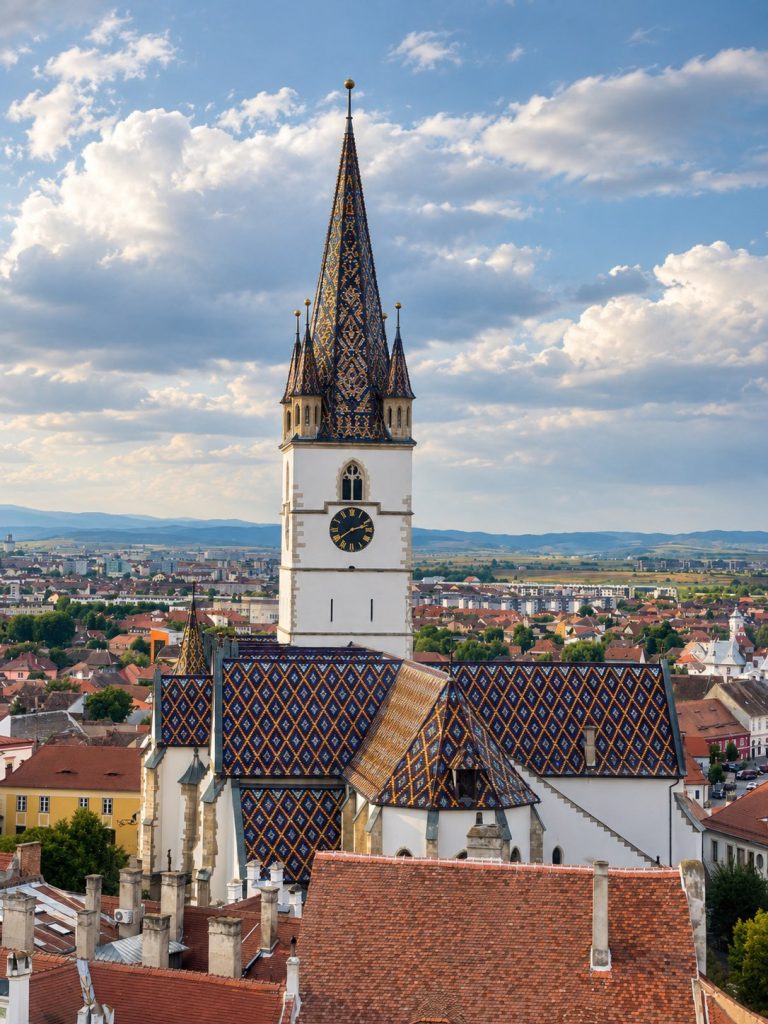
The Evangelical Church of Sibiu, known in German as the Evangelische Stadtpfarrkirche, is one of the defining monuments of Transylvania’s medieval urban heritage. Its soaring tower, steep roofs and Gothic architecture dominate Piața Huet, recalling the importance of the church in the development of Hermannstadt, as Sibiu was historically known in German.
Yet the history of this sacred place extends beyond the Gothic building visible today. Archaeological investigations have identified remains of an earlier Romanesque church, demonstrating that the site was already a place of worship in the medieval settlement before the great Gothic reconstruction began.
The present church developed over successive building campaigns during the fourteenth, fifteenth and early sixteenth centuries. Construction of the Gothic structure began around the middle of the fourteenth century, while documentary evidence records work on the choir in 1371. Subsequent alterations enlarged the building, reshaped its interior and gradually established the monumental form that defines the church today.
The church was therefore not the creation of a single generation. Its architecture reflects the resources, ambitions and changing religious needs of a community that developed Sibiu into one of the principal towns of Transylvania.
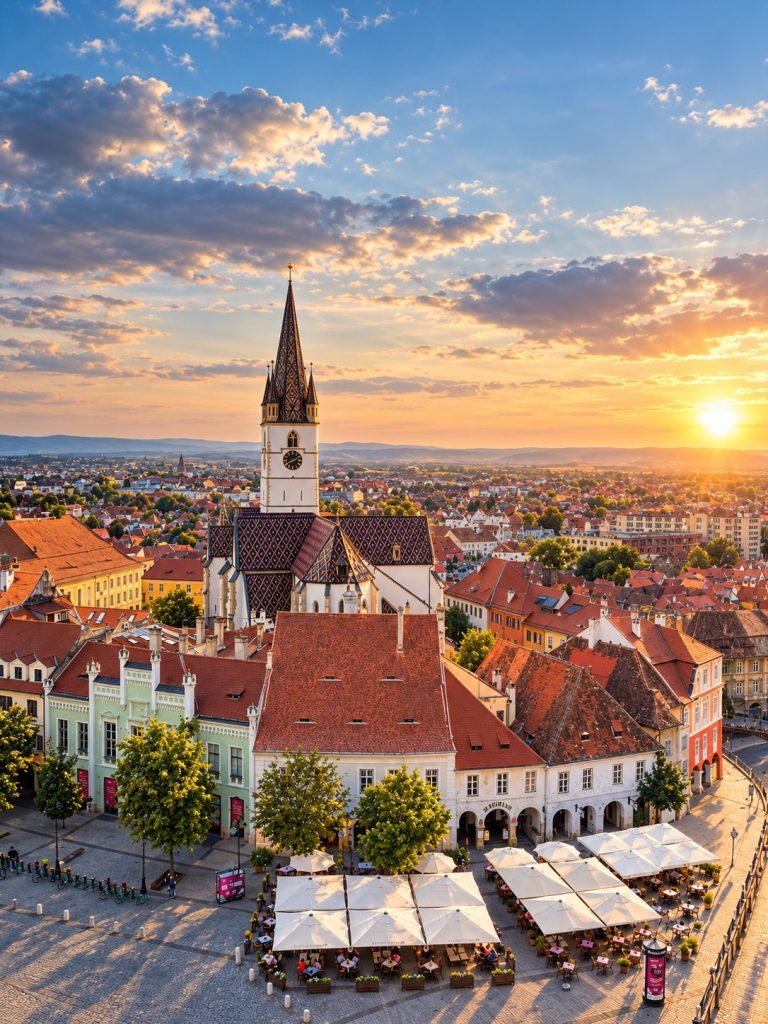
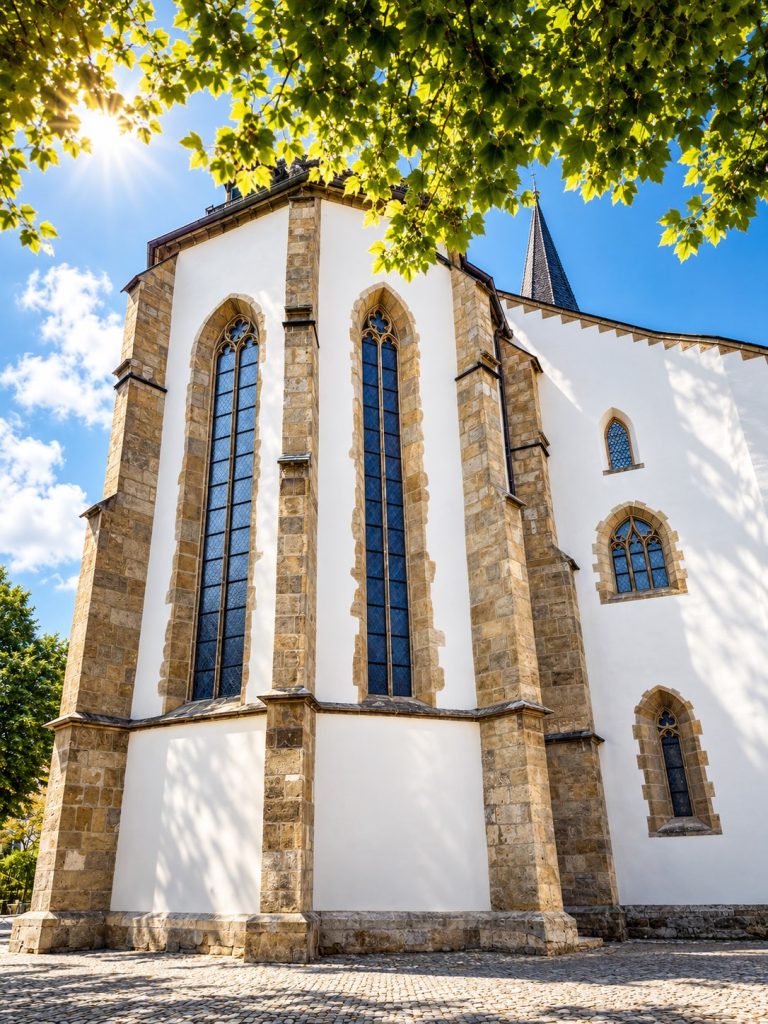
First Picture: View across Piața Mică toward the Evangelical Church, set within the historic urban fabric of Sibiu. Second Picture: Gothic architectural details of the church, reflecting the craftsmanship of medieval Hermannstadt.
The Church and the Transylvanian Saxons
For centuries, Sibiu was a leading centre of the Transylvanian Saxons, a German-speaking community whose institutions, craftsmanship and commercial networks helped shape the urban culture of southern Transylvania.
The parish church stood at the centre of this communal life. It was a place of worship and religious observance, but also a setting for public commemoration, where memorials preserved the names and achievements of generations of townspeople.
The sixteenth century brought a profound religious transformation. During the Reformation, Sibiu’s Saxon community adopted Lutheranism, and the former Church of St Mary became the principal Evangelical church of the town.
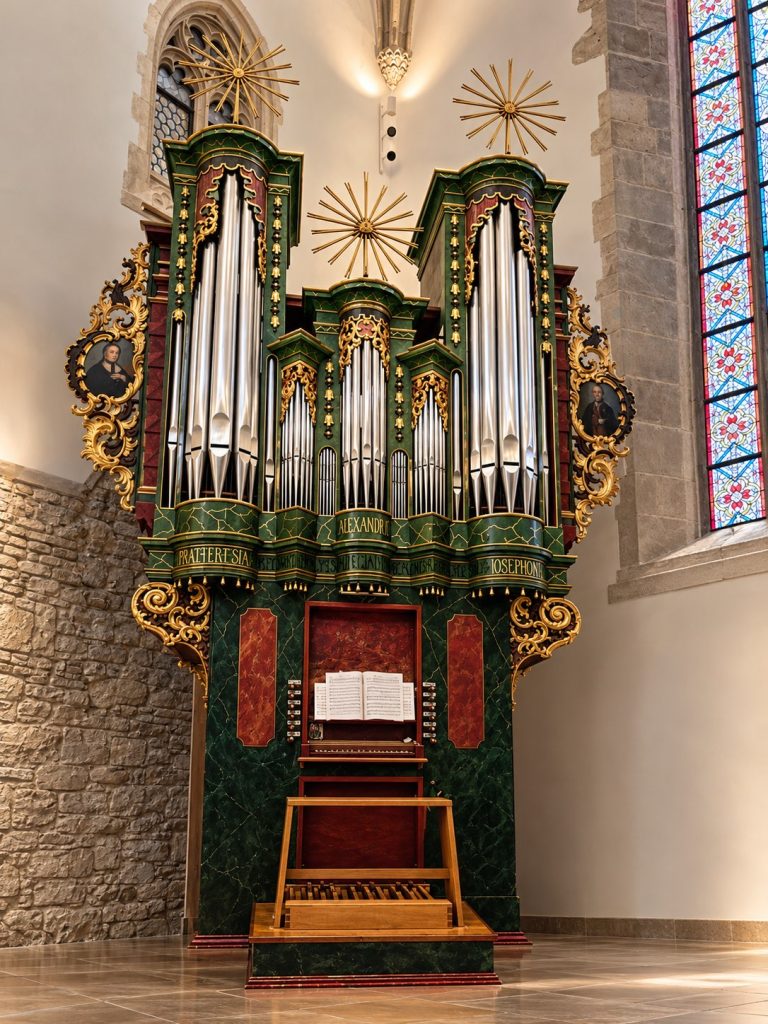
This change connected Sibiu with the wider currents of the European Reformation while giving the church a lasting place in the religious history of Transylvania. Its identity evolved, but its importance to the local community endured.
The building remains an active place of worship within the Evangelical Church of the Augsburg Confession in Romania. Its significance thus extends beyond its status as an architectural monument: it continues a religious tradition rooted in the history of the town.
Gothic Architecture and the Art of the Sacred
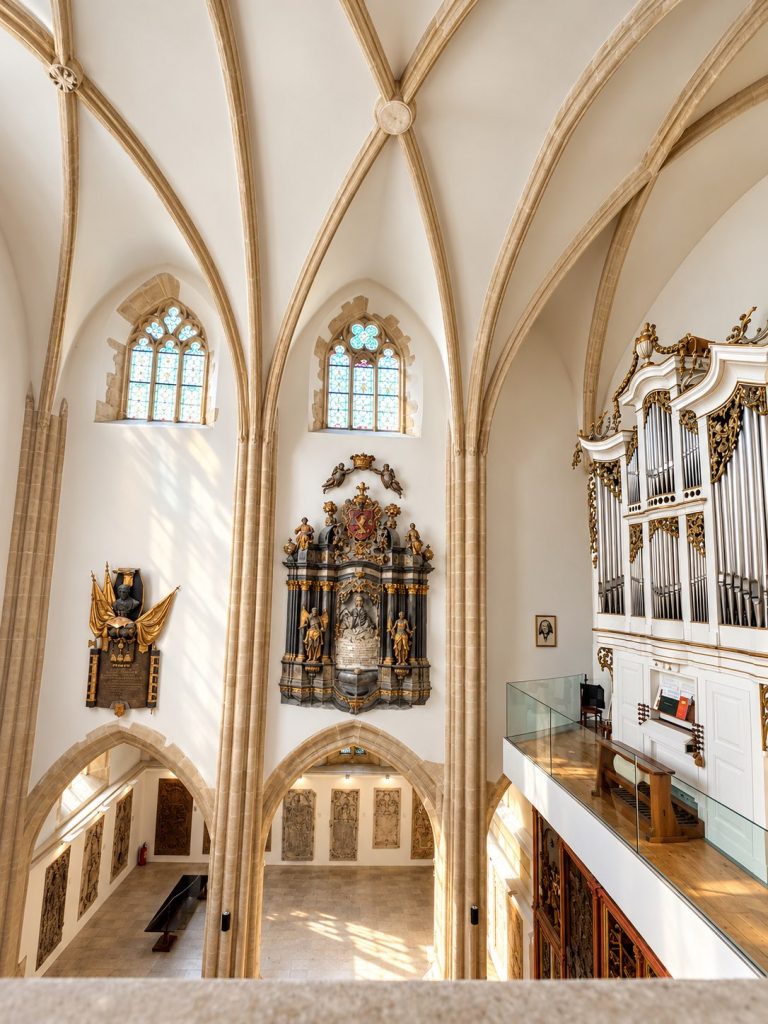
The church’s exterior conveys the scale and vertical emphasis of Gothic architecture. Inside, its spacious nave, choir and architectural details reveal the craftsmanship involved in creating one of the major medieval churches of the region.
The building’s present appearance is the result of successive phases of construction and adaptation. Its medieval fabric was altered over time, while later generations introduced new furnishings, memorials and artistic elements in response to changing religious practices and aesthetic preferences.
Among its most important surviving objects is the bronze baptismal font, dated to 1438 and attributed to the master craftsman Leonhardus. Its surface is decorated with Gothic inscriptions and numerous relief figures, making it an outstanding example of medieval metalwork in Transylvania.
A traditional account associates the bronze used for the font with Ottoman cannon captured during the conflict of 1437. This story forms part of the object’s historical tradition, although the precise origin of the metal should not be presented as definitively established.
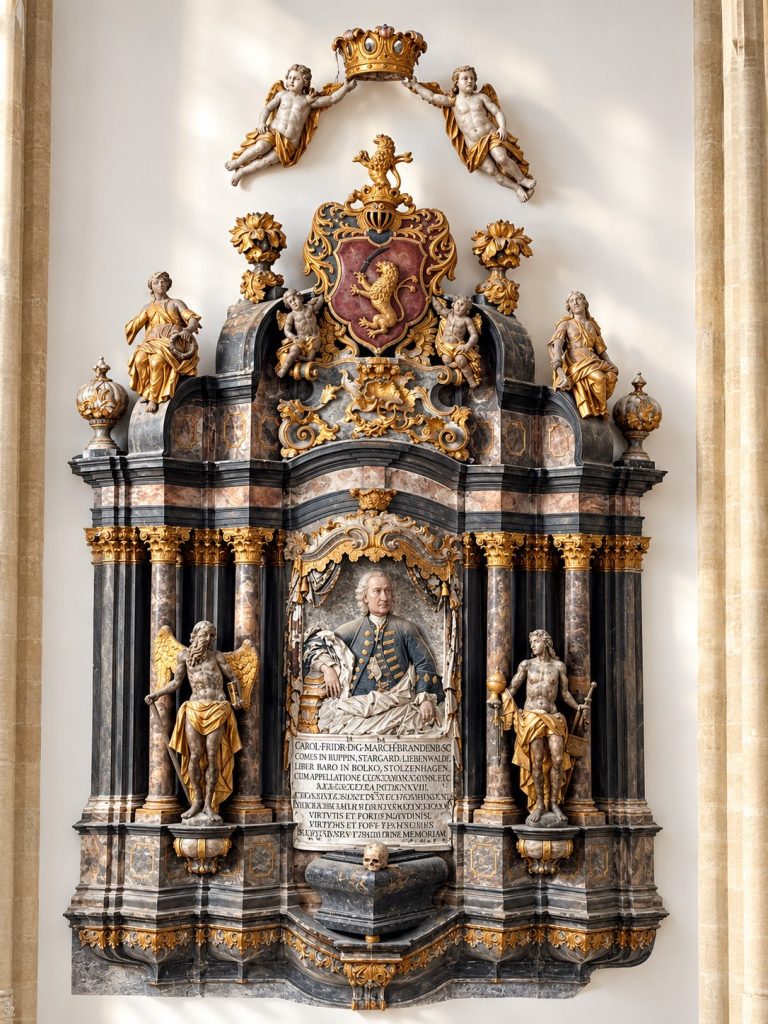
The church also preserves historic altars, carved furnishings, inscriptions, funerary monuments and other works of art. Together, these objects illuminate the religious practices, artistic traditions and social relationships of the community that maintained the church over the centuries.
The interior is therefore more than an architectural space. It is a historical record in which craftsmanship, faith and civic memory have accumulated across generations.
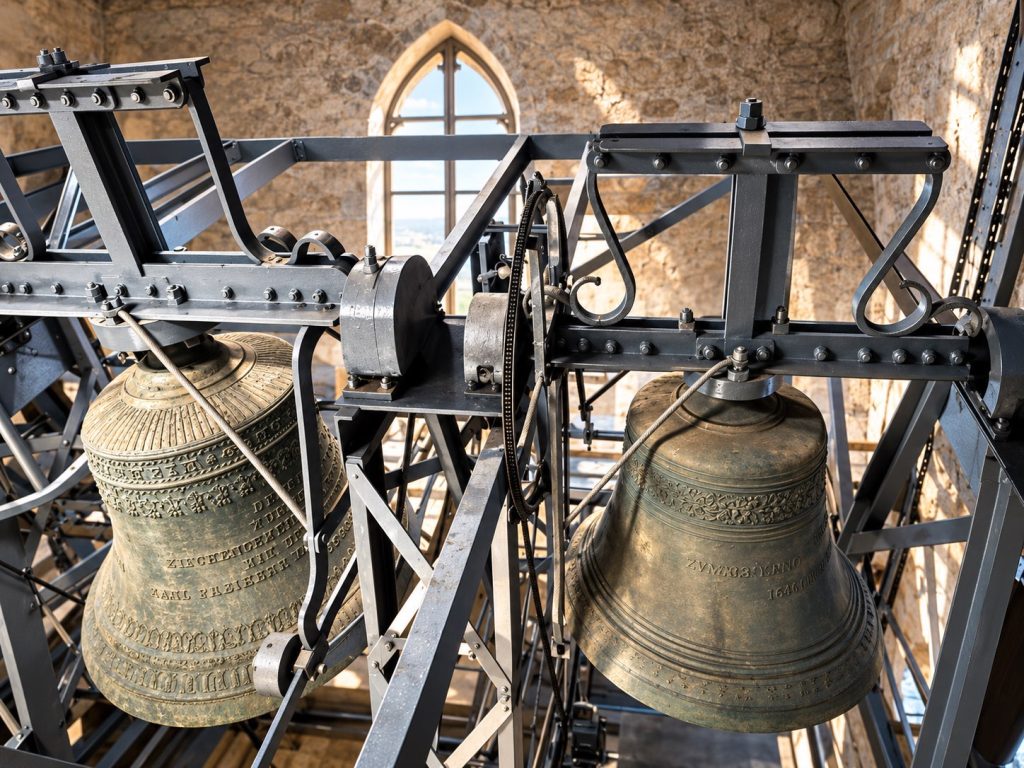
Inside the belfry of the Evangelical Church in Sibiu: historic bronze bells and timber support structure.
Mihnea cel Rău: The Wallachian Prince Who Died in Sibiu
Among the people whose memory survives within the church, Mihnea cel Rău occupies a special place for the history of Wallachia.
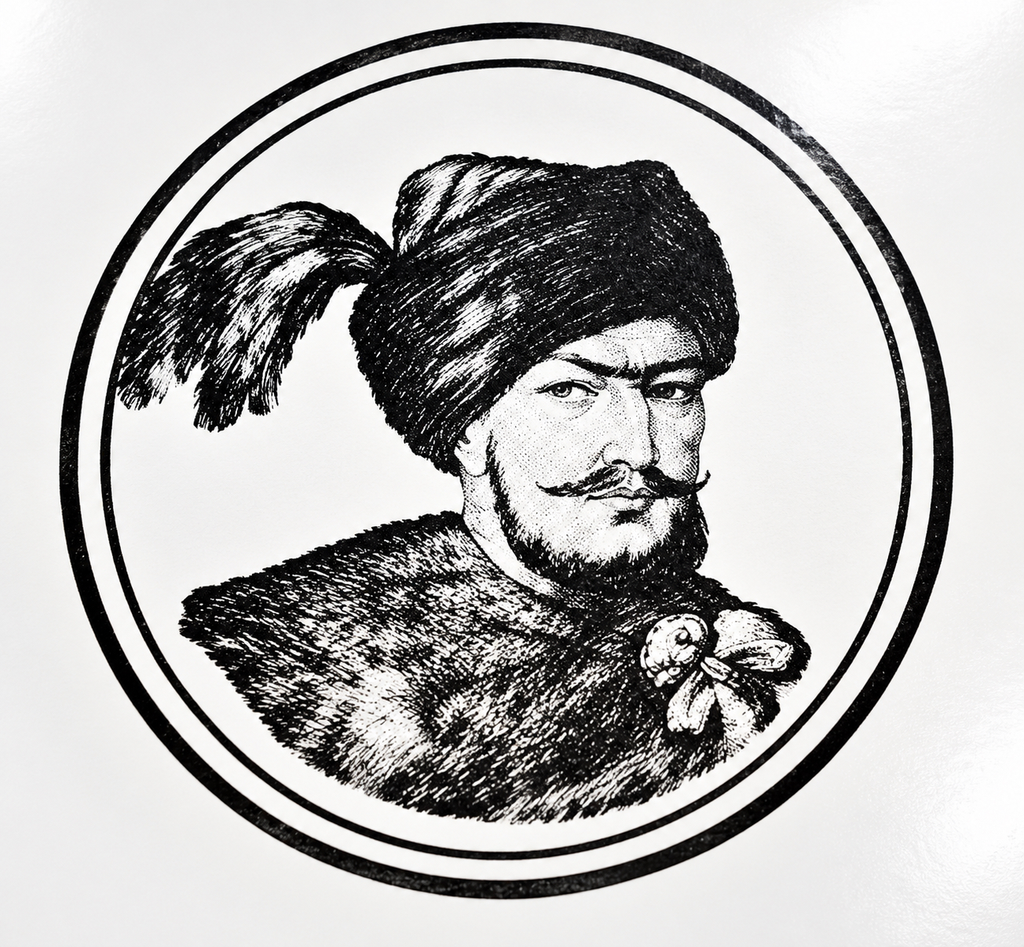
Mihnea, the son of Vlad III Țepeș, ruled Wallachia from 1508 until 1509. His brief reign unfolded amid dynastic rivalry, tensions with the boyars and the competing interests of neighbouring powers. His political position was unstable, and after losing the throne he was forced to leave Wallachia.
In early 1510, Mihnea sought refuge in Sibiu with members of his family. The town was then an important centre of the Transylvanian Saxons, situated within the political world of the Kingdom of Hungary. It offered shelter to a displaced prince, but it could not protect him from the consequences of the conflicts he had left behind.
On 12 March 1510, Mihnea was murdered in Sibiu. The inscription on his tombstone describes him as the Wallachian voivode who was treacherously killed there by a man named Akschita. The historical explanation provided by the church identifies this figure with Demetrius Jaksic and records that the attack took place near the church, after Mihnea had attended the early morning service.
The plot involved men who had themselves sought refuge in Sibiu after being persecuted by Mihnea. Their presence illustrates the complicated circumstances confronting the town authorities: a displaced ruler had arrived with his own political enemies, and the rivalries of Wallachia had followed him across the Carpathians.
The church’s account states that those involved were sentenced to death by the town community for violating the rights of asylum and the peace of the city.
Mihnea was buried in the Evangelical Church. His tombstone preserves the memory of his death and provides a direct historical connection between the Wallachian dynasty and one of the principal religious monuments of Transylvania.
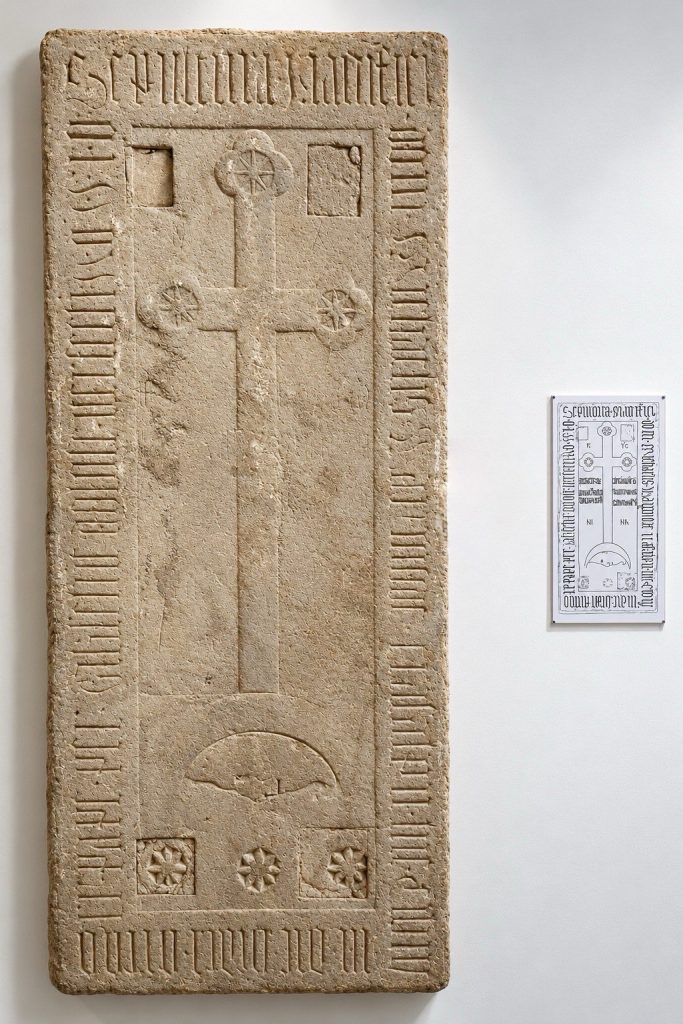
For Basarab Heritage, this connection is particularly meaningful. The church is not merely a landmark of Saxon Transylvania; it is also the final resting place of a son of Vlad Țepeș, whose life and death reveal how closely the histories of Wallachia and Transylvania could intersect.
The Ferula: A Gallery of Memory
One of the most distinctive features of the church interior is the western section known as the Ferula. Its walls contain an exceptional collection of historic funerary monuments, creating a gallery of names, inscriptions, heraldic devices and commemorative sculpture.
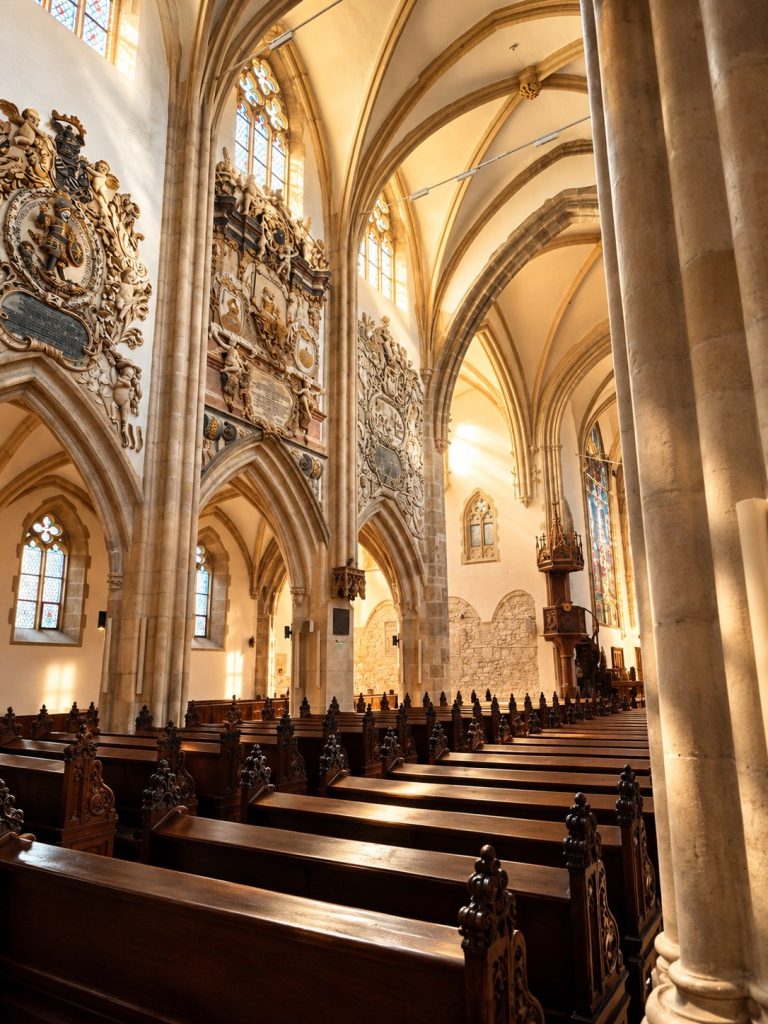
From the late fifteenth century, the church served as a burial place for mayors, administrative officials and other prominent members of Sibiu’s community. Their tombstones reflected the status of individuals and families while preserving memories of the town’s civic and religious life.
During restoration works in 1853-1855, many of the tombstones that had covered graves within the church were removed from their original positions. A selection was incorporated into the walls of the Ferula, forming a collection conventionally described as comprising 67 tombstones.
This arrangement transformed individual funerary monuments into a wider historical ensemble. The inscriptions and sculptural details preserve evidence of changing artistic styles, family identities and traditions of commemoration. They also offer a glimpse into the social world of the historical town, where public office, family standing and religious affiliation often found expression in funerary art.
Mihnea’s tombstone belongs to this remarkable setting. Its presence is particularly striking because it commemorates a Wallachian ruler within a church whose principal historical identity is connected with the Transylvanian Saxon community.
The Ferula thus brings together two histories that might otherwise appear separate: the civic and religious history of Sibiu, and the dynastic history of Wallachia.
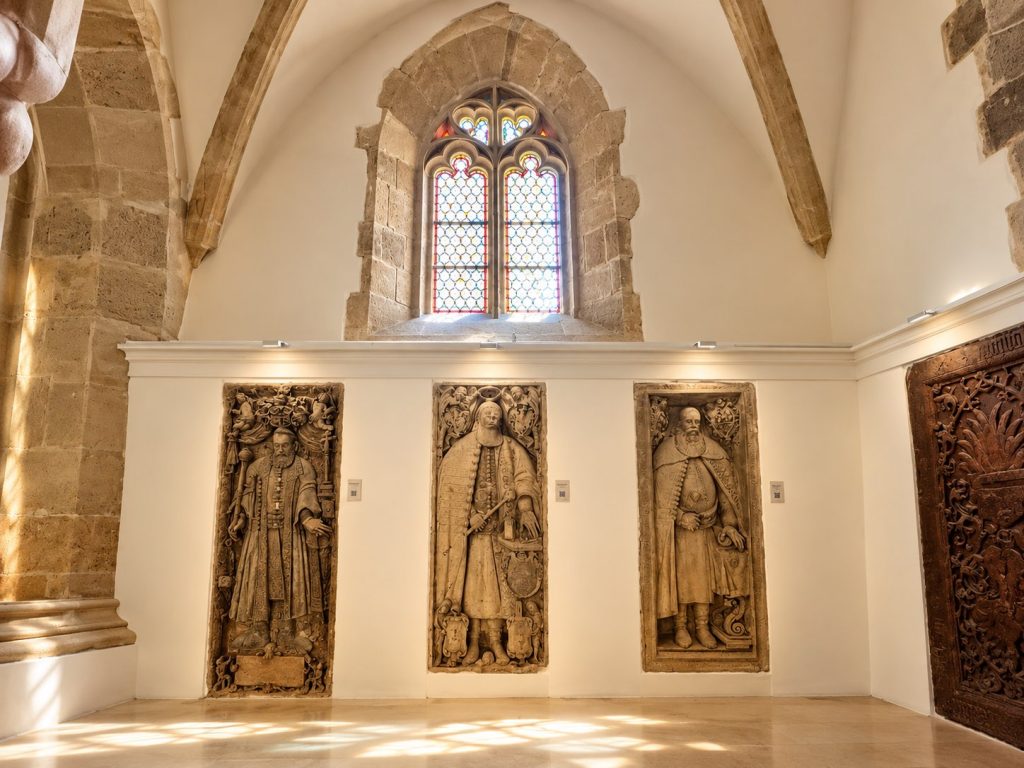
Tombstones set into the walls of the Ferula, where Transylvanian civic history and Wallachian dynastic tradition intersect.
From Medieval Parish Church to Living Heritage
The Evangelical Church has endured changing religious practices, architectural alterations and the passage of centuries. Its history reflects the development of Sibiu from a medieval settlement into a major urban centre, while its surviving furnishings and memorials preserve traces of the people who shaped that development.
The church’s importance is not confined to its Gothic architecture or its collection of historic objects. It remains a living religious institution, connecting the present congregation with a tradition that has continued through profound political and cultural changes.
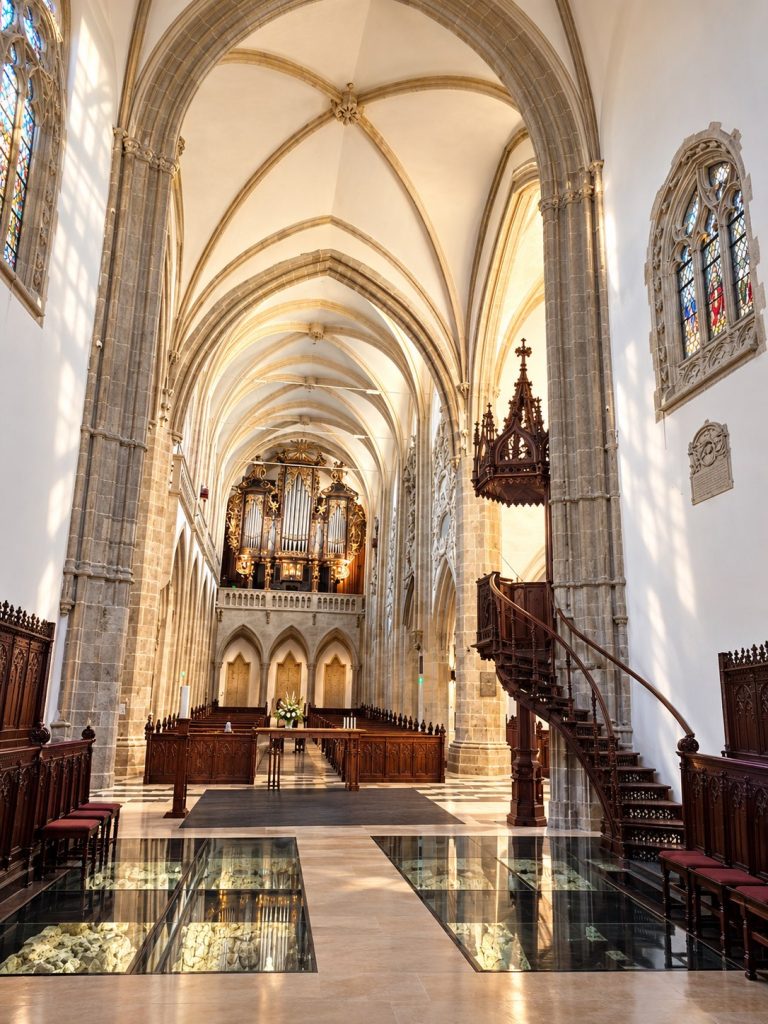
At the same time, the building preserves evidence of a wider historical landscape. Its architecture speaks of medieval craftsmanship; its bronze font recalls the artistic achievements of the fifteenth century; its memorials record the lives of civic leaders and townspeople; and Mihnea’s tombstone bears witness to the movement of people and political conflicts across the Carpathians.
These layers of history give the church a significance that reaches beyond the boundaries of Sibiu itself.
A Wallachian Memory Within Transylvanian Heritage
The history of Mihnea cel Rău provides a compelling point of entry into the story of the Evangelical Church, but it is only one part of a much larger historical narrative.
The church belongs first and foremost to the religious and cultural heritage of Sibiu and the Transylvanian Saxons. Its long architectural development, its role in the Reformation and its remarkable collection of funerary monuments make it an essential witness to the history of the town.
Yet within this setting rests a prince whose life was shaped by the political struggles of Wallachia. His tomb reminds us that the histories of the lands on either side of the Carpathians were never entirely separate. Dynastic rivalries, exile, trade and political relationships connected their inhabitants in ways that can still be traced through surviving monuments.
For Basarab Heritage, Mihnea’s tomb gives this connection a tangible form. More than five centuries after his death, the inscription in Sibiu preserves the memory of a Wallachian voivode within a church shaped by another community’s history.
It is a reminder that heritage often reveals its deepest connections in unexpected places – not only in princely courts and fortresses, but also in the quiet testimony of a tombstone preserved within the walls of a historic church.
The accompanying photographs document the exterior and interior of the Evangelical Church in Sibiu, including its Gothic architecture, historic furnishings and funerary monuments.
Basarab Heritage
— A.C.
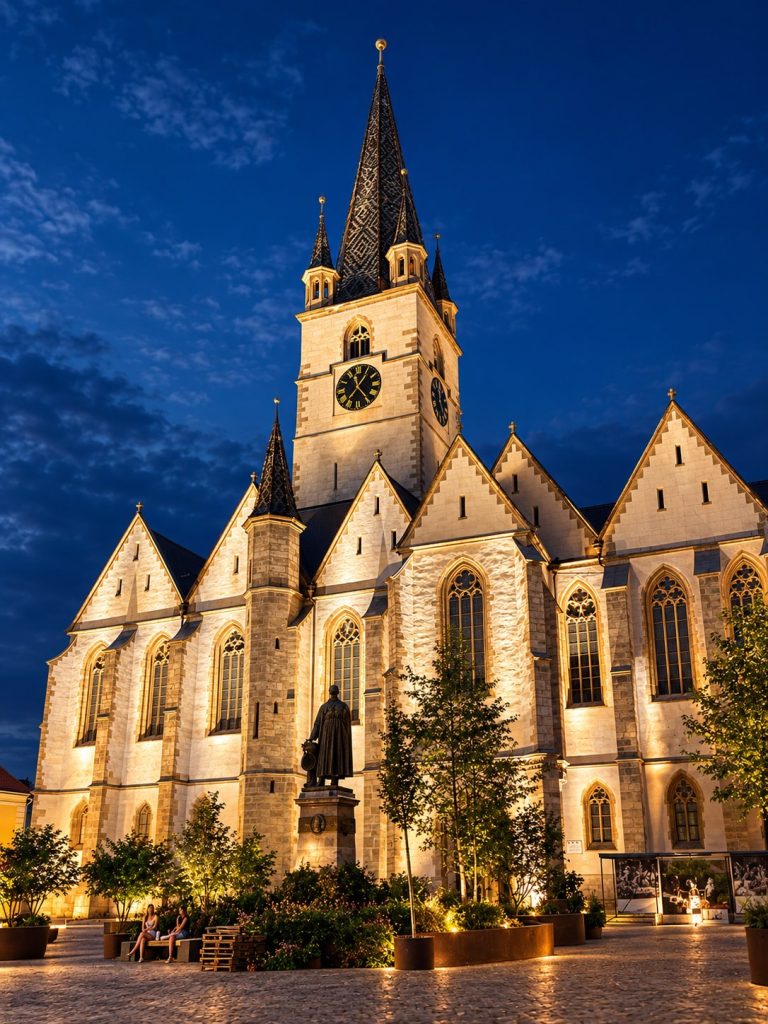
Twilight at Piața Huet: the monumental facade and bell tower of the Evangelical Church against the evening sky.