
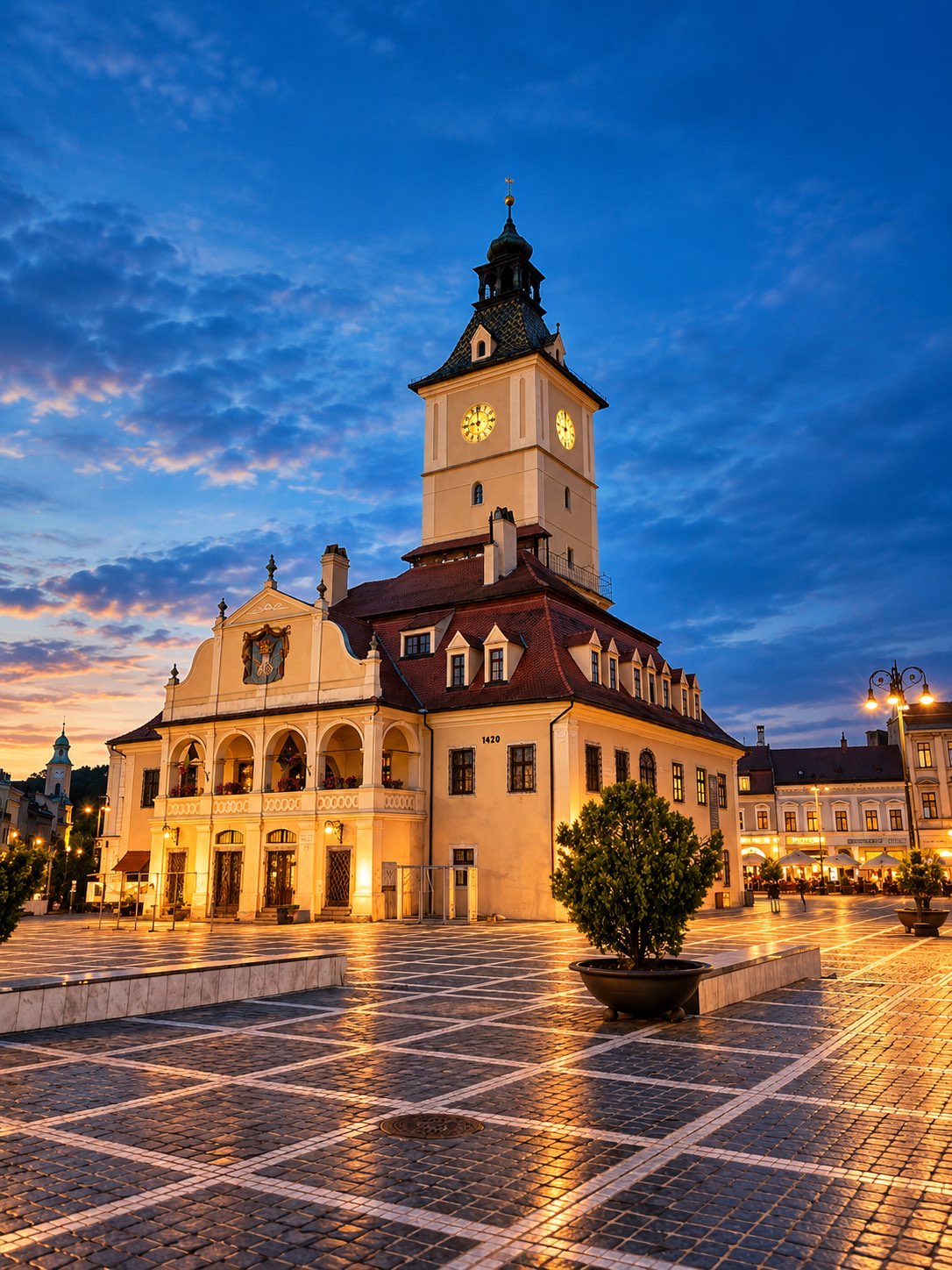
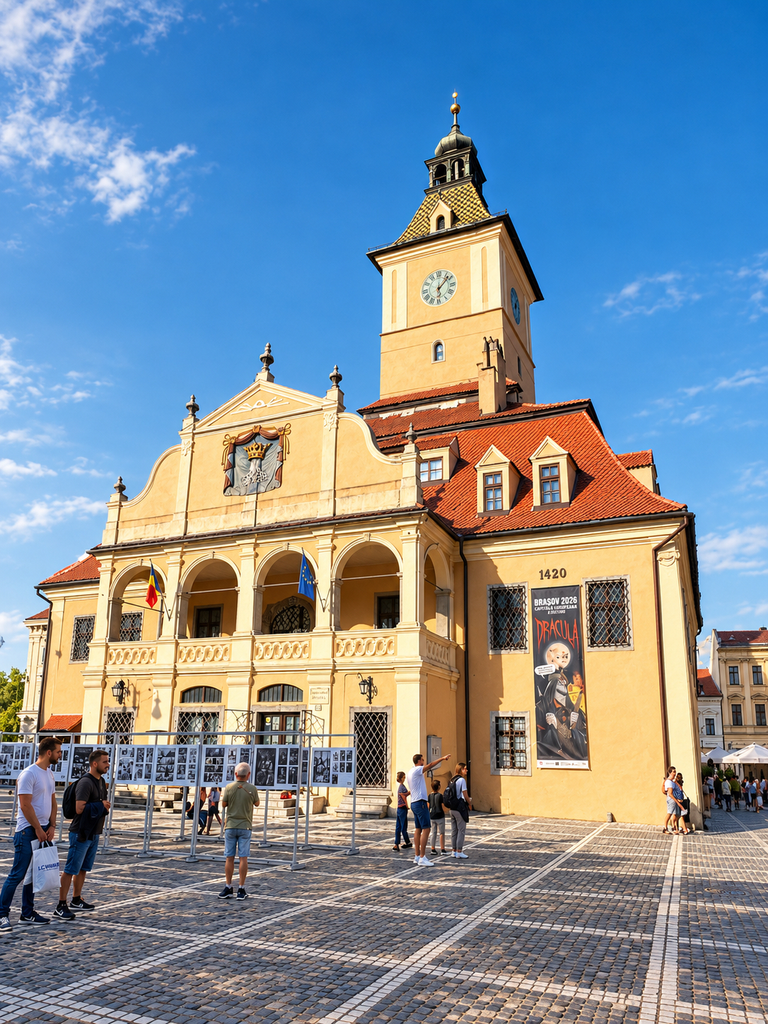
In the heart of historic Brașov, the former town hall stands as a witness to centuries of civic government, commerce and urban life. Known as Casa Sfatului, this landmark of the old marketplace tells a story not of princely residence, but of the institutions through which a Transylvanian town governed its affairs.
At the Heart of the Old Town
At the centre of Brașov’s historic marketplace rises Casa Sfatului, the former seat of the town council. Its tower, distinctive roofline and layered architectural forms have made it one of the defining landmarks of Piața Sfatului.
For centuries, this square served as a meeting place for merchants, craftsmen, townspeople and visitors arriving from the surrounding region and beyond. Trade brought together people of different languages and backgrounds, while the town’s civic institutions regulated commercial activity and administered justice.
Casa Sfatului occupied a central position in this urban world. It was not merely an administrative building, but a place where decisions affecting the life of the community were made, disputes were addressed and the affairs of the town were conducted.
Its history offers a perspective on the development of Brașov as an important commercial and civic centre of Transylvania.
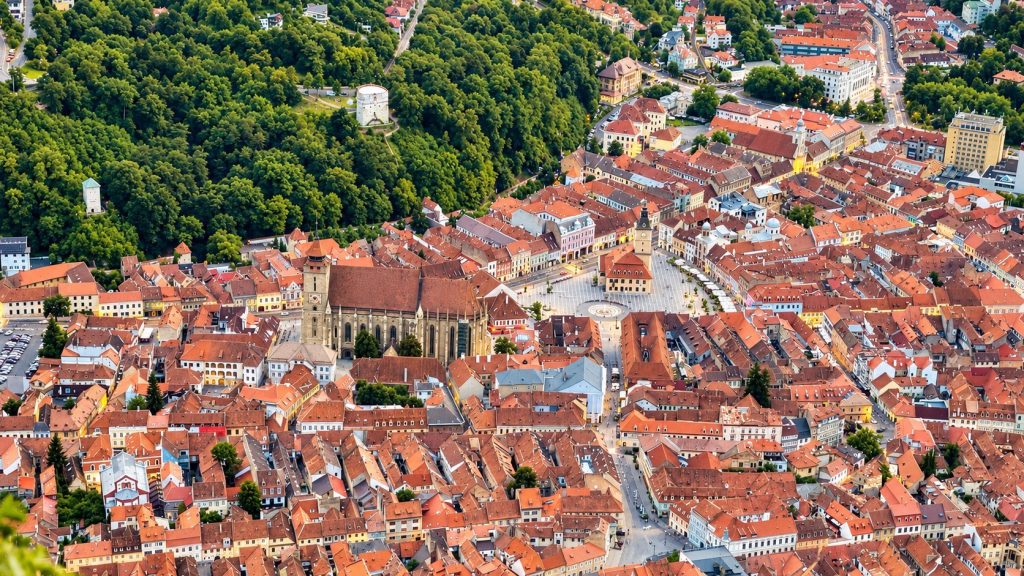
Panoramic view of historic Brașov from Mount Tâmpa, showing Piața Sfatului and Casa Sfatului at the centre of the medieval urban fabric.
The Origins of a Civic Institution
The earliest important documentary reference associated with Casa Sfatului dates to 23 December 1420. An agreement between the Furriers’ Guild and the representatives of the Burzenland district concerned the establishment of a room above the guild’s vaulted commercial space, intended for the administration of justice and meetings of the town council.
The document provides valuable evidence of the relationship between civic authority and the organised crafts of medieval Brașov. The proposed council chamber was to occupy space above premises belonging to a guild, reflecting the close connection between urban government and the commercial life of the town.
The building’s beginnings were therefore practical as well as symbolic. It emerged from the needs of a community whose prosperity depended on trade, regulated markets and the administration of local affairs.
The Ottoman campaign of 1421 brought destruction to much of the surrounding region and disrupted the development of Brașov. The precise relationship between the original agreement and the construction of the surviving building should be treated with care: the document establishes an early stage in the site’s history, rather than proving that the present structure was completed at that time.
By 1503, the town hall was documented under the Latin designation praetorium, a term associated with an official civic building. This later reference confirms the established administrative significance of the site.
The Tower and the Voice of the Town
The tower is among the most recognisable features of Casa Sfatului. Its origins are associated with an earlier structure, possibly connected with the supervision of an approach or crossing near the marketplace. The exact development of this earliest phase remains a matter for historical and architectural interpretation.
During the early sixteenth century, the tower underwent important works. It was rebuilt and altered over subsequent decades, and its elevated position served practical purposes within the urban environment.
Known as the Trumpeters’ Tower, it became associated with the observation of the town and the communication of important signals. From such a vantage point, watchmen could help monitor approaching danger and alert inhabitants to events requiring their attention, including fires.
The tower also reflected the standing of the town’s civic authority. In the sixteenth century, its roof was adorned with four small corner turrets, traditionally associated with the right of ius gladii — the authority to impose capital punishment. This feature should be understood within the historical context of medieval and early modern civic privileges, rather than as a complete account of the town’s legal jurisdiction.
The tower’s role extended beyond its architectural presence. It formed part of the public infrastructure through which the town observed, regulated and communicated its affairs.
A Town Hall Shaped by Fire and Reconstruction
The present appearance of Casa Sfatului is the result of several centuries of construction, damage and renewal. Its lower sections retain features associated with Gothic architecture, while later Renaissance and Baroque elements reflect successive periods of adaptation.
The building suffered repeatedly from natural disasters and other destructive events. Lightning struck the tower in 1608, and a major earthquake in 1662 was followed by further damage and restoration. The great fire of Brașov in April 1689 also severely affected the town hall and much of the surrounding historic centre.
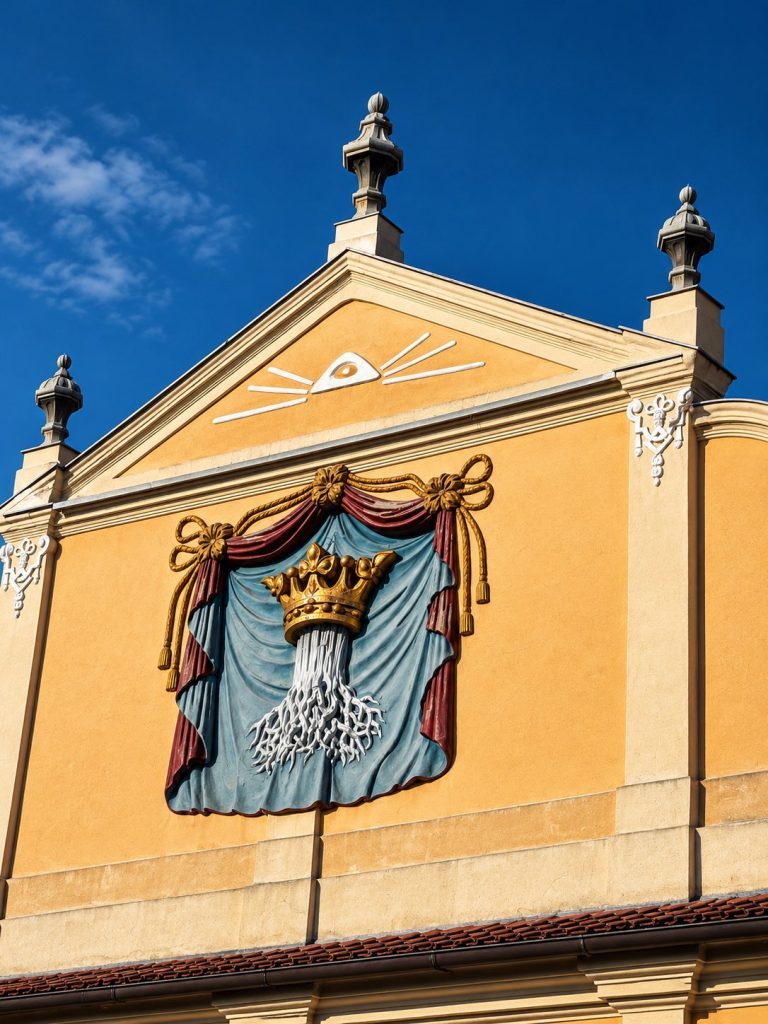
Reconstruction continued through the eighteenth century. The building acquired new architectural features, including the loggia on its western façade, while its exterior increasingly reflected the Baroque character of the period. The coat of arms of Brașov, displayed on the façade, further expressed the civic identity of the town.
These changes did not erase the building’s earlier history. Instead, they produced an architectural record in which successive periods remain visible. Casa Sfatului is therefore best understood not as a monument belonging to a single moment, but as a structure shaped by the changing needs, fortunes and aspirations of the community it served.
Its walls bear witness to the endurance of civic institutions through destruction and rebuilding.
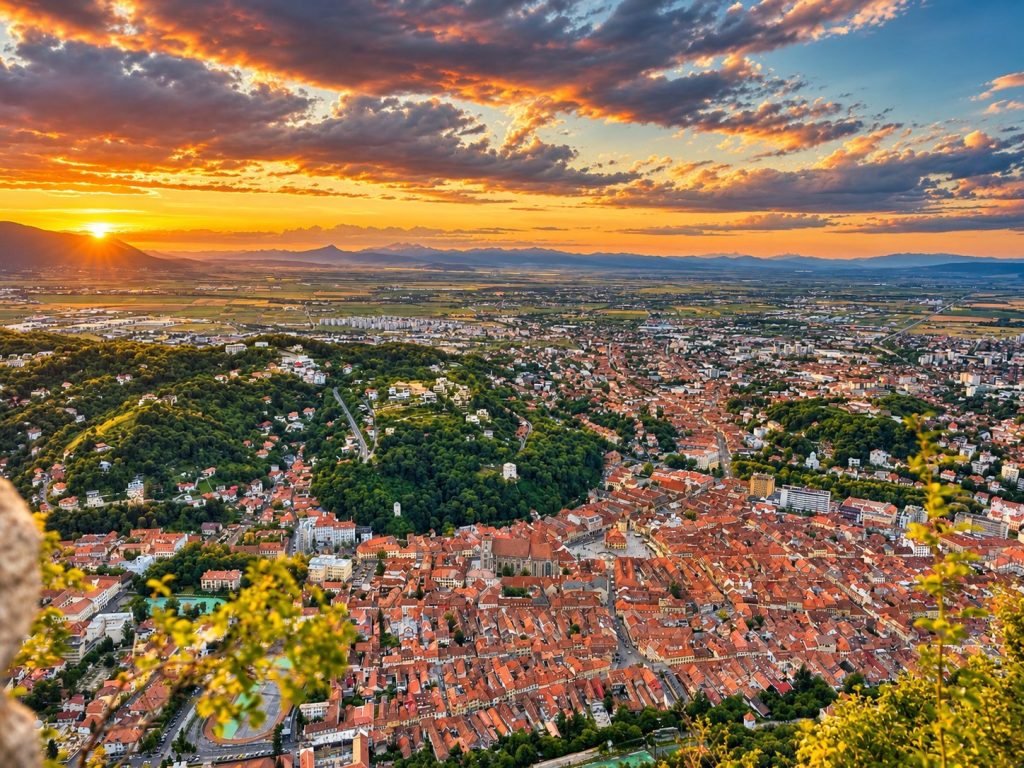
Sunset over the Burzenland depression viewed from Mount Tâmpa, illustrating the geographical setting and surrounding landscape of historic Brașov.
The Marketplace and the Life of the City
Casa Sfatului cannot be fully understood apart from Piața Sfatului itself. During the late medieval and early modern periods, the marketplace was a principal setting for the economic and social life of Brașov.
Merchants brought goods from neighbouring regions and from wider trading networks, while craftsmen organised their work through guilds. The square accommodated markets and fairs, and the surrounding streets reflected the activities conducted there. Their historic names preserve traces of this commercial geography and of the trades that helped shape the town.
The council’s presence in the marketplace was significant. Civic government and commerce occupied the same urban space, linking the regulation of trade with the administration of justice and the maintenance of public order.
Brașov’s history was shaped by its position within the wider world of Transylvania and by its connections with trading routes extending towards Central Europe and the lands to the south and east. Its inhabitants lived within a complex political and cultural environment, in which local privileges, economic relationships and regional authority all played important roles.
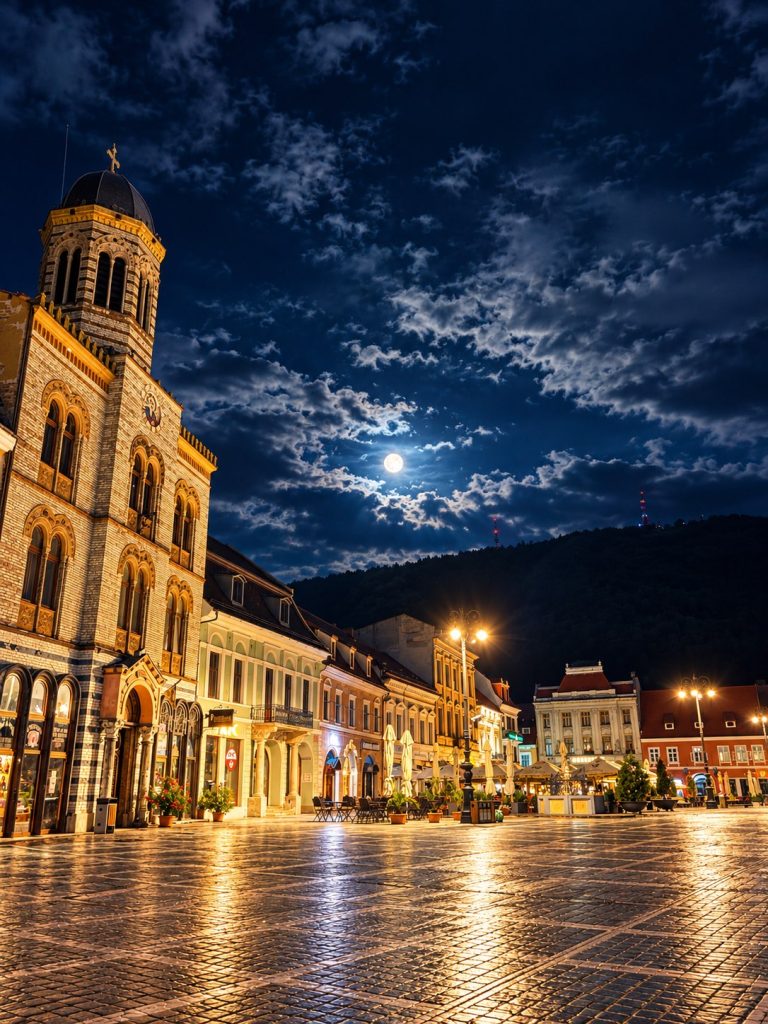
Casa Sfatului stood at the centre of this world: a place where the practical administration of a prosperous town met the wider forces shaping its history.
From Civic Authority to Historical Memory
As Brașov developed, the administrative functions of Casa Sfatului gradually changed. In 1876, the town authorities moved their offices to a new building, bringing the former town hall’s long period as the seat of municipal government to an end.
The historic building subsequently served other civic purposes, including the preservation of the town’s archives. Since 1950, it has housed the Brașov County Museum of History, where permanent and temporary exhibitions present aspects of the history of the town and its surrounding region.
This transformation has given the building a renewed public purpose. Once a place where the affairs of the community were administered, it now serves as a place where the history of that community can be studied and interpreted.
The change is particularly fitting. The building’s own history – from its medieval civic origins through successive reconstructions to its present museum role – forms part of the historical narrative preserved within its walls.
Casa Sfatului remains closely connected with the identity of Brașov, not simply because of its distinctive appearance, but because of the many generations whose public life unfolded around it.
A Monument to the Civic Heritage of Transylvania
The history of Transylvania is often told through its princes, fortresses, churches and political transformations. Yet the history of its towns is equally important. Urban communities developed their own institutions, organised commerce, maintained local privileges and negotiated their place within wider political structures.
Casa Sfatului offers a tangible reminder of this civic dimension of the past. Its origins reflect the relationship between guilds and town government; its tower evokes the practical responsibilities of urban administration; and its successive architectural forms preserve the memory of fire, rebuilding and institutional continuity.
Today, overlooking Piața Sfatului, the former town hall remains one of Brașov’s most enduring historical landmarks. It reminds us that the heritage of a city resides not only in the monuments of rulers and religious foundations, but also in the places where communities governed themselves and shaped their common life.
Basarab Heritage
— A.C.
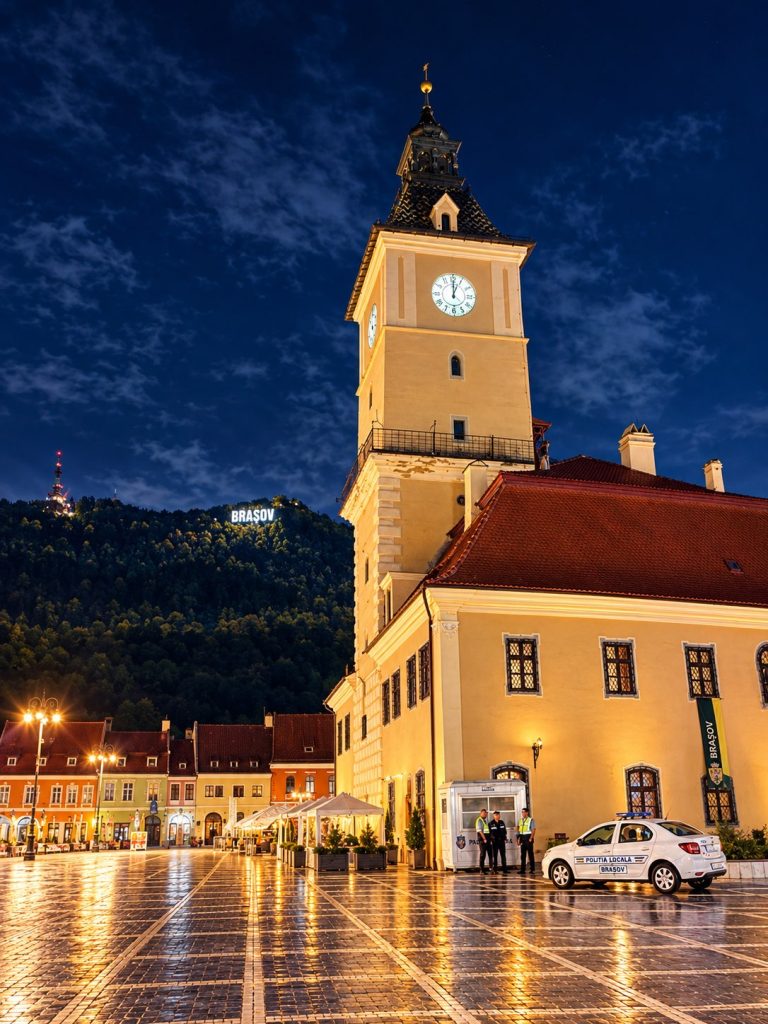
Casa Sfatului and its prominent council tower illuminated at twilight, overlooking the historic marketplace of Brașov.