
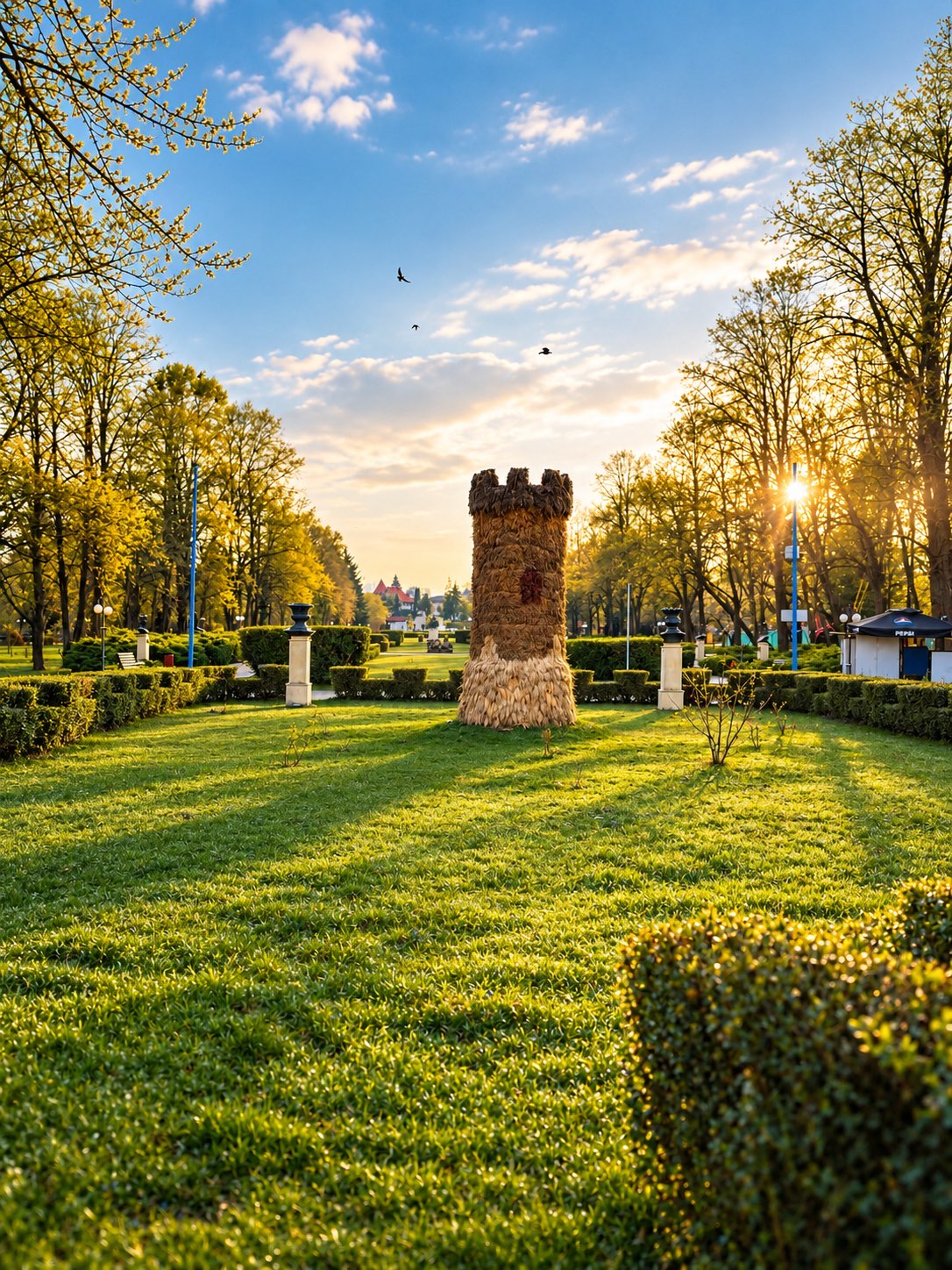
Along the banks of the Ialomița River, beside the historic heart of Târgoviște, lies Chindia Park – a public landscape whose present appearance belongs to the modern city, yet whose setting preserves a much older connection with Wallachian princely life.
The park was laid out in 1970 on the grounds of the former princely gardens, which once extended behind the Princely Court. Its creation transformed this historic landscape into a public space for recreation, bringing together green avenues, open lawns, and a recreational lake within one of Târgoviște’s most recognisable urban settings.
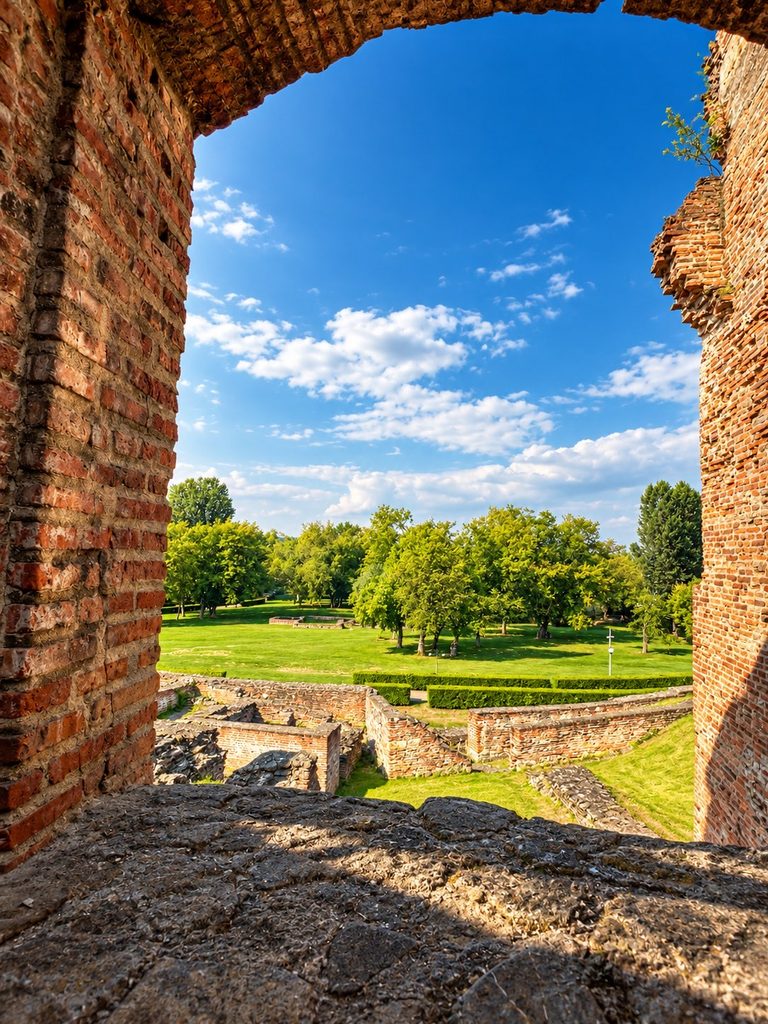
The history of the grounds reaches back to the age of the Wallachian princes. In the sixteenth century, during the reign of Petru Cercel, the princely residence underwent a notable programme of architectural and landscape development. Influenced by his experience of Western European courts, the prince introduced new elements into the organisation of the residence and its surroundings. The gardens formed part of a broader vision of princely representation, in which architecture, water, and cultivated landscapes complemented one another.
The modern park should not, however, be mistaken for a Renaissance garden surviving in its original form. Its present layout dates from the twentieth century, and the precise relationship between the earlier princely gardens and the modern recreational grounds must be understood in that context. What links the two is not an unchanged design, but the continuity of the landscape as a place associated first with princely life and later with the public life of the city.
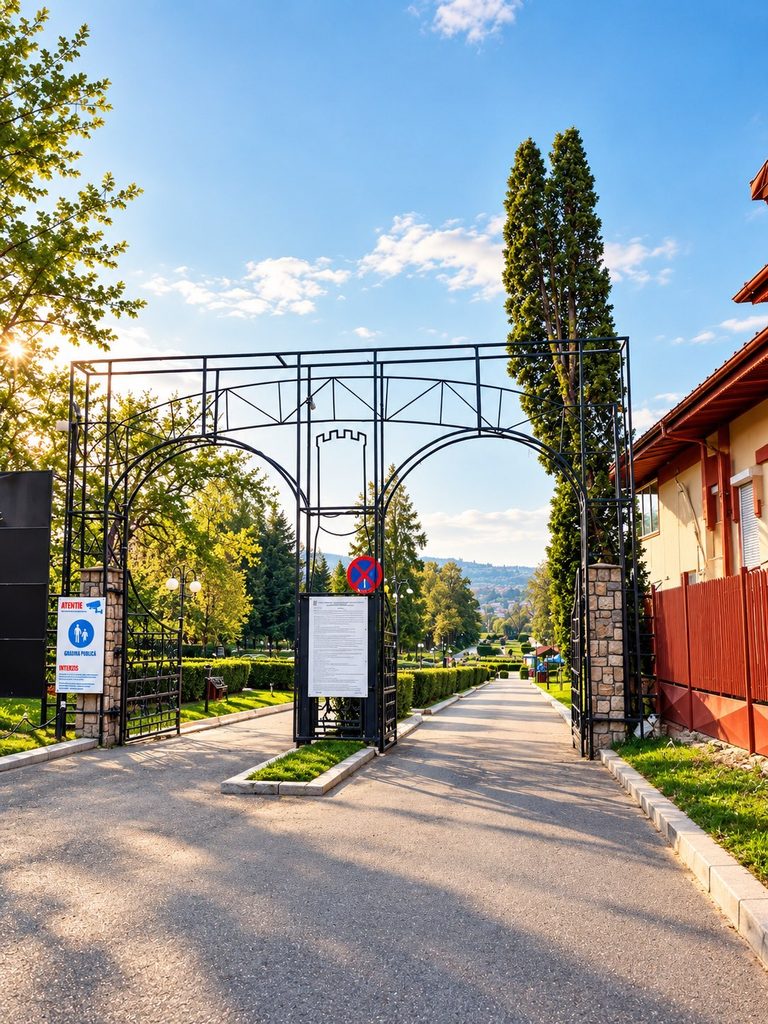
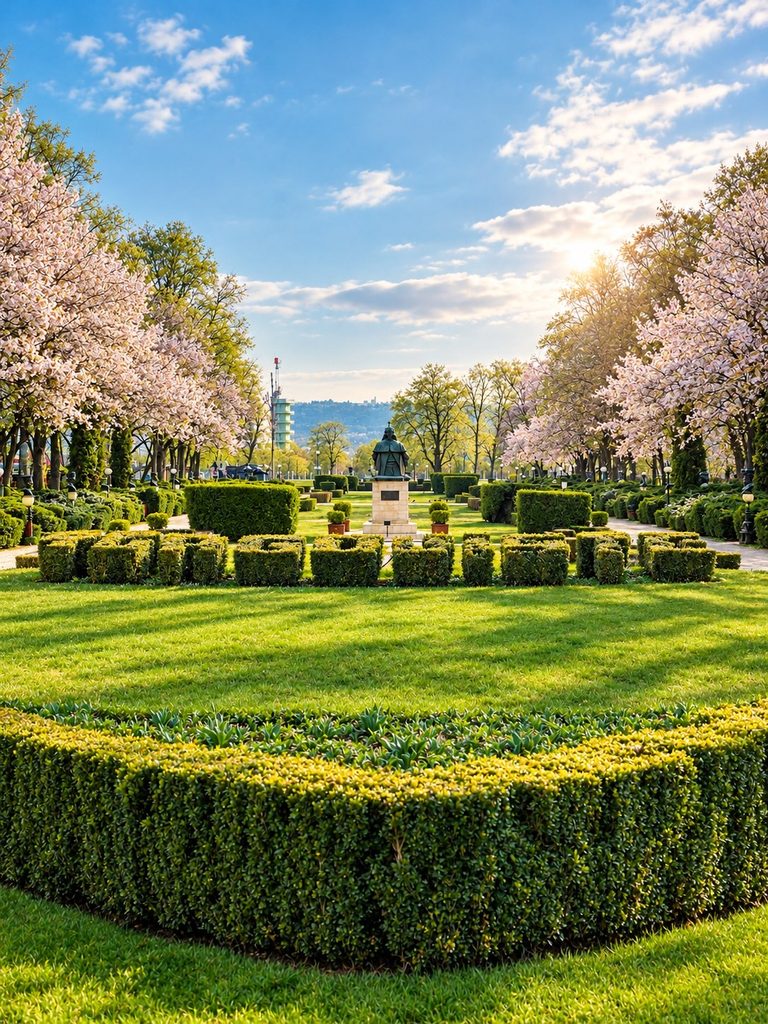
Contrasting views of Chindia Park: (left) the main entrance gate with the adjacent roadway; (right) the central ‘Avenue of the Thirty-Three Voivodes’ (Aleea celor 33 de voievozi), highlighting the park’s modern layout against a historical backdrop.
The park’s position gives it a distinctive character. Nearby stands the Princely Court, with its churches, palace remains, and historic fortifications. The Chindia Tower rises above the surrounding landscape, recalling the centuries in which Târgoviște served as one of the principal centres of Wallachian government. Yet within the park itself, the atmosphere is different: a landscape once associated with princely gardens has become a place of leisure, movement, and everyday civic life.
The recreational lake is among the park’s defining features. Alongside the paths and planted areas, it offers changing perspectives on the surrounding landscape, reflecting the colours of the seasons and the silhouettes of the trees. The park’s appearance is never quite the same from one part of the year to another, and this seasonal transformation forms part of its enduring appeal.
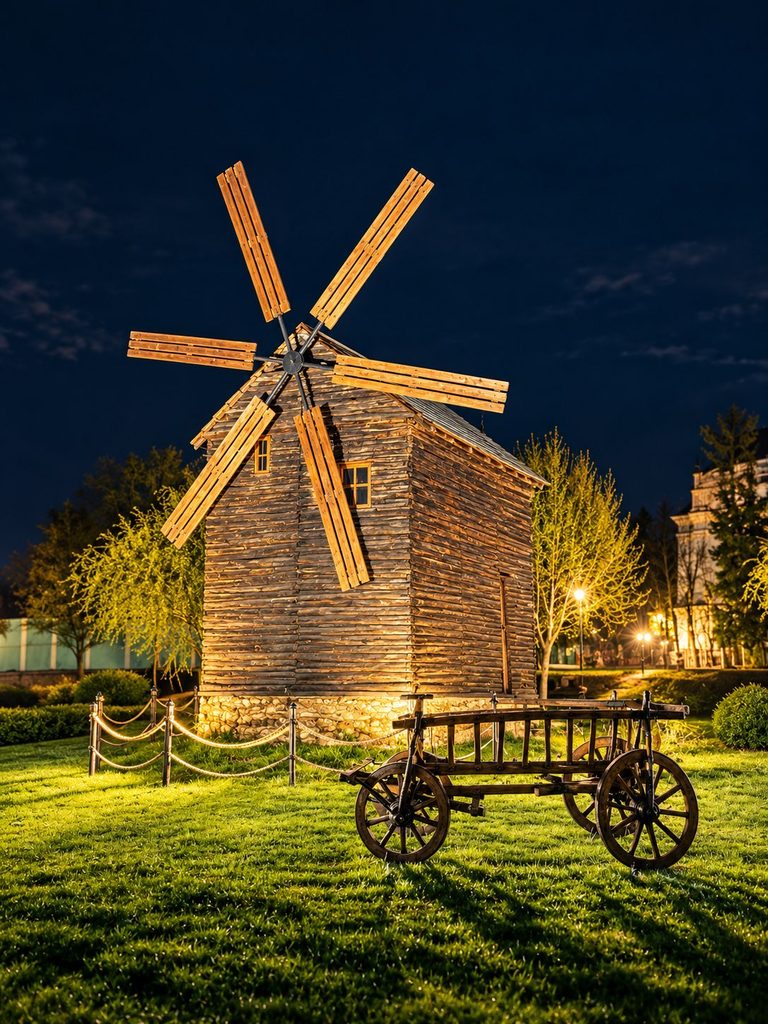
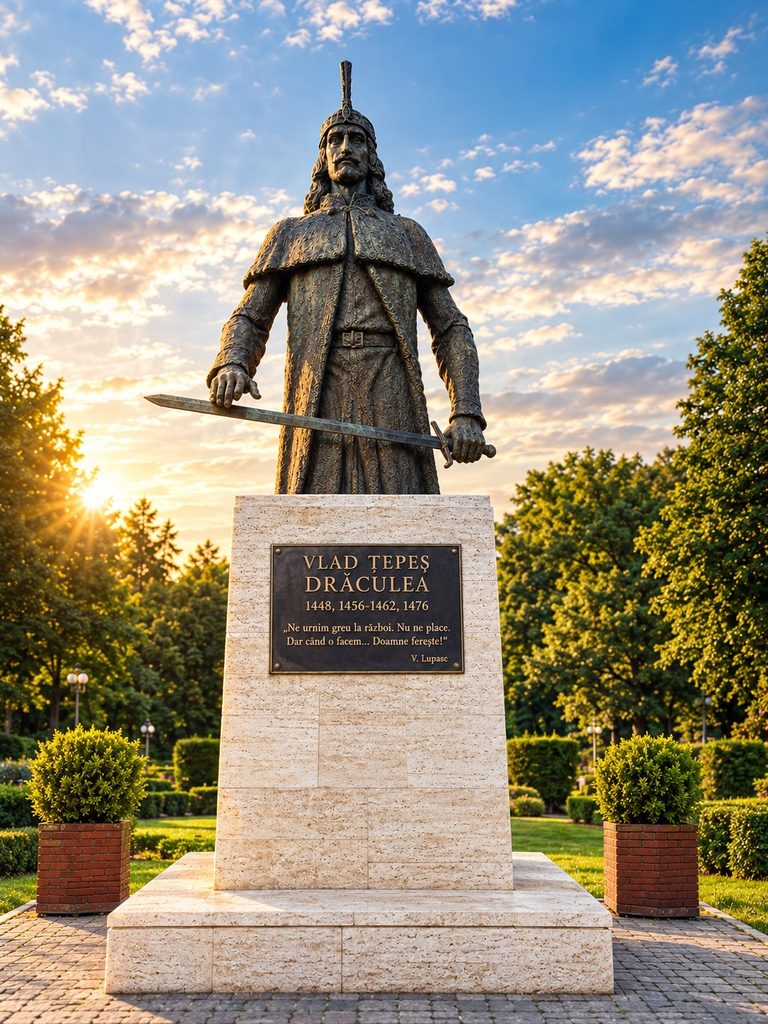
In 2006, the park acquired another historical landmark: the Aleea celor 33 de voievozi, or Avenue of the Thirty-Three Voivodes, commemorating the princes associated with Târgoviște’s history as a seat of Wallachian rule. This addition brought the region’s dynastic memory directly into the public landscape, linking a modern recreational space with the history of the former princely seat.
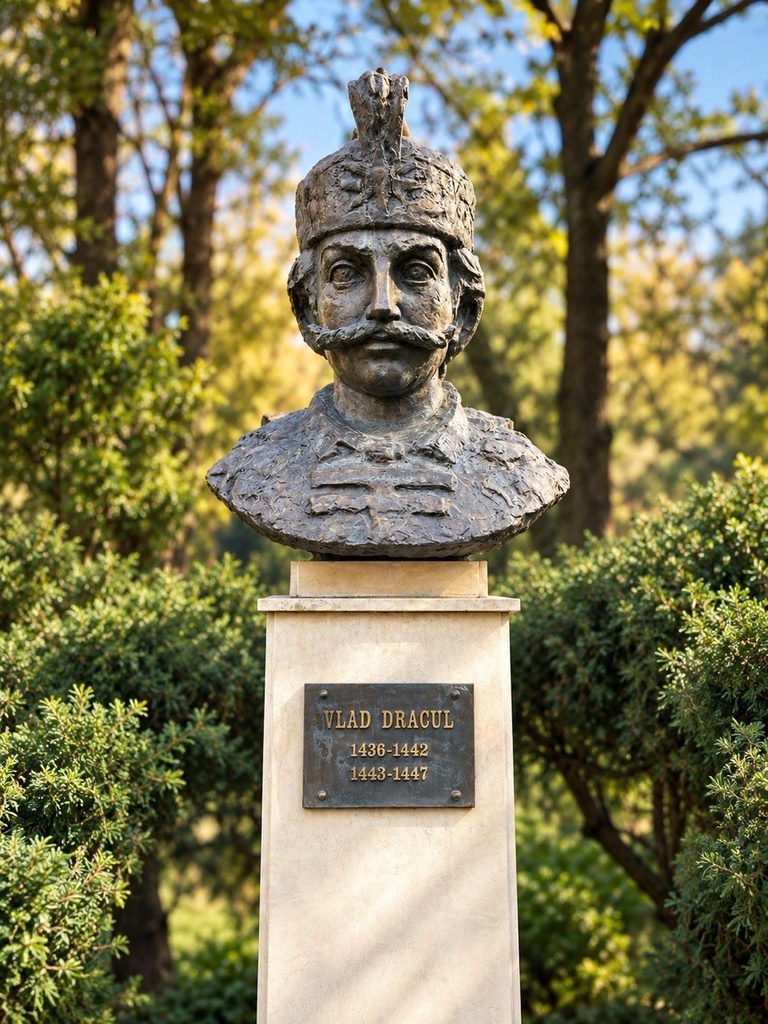
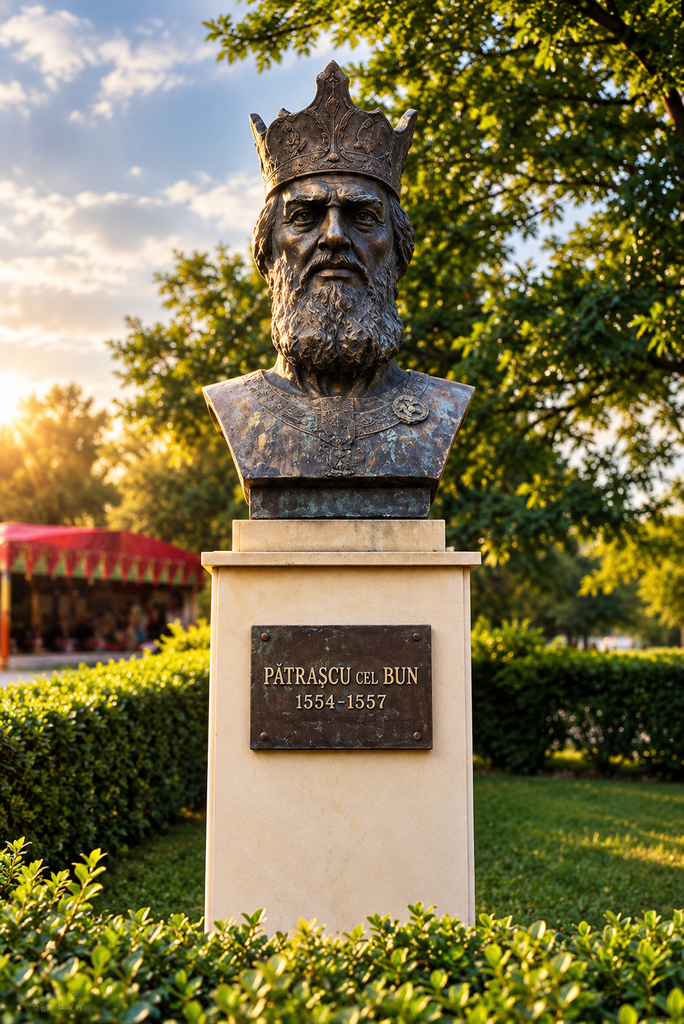
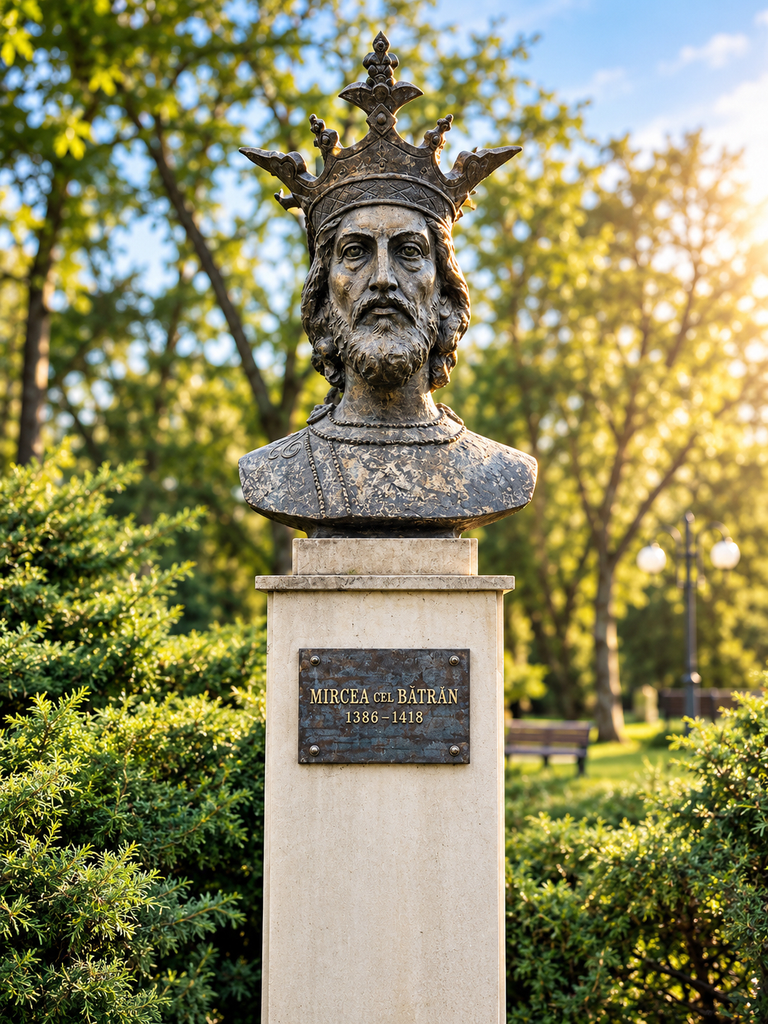
Portrait busts along the ‘Avenue of the Thirty-Three Voivodes’ (Aleea celor 33 de voievozi) in Chindia Park, depicting Wallachian sovereigns who shaped the history of Târgoviște.
Chindia Park occupies a distinctive place in the historical landscape of Târgoviște. Neither a medieval monument nor a princely garden preserved in its original form, it represents a later chapter in the life of a historic setting. The former landscape of princely residence has become a shared public space, where the memory of Wallachian rule remains part of the everyday life of the modern city. At Chindia, history endures not only in surviving buildings and ruins, but also in the relationship between a place and the generations that have shaped it.
The accompanying photographs were taken and afterwards digital remastered during visits to Târgoviște in the company of Vladislav Carol Nicolae, documenting the park across different seasons and capturing the changing character of this historic urban landscape.
Basarab Heritage
— A.C.
Location & Access
Address: Calea Domnească, Târgoviște, Dâmboviţa County, Romania
Setting: Situated on the historic grounds of the former Princely Court, open daily.