
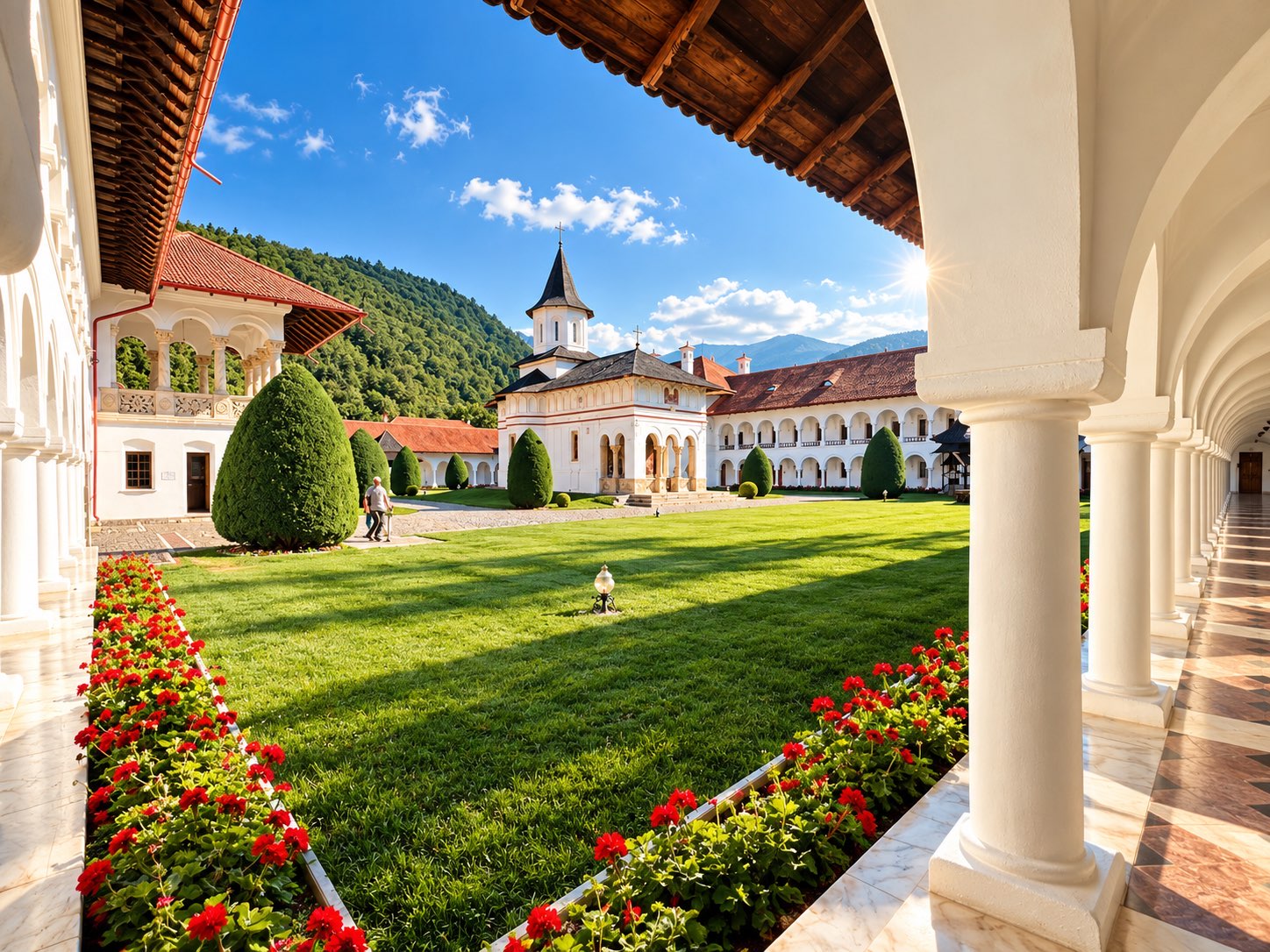
At the foot of the Făgăraș Mountains, in the valley of the Sâmbăta River, stands the Brâncoveanu Monastery of Sâmbăta de Sus. Its history connects the heritage of a ruling family of Wallachia with the religious and cultural landscape of Transylvania, offering a perspective on the ties that crossed the Carpathians in the seventeenth century.
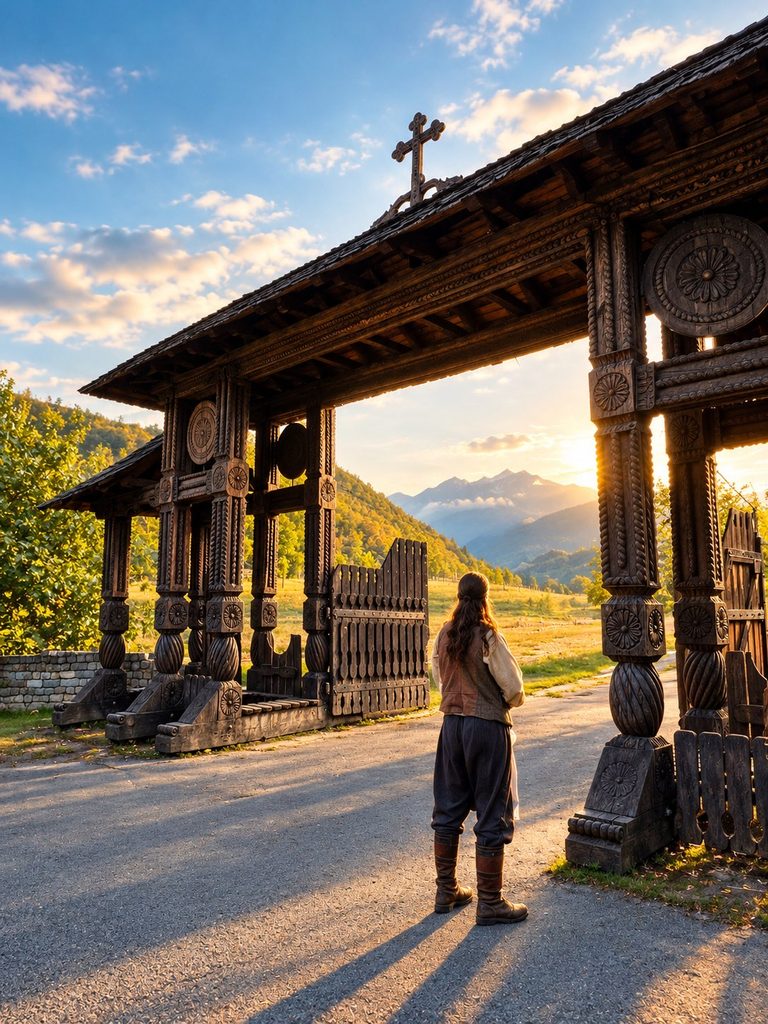
The monastery is more than an architectural landmark. Its history reflects the patronage of the Brâncoveanu family, the changing religious circumstances of Transylvania and the enduring significance of Orthodox monastic institutions in the region.
From a Family Estate to a Monastic Foundation
The documented history of the estate reaches back to 1654, when the village and surrounding lands of Sâmbăta de Sus came into the possession of Preda Brâncoveanu, the grandfather of Constantin Brâncoveanu, who would later rule Wallachia from 1688 to 1714.
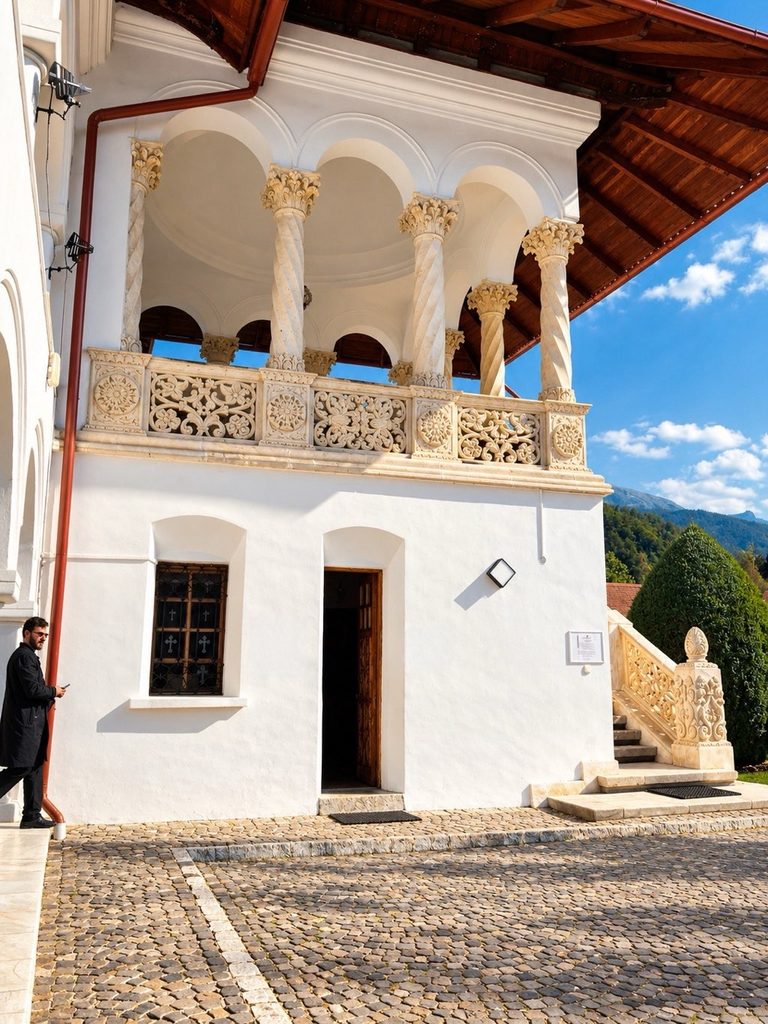
According to the monastery’s traditional history, Preda established a small wooden church in the valley, possibly serving monks who had already settled in this secluded landscape. The precise beginnings of the earlier monastic community remain difficult to establish, but the site’s religious history predates the monumental foundation associated with his grandson.
Towards the end of the seventeenth century, Constantin Brâncoveanu developed the foundation into a stone monastery. The exact construction date is not entirely certain: accounts commonly place the work around 1686 or 1696. A donation recorded in a Triodion in 1701 provides contemporary evidence that the monastery was already associated with the prince and his estate at Sâmbăta de Sus.
This development formed part of a wider pattern of princely and noble patronage through which churches and monasteries received land, books, liturgical objects and other forms of support. Such foundations served religious communities while also becoming places where artistic traditions, written culture and collective memory could be maintained.
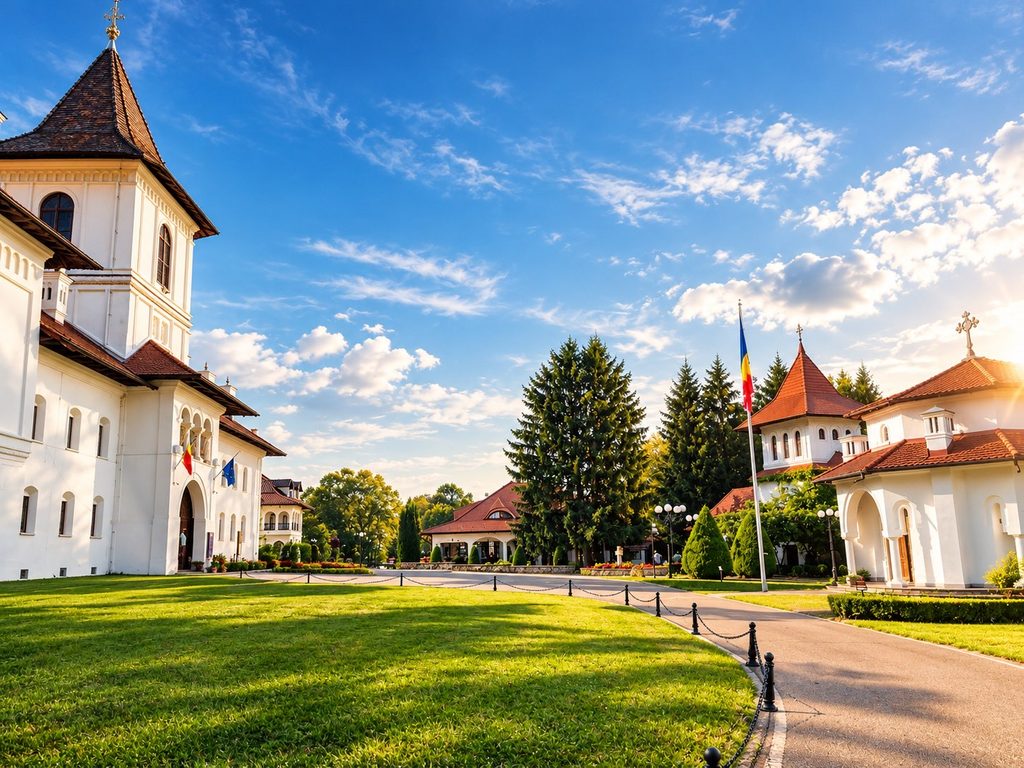
The courtyard and monastic complex of Sâmbăta de Sus, combining historical architectural elements with twentieth-century reconstruction.
Brâncovenesc Architecture and Religious Patronage
The monastery is associated with the architectural and artistic culture of the Brâncoveanu period. Often described as the Brâncovenesc style, this tradition combined elements drawn from local building practices with influences from Byzantine, Ottoman and Renaissance forms.
The style is particularly associated with the churches, palaces and monastic foundations commissioned during Constantin Brâncoveanu’s reign. These buildings and their decoration expressed the cultural ambitions of a princely court that supported religious institutions, craftsmanship and the production of books and religious art.
At Sâmbăta de Sus, the original church was dedicated to the Dormition of the Mother of God. Its interior was painted in 1766–1767, decades after Constantin Brâncoveanu’s death, demonstrating that the monastery’s artistic history continued beyond the period of its founding.
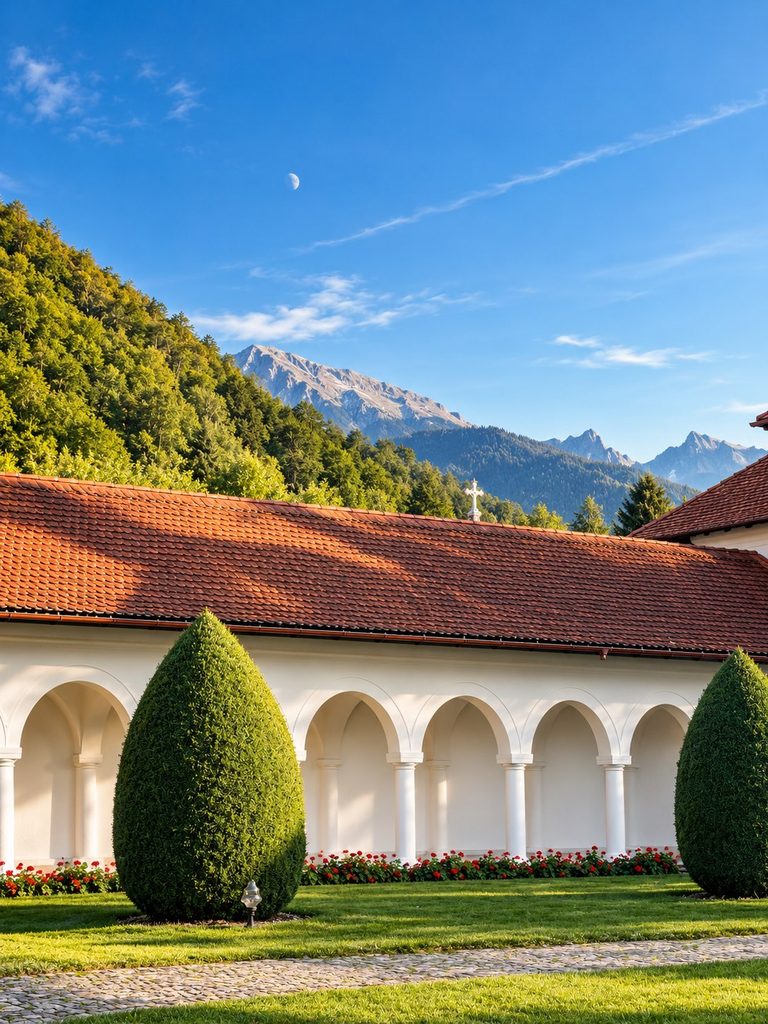
The surviving church and the later reconstruction of the monastic enclosure must therefore be understood as distinct historical layers. The site preserves the memory of the Brâncoveanu foundation, but not every part of the present complex belongs to the original seventeenth-century building campaign.
A Wallachian Foundation Beyond the Carpathians
Sâmbăta de Sus occupied a significant geographical position. Although the estate was linked to a ruling family from Wallachia, it lay in Transylvania, a region whose political circumstances changed considerably during the late seventeenth century as Habsburg authority expanded.
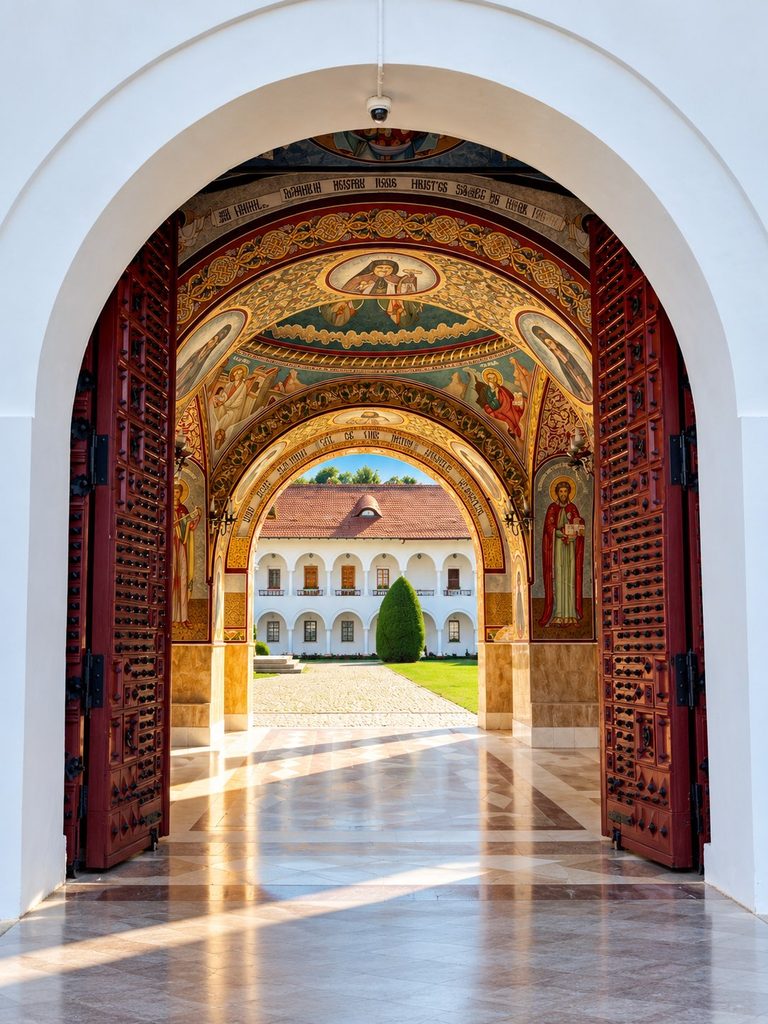
The monastery thus illustrates how religious patronage could extend beyond the borders of a ruler’s own principality. The Brâncoveanu family’s involvement at Sâmbăta created a lasting connection between Wallachian princely culture and an Orthodox foundation in Transylvania.
This relationship should not be reduced to a single political explanation. The monastery’s religious role, its association with the Brâncoveanu estate and the broader context of Orthodox life in Transylvania all form part of its historical significance. Its existence demonstrates the reach of family patronage across the Carpathians, while the precise intentions behind the foundation require careful consideration of the available evidence.
Destruction and the Long Road to Restoration
The monastery’s history took a dramatic turn in 1785, when it was suppressed under Habsburg rule and largely destroyed. The church survived, but it remained in ruins for generations. The suppression marked a profound interruption in the life of the monastic community and in the continuity of the original foundation.
Restoration began in 1926 under Metropolitan Nicolae Bălan of Transylvania. The damaged church was repaired, and the monastery’s revival gradually took shape. The church and the newly constructed buildings were consecrated on 15 August 1946.
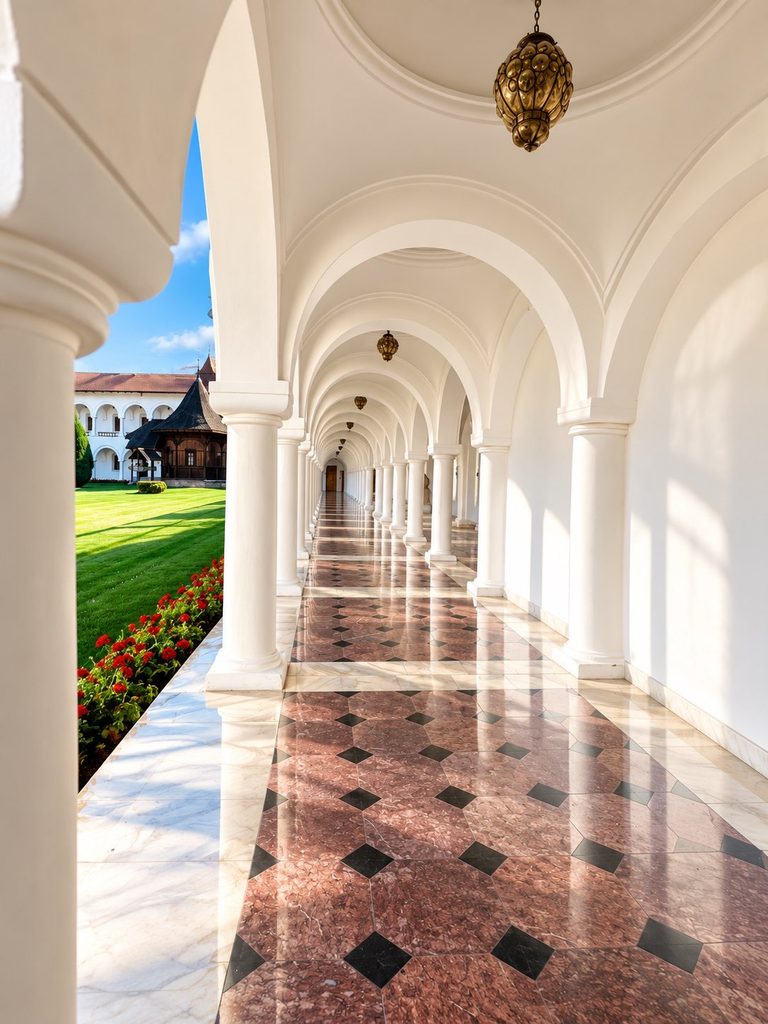
A further phase of reconstruction and development began under Metropolitan Antonie Plămădeală in the 1980s, with work on the monastic enclosure starting in 1985. The complex visible today consequently reflects both the surviving historical church and the efforts of successive generations to restore the site as a functioning religious centre.
The monastery’s present appearance should therefore be read not as an untouched survival from the age of Constantin Brâncoveanu, but as the result of a long and complex history of foundation, destruction, restoration and renewed religious life.
A Heritage Shared Across the Mountains
Today, the Brâncoveanu Monastery remains an important place of Orthodox worship and pilgrimage. Its history brings together several dimensions of the past: the patronage of a Wallachian ruling family, the religious history of Transylvania, the artistic culture associated with the Brâncoveanu period and the modern recovery of a damaged historic site.
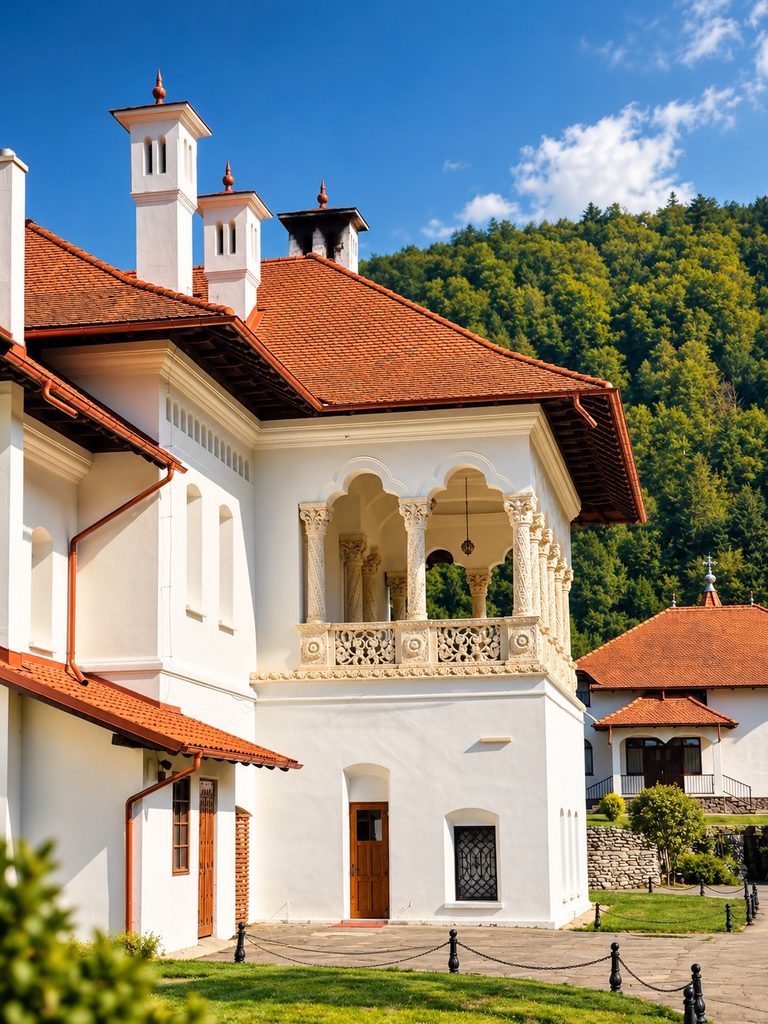
Sâmbăta de Sus reminds us that the history of Wallachia cannot be understood solely within the boundaries of the principality. Family estates, religious foundations and networks of patronage connected communities on both sides of the Carpathians, creating relationships that outlasted individual rulers and political arrangements.
The monastery’s story is also one of historical continuity interrupted and restored. The original foundation did not survive unchanged, yet its memory remained powerful enough to inspire its reconstruction centuries later.
Such places are not merely monuments of the past. They are living landscapes in which architecture, faith and family history preserve traces of a shared regional heritage.
Basarab Heritage
— A.C.
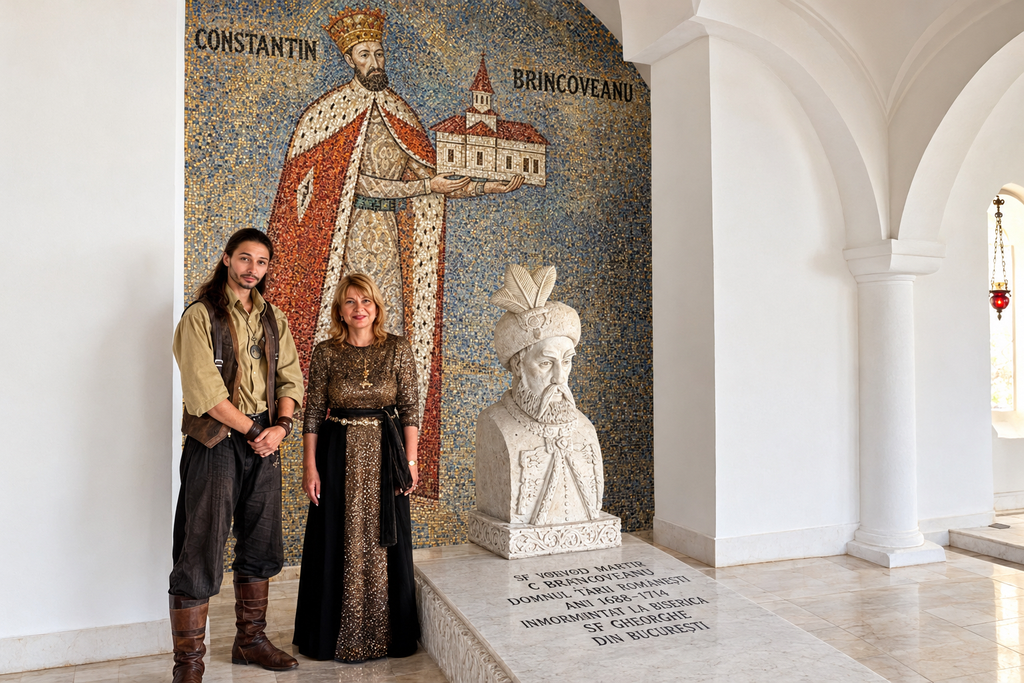
Vladislav Carol Nicolae and his cousin, HIH Princess Silvia Lucia Andronik Cantacuzino, at Sâmbăta de Sus Monastery, standing in front of the monument, with a mosaic depicting Saint Constantin Brâncoveanu, Voivode of Wallachia (1688–1714).