
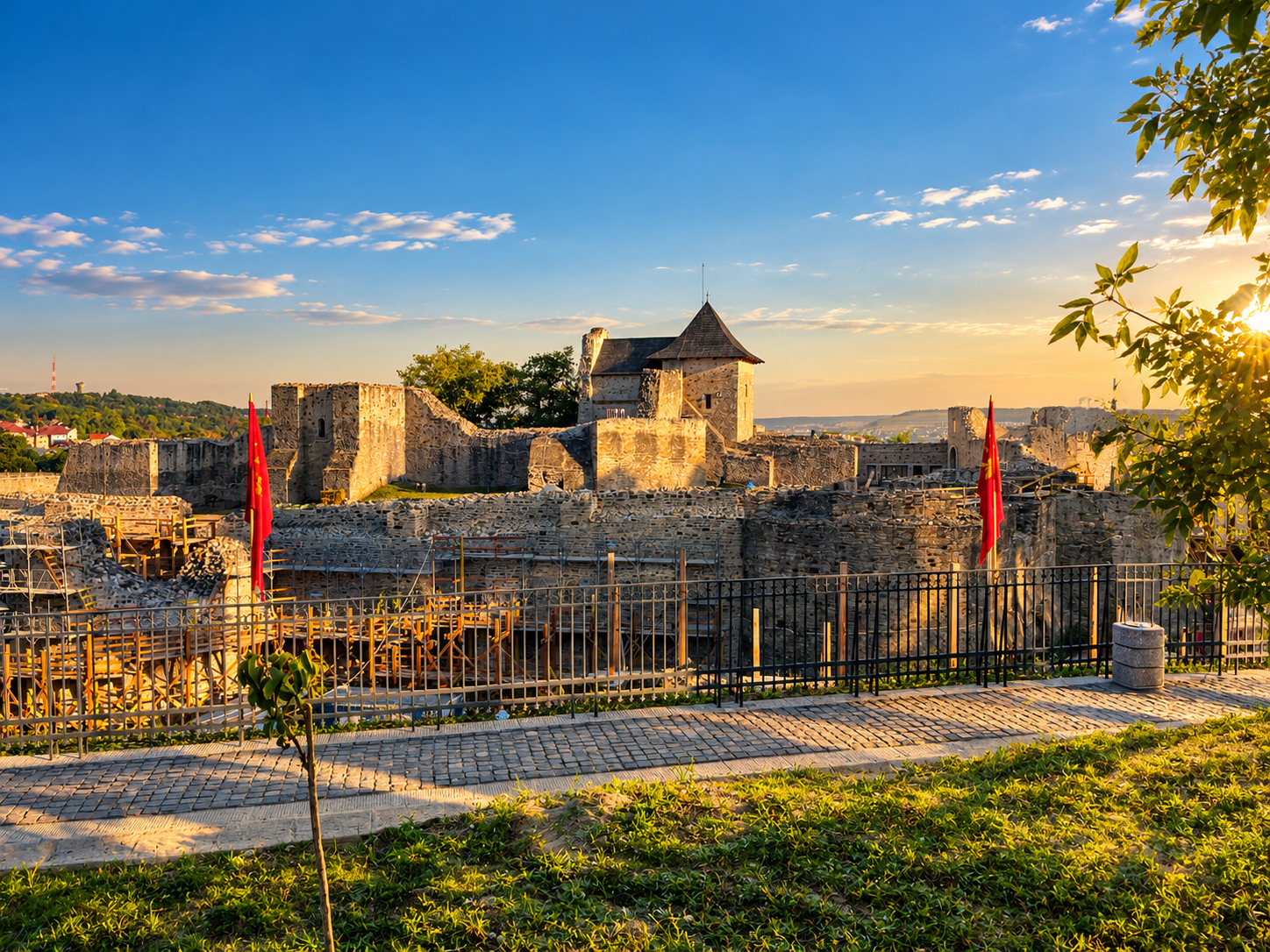
Rising above the valley on the eastern edge of Suceava, the Cetatea de Scaun preserves the memory of one of the most important centres of medieval Moldavian power. Its massive walls, defensive ditches and carefully arranged approaches bear witness to a time when the principality stood at the crossroads of competing political interests, maintaining relations with neighbouring kingdoms while defending its autonomy.
For almost two centuries, the fortress served as the principal residence of the rulers of Moldavia. It witnessed the consolidation of princely authority, the military reforms of Ștefan cel Mare, the campaigns of foreign armies and the gradual transformation of the principality’s political landscape. Today, its surviving structures offer a remarkable connection to that history.
The Beginnings: Petru I Mușat and the Rise of Suceava
The fortress was established towards the end of the fourteenth century, during the reign of Petru I Mușat (1375-1391). Its construction formed part of the development of Moldavia’s political and defensive institutions at a time when the principality was strengthening its position between the Kingdom of Poland, the Kingdom of Hungary and the expanding Ottoman power.
The earliest documentary reference to the fortress dates to 10 February 1388. The document, issued by Petru I and addressed to the Polish king Władysław II Jagiełło, concerns a substantial loan of silver. Its closing formula records that the charter was written at the Fortress of Suceava.
This is more than a passing geographical reference. It demonstrates that the fortress was already functioning as a place of princely authority and diplomatic activity. The document also offers a glimpse into the wider political world of medieval Moldavia, whose rulers maintained important relations with neighbouring powers.
Petru I is also associated with the transfer of the Moldavian political centre from Siret to Suceava. The city’s growing importance was reflected in the development of princely, administrative and religious institutions. The fortress became a central element of this emerging political landscape.
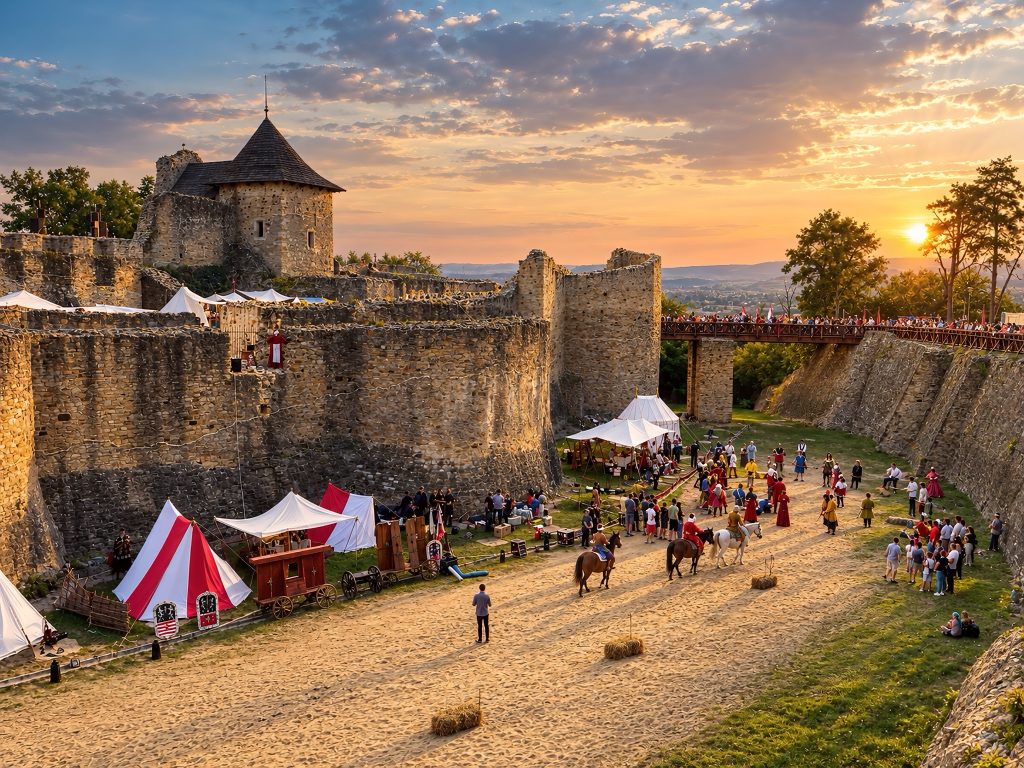
The courtyard and fortifications of the Cetatea de Scaun during the Medieval Art Festival, bringing the historic residence of Moldavian rulers to life.
A Princely Residence and a Centre of Government
The original fortress, commonly known as the Mușatin stronghold, was a relatively compact fortified structure. Built with substantial masonry walls and defensive towers, it was intended to provide protection for the ruler, his household and those close to the princely court.
Under Alexandru cel Bun (1400-1432), the complex was further developed. The fortress continued to serve as a place of princely residence and administration, while Suceava consolidated its position as the political centre of Moldavia.
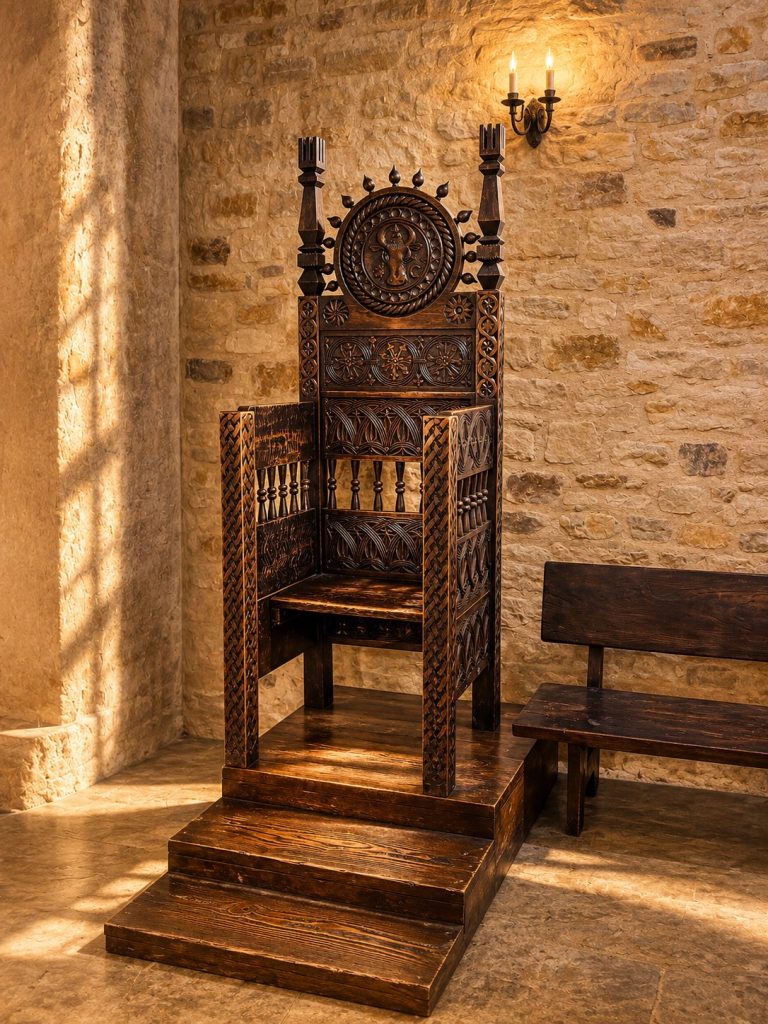
Medieval government was not conducted from a single building in the modern sense. The ruler’s household, the princely council, the chancery and the officials responsible for finance, justice and military affairs formed part of a broader system of courtly administration. The fortress provided a protected setting for many of these activities, while other princely establishments in Suceava served complementary functions.
The documents issued here, together with the coins produced by the Moldavian mint, reflect the growing institutional importance of the city. Suceava was not merely a residence chosen for its strategic position: it became a place from which the principality was governed and represented.
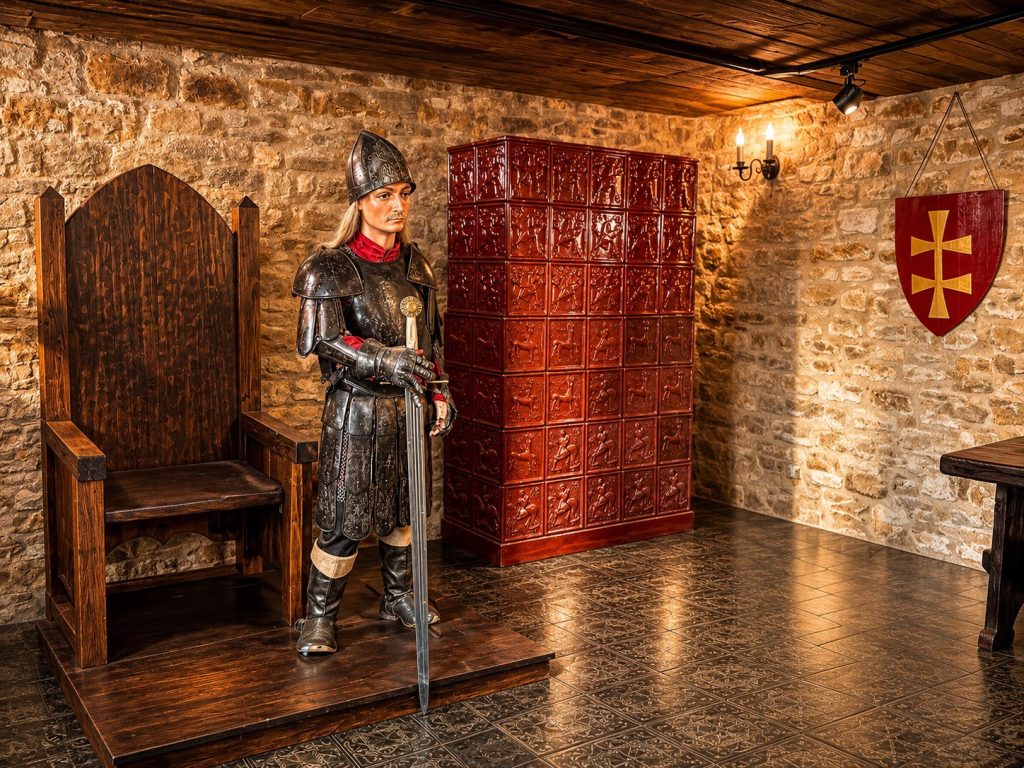
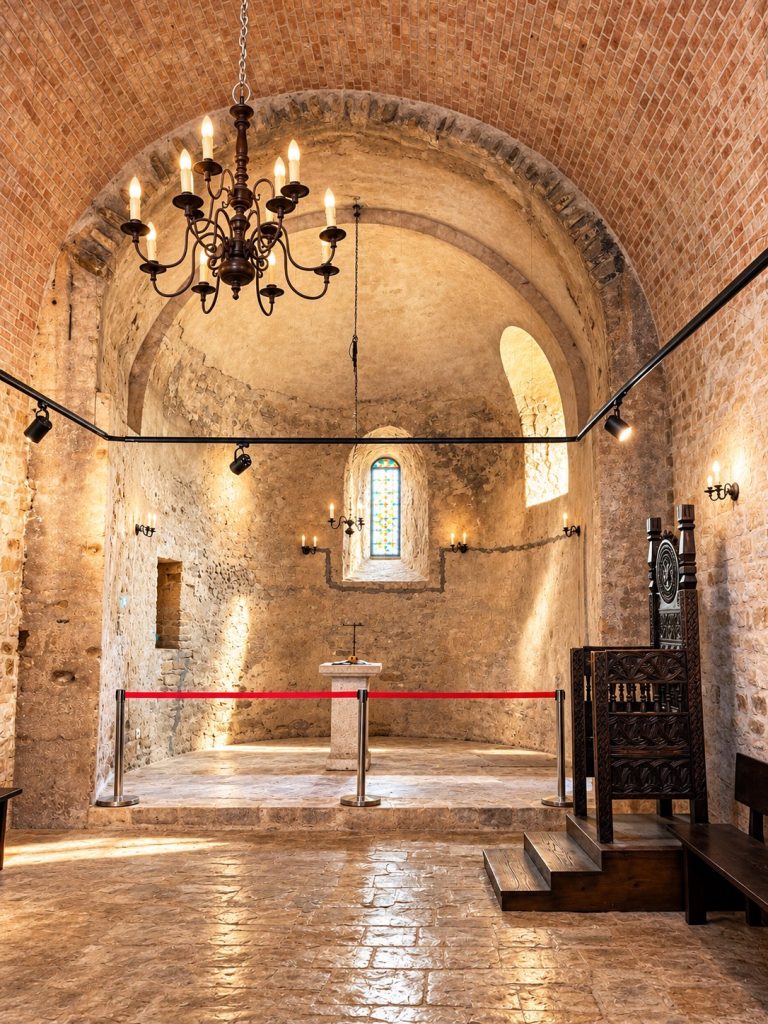
Exhibition space inside the fortress museum, illustrating the material culture and interior environment of the medieval Moldavian court.
Ștefan cel Mare: The Transformation of the Fortress
The most significant phase in the fortress’s military development took place during the long reign of Ștefan cel Mare (1457-1504).
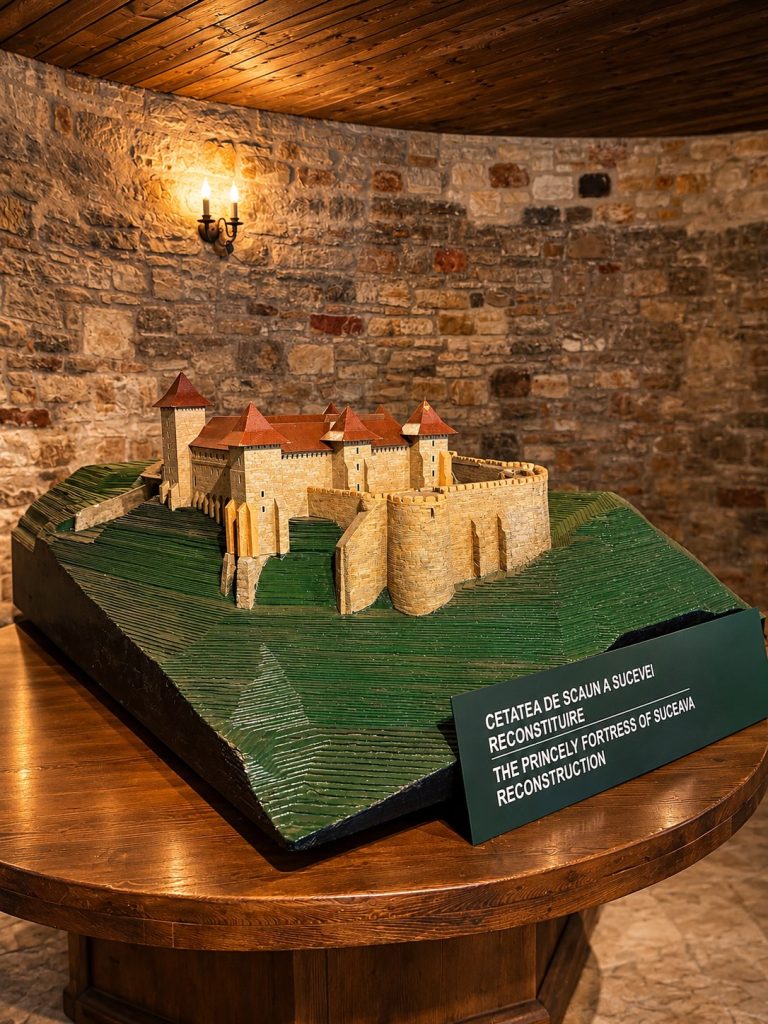
Faced with the changing military realities of the fifteenth century, Ștefan strengthened Moldavia’s defensive network and substantially transformed the fortress at Suceava. The original Mușatin structure was reinforced and surrounded by additional defensive works, creating a more complex system designed to withstand increasingly powerful siege forces.
These improvements were carried out in successive stages. During the 1470s, a new defensive enclosure was added around the older fortress. Further works followed in the later fifteenth century, including the strengthening of the defensive walls and the development of the broad ditch surrounding the complex.
The changes reflected the evolving nature of warfare. Fortifications had to contend not only with direct assaults but also with increasingly sophisticated siege equipment and artillery. Additional walls, towers and carefully arranged approaches helped make the fortress a formidable defensive position.
The visitor can still appreciate the logic of this system. Access to the inner fortress was carefully controlled. An attacking force approaching the stronghold had to negotiate the defensive ditch, the bridge and successive barriers before reaching the central enclosure. Each obstacle formed part of a defensive arrangement intended to slow and expose an advancing enemy.
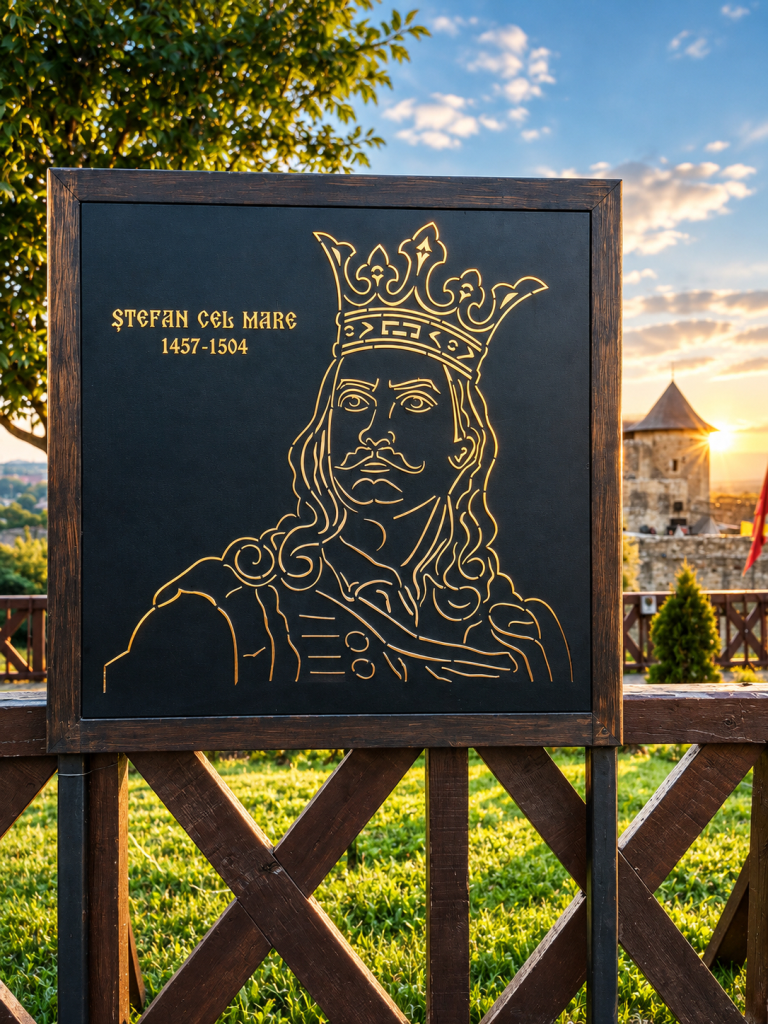
The fortress was therefore the product of several generations of construction, but it was under Ștefan cel Mare that its defensive character reached its most developed form.
The Military Campaigns of the Fifteenth Century
The military history of Suceava cannot be separated from the conflicts that shaped Moldavia’s relations with its neighbours.
In 1476, the Ottoman Sultan Mehmed II personally led a campaign against Moldavia following the Ottoman victory at the Battle of Valea Albă. The invasion placed the principality under severe pressure. Although the countryside suffered considerably, the fortress remained in Moldavian hands.
Further military pressure followed during the subsequent decades. In 1497, the stronghold faced one of its most celebrated tests when the army of King John I Albert of Poland invaded Moldavia. The Polish campaign culminated in the siege of Suceava, which failed to bring the fortress under the attacker’s control.
The events of 1497 are particularly significant because they illustrate the strategic importance of the stronghold within the wider political rivalry between Moldavia and Poland. The fortress was not simply defending a town; it was protecting the seat of a principality whose ruler was determined to preserve his political autonomy.
Another Polish campaign followed in 1509, during the reign of Bogdan III, son and successor of Ștefan cel Mare. The continued military attention directed towards Suceava demonstrates the enduring strategic importance of the Moldavian capital and its principal stronghold.
The fortress acquired a reputation for resistance, but its survival should not be confused with the security of the surrounding territory. Military campaigns could bring devastation to towns, villages and agricultural lands even when the central stronghold remained unconquered.
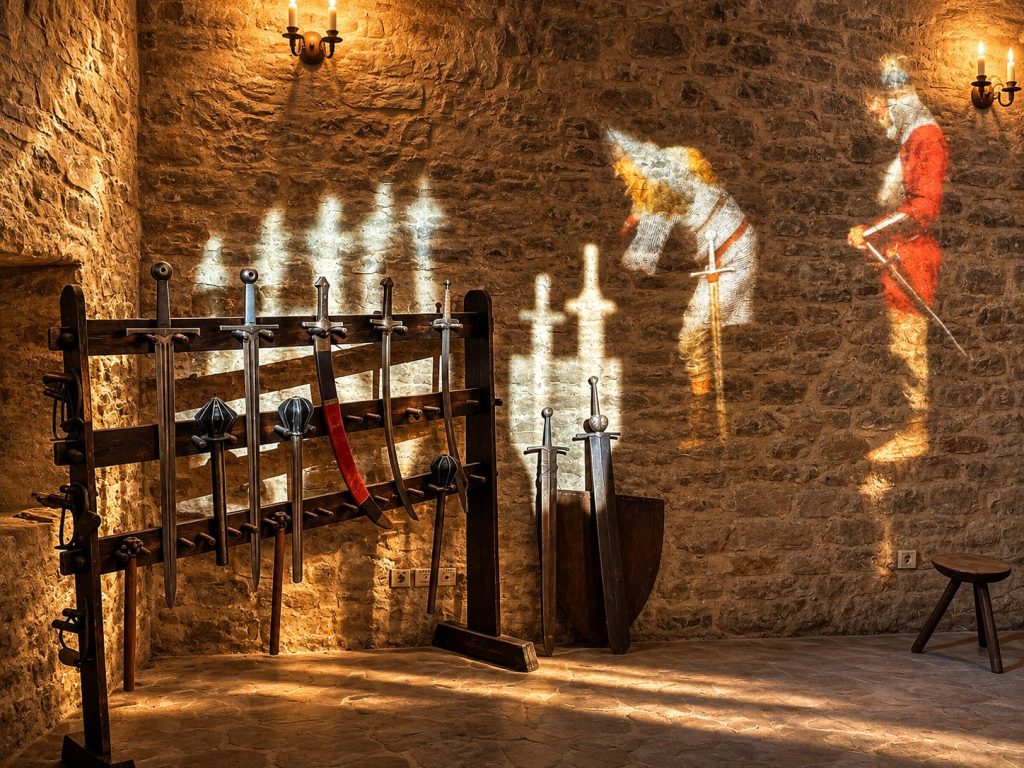
Weapon racks and historical projections illustrating the military equipment of the garrison within the fortress museum.
Beyond the Battlefield: Life Within the Walls
Although its defensive role is central to its history, the Cetatea de Scaun was also a place of residence and daily activity.
Within its walls were spaces associated with the princely household, administrative functions, storage and the practical requirements of maintaining a fortified residence. Archaeological investigations have revealed evidence of the material culture of those who lived and worked there.
The architectural remains also offer insight into the refinement of the princely environment. Stonework and decorative elements reveal the influence of Gothic artistic forms, while domestic features such as tiled stoves demonstrate the combination of local traditions with wider Central European influences.
The fortress was thus more than a military installation. It was a setting for the exercise of political authority, the reception of visitors and envoys, and the everyday activities required to sustain a princely household.
The archaeological finds displayed today help bring this world into focus. Weapons, coins, heraldic material and architectural fragments illustrate different aspects of Moldavian political and material culture between the fourteenth and seventeenth centuries.
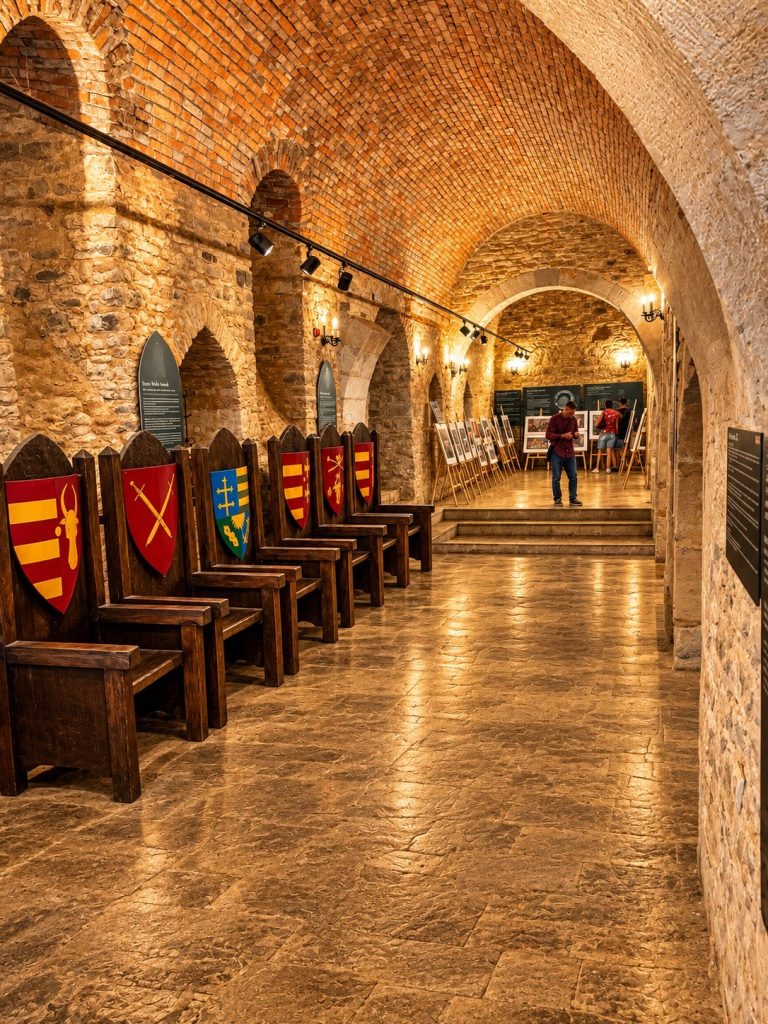
The Crisis of 1538: Petru Rareș and the Ottoman Occupation
The sixteenth century brought profound changes to Moldavia and to the role of its principal fortress.
During the reign of Petru Rareș, the Ottoman Sultan Süleyman I launched a campaign against Moldavia in 1538. The prince’s position had become increasingly vulnerable, and the campaign culminated in his loss of the throne.
The fortress of Suceava was occupied by Ottoman forces in the course of this political crisis. The episode is traditionally associated with the defection of Moldavian boyars, whose actions contributed to the collapse of Petru Rareș’ position. The fortress was therefore not overcome simply through a direct assault on its walls.
This episode illustrates an important truth about medieval fortifications: even the strongest defensive works could not guarantee the security of a ruler whose political support had begun to disintegrate. Military architecture and political stability were inseparable.
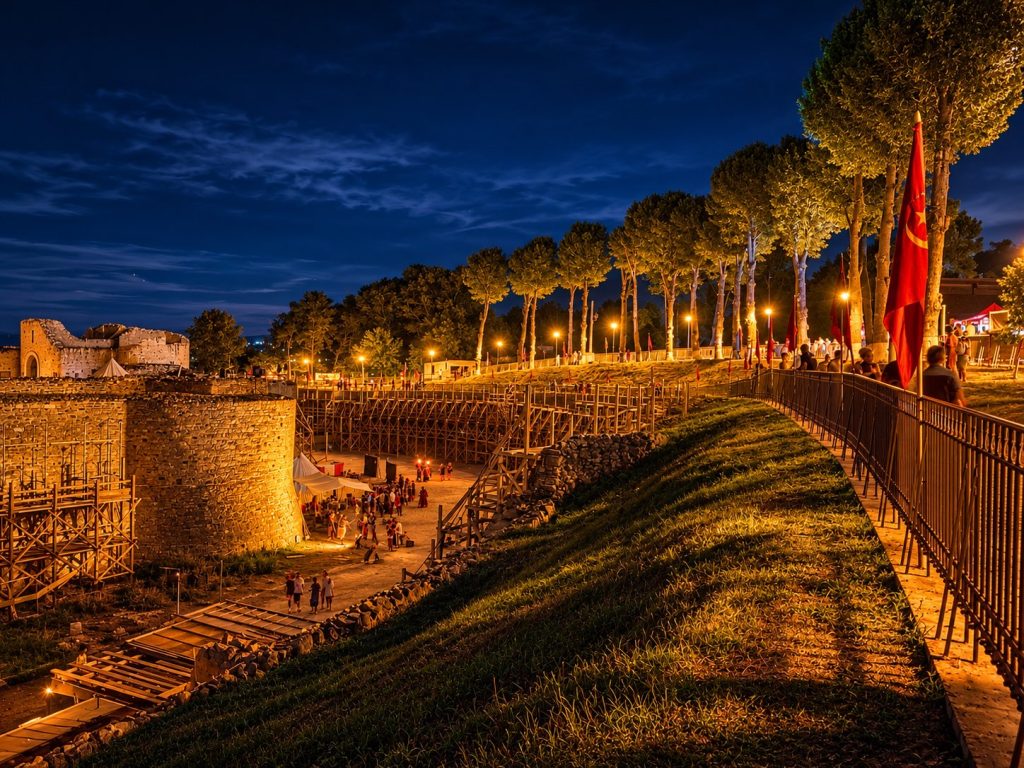
The illuminated stronghold of Suceava under a night sky.
Mihai Viteazul and the Events of 1600
Another notable episode occurred in 1600, when the forces of Mihai Viteazul entered the fortress of Suceava during his campaign in Moldavia.
This event formed part of Mihai’s brief assumption of authority over Wallachia, Transylvania and Moldavia. His achievement is often remembered as the first political union of the three principalities under a single ruler.
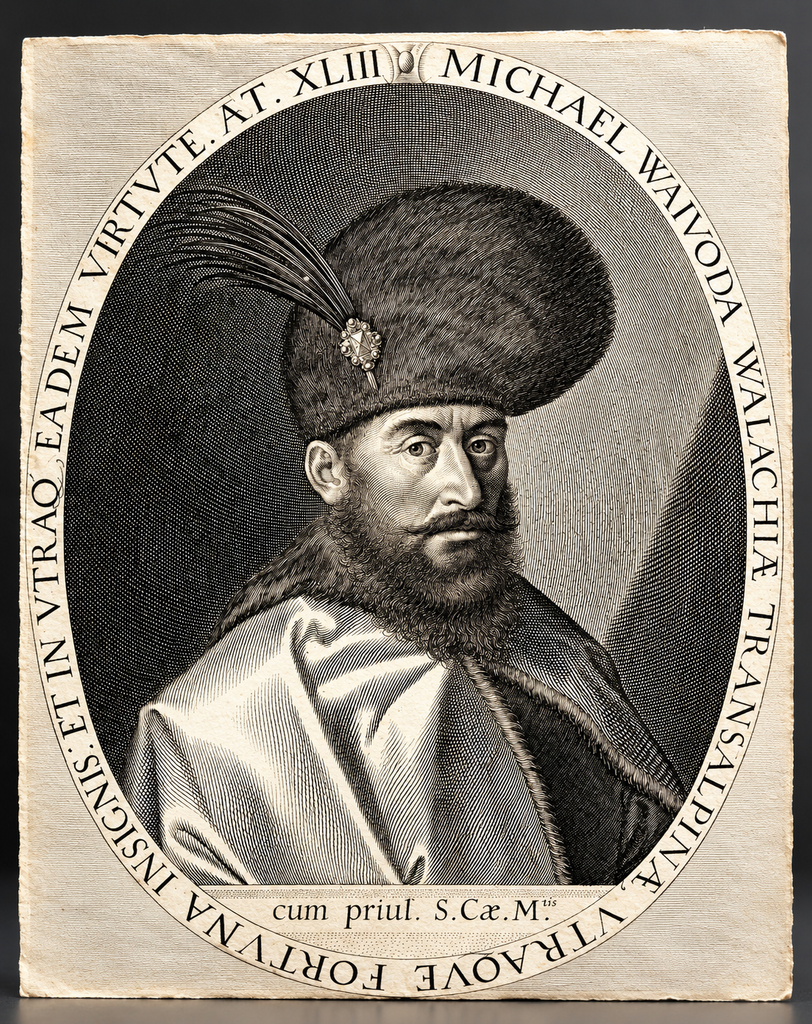
Historical precision, however, requires an important distinction. Mihai’s authority over the three territories lasted only briefly and did not establish a permanent unified state. Nevertheless, the events of 1600 demonstrate that Suceava remained an important strategic and political centre long after the age of Ștefan cel Mare.
The Final Destruction: 1675
By the seventeenth century, the political and military circumstances of Moldavia had changed considerably. The fortress was no longer the central seat of princely power that it had been in the fifteenth century.
A decisive turning point came in 1675, during the reign of Dumitrașcu Cantacuzino. Acting on Ottoman orders, the Moldavian authorities arranged for the fortress to be dismantled and rendered unusable as a military stronghold.
The destruction marked the end of the fortress’s active role as a major centre of princely defence. Its remaining structures were subsequently affected by natural deterioration and, according to historical accounts, by an earthquake in 1684.
Over time, the abandoned fortress also became a source of building material. Stones were removed and reused, and the once formidable stronghold gradually fell into ruin. What had once symbolised the authority and resilience of medieval Moldavia became a fragmentary monument within the landscape.
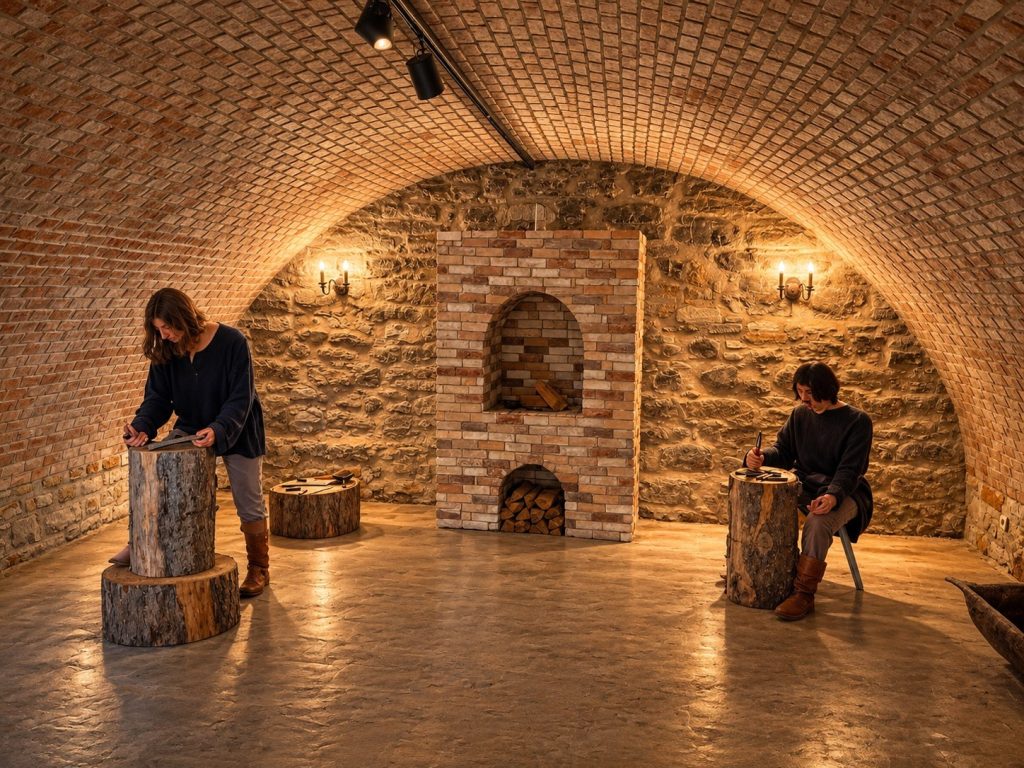
Vaulted interior exhibit at Suceava Fortress, reflecting its rich structural history.
Rediscovery, Archaeology and Restoration
The modern rediscovery of the fortress began in the late nineteenth century. In 1895, the Austrian architect and archaeologist Karl Adolf Romstorfer initiated systematic investigations that helped bring the remains of the complex to scholarly attention.
Further archaeological research during the twentieth century, particularly from 1951 onwards, contributed substantially to the understanding of the fortress’s construction phases, defensive arrangements and internal organisation.
These investigations revealed that the monument was not the product of a single building campaign. Its surviving form reflects successive periods of construction, reinforcement, repair and adaptation, from the Mușatin foundation to the later interventions of the seventeenth century.
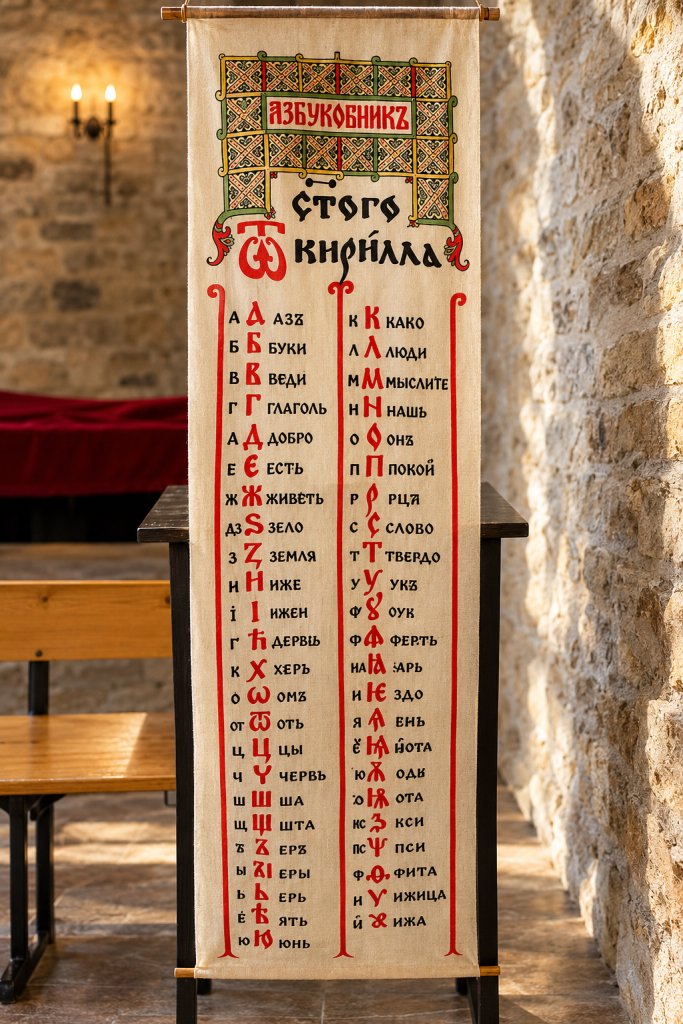
Between 2011 and 2015, extensive restoration and consolidation works were carried out. Sections of the northern side, the entrance, rooms on the ground floor of the older Mușatin fortress and parts of the defensive enclosure were restored or reconstructed on the basis of the available archaeological and architectural evidence.
The present appearance of the site must therefore be understood as the result of both medieval construction and modern conservation. Some areas preserve historic masonry, while others reflect restoration work intended to make the fortress more accessible and intelligible to visitors. This distinction is important when interpreting the monument.
In 2016, the National Museum of Bukovina opened a permanent exhibition within the fortress, presenting aspects of medieval Moldavian history, including weaponry, heraldry, archaeological finds and the material culture of the princely court.
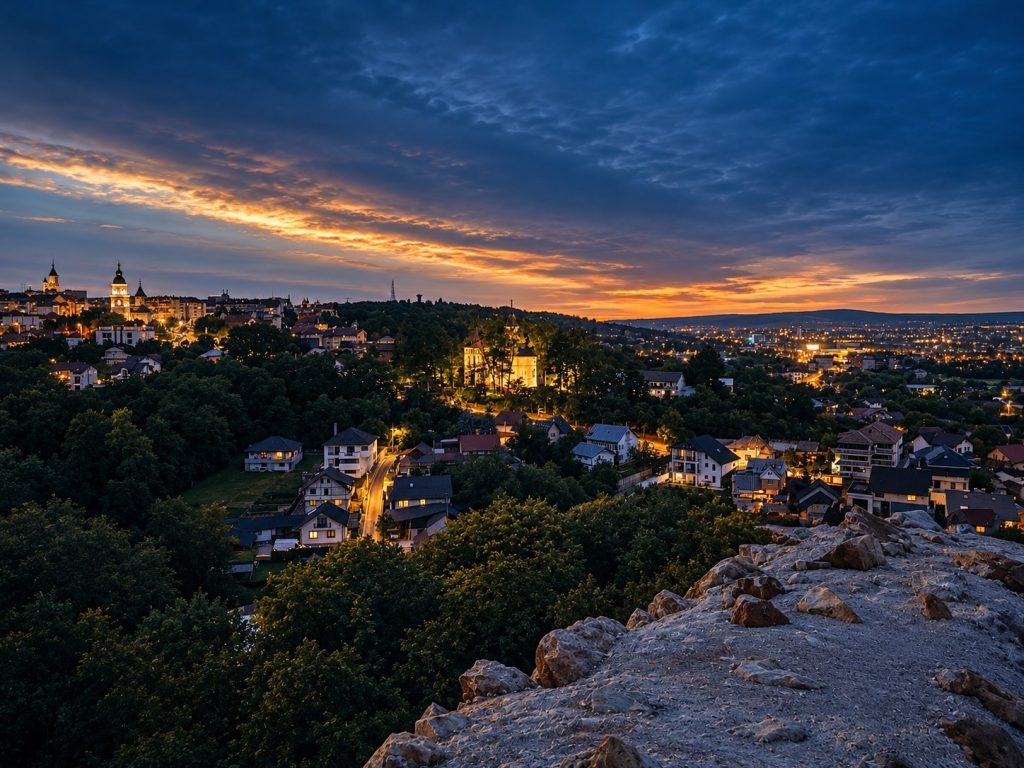
Panoramic sunset view from the fortress hill overlooking the city of Suceava and the surrounding Moldavian landscape.
The Medieval Art Festival: History Brought to Life
The fortress continues to occupy an important place in the cultural life of Suceava. One of the most notable contemporary events associated with it is the Festivalul de Artă Medievală „Ștefan cel Mare” – the Medieval Art Festival named after Ștefan cel Mare.
Organised by the National Museum of Bukovina, the festival brings performers, historical reenactment groups, musicians, craftspeople and visitors together within the setting of the fortress. Its programme has included medieval-inspired performances, demonstrations of historical crafts, equestrian displays, archery, theatrical presentations and activities for younger visitors.
The event offers a lively way of introducing the public to the atmosphere of the Middle Ages. It also creates an opportunity to encounter the fortress not merely as an archaeological monument, but as a place that continues to inspire cultural participation and historical curiosity.
For Vladislav Carol Nicolae, the festival holds a particular appeal. Its combination of historical atmosphere, performance and the setting of the old princely stronghold makes it a memorable celebration of Suceava’s heritage.
It is worth remembering, of course, that modern historical festivals are interpretations of the past rather than literal reproductions of medieval life. Their value lies in making history accessible, encouraging interest in historical research and bringing people into contact with the places and traditions that have shaped their cultural inheritance.
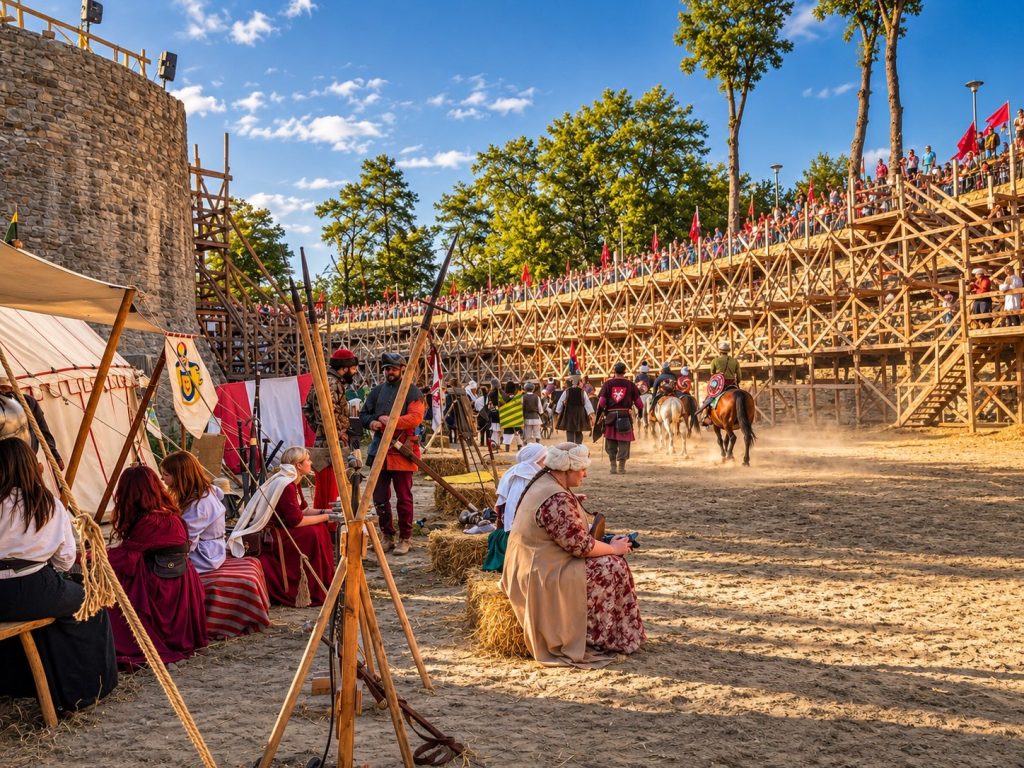
Reenactors and visitors gathered within the fortress grounds during the annual Ștefan cel Mare Medieval Art Festival in August, connecting contemporary cultural life with the site’s historic legacy.
The Fortress and the Legacy of Medieval Moldavia
The Cetatea de Scaun of Suceava preserves a remarkable chapter in the history of Moldavia. Its foundations belong to the reign of Petru I Mușat, its defences were transformed under Ștefan cel Mare, and its later history reflects the changing political circumstances of the principality.
Its significance lies not only in the campaigns it witnessed or the rulers who resided within its walls. It also represents the development of princely government, the organisation of military defence and the relationships that connected Moldavia to the wider political world of Eastern and Central Europe.
Today, the surviving walls allow visitors to follow the logic of medieval fortification and to appreciate the complexity of a princely stronghold. The fortress is at once an archaeological monument, a reminder of political ambition and a material witness to the history of a principality that maintained its identity amid powerful neighbours.
To walk through the Cetatea de Scaun is to encounter more than the remains of a medieval castle. It is to enter a place where the history of Moldavian authority, diplomacy and defence was shaped over generations – a place whose story continues to be discovered, interpreted and shared.
Basarab Heritage
— A.C.
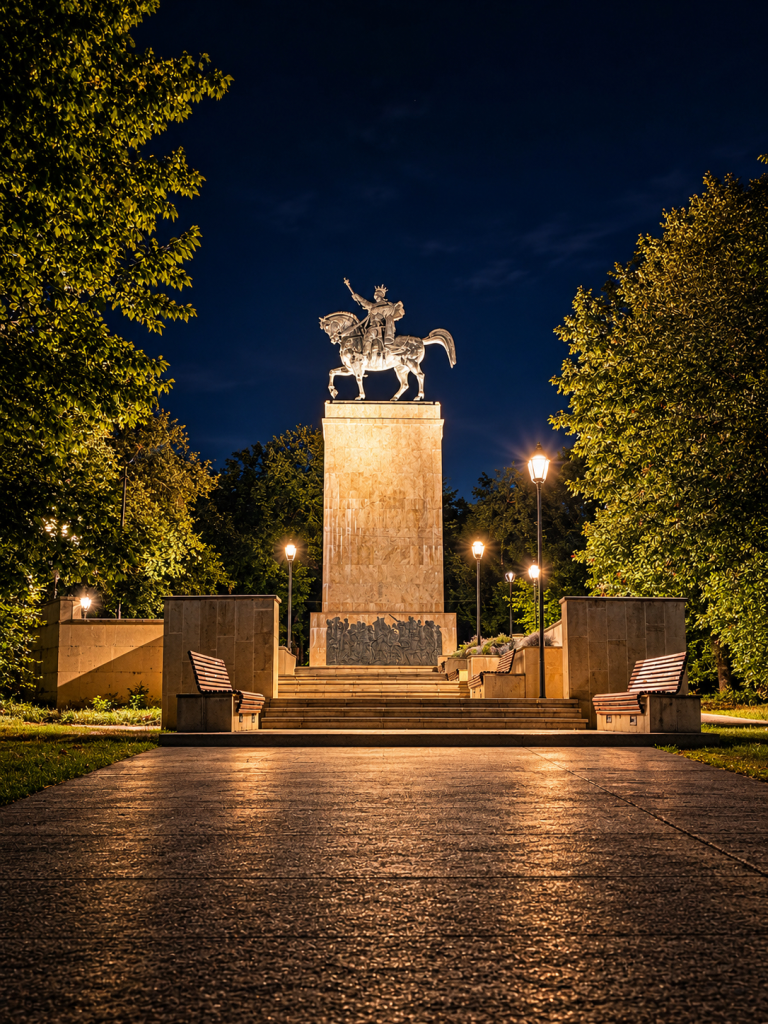
The equestrian monument of Voivode Ștefan cel Mare near the fortress, commemorating the enduring legacy of Moldavia’s most celebrated ruler.