
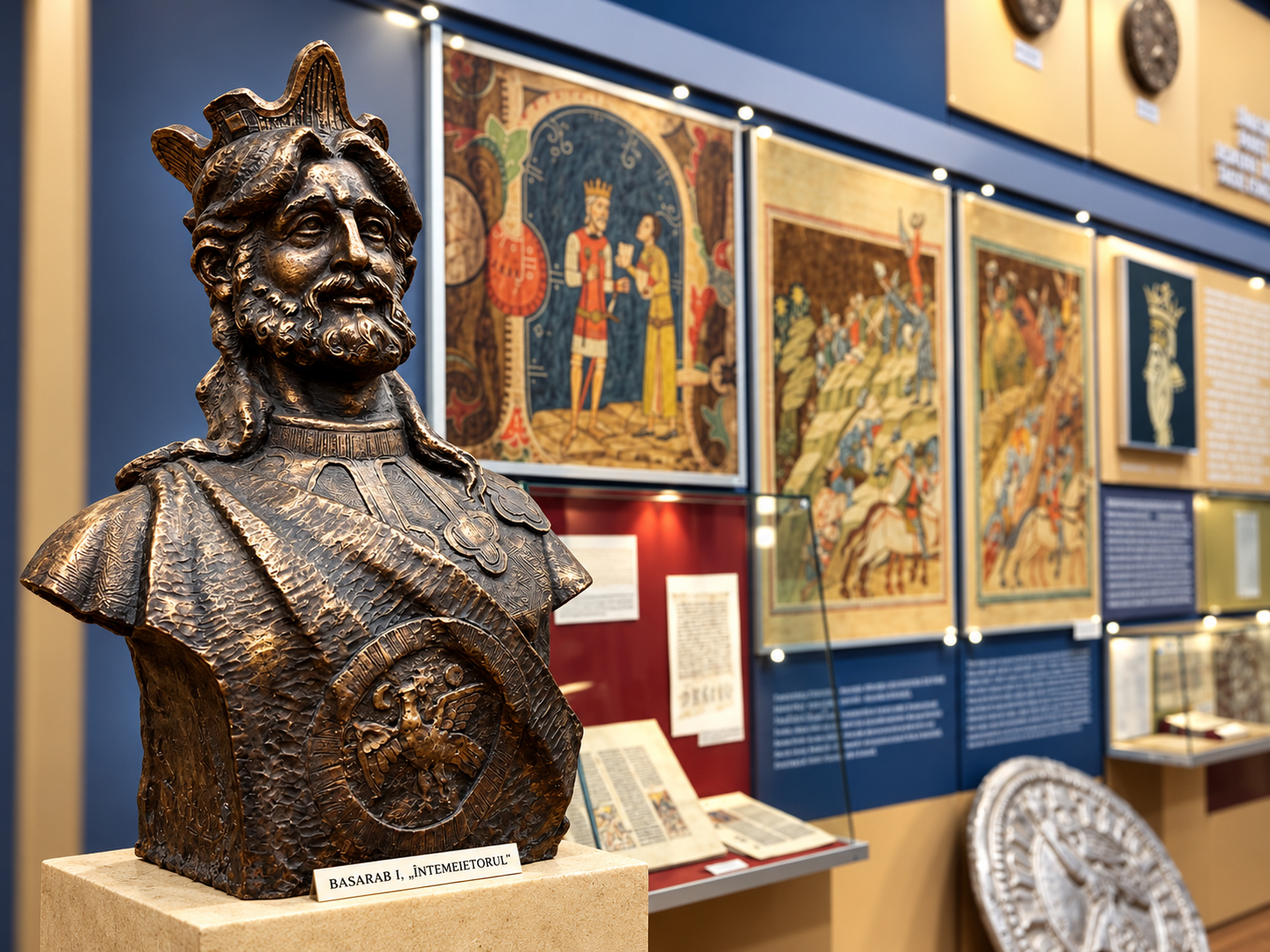
Monuments and manuscripts alone do not constitute the entirety of our historical legacy. Equally important are the objects preserved in museums and regional collections, whose material testimony allows us to engage directly with the people, institutions, and traditions of the past.
Located on Calea Domnească in the historic centre of Târgoviște, the Historical Museum of Dâmbovița County offers a broad perspective on the history of the region, from prehistoric communities to the political and cultural transformations of the early twentieth century. Housed in a former Palace of Justice dating from the beginning of the twentieth century, the museum forms part of a wider historical landscape closely associated with the former princely residence of Curtea Domnească.
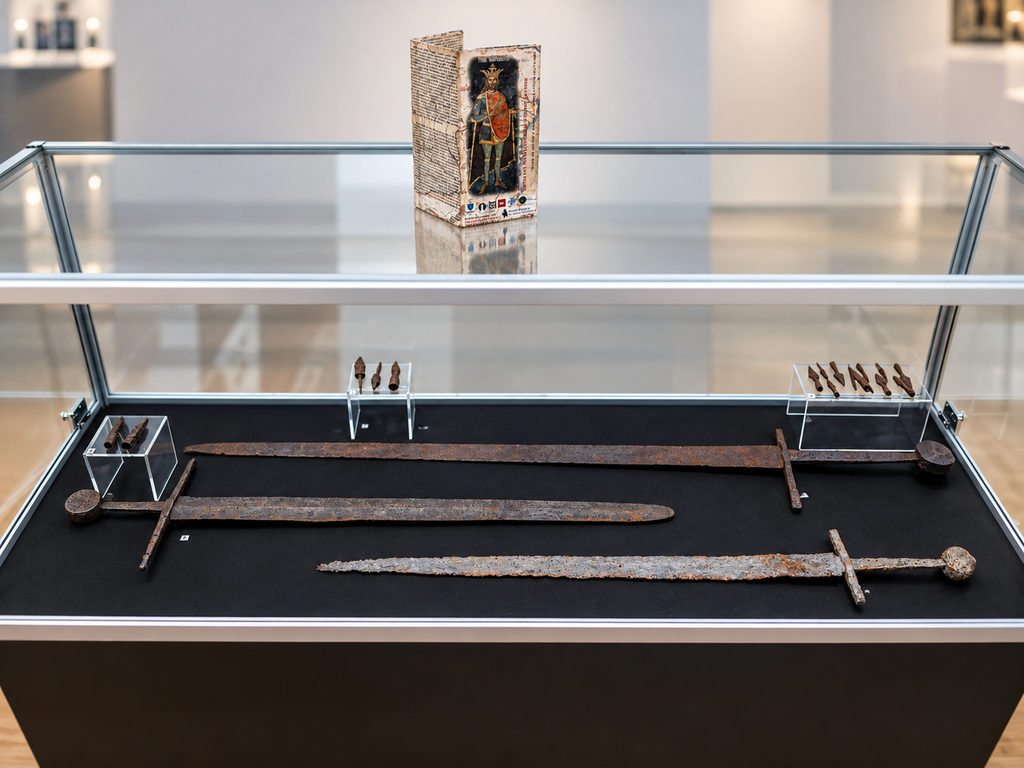
Medieval broadswords and weaponry displayed alongside historical prints in the exhibition of the Historical Museum of Târgoviște.
From Prehistory to the Medieval Principality
The museum’s permanent exhibition begins long before the emergence of Wallachia as a medieval principality. Archaeological finds illustrate the lives and material culture of the communities that inhabited the region throughout prehistory and antiquity. Among the objects described in the museum’s collection are Neolithic pottery associated with the Gumelnița culture, a Bronze Age ornament made of aventurine quartz discovered at Gorgota, and a Celtic sword and axes dating from the early Iron Age.
The exhibition also presents evidence of the region’s connections with the wider ancient world, including Geto-Dacian, Macedonian, and Roman coin hoards. Particularly noteworthy is a fifth-century Hunnic cauldron discovered in 1983 at Ionești, an object that offers a tangible connection to the complex movements of peoples and cultures that shaped southeastern Europe during late antiquity.

Together, these archaeological finds provide a deeper understanding of the historical landscape in which the medieval Romanian principalities would later emerge.
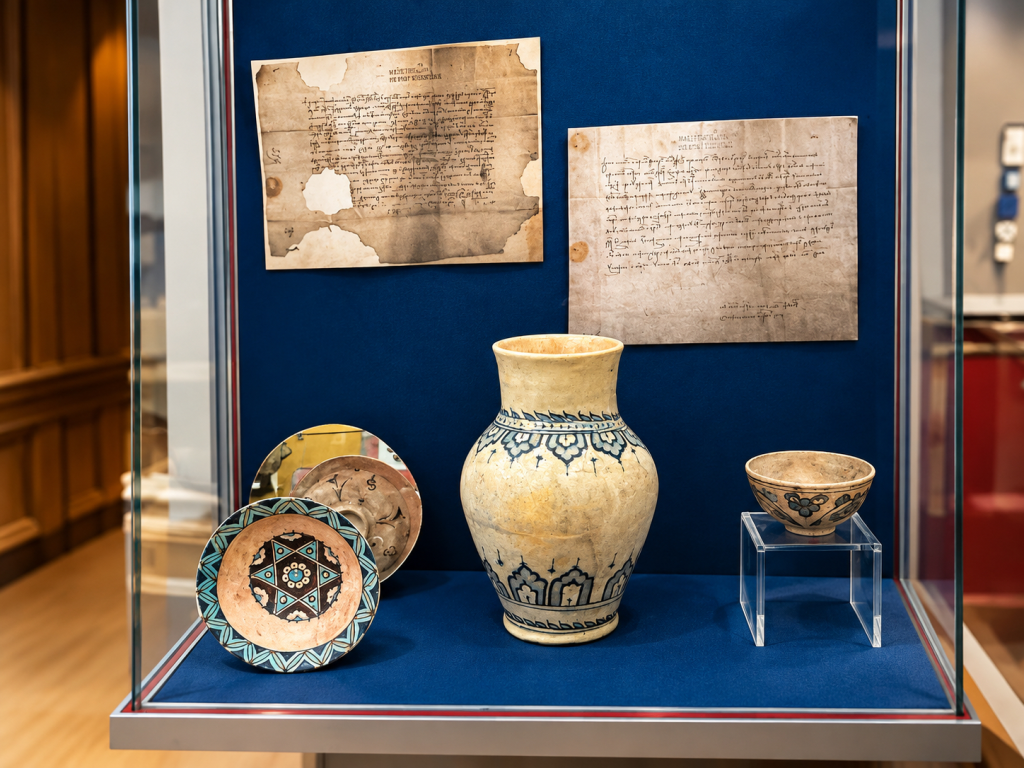
Medieval glazed ceramics and manuscript fragments illustrating the material and cultural life of Wallachia.
Târgoviște and the Princely Heritage of Wallachia
For those interested in the political and dynastic history of Wallachia, the museum’s medieval and early modern collections are especially significant. The permanent exhibition explores the formation of the principality and the important role played by Târgoviște, particularly during the fifteenth century.
For centuries, the city was closely associated with princely authority, court life, and the development of Wallachian political institutions. Its history is inseparable from that of the rulers who shaped the principality, among them Radu cel Mare, Neagoe Basarab, Petru Cercel, Mihai Viteazul, Matei Basarab, and Constantin Brâncoveanu.
The museum follows the region’s history through the sixteenth, seventeenth, and eighteenth centuries, a period marked by political change, cultural development, military conflict, and the continuing importance of princely patronage. Objects from these periods help place the surviving monuments of Târgoviște within the broader context of Wallachian history.
A visit to the museum therefore complements an exploration of the nearby Curtea Domnească, where the remains of the former princely residence offer a direct encounter with the architectural and political landscape of the principality.
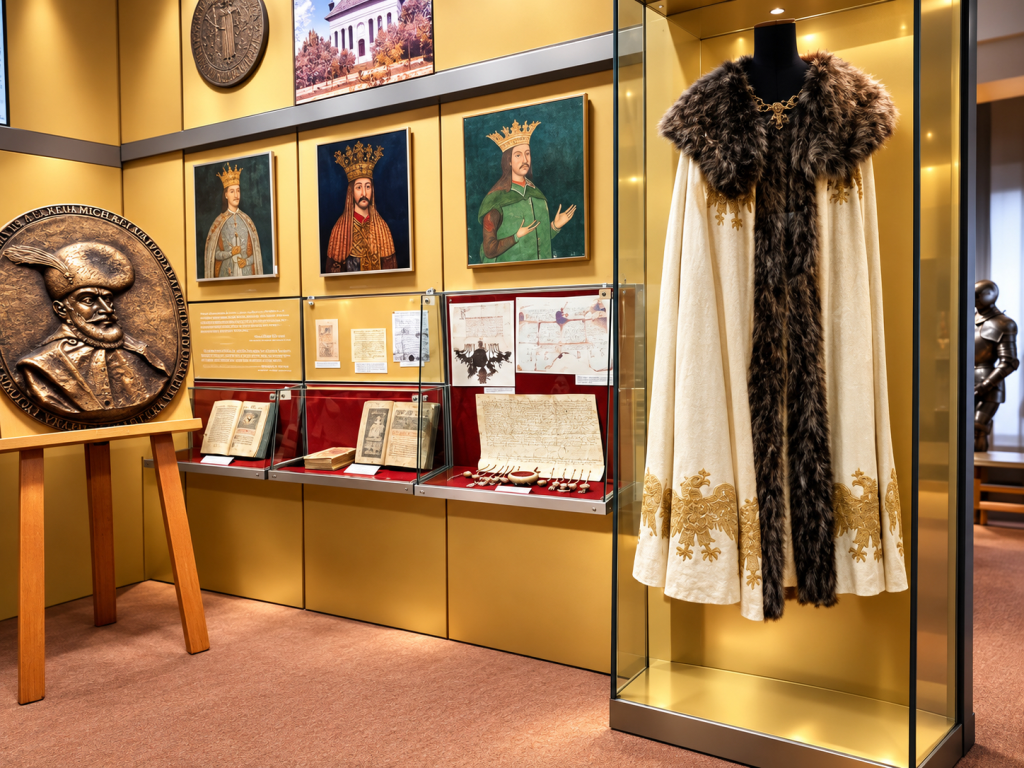
Princely portraits, insignia, and ceremonial garments from the era of Wallachia’s rulers.
From the Principalities to Modern Romania
The museum’s historical narrative continues beyond the age of the medieval voivodes. Its later sections examine the transformations of the nineteenth century, including the movement associated with Tudor Vladimirescu in 1821, the Revolution of 1848, and the process of union and state formation that followed.
The final part of the permanent exhibition addresses the Romanian War of Independence of 1877-1878 and the First World War, placing these events within the broader story of Romania’s emergence as a modern state.
This chronological approach is one of the museum’s strengths. Rather than presenting the princely period as an isolated chapter, it connects Wallachia’s medieval and early modern history with the political developments that shaped modern Romania.
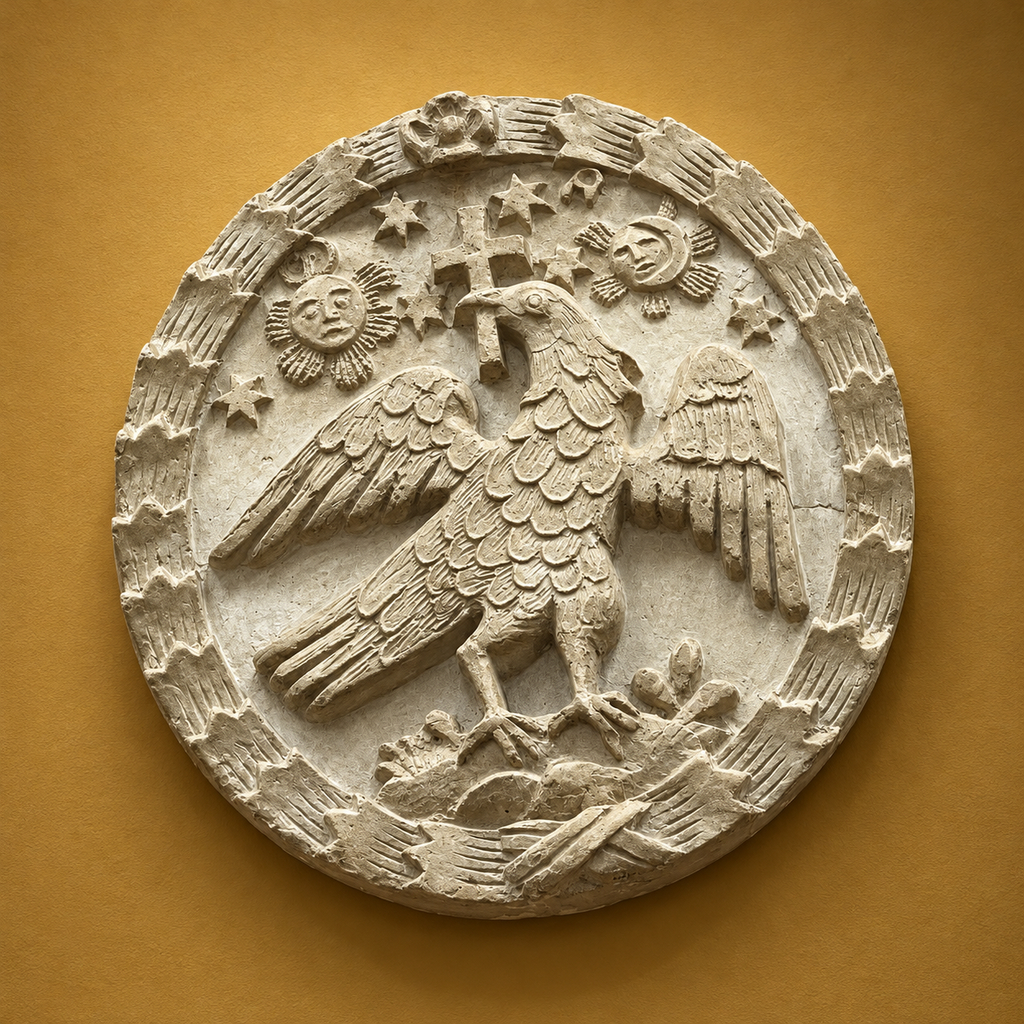
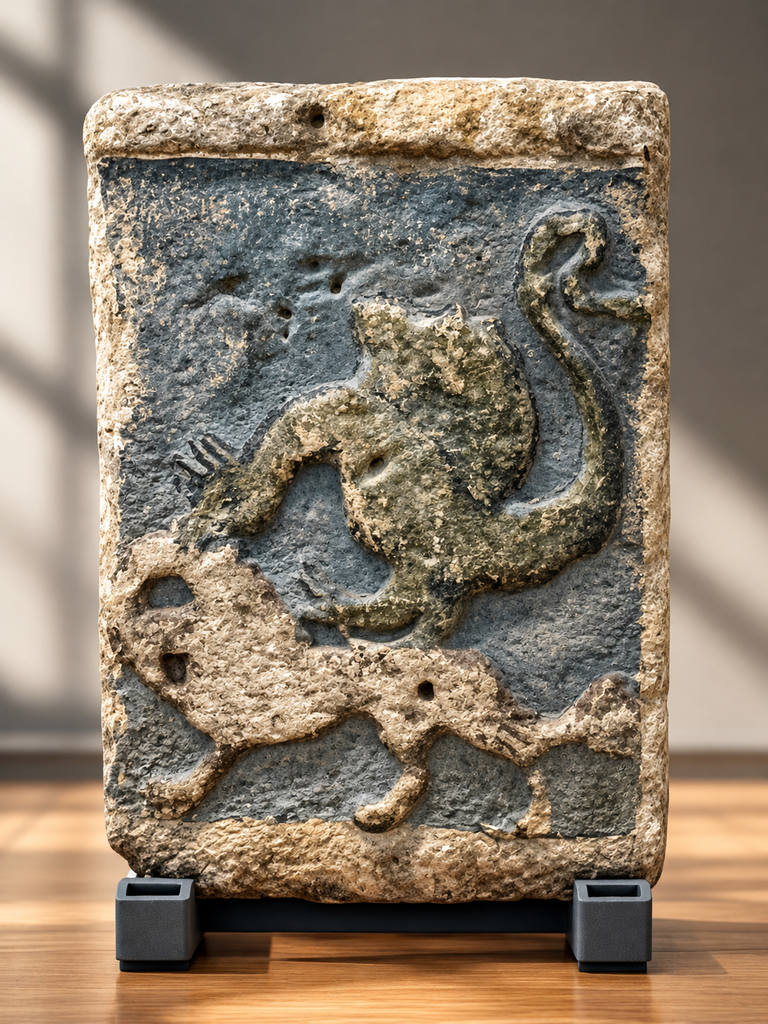
Stone relief of the Wallachian heraldic emblem, illustrating the political and spiritual iconography of the voivodesate.
Preserving the Material Memory of the Romanian Lands
Regional museums are essential to the preservation and interpretation of historical heritage. Their importance lies not only in the age or rarity of individual objects, but also in the stories that emerge when those objects are placed within their proper historical context.
The Historical Museum of Târgoviște deserves a place in any serious exploration of Wallachia’s past. Its collections offer visitors an opportunity to look beyond familiar monuments and engage with the archaeological, political, and cultural evidence that gives the region’s history its depth.
We extend our appreciation to the curators, historians, and staff whose work preserves these collections and makes them accessible to future generations. And, last but not least, to the charming feline presence at the entrance, who seems to have assumed the unofficial role of welcoming visitors to the museum.
Keeping historical memory alive requires sustained care, research, and public engagement. Through Basarab Heritage, we hope to encourage a deeper appreciation of the institutions, collections, and historic places that preserve the many layers of our shared cultural heritage.
Basarab Heritage
— A.C.
⸻
Visitor Information
Museum: Muzeul de Istorie – Complexul Național Muzeal „Curtea Domnească” Târgoviște
Address: Calea Domnească nr. 189, Târgoviște, Dâmbovița County, Romania
Official website: muzee-dambovitene.ro