
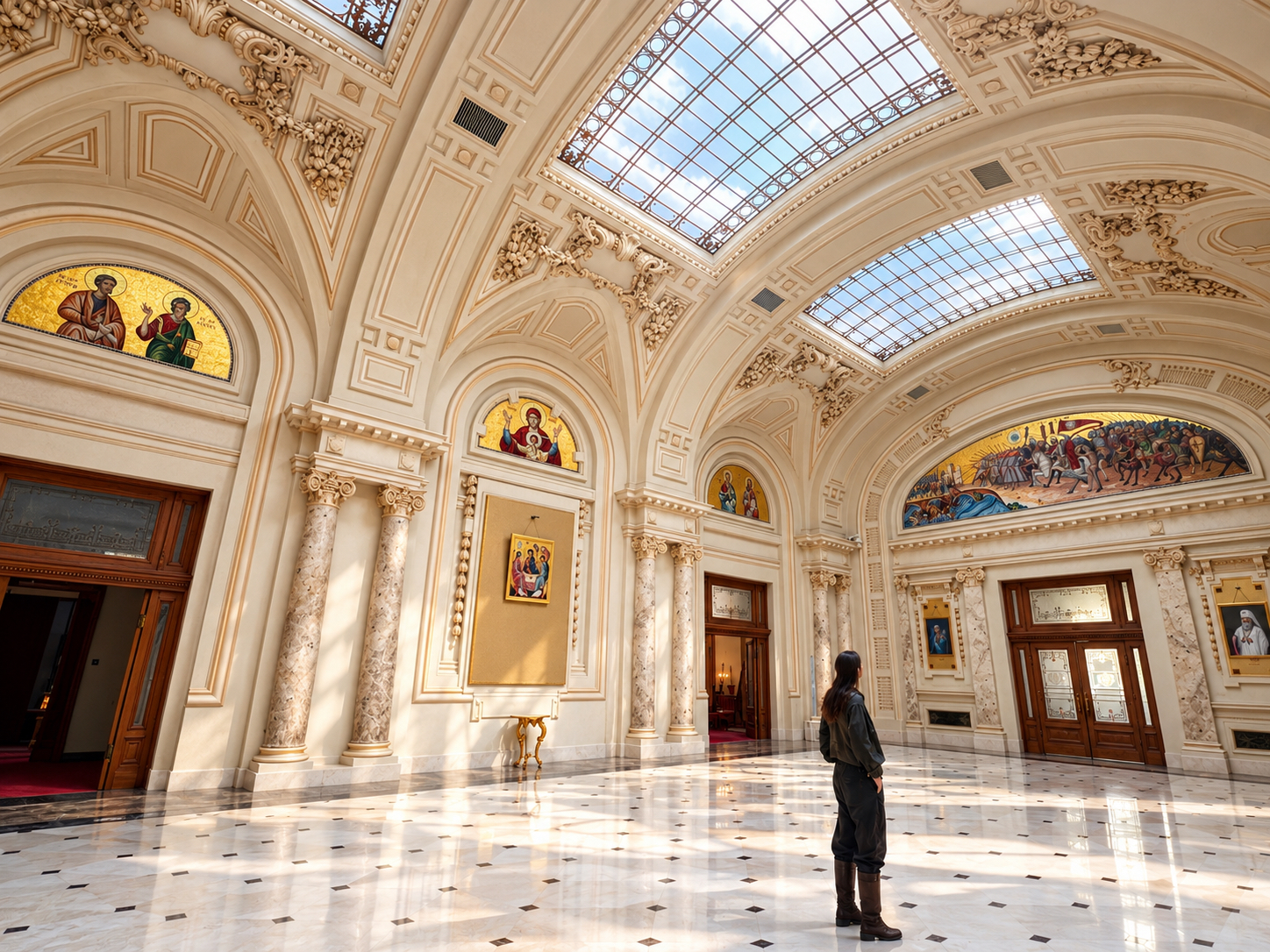
The stewardship of cultural and historical heritage extends beyond the preservation of archives and written records. It also encompasses the continued study and documentation of the places in which a nation’s spiritual, political, and architectural history has taken form.
In August, during a private visit to Bucharest, Vladislav Carol Nicolae, accompanied by close companions, visited and documented the Patriarchal Palace (Palatul Patriarhiei) on Dealul Mitropoliei. The historical significance of this site reaches considerably further back than the present building itself.
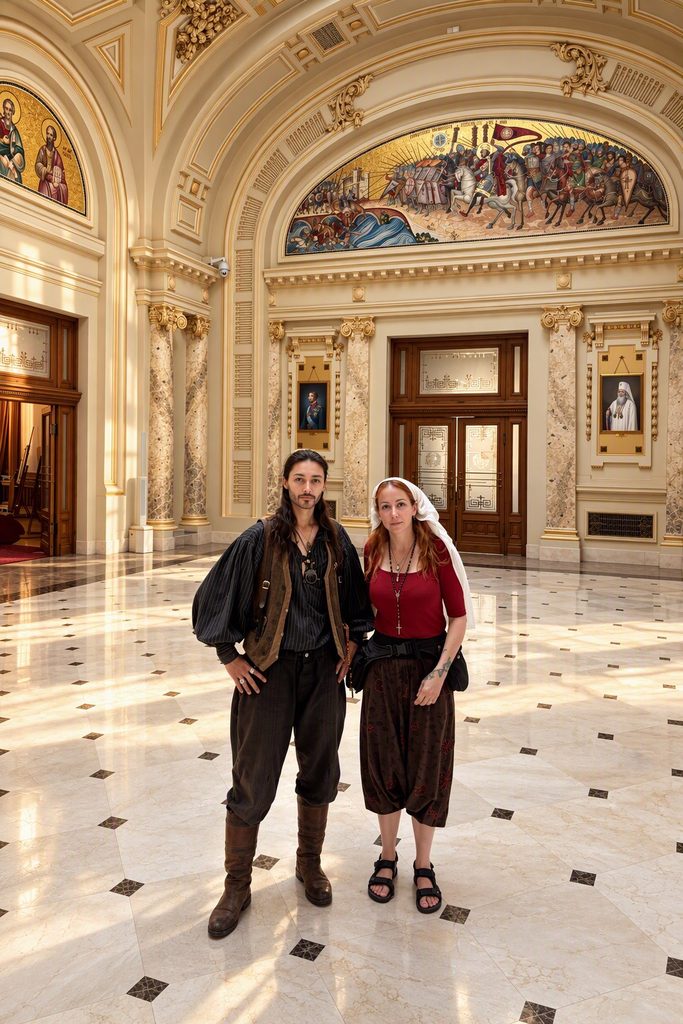
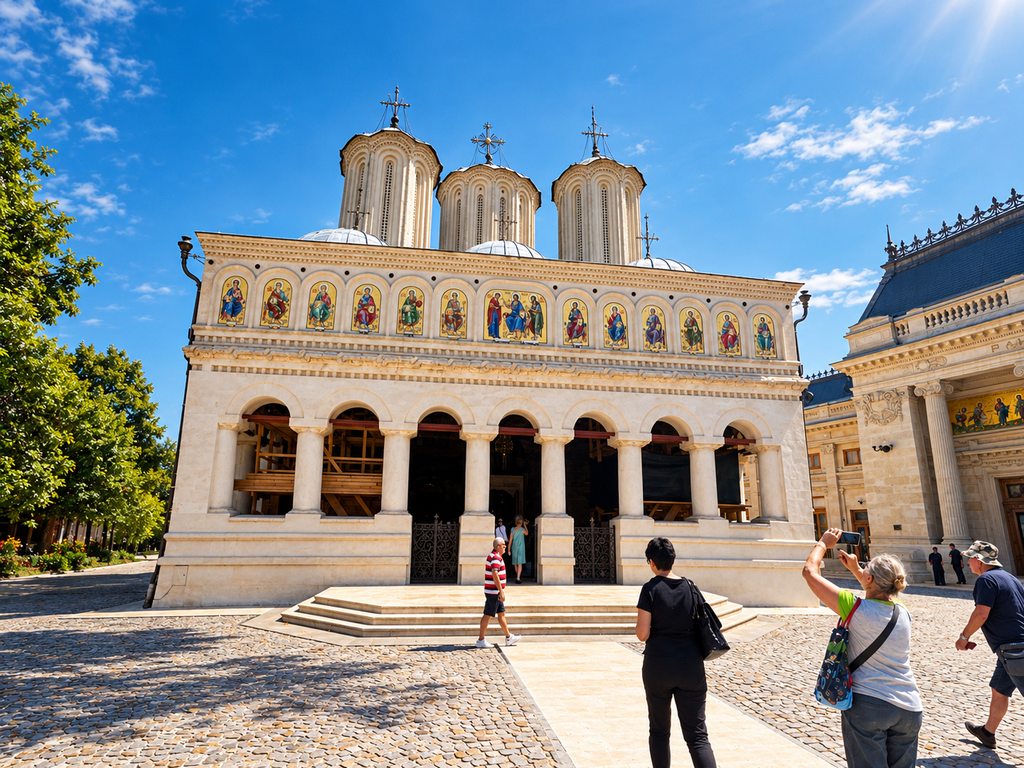
The Patriarchal ensemble stands on grounds associated with the monastery dedicated to the Holy Emperors Constantine and Helena, founded in 1656 by Constantin Șerban Basarab, Voivode of Wallachia. The monastery church was consecrated in 1658, and the complex subsequently developed into one of the principal ecclesiastical centres of the Wallachian capital. Over time, the surrounding hill became a place where religious authority and the political life of the principality were closely intertwined.
The site also occupies a significant place in the history of modern Romania. On 24 January 1859, the Elective Assembly of Wallachia, presided over by Metropolitan Nifon, elected Alexandru Ioan Cuza as ruler of Wallachia. Having already been elected ruler of Moldavia on 5 January, Cuza’s second election brought the two principalities under a common sovereign and marked a decisive step towards the formation of the modern Romanian state.
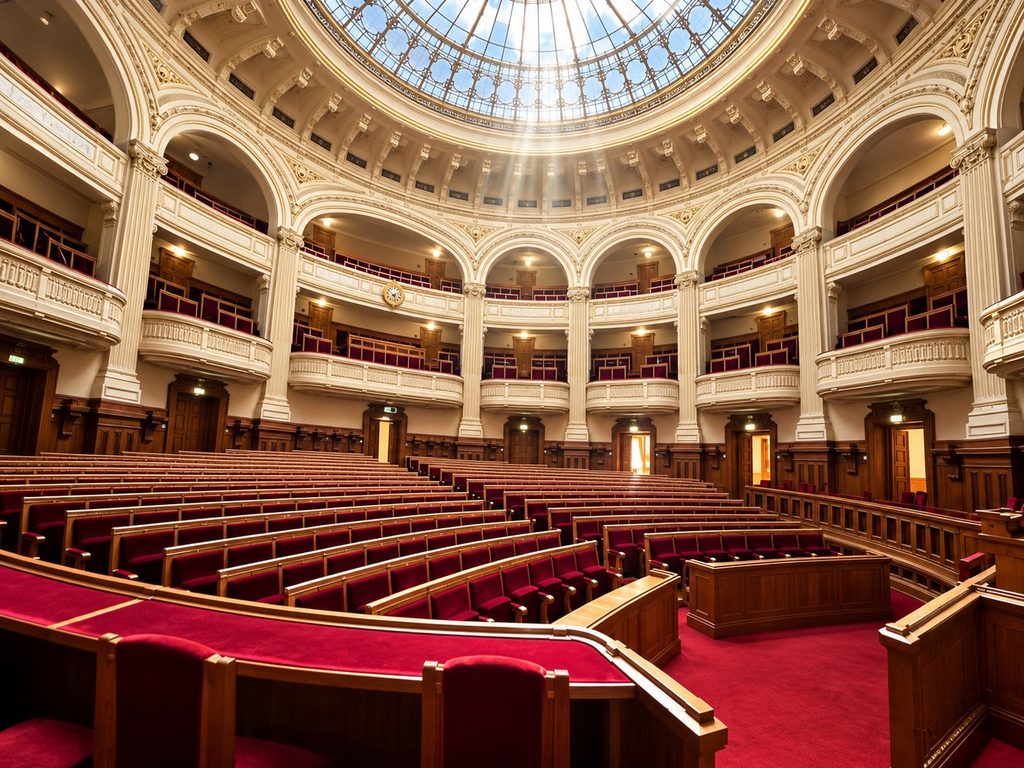
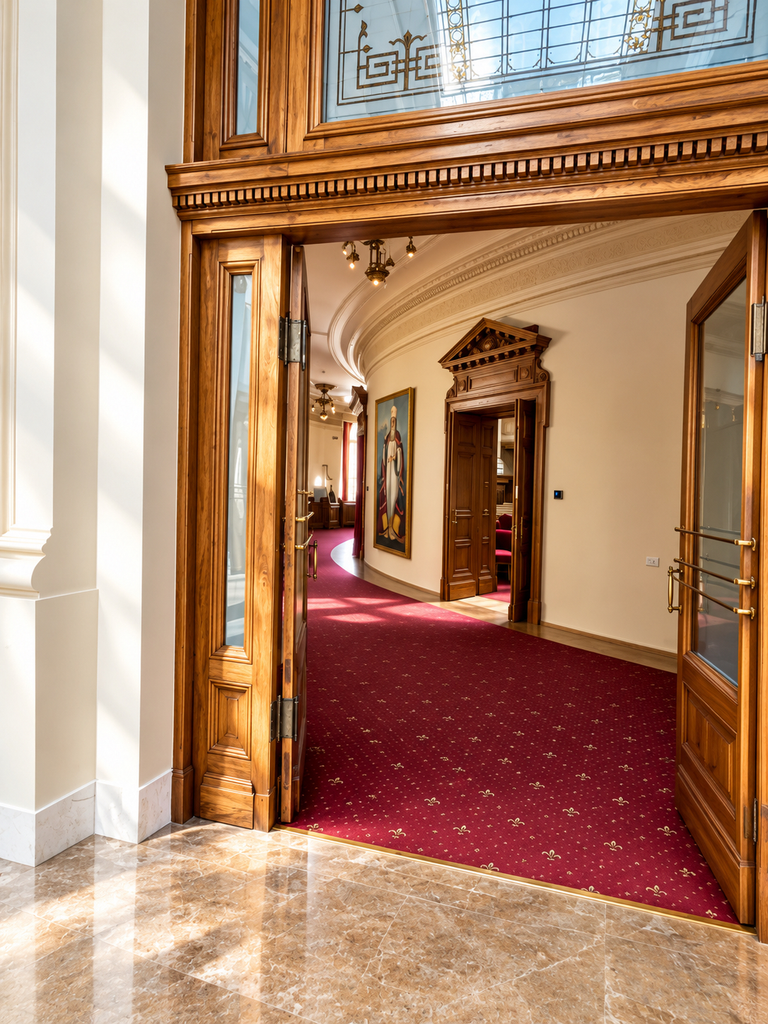
The former assembly hall of the Chamber of Deputies within the Patriarchal Palace on Dealul Mitropoliei, designed by architect Dimitrie Maimarolu (1906–1908).
The present Patriarchal Palace, however, belongs to a later chapter of this history. Constructed by the Romanian State between 1906 and 1908 according to the plans of architect Dimitrie Maimarolu, it was originally built to house the Chamber of Deputies. Its construction formed part of a broader transformation of Bucharest at the beginning of the twentieth century. The site itself had previously belonged to the Metropolis of Wallachia.
The building was also notable for its architectural significance. The Romanian Orthodox Church describes it as the first reinforced-concrete construction in the country. Its history was not without adversity: the original dome collapsed during the earthquake of 10 November 1940 and was subsequently reconstructed.
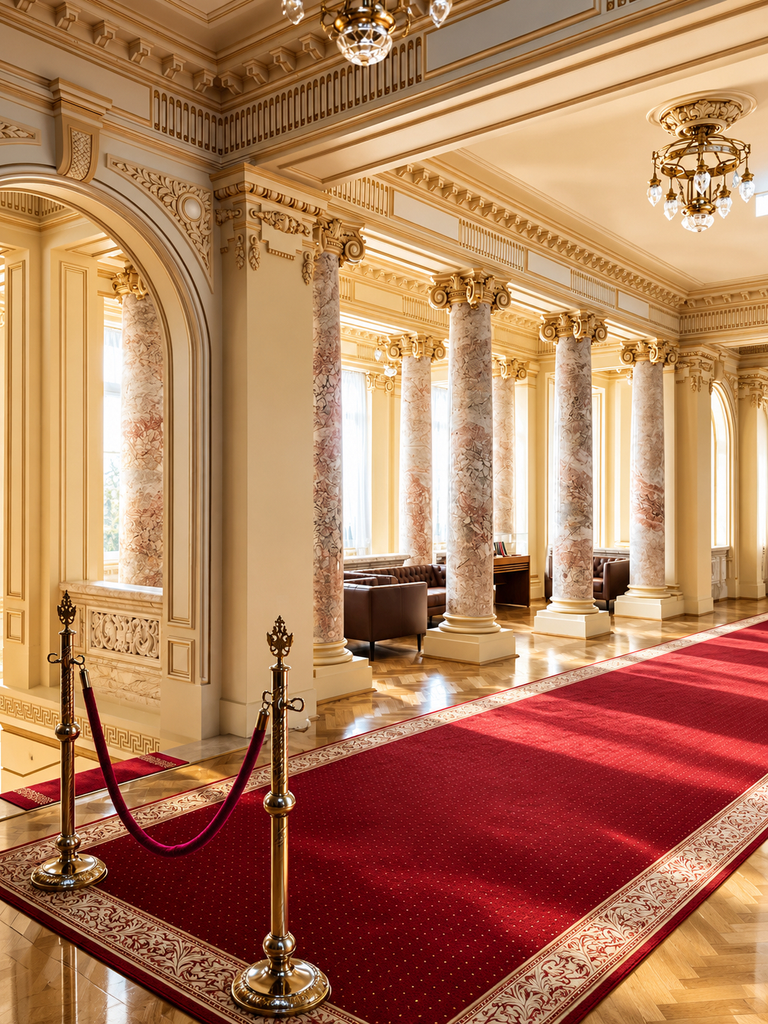
The halls encountered today therefore carry several successive layers of Romanian history. The ecclesiastical foundations of the seventeenth century, the political transformation of 1859, the parliamentary architecture of the modern Romanian state, and the contemporary role of the Romanian Patriarchate converge within the same historic ensemble.
To walk through these halls is not merely to observe an architectural monument. It is to encounter a place in which the institutional memory of the Romanian state, the spiritual heritage of Wallachia, and the architectural ambitions of modern Bucharest remain physically connected.
Documenting such sites on a personal level forms part of our own stewardship of heritage. The preservation of historical memory cannot depend exclusively upon archives and scholarly publications; it must also remain present in the places themselves, in their architecture, and in the continued attention of those who recognize their significance.
Basarab Heritage remains dedicated to documenting and preserving the memory of these historic landmarks, ensuring that their architectural, ecclesiastical, and political legacy continues to be studied, respected, and carried forward for posterity.
Basarab Heritage
— A.C.
Visitor Information
Patriarchal Palace (Palatul Patriarhiei)
Dealul Mitropoliei 25
Bucharest, Romania
Visitors are encouraged to check current access arrangements in advance, as access to the palace and its historic interiors may be restricted.