An Unexpected Question in an Old Classroom
Sometimes an artistic idea begins not with a carefully prepared plan, but with a simple question – and a moment of unexpected embarrassment.
In August, during a visit to the First Romanian School in Brașov, Vladislav Carol Nicolae found himself in precisely such a situation. Accompanied by his cousin and several friends, he was taking part in a guided tour of this remarkable place, so closely connected with the history of Romanian education and cultural life in Transylvania.
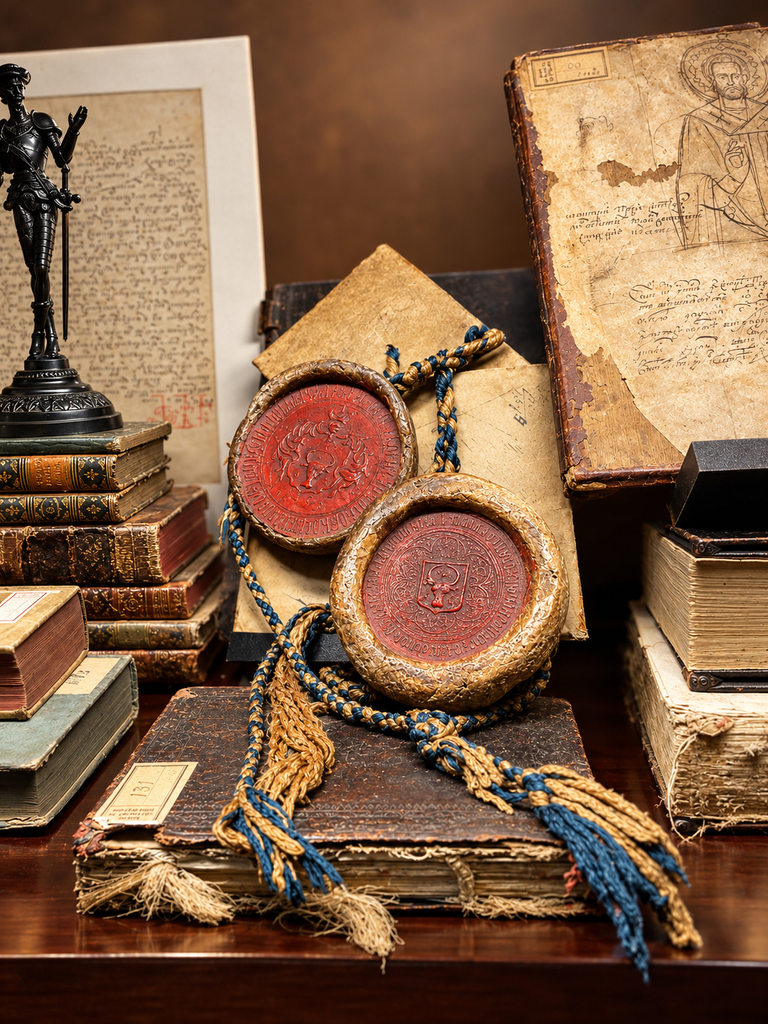
During the visit, the guide, assuming the role of a teacher, addressed him in front of the assembled group – or, as the setting suggested, the class – and asked a seemingly straightforward question: How many stanzas does the Romanian national anthem have?
Vladislav Carol Nicolae could not immediately provide the answer.
It was an unexpectedly uncomfortable moment. In a place dedicated to learning, surrounded by the history of Romanian language and education, he had been caught unprepared by a question whose answer, in retrospect, seemed simple enough. The number was eleven.
The incident might easily have remained no more than a small anecdote from a summer excursion. Yet it stayed with him. He resolved that he would certainly not forget the number again. More than that, he began to consider the eleven stanzas themselves: how many people knew the complete poem, how many had actually read it, and how much of its original substance remained familiar beyond the verses usually heard at official ceremonies?
From that thought emerged an unusual musical idea: to set the entire poem to music, rather than limiting the interpretation to the familiar selection of stanzas.
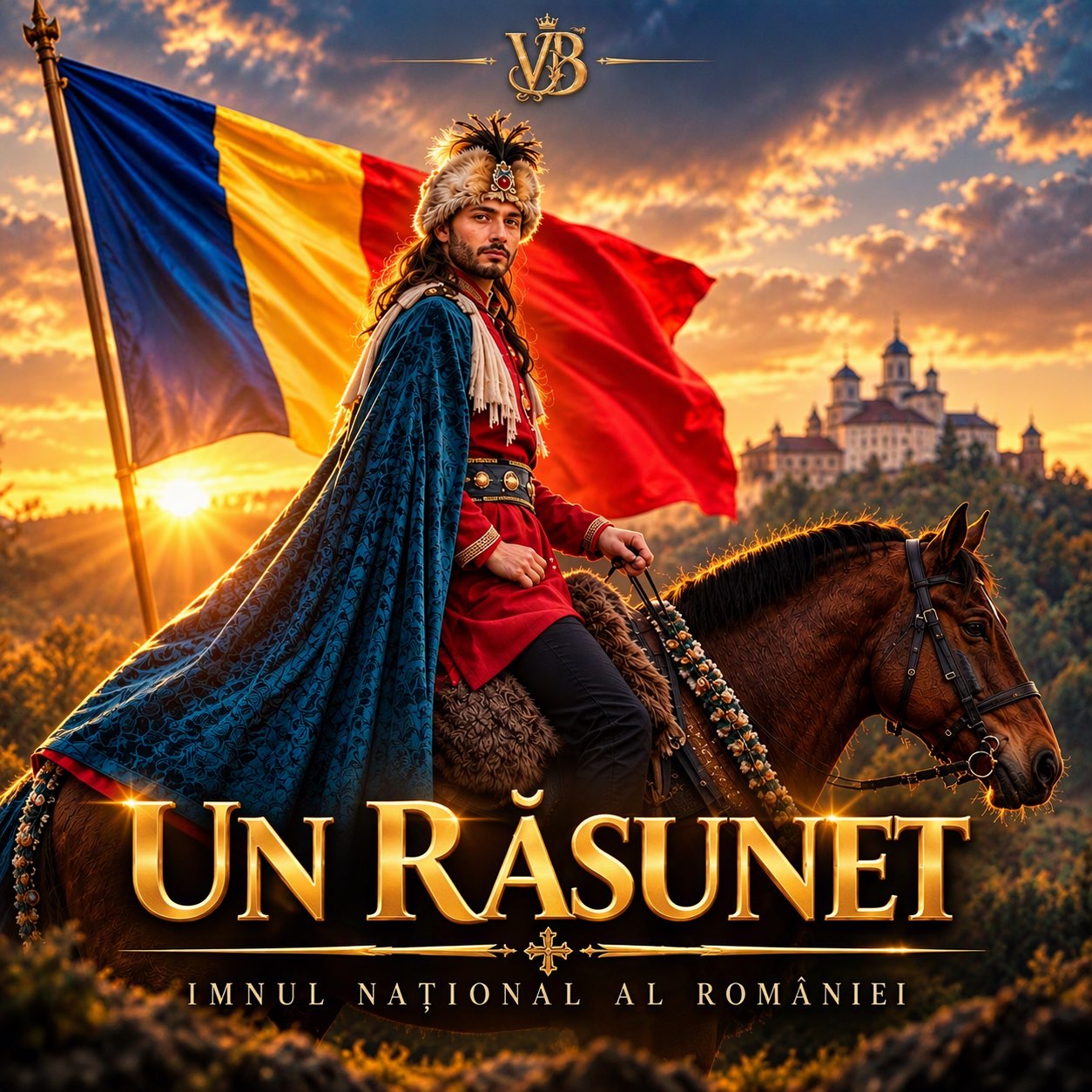
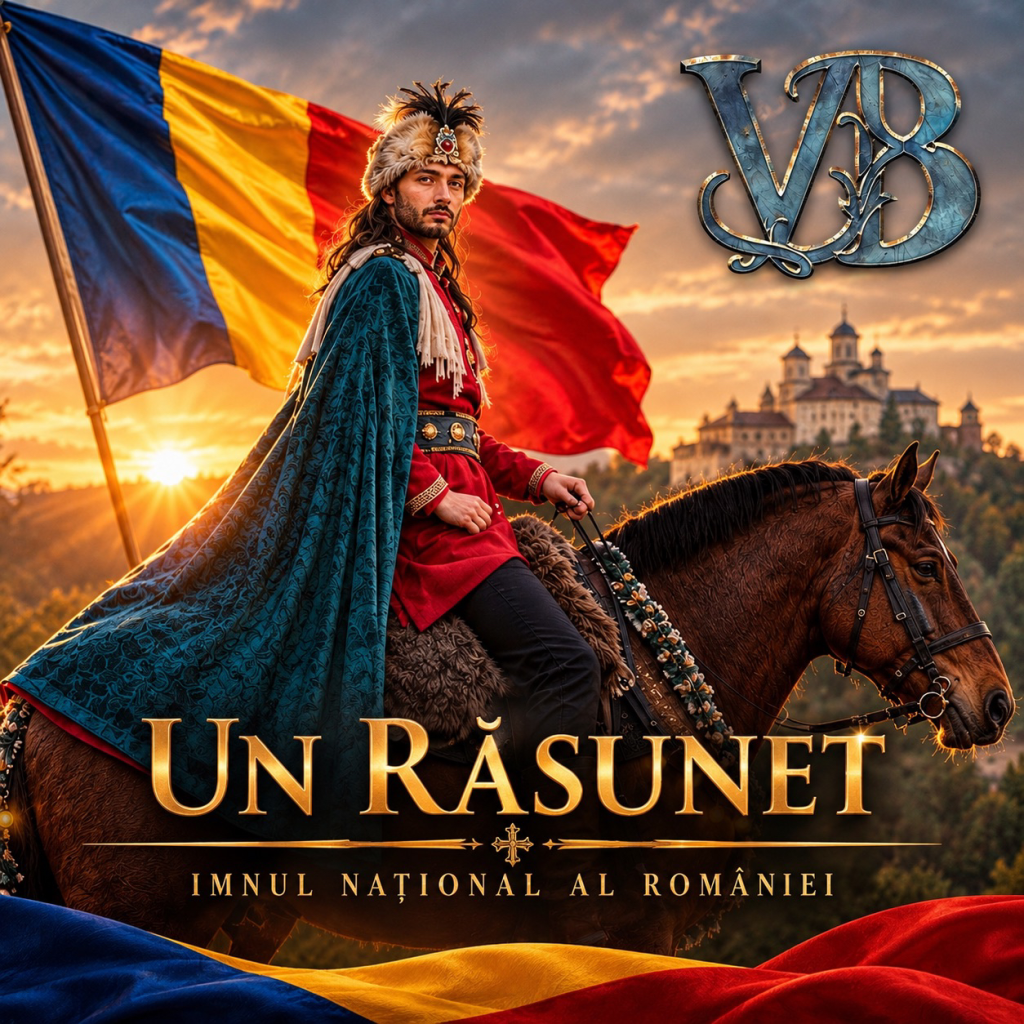
The result is Un Răsunet, Vladislav Carol Nicolae’s musical interpretation of all eleven stanzas of Andrei Mureșanu’s poem.
What began with a moment of embarrassment in an old classroom thus became a personal encounter with one of the most significant texts in nineteenth-century Romanian history.
The Poem Behind the National Anthem
The story of Un Răsunet leads back to the revolutionary year 1848, a period of profound political and social upheaval throughout Europe.
In Transylvania, Romanian intellectuals and representatives of the population were articulating demands for political recognition, civil rights, educational opportunities and the public use of their language. The National Assembly at Blaj on 15 May 1848 gave particular expression to these aspirations. Its programme, known as the Petiția Națională – the National Petition – called, among other things, for the recognition of Romanians as a political nation, representation in public institutions, education in Romanian and the emancipation of the peasantry.
Brașov was one of the important centres of this intellectual and cultural activity. It was here that Andrei Mureșanu (1816-1863), poet, teacher and publicist, lived and worked. The atmosphere of the time, the meetings of Romanian intellectuals and the demands being voiced across Transylvania formed the historical setting for his poem.
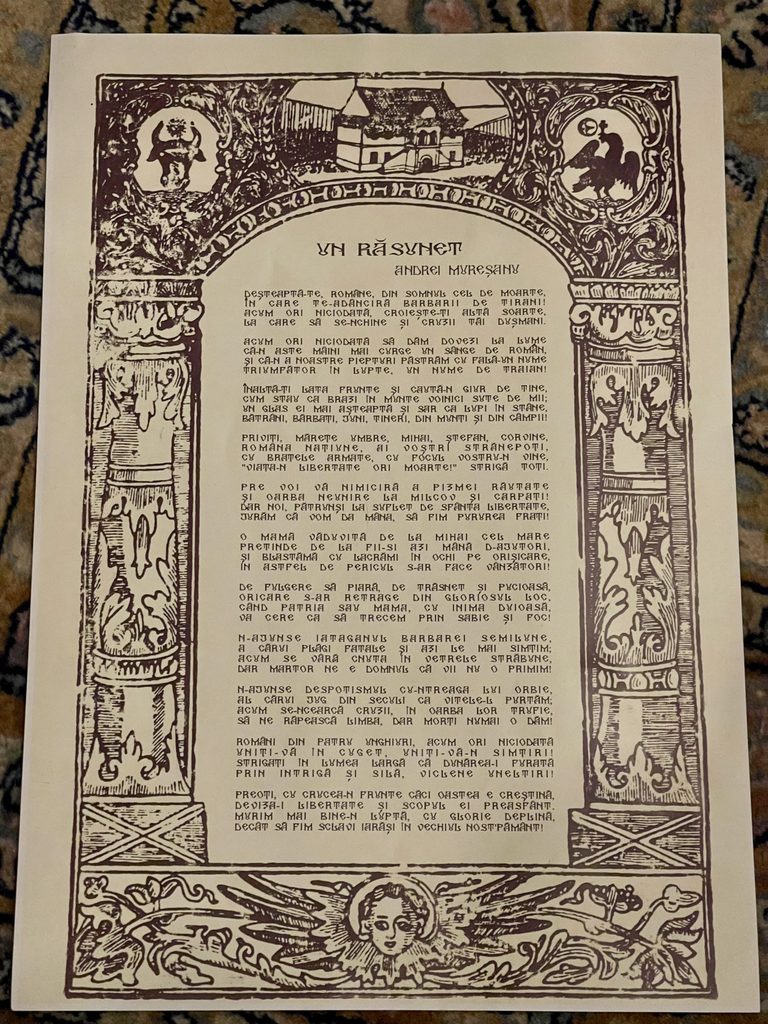
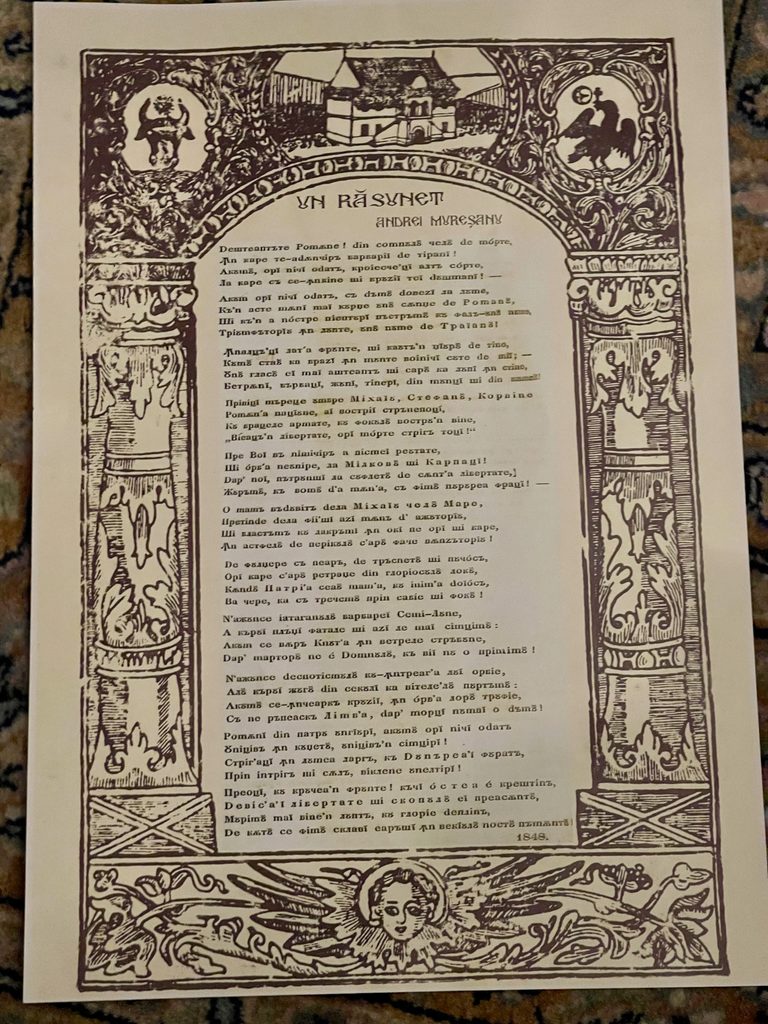
Mureșanu wrote Un Răsunet in the spring of 1848. The poem was published on 21 June 1848 in issue no. 25 of Foaie pentru minte, inimă și literatură, the cultural supplement of Gazeta de Transilvania, published in Brașov.
Its opening words – Deșteaptă-te, române – would eventually become the title by which the poem and the national anthem are now widely known: Deșteaptă-te, române! – “Awaken, Romanian!”
At the time of its composition, however, it was not a state anthem. It was a revolutionary and patriotic poem, written in response to the political circumstances of 1848. Its language is urgent and exhortative; it calls for awakening, solidarity, courage and freedom.
The poem’s eleven stanzas form a sustained appeal. They invoke historical memory, describe the burdens of domination, warn against internal division and call upon Romanians to stand together. Its references to Roman ancestry, historical rulers and the Christian faith belong to the political and cultural vocabulary of nineteenth-century Romanian national consciousness.
From Revolutionary Poem to National Anthem
The transformation of Un Răsunet into a song is an important part of its history.
The melody traditionally associated with the anthem is officially attributed to Anton Pann (1796-1854), composer, music teacher and collector of popular music. Yet the precise history of the tune is more complex than a simple attribution might suggest.
A particularly important tradition connects the melody with Din sânul maicii mele, an older tune known in the musical environment of the period. Gheorghe Ucenescu, a singer and former pupil of Anton Pann, is also associated with the process by which the melody came to be used with Mureșanu’s poem.
The precise contributions of Pann, Ucenescu and the earlier musical tradition remain subjects of historical discussion. The official attribution to Anton Pann should therefore be distinguished from the more complicated history of the melody’s transmission and adaptation.
The song is traditionally associated with its first official public performance on 29 July 1848 in Zăvoi Park in Râmnicu Vâlcea. A contemporary report dated 30 July 1848 records the gathering of citizens there and refers to Anton Pann and other musicians performing a vocal composition with patriotic verses. This report provides valuable contemporary evidence for the event, although the exact identification of the song in that document is not entirely explicit.
Over the following decades, Deșteaptă-te, române! became closely associated with Romanian patriotic and national movements. It was sung during the War of Independence of 1877-1878, during the First World War and in connection with the Great Union of 1918.
During the communist period, the song was prohibited by the authorities. Yet it remained part of the country’s historical and cultural memory. It was heard again during the workers’ revolt in Brașov on 15 November 1987 and, most notably, during the Romanian Revolution of December 1989.
On 24 January 1990, Decree-Law no. 40 formally adopted Deșteaptă-te, române! as the national anthem of Romania. Its status was subsequently established in Article 12 of the Constitution.
The complete poem is commonly transmitted in eleven stanzas. At official and ceremonial occasions, however, the anthem is generally performed using four of them: the first, second, fourth and eleventh.
This distinction is central to Vladislav Carol Nicolae’s project. His recording returns to the complete literary work, allowing listeners to encounter the poem in its full eleven-stanza form.
Songtext
The following is the eleven-stanza version used in Vladislav Carol Nicolae’s musical interpretation. It is presented in the wording and spelling supplied for the recording. Certain expressions reflect the historical language and political ideas of 1848 and should be understood in that context.
Un Răsunet – The Complete Romanian Text with Translation
1
Deşteaptă-te, Române, din somnul cel de moarte,
În care te-adânciră barbarii de tirani!
Acum ori niciodată croieşte-ţi altă soarte,
La care să se-nchine şi cruzii tăi duşmani!
2
Acum ori niciodată să dăm dovezi la lume
Că-n aste mâni mai curge un sânge de roman,
Şi că-n a noastre piepturi păstrăm cu fală-un nume Triumfători în lupte, un nume de Traian!
3
Înalţă-ţi lata frunte şi cată-n giur de tine,
Cum stau ca brazi în munte voinici sute de mii;
Un glas ei mai aşteaptă şi sar ca lupi în stâne,
Bătrâni, bărbaţi, juni, tineri, din munţi şi din câmpii!
4
Priviţi, măreţe umbre, Mihai, Ştefan, Corvine,
Româna naţiune, ai voştri strănepoţi,
Cu braţele armate, cu focul vostru-n vine,
“Vieaţă-n libertate ori moarte!” strigă toţi.
5
Pre voi vă nimiciră a pizmei răutate
Şi oarba neunire la Milcov şi Carpaţi!
Dar noi, pătrunşi la suflet de sânta libertate,
Jurăm că vom da mâna, să fim pururea fraţi!
6
O mamă văduvită de la Mihai cel Mare
Pretinde de la fiii-şi azi mână d-ajutori,
Şi blastămă cu lacrămi în ochi pe orişicare,
În astfel pe pericul s-ar face vânzători!
7
De fulgere să piară, de trăsnet şi pucioasă,
Oricare s-ar retrage din gloriosul loc,
Când patria sau mama, cu inima duioasă,
Va cere ca să trecem prin sabie şi foc!
8
N-ajunse iataganul barbarei semilune,
A cărui plăgi fatale şi azi le mai simţim;
Acum se vâră cnuta în vetrele străbune,
Dar martor ne e Domnul că vii nu o primim!
9
N-ajunge despotismul cu-ntreaga lui orbie,
Al cărui jug din seculi ca vitele-l purtăm;
Acum se-ncearcă cruzii, în oarba lor trufie,
Să ne răpească limba, dar morţi numai o dăm!
10
Români din patru unghiuri, acum ori niciodată
Uniţi-vă în cuget, uniţi-vă-n simţiri!
Strigaţi în lumea largă că Dunărea-i furată
Prin întrigă şi silă, viclene uneltiri!
11
Preoţi, cu crucea-n frunte! căci oastea e creştină,
Deviza-i libertate şi scopul ei preasânt.
Murim mai bine-n luptă, cu glorie deplină,
Decât să fim sclavi iarăşi în vechiul nost’ pământ!
1
Awaken, Romanian, from your sleep of death,
Into which the barbarous tyrants have plunged you!
Now or never, shape another destiny for yourself,
Before which even your cruel enemies shall bow!
2
Now or never, let us show the world
That in these hands there still flows Roman blood,
And that in our hearts we proudly preserve a name,
A name triumphant in battle – the name of Trajan!
3
Lift up your broad brow and look around you:
See how hundreds of thousands stand, strong as mountain firs;
They await but a single voice, then spring like wolves upon the fold –
Old men, men, youths and young ones, from mountains and plains!
4
Behold, you mighty shades: Michael, Stephen, Corvinus,
The Romanian nation, your descendants,
With weapons in their arms and your fire in their veins,
All cry aloud: “Life in freedom, or death!”
5
You were undone by the malice of envy
And by blind disunity between the Milcov and the Carpathians!
But we, with holy freedom deep within our souls,
Swear to join hands and remain brothers forever!
6
A mother, widowed since the days of Michael the Great,
Now asks her sons to lend her a helping hand;
With tears in her eyes she curses whoever,
In such peril, would become a traitor!
7
May lightning strike, may thunder and sulphur destroy
Whoever withdraws from this glorious place,
When the homeland, or our tender-hearted mother,
Calls upon us to pass through sword and fire!
8
Was the scimitar of the barbarous Crescent not enough,
Whose fatal wounds we still feel to this day?
Now the whip is driven into our ancestral homes,
But God is our witness: we shall not accept it while alive!
9
Is despotism, with all its blindness, not enough,
Its yoke borne by us for centuries, like beasts?
Now the cruel ones, in their blind arrogance, attempt
To rob us of our language – but we shall surrender it only in death!
10
Romanians from the four corners, now or never,
Unite in thought, unite in feeling!
Cry out to the wide world that the Danube is being taken from us
Through intrigue and force, through deceitful schemes!
11
Priests, with the cross held high, for the army is Christian;
Its motto is freedom, and its purpose most sacred.
Better to die in battle with full glory
Than to be slaves once more in our old homeland!
Listen to the Song
Reading the Poem in Its Historical Context
The eleven stanzas are more than an extended version of the words familiar from official ceremonies. Together, they reveal a much broader historical and political vision.
The opening stanzas call for awakening and invoke the idea of Roman ancestry, a central element of Romanian national thought in the nineteenth century. The reference to Trajan expresses the historical and cultural understanding of Romanian origins that had become particularly influential among the intellectuals of the period.
The figures named in the fourth stanza – Mihai, Ștefan and Corvinus – evoke rulers associated with the history of the region: Michael the Brave, Stephen the Great and Matthias Corvinus. They appear not as a precise historical genealogy, but as exemplary figures from a remembered past, summoned to lend authority and inspiration to the present struggle.
The fifth stanza turns towards the problem of division. The Milcov, historically associated with the boundary between Moldavia and Wallachia, becomes a geographical symbol of separation. The image of a widowed mother, identified with the homeland, calls upon her sons to overcome their divisions and remain united.
The later stanzas employ the forceful language of the revolutionary age. The crescent, the scimitar and the whip are images of domination and suffering; the defence of language expresses the determination to preserve cultural identity. The reference to the Danube belongs to the political concerns of the period and should be read within the specific circumstances of 1848.
The poem’s concluding appeal is unmistakable: freedom is presented as a sacred purpose, and the refusal to accept renewed servitude as a matter of honour.
These are the words of a nineteenth-century revolutionary poem. Their historical vocabulary, religious imagery and political urgency belong to the world in which Mureșanu wrote them. Understanding that context allows the modern reader to appreciate the work without confusing its original circumstances with the political realities of the present.
Returning to the Eleven Stanzas
It is worth returning to the small incident in Brașov.
Vladislav Carol Nicolae had not set out that day to create a musical interpretation of a historic poem. He had simply joined his cousin and friends for a visit to a place where generations of Romanian pupils had learned their language and history. A question from the guide had exposed a gap in his own immediate knowledge – and that was enough to set a process in motion.
There is something fitting about the fact that this idea emerged in Brașov. The city was not merely the place where Mureșanu’s poem was published in 1848; it was also the setting in which the poet lived and worked, and one of the important centres of Romanian cultural life in Transylvania.
The connection between place, memory and music is therefore more than incidental. A visit to a historic school led Vladislav Carol Nicolae back to a poem born in the same city nearly two centuries earlier.
His response was not simply to memorise the answer to the guide’s question. He chose to explore the eleven stanzas in their entirety and to give them a musical form.
Un Răsunet: A Personal Musical Interpretation
With Un Răsunet, Vladislav Carol Nicolae turns a personal experience into a creative engagement with a work of national and historical significance.
The undertaking is distinctive in its decision to address the complete poem. The four stanzas most commonly heard at official ceremonies have become familiar to generations of Romanians. The remaining verses, however, contain important elements of Mureșanu’s original composition: his appeal for unity, his historical references, his defence of language and his vision of freedom.
By bringing all eleven stanzas together in one musical interpretation, Vladislav Carol Nicolae invites listeners to encounter the poem as a complete literary work, rather than solely through the shortened ceremonial form.
The title Un Răsunet also restores attention to the name under which Mureșanu’s poem first appeared in 1848. It recalls the historical moment of its creation and the circumstances in which its words began their journey through Romanian public life.
Perhaps the most pleasing aspect of the story is its beginning. A question asked during a guided tour, a moment of hesitation, and the determination not to forget the answer again: from such a modest incident came the idea for a musical undertaking devoted to all eleven stanzas.
The next time someone asks Vladislav Carol Nicolae how many stanzas the original poem behind the Romanian national anthem contains, he will have a rather more substantial answer than a number. He will be able to point to a complete musical interpretation of the work itself.
And that, in the end, is a memorable way to turn an awkward moment into an act of remembrance.
Basarab Heritage
— A.C.
Front and reverse sides of a poster acquired at the First Romanian School in Brașov, presenting all eleven stanzas of “Un Răsunet” in both Latin and Cyrillic script.